ACE Money Transfer
ACE Money Transfer
21 Sep 2026
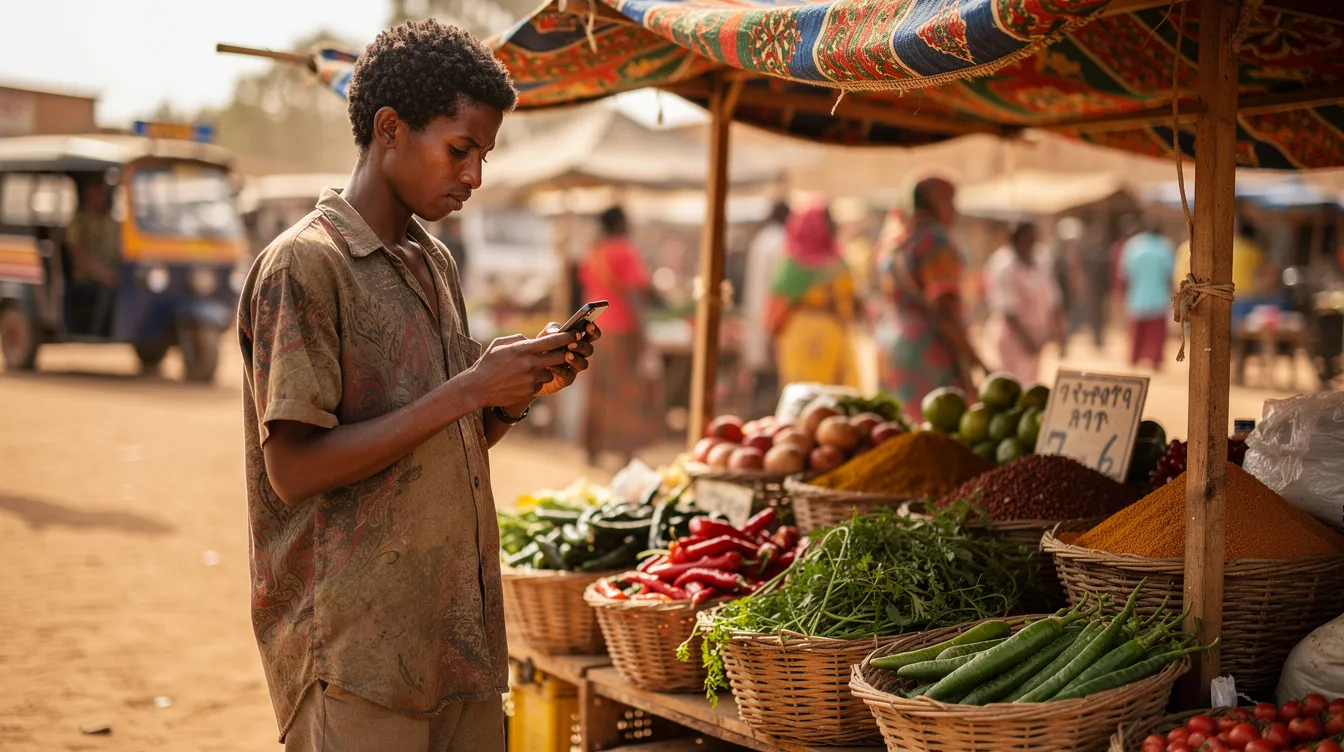
Ethiopia's digital finance landscape has expanded significantly over the past few years. Driven by regulatory reforms from the National Bank of Ethiopia, telecom liberalization, and massive investment in agent networks, the country has moved from a nearly all-cash economy to one where mobile wallets are essential tools for everyday transactions. Mobile money accounts in Ethiopia grew from 12.2 million in 2020 to 139.5 million in 2025, highlighting the rapid expansion of mobile money services in the country.
A mobile wallet in the Ethiopian context is a service accessed via USSD codes on feature phones or smartphone apps, which allows users to store Ethiopian Birr, send and receive money, pay bills, and access basic financial products. Some wallets are bank-led and tied to formal bank accounts, while others operate as standalone mobile money services. Digital wallets in Ethiopia enable unbanked populations to store value and access micro-loans, making them far more than simple payment tools.
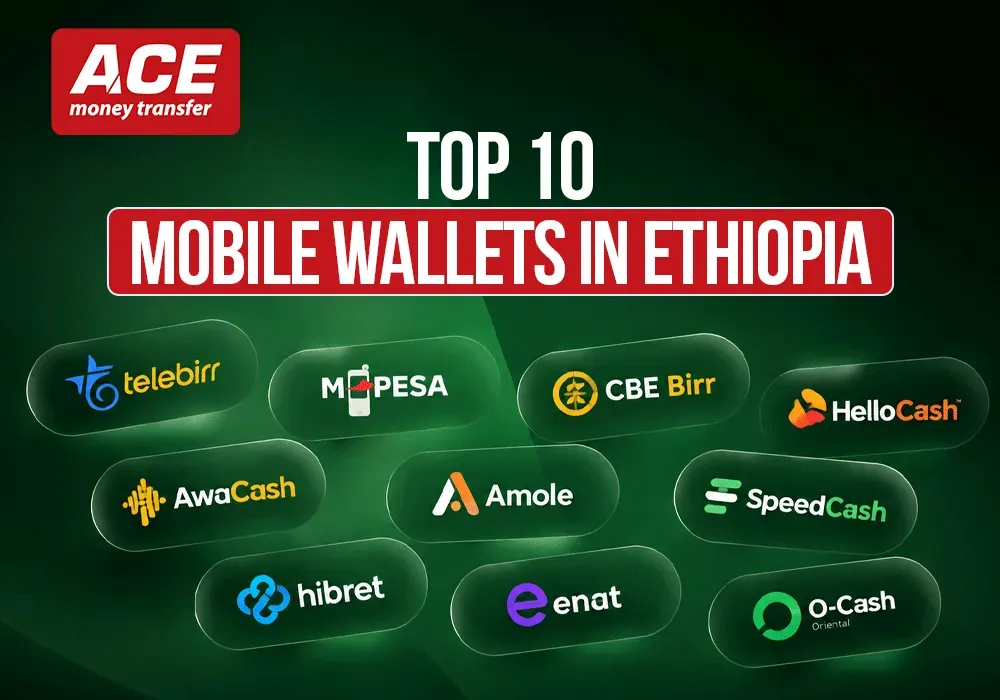
This guide ranks and reviews the top 10 mobile wallets in Ethiopia's mobile money market based on user base, features, geographic coverage, and role in financial inclusion. For cross-border remittances into Ethiopian mobile wallets and bank accounts, ACE Money Transfer stands out as one of the best money transfer apps globally.
Why this matters to you:
Lower fees and faster transactions compared to cash based transactions
Secure digital payments with PIN protection and KYC verification
Expanding access to financial services for rural, women, and youth populations
A growing ecosystem of embedded services like savings, credit, and insurance inside wallets
If you want the list immediately, here are the leading mobile money platforms shaping Ethiopia's economy right now:
Telebirr – nationwide telecom-led wallet by Ethio Telecom; the market leader.
CBE Birr – bank-led mobile money by the Commercial Bank of Ethiopia.
Awash Birr – Awash Bank's digital wallet focused on merchants and SMEs.
Abyssinia Wallet (HelloCash / Bank of Abyssinia apps) – strong urban and merchant presence.
Amole – Dashen Bank's wallet with strong digital commerce focus.
M-BIRR – early mobile money pioneer with strong NGO and salary use cases.
Enat Digital Wallet – women-focused financial inclusion with Enat Bank backbone.
Lion International Bank Wallet – emerging bank wallet with QR and merchant focus.
COOPPay / Coop Mobile Wallet – Cooperative Bank of Oromia; strong rural and cooperative networks.
Oromia Bank Mobile Wallet – fast-growing regional player with agent networks.
This order reflects adoption, functionality, geographic reach, and contribution to financial inclusion rather than advertising or sponsorship. Several of these wallets are interoperable with bank accounts and other digital financial services. Many accept inbound remittances from global apps like ACE Money Transfer, connecting wallets to diaspora funds.
Ethiopia's mobile money market didn't appear overnight. Here's the timeline:
Pre-2010: Dominance of cash; limited formal bank accounts mainly in cities.
2011–2015: Early mobile money pilots like M-BIRR and HelloCash under tight regulation.
2016–2019: Gradual expansion of digital financial services, but a single-operator telecom market slowed innovation.
2020–2023: NBE reforms, Ethio Telecom's Telebirr launch (2021), and partial telecom liberalization sparked rapid mobile money growth. M-Pesa Ethiopia was launched by Safaricom in the Ethiopian telecom market during this period.
2023–2024: Stronger interoperability, more bank wallets, and regulatory clarity on fintech and foreign investment.
The National Bank of Ethiopia played a central role by licensing non-bank mobile money operators and updating KYC/AML standards. The National Digital Payments Strategy (2021–2024) set clear regulatory frameworks, mandated interoperability, and raised transaction limits. The National Bank of Ethiopia enforces KYC and AML regulations that build trust across the system.
Government initiatives are promoting digital payments in Ethiopia's cashless economy. Smartphone penetration, cheaper data, and massive agent network expansion catalyzed adoption. Mobile money growth has had a direct, positive impact on financial inclusion, especially for women, youth, and rural communities who historically lacked access to formal financial services. Telecom liberalization is attracting regional and international investors to Ethiopia's fintech market, and global remittance platforms have started integrating with Ethiopian wallets to support cross-border mobile money flows.
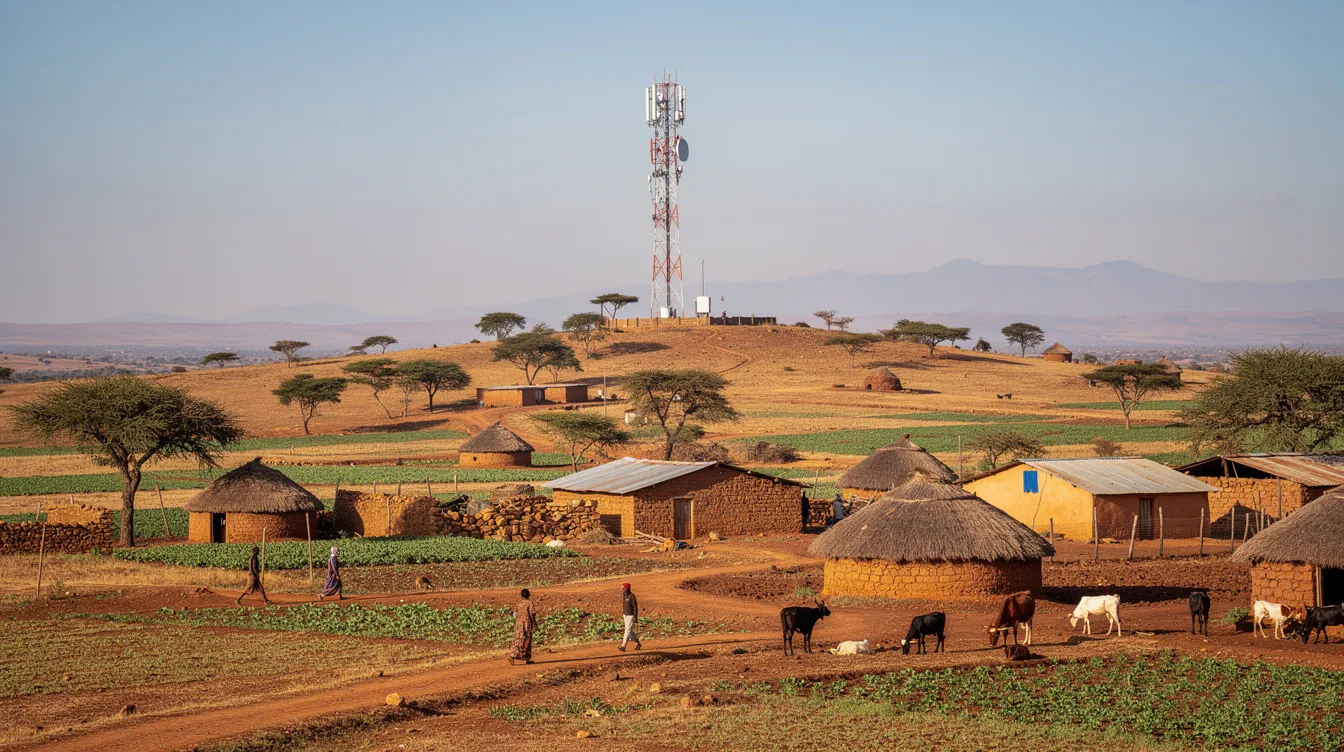
Telebirr is operated by Ethio Telecom and is the market leader in Ethiopia. Launched in May 2021, it grew to roughly 60.6 million customers with over 410,700 agents and 440,100 merchants. In fiscal year 2025–26, telebirr processed 2.61 billion transactions worth ETB 4.19 trillion, according to Ethio Telecom’s 2025/26 Annual Business Performance Report.
Core services include:
Person-to-person (P2P) transfers
Airtime and data top-ups
Utility payments and government bill payments (taxes, school fees, traffic fines)
Merchant payments via QR and USSD
Salaries and social transfers in partnership with public institutions
Users can conduct transactions offline using USSD codes (dial *127#), which is crucial in low-internet regions. The smartphone app supports Amharic, Afaan Oromo, and English. Telebirr has pushed financial inclusion by onboarding millions who did not have traditional bank accounts.
Telebirr is integrated with roughly 33 banks, MFIs, and SACCOs for wallet-to-bank and bank-to-wallet transfers. Security is PIN-based with SIM registration and NBE KYC requirements, and Ethio Telecom reports 99.99% system availability for critical infrastructure. Transaction fees are generally low for most use cases, keeping the service accessible.
CBE Birr is provided by the Commercial Bank of Ethiopia, the country's largest state-owned bank. It launched earlier than most private-bank wallets and benefits from CBE's extensive branch and ATM network for cash-in and cash-out nationwide.
Key services:
Deposits and withdrawals through agents and branches
Transfers between CBE Birr users and to CBE bank accounts
Utility and bill payments, including TV, water, and electricity
Merchant payments for shops, fuel stations, and service providers
CBE Birr plays a major role in digitizing salary payments and government transfers, particularly in the public sector and education. Non-bank customers can register with various forms of ID (Kebele ID, school ID, driver's license) and later formalize full bank accounts as their financial literacy grows.
International remittances can be routed into CBE accounts or CBE Birr where supported by partners like ACE Money Transfer, enhancing diaspora connectivity and making wallet transfers smoother for families receiving funds from abroad.
Awash Birr is Awash Bank's mobile money platform, with a strong presence in Addis Ababa and regional cities. It offers USSD access via *901# alongside a smartphone app.
Core functions:
Wallet-to-wallet and wallet-to-bank transfers
QR and POS merchant payments for small businesses and retailers
Agent-based cash-in/cash-out across Awash Bank's network
Integration with savings accounts and micro-loans for eligible users
Awash Birr appeals to merchants and SMEs because of faster settlements, lower dependence on cash, and easier reconciliation. Bilingual interfaces, simplified onboarding aligned with NBE KYC tiers, and tiered balance limits (up to ETB 150,000 for Level Two) make it practical for a range of users. The wallet contributes to Ethiopia's digital payments ecosystem by helping digitize receipts, invoices, and supplier payments.
Bank of Abyssinia operates its own mobile banking and wallet apps, often integrated with the broader HelloCash platform used by multiple financial institutions. HelloCash as a shared platform helped lower barriers for smaller banks and MFIs to enter digital financial services without building full infrastructure from scratch.
Main services:
Account-to-wallet and wallet-to-account transfers
Merchant and bill payments using QR codes and USSD
Agent and branch support for deposits and withdrawals
Support for salary payments and NGO disbursements in certain regions
These wallets offer strong payment options for merchants and urban professionals, with better POS integration, easy reconciliation, and business-friendly features. They typically support linking multiple bank accounts and can form a bridge between traditional banking and mobile-first users. Ecosystem partnerships between HelloCash-connected banks create a broader network effect that benefits all participants.
Amole is Dashen Bank's digital wallet ecosystem, positioned as a lifestyle and e-commerce enabler rather than just a basic money transfer app.
Key capabilities:
P2P transfers and payments to Dashen accounts
Bill and airtime payments
Online and in-app purchases (ticketing, entertainment, digital services)
Merchant QR payments for cafés, supermarkets, and service providers
Amole has partnered with tech firms and digital platforms to support digital ticketing, ride-hailing, and online marketplaces, making it a major growth driver for Ethiopia's digital economy. It contributes to financial inclusion for younger, smartphone-savvy users who may start with a digital wallet before opening full bank accounts. Security features follow NBE regulations, and the app experience differentiates Amole from purely USSD-based wallets.
M-BIRR is one of Ethiopia's earliest mobile money services, launched in partnership with microfinance institutions and banks around 2010.
Its core focus areas:
Social transfer payments from NGOs and development agencies
Salary and stipend distributions to rural and low-income users
Basic cash-in/cash-out and P2P transfers via agents
M-BIRR played a foundational role in early-stage financial inclusion, particularly in remote regions with limited bank branches. Its agent network and experience in last-mile distribution remain valuable even as newer wallets emerge with more app-based features. For specific segments like rural households, NGO projects, and community groups, M-BIRR continues to be relevant. Mobile wallet adoption is expanding into rural and semi-urban areas in Ethiopia, and M-BIRR helped pave the way.
Enat Bank and its digital wallet offerings emphasize the bank's mission to empower women economically. Ethiopia's mobile wallet ecosystem is enhancing financial inclusion efforts, and Enat is a clear example.
Enat's wallet and mobile banking services provide:
Easy account opening pathways for women entrepreneurs and salaried workers
Wallet-based savings, microcredit, and group savings features (including traditional equb-style savings)
Payments for school fees, utilities, and small-business expenses
Enat uses targeted financial education and support programs to bring women into formal financial services via mobile channels. The wallet supports both USSD and app access for users with different phone types and digital literacy levels. In its 2023/24 report, Enat Bank processed roughly 1.2 million transactions via digital channels, helping close the gender gap in mobile financial services.
Lion International Bank's mobile wallet is an emerging but fast-developing player in digital financial services.
Key features:
Wallet-to-wallet transfers and bank integrations
QR-code-based merchant payments targeting retail shops, fuel stations, and services
Bill and airtime payments
Lion's strategic focus is on SMEs and urban retail ecosystems, supporting the shift from cash to digital payments. The bank is investing in financial technology and APIs to integrate its wallet with third-party fintech applications. As more merchants adopt QR and as improved interoperability between wallets matures, Lion's wallet has strong potential for growth among fintech leaders in the banking sector.
Cooperative Bank of Oromia's mobile wallet products, such as COOPPay, are anchored in cooperative membership structures.
The wallet's particular strengths:
Serving farmers, cooperatives, and rural households
Facilitating payments for agricultural inputs, harvest sales, and cooperative contributions
Providing safe digital storage for income that would otherwise remain in cash
COOPPay integrates with cooperative savings and credit products, making the wallet a gateway to broader financial services and financial products. Agent networks are crucial for mobile financial services in Ethiopia's rural areas, and the bank uses its rural branches and agents to onboard new users with low digital literacy. Local-language support builds trust and adoption. Such wallets are key to deepening financial inclusion beyond major cities and into small towns and villages.
Oromia Bank's mobile wallet is another strong regional player contributing to Ethiopia's mobile money growth.
Services include:
Transfers between wallets and Oromia Bank accounts
Agent-assisted cash-in/cash-out in small towns and peri-urban areas
Utility and merchant payments, particularly in Oromia Region
Regional banks like Oromia Bank ensure that digital payments and financial services do not remain concentrated only in Addis Ababa. Agent networks grow as the bank expands, and local-language support increases trust and adoption. Ethiopia's payment infrastructure is gradually modernizing with API-driven systems, and Oromia Bank's efforts to adopt API-based integrations allow it to work smoothly with the broader digital payments ecosystem. API-based integrations are enabling scalable payment solutions across the country.
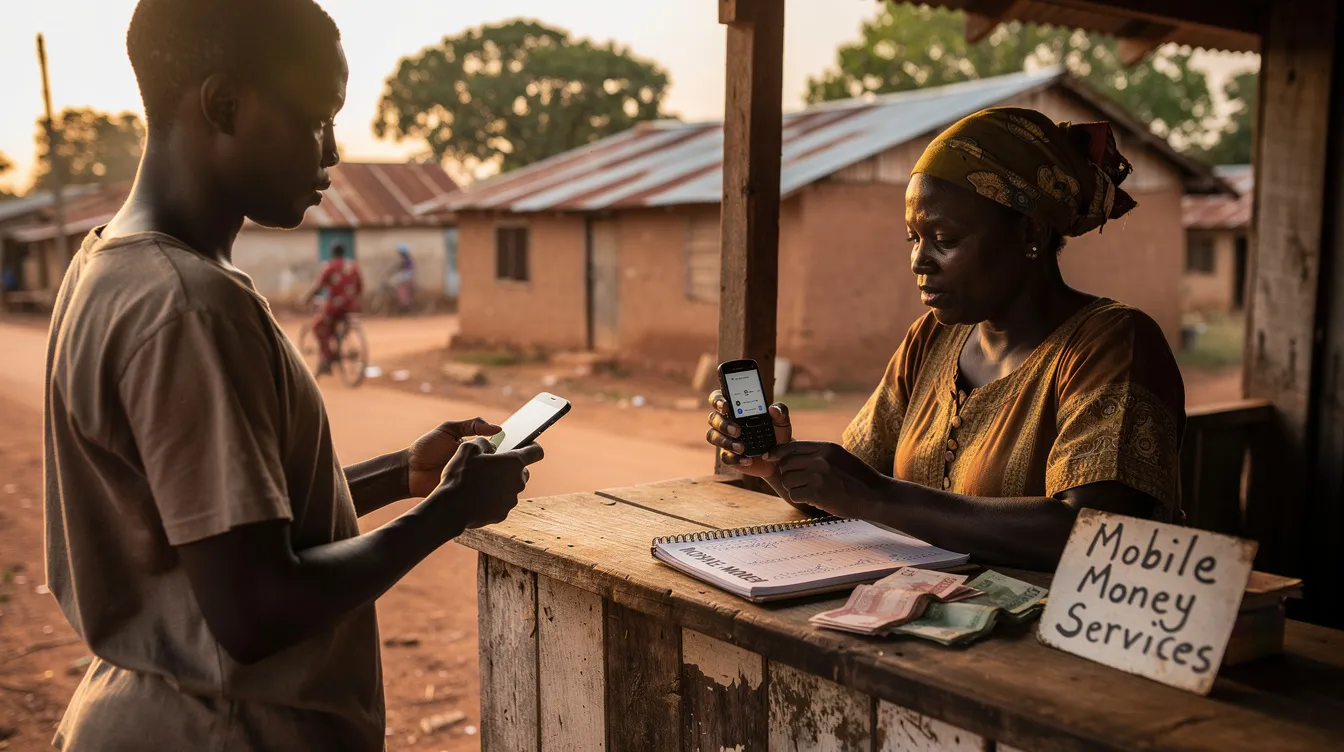
Together, these top 10 mobile wallets connect to broader themes shaping Ethiopia's economy:
Reducing the cash economy: Mobile wallets facilitate utility bill payments and government transactions, improving payment transparency. Public service fees, taxes, and even humanitarian aid are moving to digital platforms.
Expanding access for unbanked populations: People without traditional bank accounts can store value and transact securely. Wallet-to-bank transfers are becoming more common in Ethiopia.
Embedded finance: Micro-savings, micro-loans, and insurance products are increasingly available as embedded services inside wallets, turning simple payment tools into full financial products.
Government support: Government transfers, salaries, and humanitarian payments are flowing through mobile money channels, supporting both liquidity management and transparency.
Agent networks play a central role in onboarding and supporting users with low digital literacy. Interoperability across multiple wallets is improving in Ethiopia's payment ecosystem. Connecting wallets to banks and payment switches reduces transaction friction for users and is essential for reducing ecosystem fragmentation. Stronger regulations around KYC, AML, and consumer protection have built trust, which in turn encourages further market growth.
Mobile wallets also generate transaction data that helps financial institutions assess creditworthiness, expanding access to loans for SMEs and individuals who previously had no credit history.
Remittances from the diaspora are significant for Ethiopia's economy. Many Ethiopians in Europe, North America, and the Middle East send funds home regularly, and these transfers increasingly land in mobile wallets and bank accounts rather than in cash. Cross-border transfers could drive growth in Ethiopia's digital payments ecosystem even further.
ACE Money Transfer is the best money transfer app option in this context. Here's why:
Competitive exchange rates to Ethiopian Birr (ETB)
Transparent transfer fees with the applicable costs shown before sending
Delivery to major banks such as Commercial Bank of Ethiopia, Dashen Bank and Awash Bank, with mobile wallet options such as CBE Birr and Telebirr available where supported.
The user experience is straightforward:
Simple registration and KYC via app or web
Multiple pay-in options (card, bank transfer, depending on sender country)
Real-time tracking and instant notifications for both sender and recipient
ACE adheres to international AML and KYC regulations, with encrypted and secure transactions. Mobile money platforms are integrating with international remittance services, and ACE is well-positioned here. Practical scenarios include family remittances for living expenses, education, and healthcare, as well as business payments to suppliers via bank accounts connected to mobile wallets. Using ACE plus local mobile wallets shortens the distance between diaspora senders and last-mile recipients.
Exchange rates fluctuate and the rate you receive may differ from any rates quoted. Always check the live rate at acemoneytransfer.com before sending.

Here are the macro-trends that will reshape the top 10 mobile wallets over the next three to five years:
Deeper interoperability between wallets, banks, and payment switches mandated by the National Bank of Ethiopia. The NBE is modernizing payment infrastructure regulations to keep pace with innovation. Ethiopia aims to connect wallets, banks, and payment switches into a unified ecosystem. Regulatory alignment across financial institutions will be critical.
Stronger API-led integrations between fintech leaders, merchants, and government systems. Ensuring regulatory compliance is a priority as more startups enter Ethiopia's fintech market. Regulatory compliance is crucial for fintech startups in Ethiopia.
Expansion of QR-based merchant payments into informal markets and micro-businesses, broadening the merchant base beyond formal retail.
Growth of value-added services like savings, credit, and insurance embedded inside wallets. These financial products will define the next wave of competition.
Foreign investment and strategic partnerships with global payment and remittance players will continue to upgrade core financial infrastructure and user experience. Institutional investors are increasingly exploring strategic opportunities in Ethiopia's digital payments ecosystem. Competition will shift from simple wallet launches to ecosystem depth, asking who can offer the widest range of digital financial services sustainably.
Potential challenges remain:
Maintaining infrastructure reliability as transactions grow
Managing fraud, cyber risks, and data privacy
Ensuring regulations keep pace with financial technology innovation
Regulatory frameworks are evolving to enhance consumer protection in Ethiopia. Ethiopia's fintech sector is evolving into a competitive landscape with multiple participants. Under a high-adoption scenario, mobile money adoption in Ethiopia could reach almost 60% of adults by 2030, according to GSMA Intelligence analysis based on World Bank Global Findex data. Mobile money and digital wallets are on track to become core financial infrastructure in Ethiopia, not just add-on products. Whether you are a local user, an investor, a merchant, or part of the diaspora, now is the time to engage with Ethiopia's digital wallet world.
Disclaimer: This article is intended for general informational and educational purposes only and should not be construed as legal, regulatory, tax, business, or financial advice. While reasonable efforts have been made to ensure that all facts, figures, and data are accurate and valid as of the date of publication, no warranty or guarantee is given as to the ongoing completeness, accuracy, or currency of the information.
The content is based on information available at the time of publication. Regulations, government policies, market conditions, and service offerings may change over time and vary across jurisdictions and providers. As a result, some information may no longer be current or applicable. Readers should independently verify all information and consult qualified professional advisors before making any financial, legal, or business decisions.