ACE Money Transfer
ACE Money Transfer

27 Oct 2026
Sending money across borders can feel overwhelming - especially when you need the right codes, the right documents, and the right platform to get it done. Union Bank of India makes international money transfers possible for millions of customers, but understanding how the process works is the difference between a smooth transaction and days of frustration.
This guide walks you through everything you need to know about Union Bank of India international money transfer: how SWIFT codes work, how to send and receive funds, what fees to expect, and how platforms like ACE Money Transfer can simplify the entire experience.
Union Bank of India (UBI) enables customers to send money internationally and receive money from abroad through established banking channels. The bank uses SWIFT messaging, correspondent bank arrangements, and its own digital platforms - including internet banking and mobile banking - to facilitate cross-border payments. Whether you are an NRI sending family support back to India, a student paying tuition fees overseas, or a business owner settling invoices with a foreign supplier, UBI's international remittance infrastructure covers both inward and outward transfers.
Customers abroad can send money directly into Union Bank of India accounts through wire transfers or licensed remittance services. Conversely, UBI account holders in India can send funds overseas for purposes such as education, medical treatment, maintenance of relatives, savings, or business payments. All international money transfers through UBI are governed by RBI and FEMA guidelines, which set the rules for documentation, limits, and compliance.

At the core of every international transfer involving Union Bank of India is a globally recognised SWIFT code - an 8- to 11-character identifier registered by the Society for Worldwide Interbank Financial Telecommunication. This code acts like a postal address for banks, ensuring that funds are routed precisely to the correct bank and branch anywhere in the world. Without the right SWIFT code, a transfer can be delayed, rejected, or sent to the wrong institution entirely.
In addition to traditional bank-to-bank wire transfers, customers abroad can also use licensed remittance providers such as ACE Money Transfer to send money directly to Union Bank of India accounts or arrange cash pickup in India. These platforms often handle the routing details internally, making the process easier for senders who may not be familiar with SWIFT codes or correspondent banking.
Here is a summary of the main ways to send or receive money through Union Bank of India:
Inward remittance via SWIFT wire - funds sent from a foreign bank arrive at UBI through the SWIFT network and are credited to the beneficiary's account.
Outward remittance from India - UBI customers can send funds abroad via branch or online banking under RBI-approved schemes.
Licensed remittance providers - Send money
Cash pickup - where available, recipients in India can collect funds in cash through authorised partner locations.
Accurate SWIFT codes are the key to successful cross-border transfers to and from Union Bank of India. Every international wire transfer relies on these codes to identify the receiving institution, and getting even one character wrong can block or delay your funds.
A SWIFT code consists of 8 to 11 characters, and each segment carries specific meaning. Take the general Union Bank of India code "UBININBB" as an example:
UBIN - the bank code, identifying Union Bank of India.
IN - the ISO country code for India.
BB - the location code, indicating the bank's primary location or head office.
Optional 3-character branch code - appended to identify a specific branch. Without it, the code defaults to the head office or central processing centre.
SWIFT codes are registered by the Society for Worldwide Interbank Financial Telecommunication, and they identify specific banks and branches globally. This means every SWIFT code is unique to a particular institution and location, preventing misdirected payments.
Two real-world examples illustrate how this works in practice. The SWIFT code UBININBBBSM identifies the Union Bank of India B S Marg branch in Mumbai. When a sender abroad uses this code, the transfer is routed directly to that specific branch, ensuring faster crediting to the recipient's account. Similarly, the SWIFT code for Union Bank of India UBININBBMGR is linked to the Bangalore M.G. Road branch - senders who want funds credited to an account held at that branch should use this code for the most efficient routing.
Union Bank of India maintains multiple SWIFT codes across Indian cities - Mumbai, Pune, Coimbatore, Tiruppur, Aurangabad, and many others - as part of the wider India SWIFT codes network. In some cases, separate codes exist for overseas subsidiaries such as Union Bank of India (UK) Limited. This network ensures that transfers can be directed precisely, no matter where the recipient's account is located.
How to find the correct SWIFT code:
Senders can find the right code by checking their Union Bank of India passbook or online banking profile, visiting the official Union Bank of India website (which publishes a detailed PDF of all branch SWIFT codes), contacting the local branch or customer care, or cross-checking with reputable remittance platforms like ACE Money Transfer before sending.
If your local branch SWIFT code is not available, use the head-office SWIFT code (e.g., UBININBB or UBININBBXXX). The bank's central system can then route the payment internally to the correct account based on the account number you provide.
Before sending money, always run through these error-checking steps: verify the SWIFT code, account number, beneficiary name, and bank address carefully. Even small mistakes in a SWIFT code can block the transfer or divert funds to the wrong institution, resulting in delays and additional charges to correct.
A sender needs four pieces of data at minimum: the SWIFT code, the recipient's account number (or IBAN for non-Indian receiving banks), the beneficiary's full name exactly as it appears in bank records, and the purpose of remittance (required under Indian foreign exchange regulations).
Using the correct SWIFT code ensures reliable money transfer processing whether you are sending through Union Bank of India directly or through an intermediary service like ACE Money Transfer.

Different branches of Union Bank of India and its overseas entities have their own SWIFT codes to handle incoming and outgoing international payments. Here are several specific examples that show how the system works in practice.
The SWIFT code UBININBBSEP is linked to the SEEPZ branch in Andheri, Mumbai Suburban. A sender in the United States who needs to transfer funds to a recipient holding an account at this branch would use this code to ensure the payment is routed directly, avoiding unnecessary intermediary handling.
For a Pune branch, a code similar to UBININBBPUM directs incoming transfers to that city. Likewise, the Tiruppur branch uses UBININBBTRP - if the recipient's account is in Tiruppur, this code ensures the funds arrive without detour.
Union Bank of India (UK) Limited, which operates in cities like London, may have its own separate SWIFT code for overseas operations. Senders in the UK transferring to or from a UBI-linked entity should confirm this code directly with the bank.
When no branch-specific code is known, the general head office code UBININBB (or UBININBBXXX) serves as a catch-all. The bank's internal system then uses the account number to route the funds to the correct branch. However, using a branch-specific code whenever possible can speed up processing and reduce the chance of intermediary fees.
These examples illustrate how Union Bank of India fits into the broader network of India SWIFT codes. Customers should always confirm the exact code from official sources - the UBI website, their passbook, or a verified remittance provider - before sending money. While these codes are essential for bank-to-bank transfers, ACE Money Transfer can often handle the SWIFT routing details automatically when customers submit accurate recipient bank information.
Customers have several options for moving money internationally with Union Bank of India. They can send money to UBI accounts via traditional bank wire transfers using SWIFT, or through licensed online remittance providers like ACE Money Transfer. Recipients can receive money in their Union Bank of India bank accounts, or via cash pickup depending on the service used.

Sending money to a Union Bank of India account from abroad:
If you are using your own bank to initiate the transfer, here is the typical workflow:
Collect the recipient's UBI account number, full name (exactly as it appears in bank records), branch name, and the branch or head-office SWIFT code.
Log in to your bank's online banking or visit your local branch to initiate an international wire transfer.
Choose the currency you are sending in (e.g., USD, GBP, EUR) and the amount.
Provide the purpose of remittance - for example, family maintenance, education, savings, or business payment.
Confirm the fees and exchange rate before submitting. FX fees vary by currency and can be competitive depending on the corridor and provider you choose.
Processing times for inward remittances to India typically range from 1 to 3 business days, depending on the sending country, the correspondent banks involved, and whether all data is complete.
Note that beneficiaries may face deductions from the received amount due to intermediary bank charges. These are fees levied by banks that sit between the sending and receiving institution, and they are largely outside UBI's control.
Sending money overseas from a Union Bank of India account in India:
UBI account holders in India can send money abroad by visiting their UBI branch or using internet banking if their account is enabled for forex remittances. The process requires providing beneficiary bank details - including the SWIFT code, IBAN or account number, beneficiary name, and bank address - along with KYC-compliant documents and a purpose declaration per Reserve Bank of India rules.
Form A2 is mandatory for declaring the purpose of outward remittances under FEMA guidelines. Documentation requirements for remittances vary based on the purpose of the transfer - educational payments may need admission letters, while medical remittances require treatment-related documents.
Outward remittances can cover various purposes including education, medical treatment, and maintenance of relatives. India’s LRS permits eligible residents to remit up to USD 250,000 per financial year, subject to RBI rules. Regulations may change; verify current requirements with the RBI.
Charges for outward remittances include the bank's commission, SWIFT charges, GST, and potential correspondent bank fees. An exchange rate markup is applied when converting Indian Rupees to foreign currency during transactions, so it pays to check the effective rate carefully. Processing time for outward remittances typically takes 2 to 5 working days.
Tax Collection at Source may apply to outward remittances depending on the purpose - for instance, educational remittances above certain thresholds or general LRS remittances may attract TCS, which can be claimed back when filing income tax returns.
Receiving money into a Union Bank of India account:
When someone abroad sends funds to your UBI account, the incoming amount is credited to your rupee or foreign currency account after conversion (if needed). Inward remittance fees vary by bank and transaction type; verify current charges with your bank. Regulations may change. Plus any correspondent bank charges that may have been deducted along the way. For large incoming sums, the recipient may be asked to provide purpose or relationship details for compliance.
Once funds are credited, you can withdraw via branch, ATM, or use them for online transactions.
Always double-check all data before sending money internationally. If an expected transfer does not arrive within the standard time window, contact Union Bank of India customer support with your transaction reference for assistance.
Key do's and don'ts for international money transfer with Union Bank of India:
| Do | Don't |
|---|---|
| Verify the SWIFT code against official UBI sources | Use a code from an unverified website |
| Provide the beneficiary name exactly as it appears in bank records | Assume nicknames or shortened names will work |
| Declare the correct purpose of remittance | Leave purpose fields blank or vague |
| Keep PAN, KYC, and Form A2 ready for outward transfers | Send amounts exceeding LRS limits without approval |
| Confirm fees and exchange rates before clicking send | Assume the displayed rate includes all charges |
SWIFT payments can be expensive without alternatives. Traditional bank wires often involve multiple intermediary fees, opaque exchange rate markups, and processing delays that add up. That is where platforms like ACE Money Transfer come in.
ACE Money Transfer Limited is authorised by the FCA as an Authorised Payment Institution (FRN 506692) to provide payment services. It supports transfers to Union Bank of India accounts and other eligible payout methods. FCA Register. It is designed to be easy to use, with transparent pricing and real-time tracking.
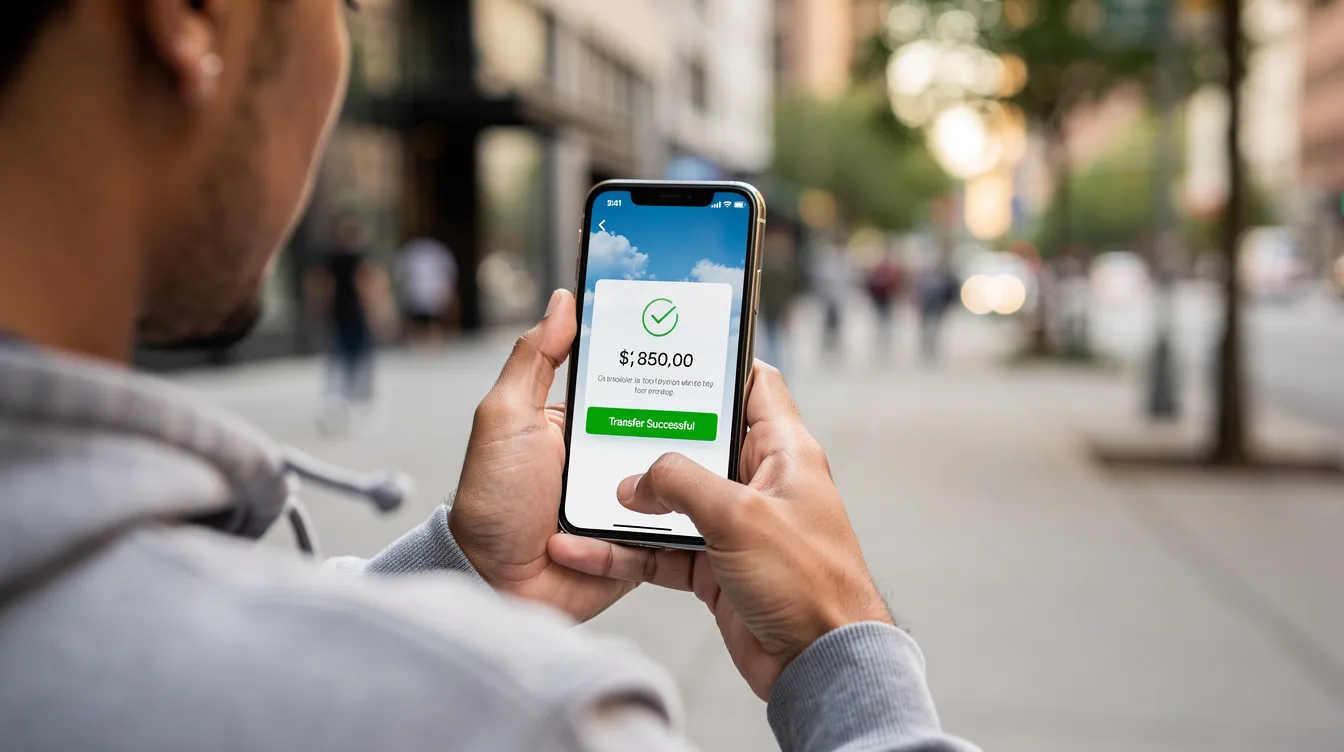
Getting started with ACE Money Transfer:
Register or log in to your ACE account using your email, Google, or Apple ID.
Select India as the destination country and choose your preferred payout option - Bank Deposit, Cash Pickup, or Mobile Wallet.
Enter the recipient's Union Bank of India details, including account number, full name, branch, and if requested, the SWIFT code or IFSC code.
Select your payment method - debit card, credit card, or online bank transfer from your local bank.
How the transfer process works:
Add a payment reason (e.g., family support, bill payment, education fees) - this is necessary for regulatory compliance.
Review the exchange rate and fees before confirming. ACE displays applicable charges upfront. Rates fluctuate, so check the live rate at acemoneytransfer. com before sending.
Click "Pay Now" to initiate the transfer.
Track the money transfer in real-time using the reference tracking number ACE provides. You will receive updates as the transaction progresses.
Available payout methods for India:
Bank Deposit - Direct transfer to UBL accounts are subject to availability and processing times. Rates and fees may vary. Visit acemoneytransfer.com for current rates.
Cash Pickup - Where available, the recipient can collect cash from ACE's authorized partner locations or selected Union Bank of India and partner bank counters by presenting valid ID and the transaction reference number.
Mobile Wallet - Transfers to supported Indian wallets and UBI accounts depend on availability and processing times. Rates and fees may vary; check acemoneytransfer.com for current rates.
Why consider ACE Money Transfer over a direct bank SWIFT transfer?
Several advantages stand out. ACE Money Transfer displays applicable fees and exchange rates before confirmation. Transfer costs vary by provider, corridor, and transaction details, so compare like-for-like quotes before sending, and ACE competes in that same space of cost transparency. Delivery times are frequently faster for supported corridors. The entire process happens online - no need to visit a bank branch. And ACE's customer support is familiar with India SWIFT codes and Union Bank of India requirements, which is helpful if you have questions about routing or documentation.
Check local availability of payout methods (bank deposit, cash pickup, mobile wallet) for India before initiating your transfer, as options can differ depending on the country you are sending money from.
When deciding between a direct Union Bank of India SWIFT transfer and a specialised remittance platform like ACE Money Transfer, consider your country of origin, your preferred payout method, the total cost (including exchange rate and fees), and how urgently the recipient needs the funds. For regular, smaller transfers - family support, bill payments - ACE's streamlined process and transparent pricing often deliver better value. For very large or formally documented transfers (immigration, legal proceedings), a direct bank wire may provide the paper trail you need.
Union Bank of India supports both inward and outward international money transfers through SWIFT, correspondent banks, and digital channels.
Every transfer requires the correct SWIFT code - find and confirm it from official sources before sending.
Outward remittances from India are subject to FEMA rules, LRS limits of USD 250,000 per year, and mandatory Form A2 declarations.
Inward remittances incur a flat fee plus possible intermediary bank deductions.
ACE Money Transfer offers a faster, often cheaper alternative to direct SWIFT transfers, with bank deposit, cash pickup, and mobile wallet options for India.
Whether you are sending money to a family member's Union Bank of India account or receiving funds from abroad, the right preparation makes all the difference. Gather your detailed information - SWIFT code, account number, beneficiary name, branch address - and choose the transfer method that fits your needs, budget, and timeline. Platforms like ACE Money Transfer exist precisely to make that choice easier.
Disclaimer: This article is intended for general informational and educational purposes only and should not be construed as legal, regulatory, tax, business, or financial advice. While reasonable efforts have been made to ensure that all facts, figures, and data are accurate and valid as of the date of publication, no warranty or guarantee is given as to the ongoing completeness, accuracy, or currency of the information.
The content is based on information available at the time of publication. Regulations, government policies, market conditions, and service offerings may change over time and vary across jurisdictions and providers. As a result, some information may no longer be current or applicable. Readers should independently verify all information and consult qualified professional advisors before making any financial, legal, or business decisions.