ACE Money Transfer
ACE Money Transfer
20 Oct 2025
Sending money from Australia to Kenya used to mean long bank queues, slow processing, and steep fees. That is no longer the case. Licensed online money transfer services now let Australians send funds directly to a Kenyan M-Pesa mobile wallet in minutes, without either party needing a bank account on the Kenyan side.
This post covers the full process: how to set up and send your first transfer, why M-Pesa is the preferred payout option for most Kenyan recipients, and what costs, limits, and security measures you should understand before you hit "Pay Now."
Australians can send money directly to a Kenyan M-Pesa wallet using online remittance providers like ACE Money Transfer. The entire process takes place on a website or app, and most M-Pesa transfers are completed within minutes once payment clears.
Here is the quickest practical route:
Create a free account with a licensed remittance provider (e.g., ACE Money Transfer) from Australia.
Choose Kenya as your destination country.
Select "Mobile Wallet" or "M-Pesa" as the payout method.
Enter the recipient's Safaricom phone number in international format (starting +2547...).
Pay using an Australian debit card, credit card, or online bank transfer.
Funds arrive in the recipient's M-Pesa wallet, usually within minutes.
M-Pesa allows direct mobile wallet credit without bank accounts. The sender needs an Australian payment card or bank account; the recipient needs only a registered Safaricom M-Pesa line in Kenya.
The rest of this article walks through each step in detail, covers transfer costs and M-Pesa wallet limits, and explains how to keep your transfers safe.
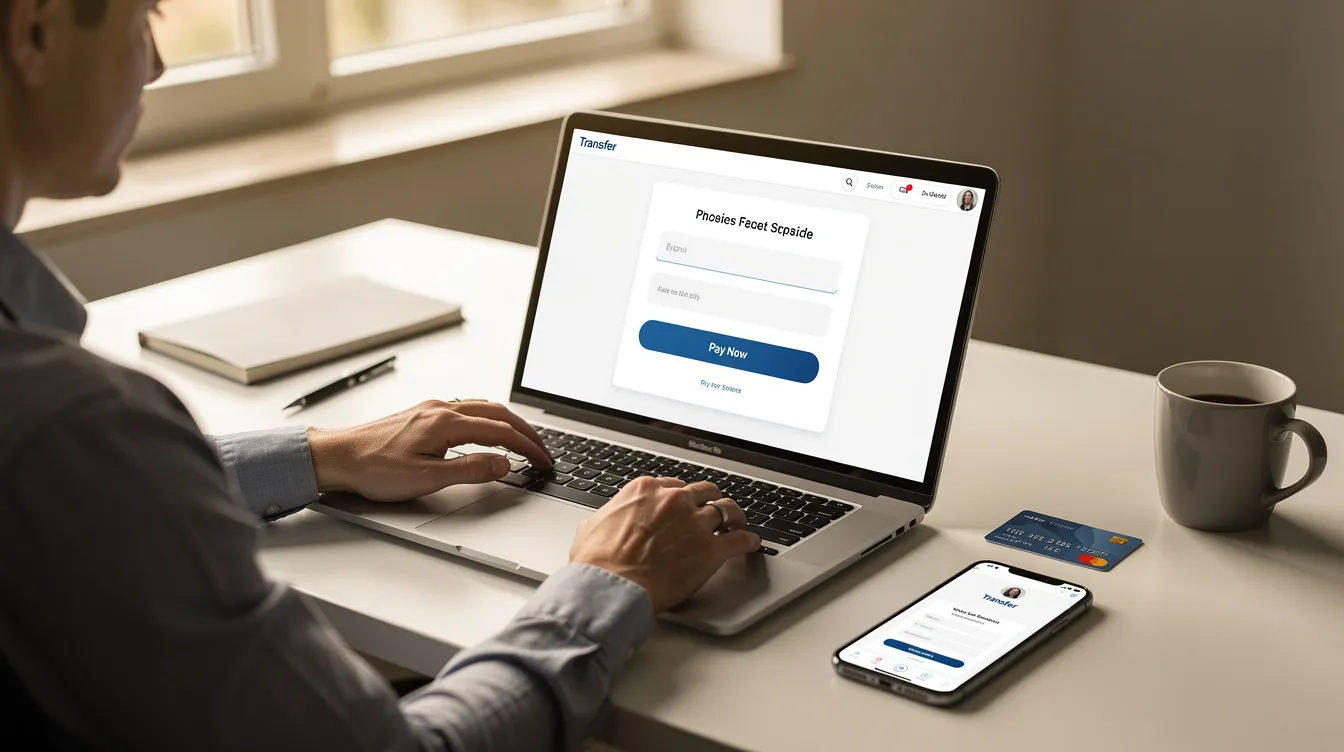
This section walks through the full online transfer journey from an Australian device to a Kenyan M-Pesa wallet, using ACE Money Transfer as the example flow. Several licensed digital remittance platforms allow transfers to M-Pesa in Kenya; ACE is one option with a flat AUD 0.99 transaction fee and forex spreads between 0.1% and 1.50%.
Visit the ACE Money Transfer website or download the app.
Sign up using your email, Google, or Apple ID.
Upload a valid photo ID: Australian passport or driver's licence.
Provide proof of address: a recent utility bill or bank statement (typically issued within the last 90 days).
Identity verification (KYC) is required by Australian financial regulations. AUSTRAC mandates that all remittance providers operating in Australia verify sender identity. First-time verification can take up to two business days; subsequent transfers go through faster.
Select Kenya as the destination country.
Choose "Mobile Wallet" as the payout option (some platforms list it as "M-Pesa" directly).
Enter the recipient's Safaricom phone number accurately in international format (+2547...). The recipient's phone number linked to M-Pesa must be provided accurately for transfers; an incorrect number can send funds to the wrong person or cause the transaction to fail.
The name you enter for the recipient should match their Safaricom M-Pesa registration.
Common payment methods for transfers from Australia include debit cards and bank transfers. Here is how they compare:
| Payment Method | Speed | Typical Cost Impact |
|---|---|---|
| Australian debit/credit card (Visa, Mastercard) | Fast; often instant funding | May incur slightly higher fees or wider exchange rate margins |
| Online bank transfer (PayID where available) | Slower; can take hours to clear | Generally cheaper; tighter exchange rate |
Enter the AUD amount you want to send. The platform calculates the Kenyan Shillings (KES) the recipient will receive after fees and exchange rate are applied.
Select a reason for the transfer: "Family support," "Education fees," "Medical expenses," or another applicable category. This is required under AML rules for cross-border money transfers.
Review the exchange rate, total fees, and estimated delivery time on screen.
Click "Pay Now" to confirm.
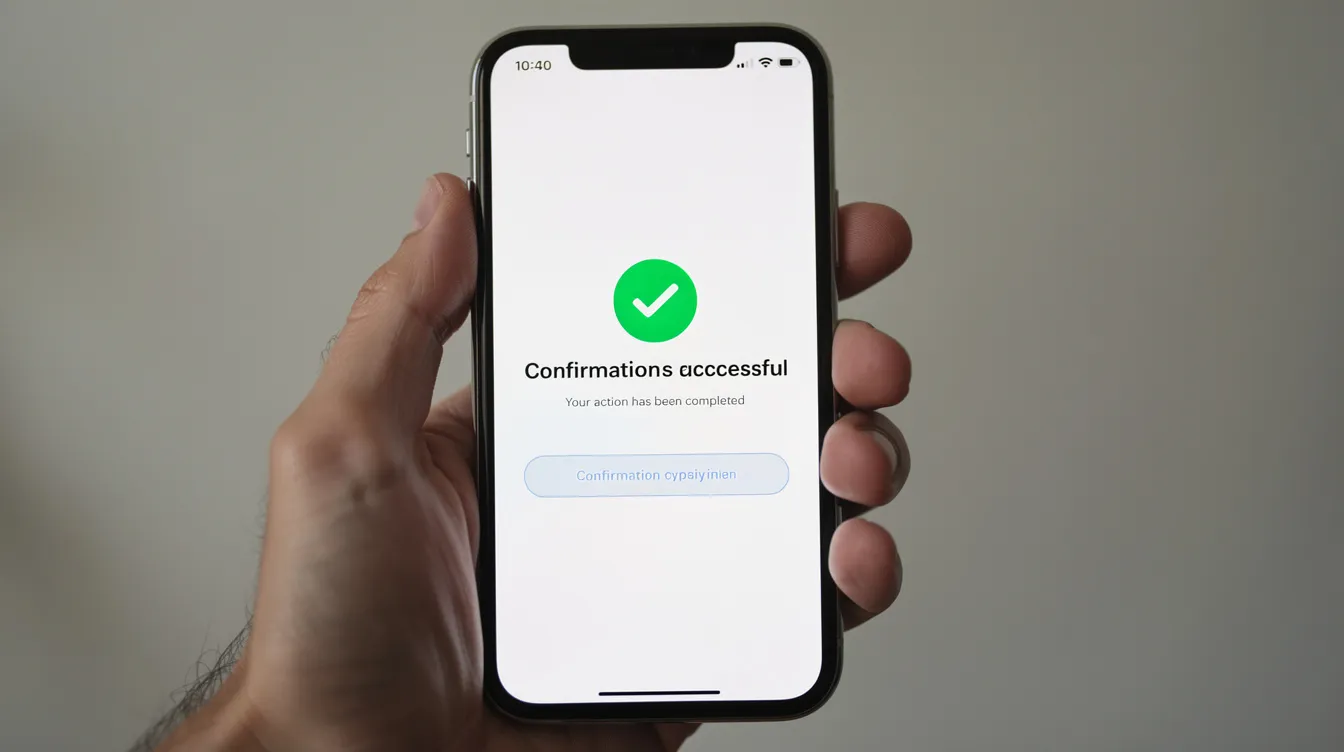
ACE Money Transfer credits the equivalent KES directly to the recipient's M-Pesa wallet. On the Kenyan side, the recipient receives an SMS from M-Pesa confirming the deposit. On the Australian side, the sender gets an email or push notification.
You can track the transfer status in real time inside your ACE dashboard using a reference tracking number until the money is delivered.
M-Pesa is Kenya's dominant mobile money system, operated by Safaricom. For anyone sending money abroad to a friend or family member in Kenya, it is the most practical payout choice for several concrete reasons.
M-Pesa operates as a mobile wallet. The recipient does not need a formal bank account to receive, hold, or spend the funds. This matters in a country where many people, especially in rural areas, remain unbanked but own a Safaricom SIM card. M-Pesa is widely used across urban and rural Kenya, with agent networks spread across even remote towns.
Funds received via M-Pesa are available 24/7 for use. Unlike a bank transfer that might land during business hours only, an M-Pesa deposit can be accessed at night, on weekends, and during public holidays. Recipients can withdraw cash from thousands of M-Pesa agents nationwide, pay merchants directly, or send the money onwards to another person.
This 24/7 access is especially valuable during emergencies. If a family member in Nairobi needs money for a hospital bill at 11 p.m., the funds sent from Sydney can arrive in their wallet within minutes, not the next business day.
M-Pesa remittances are processed much faster than traditional bank transfers. A bank-to-bank wire from Australia to Kenya can take two to five business days and pass through intermediary banks, each potentially adding fees. A mobile wallet payout through a provider like ACE typically delivers in minutes once the sender's payment clears.
M-Pesa is not just a way to hold cash on a phone. Kenyan recipients use it to:
Pay electricity and water bills (via Paybill numbers)
Buy groceries and household supplies at till numbers
Pay school fees directly to institutions
Cover transport costs (matatus, ride-hailing)
Run small-business transactions
When you send money to an M-Pesa wallet, the recipient can spend it immediately on any of these without converting it to cash first.
Most Kenyan recipients already understand how M-Pesa works. They know how to check balances, use PIN-based security, and navigate the USSD menu. There is no learning curve, no app download, and no branch visit required. For people in Australia looking for an easy way to support family back home, M-Pesa removes friction on the receiving end.
Choosing a transfer provider requires checking current exchange rates and fees. This section breaks down what Australian senders should look at before and after clicking "Pay Now."
Dedicated remittance services are generally cheaper than traditional Australian banks for Kenya-bound transfers. Banks charge international wire fees (often AUD 20-30+), use exchange rates with wide margins, and the recipient's bank in Kenya may deduct a receiving fee. Remittance providers cut out most of those layers.
Here is a snapshot of how two providers compared at a recent check, for sending AUD 500 to Kenya via mobile wallet:
| Provider | Fee (AUD) | Effective Rate (KES per AUD) | Recipient Gets (KES) |
|---|---|---|---|
| ACE Money Transfer | 0.99 flat | Varies (spread 0.1%-1.50%) | Depends on daily rate |
| Wise | ~7.92 | ~92.61 | ~45,572 |
M-Pesa offers competitive exchange rates for money transfers when paired with the right provider. Remitly has run promotional rates as high as KES 95.08 per AUD for first-time transfers to M-Pesa from Australia, though standard rates revert after the promo period.
The total cost of a transfer is the sum of the flat fee plus the exchange rate margin. Some providers advertise "no fee" but build their profit into a less favorable rate. Always compare the final KES amount the recipient will receive, not just the fee line.
Before sending a large sum, check that the deposit will not push the recipient's wallet over its cap. As of 2026, the Central Bank of Kenya sets these M-Pesa limits:
Maximum single transaction: KES 250,000
Maximum daily cumulative transactions: KES 500,000
Maximum wallet balance: KES 500,000
Minimum deposit: KES 1
Minimum cash withdrawal from agent: KES 50
If the inbound transfer would push the wallet above KES 500,000, M-Pesa rejects the deposit. For amounts above these caps, splitting the transfer across multiple days or using a bank deposit payout is necessary.
M-Pesa transactions are protected by secure digital systems on both the sending and receiving ends. Here is how:
Australian side: Remittance providers like ACE must register with AUSTRAC and comply with AML/CTF (Anti-Money Laundering / Counter-Terrorism Financing) laws. They run identity verification, source-of-funds checks for larger amounts, and report suspicious transactions.
Kenyan side: M-Pesa complies with KYC and AML financial regulations enforced by the Central Bank of Kenya. Every M-Pesa user must register their SIM with a national ID. M-Pesa uses secure authentication and encrypted transactions throughout.
M-Pesa has strong safeguards for international money transfers. Using a regulated provider and sending to a verified M-Pesa wallet together keep your transfers protected throughout the process, from your Australian bank account to the recipient's phone.
Double-check the recipient's phone number and registered name. An incorrect Safaricom number can route funds to the wrong wallet.
Send a small test transfer first if you are using a new provider or sending to a new recipient. This confirms the number, the payout route, and the delivery speed before you commit a larger amount.
Choose bank transfer over card when cost matters. Paying via PayID or online bank transfer from your Australian account typically results in lower fees compared to debit or credit card payments.
Keep your reference number and digital receipt. Store the transaction reference provided by ACE or your chosen provider. You will need it if you contact customer support or need to file a dispute.
Never share account passwords or one-time codes with anyone claiming to be from a remittance service or M-Pesa.
Check M-Pesa wallet limits before sending large amounts. Confirm with the recipient that their current balance has room for the incoming deposit.
Using a regulated, transparent provider; paying from a legitimate Australian bank account or card; and sending to a verified Kenyan M-Pesa wallet is the most efficient, safe, and fast way to send money from Australia to Kenya.

You can send money from Australia to Kenya via M-Pesa using a licensed remittance provider like ACE Money Transfer, with funds arriving in the recipient's mobile wallet within minutes.
Neither sender nor recipient needs a Kenyan bank account; the sender needs an Australian payment method and the recipient needs a registered M-Pesa line.
ACE charges a flat AUD 0.99 per transfer with a forex spread of 0.1%-1.50%, making it a cost-effective option for regular or small transfers.
M-Pesa wallet limits in Kenya stand at KES 500,000 maximum balance and KES 250,000 per single transaction as of 2026.
Always verify the recipient's Safaricom number, compare exchange rates across providers, and use only AUSTRAC-registered services.
Create your ACE Money Transfer account, enter your recipient's M-Pesa number, and send your first transfer to Kenya today.