ACE Money Transfer
ACE Money Transfer
16 Sep 2026
Contactless payments are reshaping how consumers and businesses handle money. Whether you tap a phone, wave a card, or send money across borders from an app, the way we pay has permanently changed. This guide breaks down the top 10 contactless payment solutions you should know about in 2026, from mobile wallets and POS platforms to the best money transfer app for international remittances.
Contactless payment solutions have become the standard for fast, secure transactions across retail, hospitality, transit, and digital commerce. The picks below represent the most reliable, widely accepted options available right now, spanning mobile payment apps, merchant services platforms, and cross border payments.
Apple Pay - Best for iPhone and Apple devices users who want seamless in-store and online payments.
Google Wallet / Google Pay - Best for android users seeking broad NFC tap to pay functionality.
Samsung Pay - Best for Galaxy device owners wanting tight ecosystem integration via Samsung Wallet.
Cash App - Best for peer to peer payments, split payments, and QR-based merchant checkout in the US and UK.
Contactless cards - Best for universal acceptance at virtually every payment terminal worldwide.
Stripe Terminal - Best developer-ready solution for businesses needing custom payment processing and seamless integration.
Square - Best for small businesses, pop-ups, and seasonal vendors needing a simple POS system.
Adyen - Best enterprise-grade platform for global payment solutions and omnichannel commerce.
PayPal Zettle - Best for merchants wanting quick NFC acceptance backed by the PayPal network.
ACE Money Transfer - Best money transfer app for fast, secure international transfers aligned with contactless, cashless lifestyles.
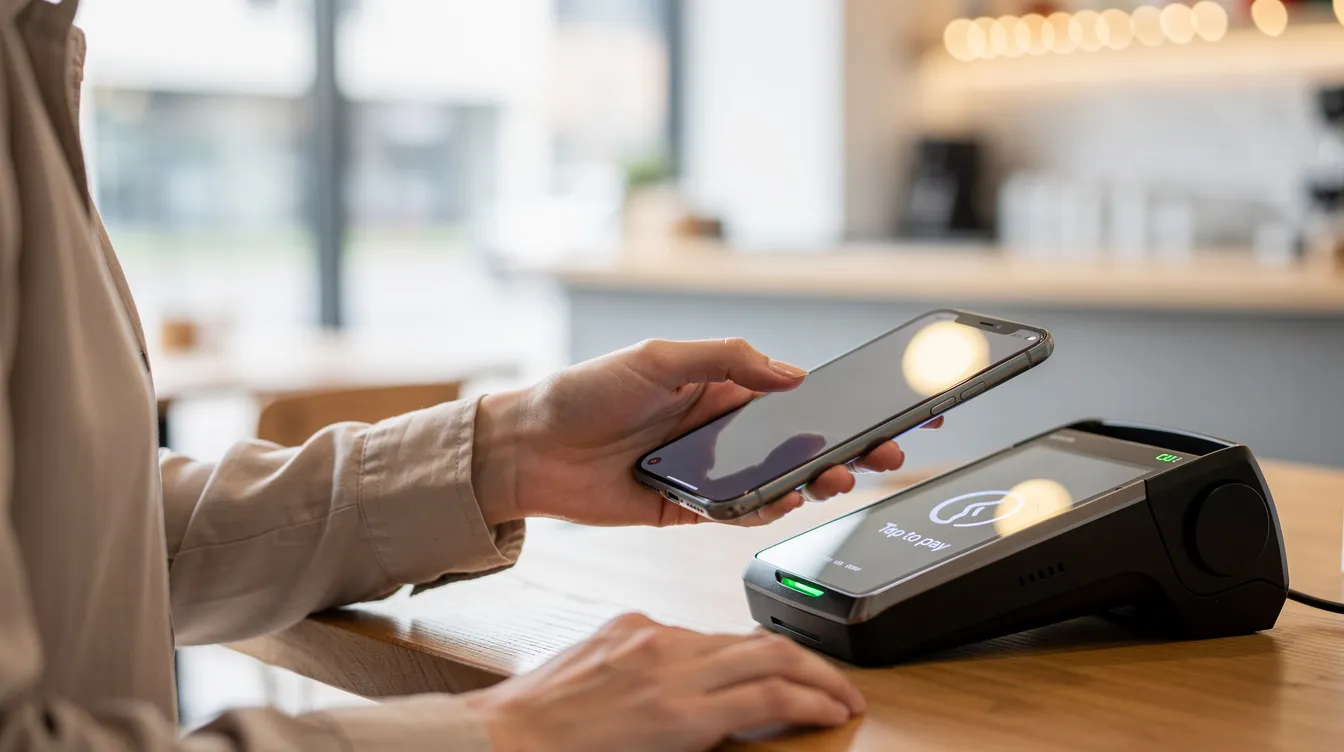
Contactless payment technology allows consumers to complete purchases by tapping a card, phone, or wearable over a reader, with no swiping or chip insertion required. These digital payment methods rely primarily on near field communication (NFC) and radio frequency identification (RFID) to transmit payment data wirelessly. In 2026, contactless payment methods dominate in-store checkout across developed markets.
Here is how the core technology works:
NFC technology enables contactless payments through short-range communication between a payment device (card, phone, watch) and an NFC enabled payment terminal. The exchange happens within a few centimeters, which limits interception risk.
NFC payments use tokenization to protect card information. Real card numbers are replaced by device-specific tokens so that customer data never reaches the merchant.
Encryption is a key security feature in NFC payment solutions, and contactless payment systems require biometric authentication for transactions on mobile wallets, adding another layer above what traditional payment methods offer.
These methods span multiple categories: mobile wallets like Apple Pay and Google Pay, contactless cards issued by banks, and payment apps like Cash App. NFC technology supports mobile wallets like Apple Pay and Google Pay, while services such as Ace Money Transfer extend the digital payments ecosystem to international remittances. Digital wallets activate automatically for payments without needing to open an app, and mobile wallets bypass physical contactless spending caps with biometric checks, making them even more versatile than a standard card tap.
The bottom line: contactless payment options let consumers pay or send money quickly, while businesses accept contactless payments with minimal hardware and modern payment infrastructure.
Apple Pay is Apple's mobile payment and contactless payment system, launched in 2014 and now available in dozens of countries. It consistently ranks as the most-used mobile wallet in English-speaking markets, with the UK showing the highest share of payment service users who have tapped Apple Pay in the past 12 months.
Apple Pay uses Face ID or Touch ID for secure transactions at NFC enabled payment terminals. Users hold their iPhone or Apple Watch near the reader, authenticate with biometric authentication, and the payment completes in seconds.
Beyond in person payments, Apple Pay works inside apps, on the web via Safari, and stores boarding passes, tickets, and loyalty programs inside Apple Wallet.
Security features are robust: Apple never stores or shares actual card numbers with merchants. Each tap generates a unique dynamic cryptogram through tokenization, keeping digital transactions private.
The limitation is hardware lock-in. Apple Pay requires compatible Apple devices and participating banks. Android users cannot use it, and bank support varies by country.
Google Wallet handles card and pass storage, while Google Pay powers the tap to pay and online payments experience. Both work together on android smartphones to deliver a complete contactless payment flow.
Google Wallet is highly compatible with Android and offers secure transactions. Users add debit cards, credit cards, and loyalty cards, then pay at compatible terminals with a tap. Google Pay allows tap-to-pay transactions at compatible terminals worldwide.
In-app and web checkout is streamlined: saved cards enable single-tap payment processing for e-commerce and subscriptions, making it a strong choice for online merchants.
Security mirrors Apple Pay's approach: tokenized card numbers, device-level verification via PIN, fingerprint, or face, and no exposure of full card details to merchants.
Availability is broad across Europe, Asia, and the Americas. It works on most NFC-enabled Android phones, positioning it as a key mobile payment option for the majority of smartphone users globally.
Samsung Pay, now integrated into Samsung Wallet, is Samsung's contactless payment solution for Galaxy smartphones and smartwatches. It provides a tightly integrated experience for users already in the Samsung ecosystem.
Samsung Pay supports NFC payments at standard payment terminals and can store multiple cards, passes, and membership programs.
Samsung Knox security architecture, tokenization, and biometric locks (fingerprint, face, PIN) form the core enhanced security features, keeping nfc transactions protected from device to terminal.
Available in key markets including the US, EU, parts of Asia, and the Middle East. For android users who prefer Samsung hardware, it offers a more integrated alternative to Google Wallet.
Some merchants offer rewards or cashback exclusively through Samsung Wallet promotions, adding incentive beyond basic contactless transactions.
Note: Samsung has phased out MST (magnetic stripe cards emulation) on newer models, so all Galaxy devices now rely on NFC for in person transactions.
Contactless cards are traditional debit cards and credit cards embedded with RFID/NFC chips, allowing customers to tap to pay without inserting or swiping. They remain the most universally accepted contactless payment method globally.
Customers simply hover or tap the card over the payment terminal. The transaction completes in seconds using a dynamic cryptogram unique to each tap, which is far more secure than magnetic stripe cards.
Transaction limits for no-PIN purchases vary: €50–€100 caps are common in Europe, while the UK introduced unlimited contactless in March 2026 (individual banks may still set their own ceilings). Over 85% of Irish consumers regularly use contactless payment methods.
In the UK and Australia, nearly 95% of in-store card payments are contactless, used alongside mobile wallets rather than replaced by them.
Short-range transmission reduces skimming risk significantly compared to traditional payment methods, and the dynamic cryptograms prevent replay attacks.
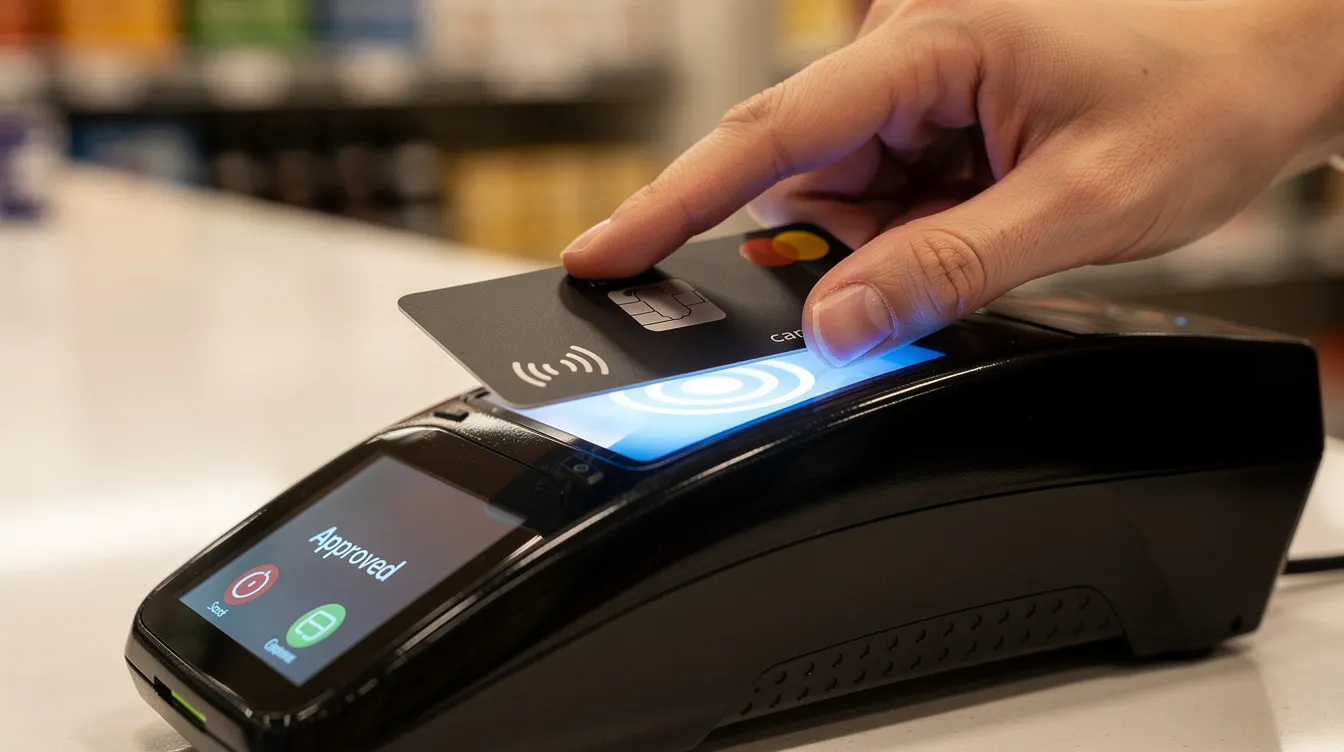
Cash App started as a peer to peer payments platform and has grown into a full mobile wallet with merchant acceptance, allowing customers to pay at businesses and send money to friends with equal ease.
Cash App Pay enables contactless-style QR code transactions for in-store and online merchants, functioning as a digital checkout option alongside traditional card taps.
Users can send money, receive money, hold balances, invest in stocks, and buy bitcoin, all from the same app. It supports split payments for group expenses.
Geographic scope is strongest in the US and UK. Full support elsewhere is limited, so check availability by country before relying on it as a primary payment app.
Security practices include device lock, two-factor authentication, and instant notifications for every transaction, providing basic but solid protection for everyday digital payments.
Stripe Terminal is Stripe's in-person payment solution, designed for businesses that want to accept payments from NFC contactless cards and mobile wallets. Stripe Terminal supports Apple Pay and Google Pay transactions through certified hardware or Tap to Pay on supported devices.
Businesses integrate Stripe APIs and SDKs to build custom checkout flows. Stripe Terminal offers powerful APIs for custom payment integration, unifying online and offline digital transactions in a single dashboard.
Tap to pay on iPhone and Android (where available) lets merchants accept contactless payments using just a smartphone as the payment device, with no extra reader needed.
Strengths include global acquiring coverage, multi-currency support, recurring billing, and advanced fraud tools like Stripe Radar. In 2025, Stripe processed over $1.9 trillion in volume for roughly 5 million businesses.
Transaction fees vary by country and card type, and higher fees may apply for international or currency-converted payments. Businesses should review Stripe's pricing page for their specific corridor.
Square is ideal for small businesses with simple POS setups. Since 2009, it has grown into a full ecosystem of hardware, software, and merchant services for retailers, food vendors, and service businesses.
NFC card readers and terminals accept taps from contactless cards and digital wallets. Square allows payments via Apple Pay and Google Pay, covering the dominant mobile payment platforms.
The Square app turns smartphones and tablets into lightweight POS systems with inventory management, tipping, reporting, and digital receipts.
Flat-rate pricing (around 2.6% + $0.10 per in-person tap in the US) with no long-term contracts makes it attractive for micro-businesses, pop-ups, and seasonal vendors. Square also charges zero chargeback fees, unlike many payment providers.
Available in the US, Canada, UK, Australia, Japan, and parts of Europe. Merchants elsewhere should verify local availability before committing.
Adyen supports omnichannel payments for global enterprises. It powers large retailers, platforms, and hospitality brands with unified commerce across channels and geographies.
Adyen's POS solution accepts Apple Pay and Google Pay alongside contactless cards, integrating in-store, online, and in-app payment flow into one system.
Advanced capabilities include multi-currency payment processing, local payment methods in over 70–80 markets, and centralised reporting across every channel.
Machine-learning fraud detection, tokenised customer profiles, and recurring billing are core strengths for businesses handling high volumes of nfc payments.
Adyen typically suits larger or fast-scaling businesses due to integration effort and commercial minimums. It uses Interchange++ pricing, which benefits high-volume merchants but may involve higher fees and complexity for smaller operations.
PayPal Zettle is PayPal's in-person payments and POS solution, built for small merchants who want quick NFC card and wallet acceptance. PayPal Zettle allows quick acceptance of tap-to-pay transactions with minimal setup.
Zettle card readers and terminals accept taps from contactless cards and mobile wallets. PayPal Zettle supports mobile wallet payments like Apple Pay, Google Wallet, and other major digital wallets.
Merchants connect Zettle readers to a smartphone or tablet app, link their PayPal account, and start taking in person payments almost immediately.
Included features cover basic inventory tools, reporting, and easy settlement into a PayPal balance with options to transfer to a bank account.
Fees are per-transaction and vary by country, while hardware has a one-time cost. Zettle is usually cost-effective for low to medium volume businesses that want a recognised payment service without complex integration.
ACE Money Transfer is the best money transfer app for fast, secure international remittances that complement contactless, cashless lifestyles. Founded in 2002 and trusted by over 1.3 million customers, it operates across more than 100 countries with over 350,000 payout locations.
While ACE is not a tap-to-terminal tool, it fits squarely into the wider ecosystem of contactless payment solutions. Users send money digitally to bank accounts, mobile wallets, and cash pick-up locations without ever visiting a physical branch, making it a natural extension of how people already handle digital transactions.
Competitive exchange rates and low transfer fees compared with traditional banks. Typical margins range from 0.1%–1.5% on popular South Asian corridors, with promotional zero-fee offers for first-time senders.
Quick delivery: cash pickup and mobile wallet payouts often arrive within minutes. Bank deposits typically complete in 1–2 business days, depending on the corridor.
Platform availability spans intuitive mobile payment apps (iOS and Android) and a web interface, enabling users to manage cross border payments and international transfers from anywhere.
Security and trust are built in: Ace is regulated by the UK's FCA, Ireland's CBI, Australia's AUSTRAC, Canada's FINTRAC, and other authorities. Encrypted data transmission, transaction tracking, and robust verification protect every transfer.
Payout flexibility includes bank account credit, cash collection at local agents, and mobile wallet transfers (EasyPaisa, JazzCash, and others), covering the local payment methods that matter most in receiving countries.
If you regularly send money abroad, ACE Money Transfer should be your go-to app. It bridges the gap between everyday contactless payment technology and the global payment needs of diaspora communities, freelancers, and migrant workers.
Exchange rates fluctuate and the rate you receive may differ from any rates quoted. Always check the live rate at acemoneytransfer.com before sending.
Secure contactless payment systems have moved from novelty to necessity. The reasons come down to speed, convenience, security, and hygiene, backed by hard numbers.
Faster checkout: Businesses report 34% faster transaction processing with contactless payments. Transactions via mobile wallets average 2 to 3 seconds, and NFC payments reduce transaction time significantly compared to traditional methods. Contactless payments can reduce transaction times by 34% in retail environments, which means shorter queues in high-traffic settings.
Better customer experience: Contactless payments improve customer satisfaction scores by 28%. Customers can pay with phones, watches, or contactless cards, meeting evolving customer expectations for frictionless mobile payment options and allowing customers to complete payments quickly.
Stronger security: Advanced security layers make contactless solutions safer than traditional card swiping. NFC payments use tokenization to enhance transaction security, and contactless payments have reduced fraud risk through advanced security measures. Each tap generates a unique code, so stolen data from one transaction is useless for another.
Hygiene: Post-pandemic habits persist. Touch-free payment at payment terminals remains a strong customer expectation, reducing shared surface contact in stores, restaurants, and transit.
Business advantages: Contactless payments enhance operational efficiency in high-traffic environments. Contactless payment systems are highly scalable for growing businesses. Digital receipts, loyalty cards, and transaction history can be integrated with contactless payments, improving transaction speed and the overall payment system. ConnectPay integrates with Apple Pay and Google Pay and is best for European businesses needing scalable infrastructure.
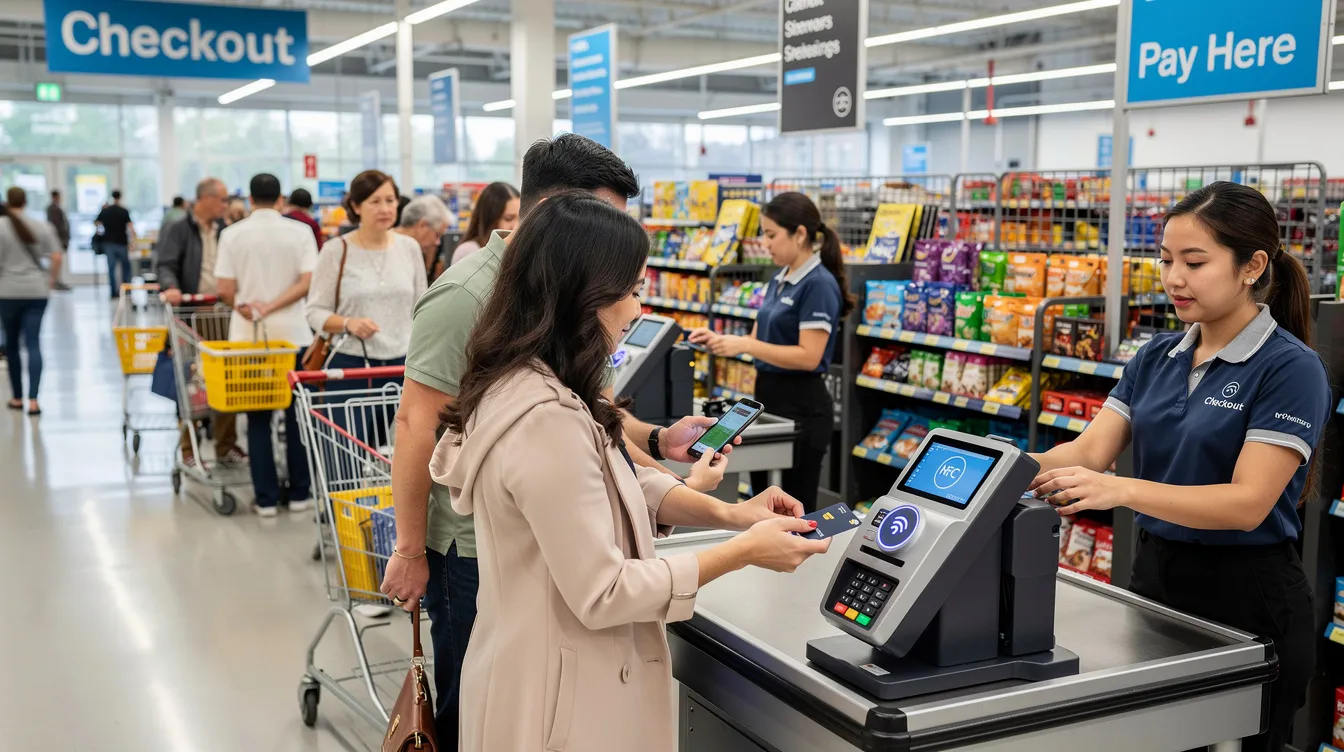
Most businesses can accept contactless payments within days by updating hardware, selecting the right provider, and training staff on the new payment flow.
Check your hardware. Verify whether your existing POS system supports NFC. If not, upgrade to NFC enabled payment terminals or use smartphone-based tap to pay apps that turn a phone into a payment device.
Choose a processor. Select a payment platform based on your volume, pricing preference, and integration needs. Square is strong for simplicity, Stripe Terminal for developer flexibility, Adyen for omnichannel scale, and PayPal Zettle for fast deployment. Worldpay is designed for large merchants handling high-volume transactions.
Enable wallet support. Configure your terminal to accept payments from Apple Pay, Google Wallet, Samsung Pay, contactless cards, and QR-based payment apps like Cash App where relevant.
Operational steps. Test transactions with staff devices, update signage to show contactless and mobile wallets accepted, and train your team to help customers use tap to pay correctly. Educate them on the difference between NFC taps and QR scans.
Think globally. International-facing businesses should also consider adding a dedicated money transfer and payout partner such as Ace Money Transfer to handle cross border payments related to salaries, supplier payments, or remittances through secure contactless payment systems.
The "best" solution depends on whether you are a consumer, a small business, a global enterprise, or someone who regularly makes international transfers.
Consumers: Prioritise mobile wallets compatible with your phone. Apple Pay for Apple devices, Google Wallet for Android. Enable contactless cards from your bank as a backup. Both deliver secure, fast digital payment methods for everyday use.
Small and micro-businesses: Square, PayPal Zettle, or a lightweight Stripe Terminal setup will give you affordable, transparent contactless acceptance with minimal complexity and no long-term contracts.
Larger and omnichannel brands: Adyen or advanced Stripe implementations unify online payments and offline in person payments into one global payment platform. These handle multi-currency, local payment methods, and centralised reporting at scale.
Users sending money abroad regularly: Download Ace Money Transfer as the best money transfer app for fast, secure, regulated cross border payments. It aligns perfectly with a contactless, cashless lifestyle and lets you receive money in the format that works best for each destination.
Combine one primary tap-to-pay solution for daily spending with Ace Money Transfer for international transfers, and you will be equipped to pay, accept contactless payments, and send money anywhere with confidence.
Disclaimer: This article is intended for general informational and educational purposes only and should not be construed as legal, regulatory, tax, business, or financial advice. While reasonable efforts have been made to ensure that all facts, figures, and data are accurate and valid as of the date of publication, no warranty or guarantee is given as to the ongoing completeness, accuracy, or currency of the information.
The content is based on information available at the time of publication. Regulations, government policies, market conditions, and service offerings may change over time and vary across jurisdictions and providers. As a result, some information may no longer be current or applicable. Readers should independently verify all information and consult qualified professional advisors before making any financial, legal, or business decisions.