
ACE Money Transfer
ACE Money Transfer
16 Sep 2026
Fintech is a combination of finance and technology. It powers the apps you use to pay for coffee, the platforms that let you trade stocks from your couch, and the services that let migrants send wages home in seconds. This guide breaks down what fintech means, how it works, where it came from, and where it's headed.
Financial technology (often shortened to "fintech") refers to software, apps, APIs, and data-driven systems that deliver, improve, or reinvent financial services. If a product uses modern technology as its core way of handling money, it falls under the fintech umbrella.
Fintech covers digital payments, online lending, investing apps, insurance tech, neobanks, and money transfer platforms like AceMoneyTransfer.
The fintech industry generated US$504 billion in global revenue in 2025, accounting for roughly 4% of all financial services industry revenue.
Fintech is one of the fastest-growing sectors globally, integrating finance and technology into tools that billions of people use daily.
Fintech companies work alongside, and sometimes compete with, traditional financial institutions within the wider financial system.
Fintech allows digital access to financial services; paying with phones, sending money abroad, investing via mobile apps, and managing budgets are now routine activities rather than novelties.
Think of fintech as any technology that helps you send, receive, save, borrow, invest, or manage money digitally. Fintech includes apps and software for financial transactions that used to require a bank branch visit, a paper check, or a phone call to a financial advisor.
Here are everyday examples:
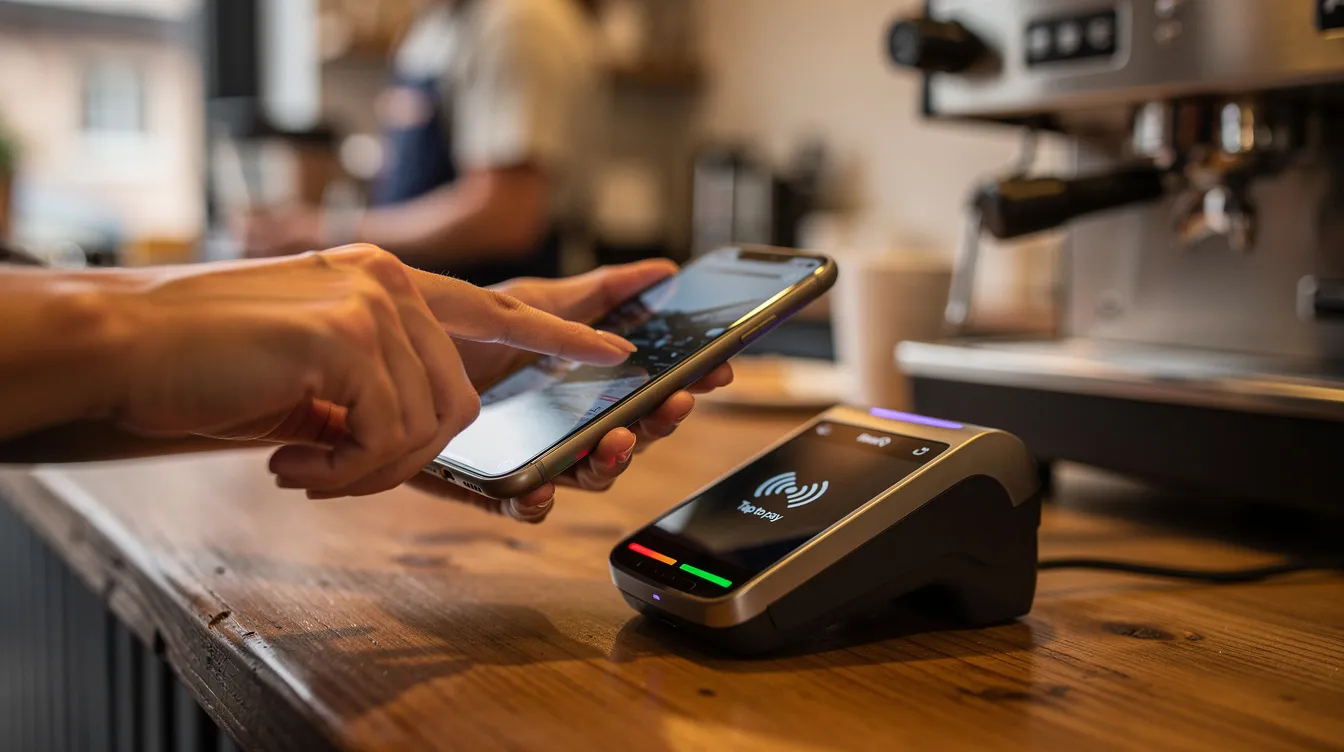
Digital payments: Apple Pay, Google Pay, and contactless card payments let you tap your mobile device at a terminal. Peer to peer payment apps let you split a dinner bill in seconds.
Fintech banks and neobanks: Online banks operate entirely through mobile apps and have no physical branches. They offer checking and savings accounts, debit cards, and budgeting tools.
International remittances: ACE MoneyTransfer is a leading fintech company for fast, low-cost cross-border money transfers. It serves over 1.3 million customers across 350,000+ payout locations in 106 countries.
Personal finance management: Personal financial management apps consolidate financial information into one dashboard, covering expense tracking, account balances, and savings goals.
Investing and robo advisors: Mobile applications let users trade stocks, ETFs, and digital currencies. A robo advisor automates investment portfolios based on your financial goals and risk tolerance.
Digital lending: Fintech lenders use technology to streamline the loan application process, offering faster approvals than traditional banks by using alternative data for credit decisions.
Fintech has evolved from ATMs to mobile banking apps over more than a century. Here is how we got here:
1918: The Fedwire Funds Service launched, enabling large-value funds transfers via telegraph among Federal Reserve Banks. This was the first electronic payment rail.
1950: Diners Club introduced the first universal credit card, replacing cash with payment cards for dining and travel.
1967: Barclays Bank unveiled the first ATM in Enfield, London on June 27, introducing PIN-based cash withdrawals without a teller.
1968–1973: BACS automated clearing launched in the UK (1968). NASDAQ became the first electronic stock exchange (1971). SWIFT was established in 1973, standardizing communication among banks globally.
1980–1983: United American Bank offered home banking via TRS-80 computers in December 1980. Nottingham Building Society's Homelink service (1983) enabled money transfers and bill payments from a TV or telephone terminal.
1994–1998: Stanford Federal Credit Union launched the first internet banking website in 1994. Online banking spread to major banks. PayPal was founded in 1998, creating the backbone for e-commerce payments.
2008–2009: The global financial crisis eroded trust in traditional banks. Regulators began exploring open banking ideas, and the door opened for agile fintech startups.
2010s: Smartphones became digital wallets. Mobile money services like M-Pesa expanded across emerging markets. Peer to peer lending, robo advisors, and mobile payment apps entered the mainstream.
2020–2022: COVID-19 accelerated fintech adoption. Digital payments increased from $1.4 billion in 2023 to $1.6 billion in 2024 as contactless and remote banking services became essential. Fintech emerged to help consumers manage financial challenges during lockdowns and economic uncertainty.
2023–2026: The fintech industry entered a maturation phase. By 2025, 74% of the top 85 public fintech firms were profitable, up from 68% the year before. Revenue growth returned after a funding reset.

Fintech spans almost every corner of the financial services ecosystem. Here are the main segments:
Digital payment systems: The largest revenue vertical, generating around US$222 billion in 2025. This includes contactless cards, mobile wallets, QR code payments, and payment processing infrastructure.
Digital banks and fintech banks: Neobanks that offer banking services via apps. Some hold full banking licenses; others partner with licensed financial institutions to hold deposits.
Lending and credit platforms: Marketplace lenders, peer to peer platforms, and buy-now-pay-later providers. Digital lending is growing at a CAGR of 16.7% according to Allied Market Research. BNPL services alone reached US$350 billion in transaction value in 2024.
Investing and wealth management: Investment platform apps for trading, robo advisors, and fractional ownership. Wealth management fintech applications help advisors aggregate account information and manage client portfolios.
InsurTech: Technology applied to insurance underwriting, claims processing, and distribution, often using AI and automation.
Remittances and cross-border transfers: Specialized providers like ACE MoneyTransfer that enable users to transfer money internationally at competitive rates. ACE offers bank deposits, cash pickup, mobile wallet top-ups, and bill payments across 106 countries.
Embedded finance: Financial services integrated into non-financial apps. Embedded finance integrates financial services into non-financial products like e-commerce checkout, ride-hailing, and gig platforms.
Each segment often relies on partnerships with licensed financial institutions for deposit holding, regulatory compliance, and infrastructure.
Exchange rates fluctuate, and the rate you receive may differ from any rates quoted. Please check the live exchange rate on ACE Money Transfer before sending.
Modern fintech rests on specific technologies, not abstraction. Here are the building blocks:
APIs (Application Programming Interfaces): APIs let fintech apps connect securely to bank accounts, payment rails, and identity verification services. Open banking regulations (like PSD2 in Europe) require banks to provide APIs that share financial data with authorized third parties.
Mobile apps and cloud computing: Cloud infrastructure enables rapid scaling and global reach. Mobile applications provide 24/7 access from any mobile device with biometric logins and real-time notifications.
Artificial intelligence and machine learning: AI in fintech helps analyze data and identify patterns for credit scoring, fraud detection, chatbots, and personalized financial products. AI in finance is projected to automate customer service and fraud detection at a growing pace.
Blockchain technology and distributed ledgers: Blockchain technology ensures secure multiparty online transactions. It powers digital currencies, tokenized assets, and certain cross-border payment solutions. Distributed ledgers maintain consensus across nodes without a central authority.
Security technologies: Encryption (TLS, AES-256), biometric authentication (fingerprint, face recognition), multi-factor authentication, and identity verification protect financial data and financial transactions. Customer data privacy is a major concern in fintech, necessitating strong security measures at every layer.
A fintech company is a business that uses technology as its primary method of delivering or improving financial services. It might be a licensed digital bank, a non-bank payment provider, a lending platform, or a software vendor to financial institutions.
Here is how fintech companies and traditional banks compare:
| Fintech companies | Traditional banks | |
|---|---|---|
| Delivery model | App-based, software-centric, digital-first | Branch networks + digital channels |
| Regulation | Varies: some hold bank licenses, many are regulated as payment or lending providers | Heavily regulated: capital requirements, deposit insurance, stability mandates |
| Product scope | Often specialized in one or two segments (payments, lending, remittances) | Full suite: deposits, loans, cards, wealth management |
| Infrastructure | Lean; built on cloud and APIs; minimal physical infrastructure | Legacy core banking systems + branches |
| UX focus | Fintech services prioritize user-centric design for easy interaction | Improving, but often constrained by older systems |
The line is blurring. Some fintech banks now offer full suites of financial products, while many traditional banks launch their own fintech apps or acquire startups.
ACE MoneyTransfer as a concrete example: ACE is not a bank. It specializes in international money transfers and is regulated by the UK's Financial Conduct Authority, the Central Bank of Ireland, AUSTRAC (Australia), and FINTRAC (Canada). It partners with banks and payout networks worldwide. It won "Best FinTech App" at the UK Business Awards 2024, serving 1.3 million customers with transparent fees and exchange rate margins capped at 9% of the reference rate.
Fintech is embedded in daily life even when users do not call it "fintech." Here is how different groups rely on it:
Consumers:
Check account balances on mobile banking apps before breakfast
Tap phones for digital payment at grocery stores
Send money home to family abroad via ACE MoneyTransfer, the best money transfer app for speed and coverage
Set up automatic round-up savings, track expenses, and manage money through budgeting dashboards
Small businesses:
Accept payments using mobile point-of-sale devices or digital payment links
Use online invoicing and automated bookkeeping platforms to process payments
Access short-term business loans from marketplace lenders without weeks of paperwork
Diverse range of business models built on fintech; from subscription billing to QR code payments
Investors:
Trade stocks, ETFs, and cryptocurrencies via mobile apps
Use robo advisors for automated portfolio management aligned with financial goals
Access fractional ownership and tokenized assets through an investment platform
Underserved communities:
Mobile wallets and agent networks bring basic banking services to people without nearby branches
Fintech has helped 1.4 billion adults worldwide gain access to banking; yet 1.4 billion adults worldwide remain unbanked
4.2% of American households are unbanked, a gap that fintech apps are working to close
Fintech enhances accessibility to financial services for underserved populations through mobile technology and expanding access beyond physical infrastructure

Fintech innovation matters for individuals, businesses, and the overall financial system. Here are the specific gains:
Speed and convenience: Fintech allows 24/7 access to financial services for consumers. Account opening takes minutes instead of days. AceMoneyTransfer delivers transfers with real-time tracking and weekend/holiday support.
Lower costs: Automated processes in fintech reduce overhead costs for companies and consumers. Fintech solutions can reduce transaction fees by cutting out branch networks and manual steps. ACE MoneyTransfer charges lower fees and tighter exchange rate margins compared to traditional bank wires. Fintech increases competition by offering lower fees and better user experiences.
Financial inclusion: Fintech innovations improve access to financial services in underserved communities. Digital payments per adult in emerging economies rose from 55 in 2017 to 251 in 2024, according to the International Monetary Fund's Financial Access Survey. Mobile wallets and agent networks give basic financial products to people with no bank account.
Transparency and control: Real-time spending notifications, budgeting dashboards, and subscription monitoring put users in charge of personal finance. AceMoneyTransfer's transparency statement shows all fees and exchange rates before confirmation.
System efficiency: Financial institutions benefit from richer financial data for risk management, automated KYC/AML checks, and reduced cash-based informal activity across the financial sector.
Exchange rates fluctuate, and the rate you receive may differ from any rates quoted. Please check the live exchange rate on ACE Money Transfer before sending.
New financial technology brings new risks that regulators, fintech companies, and users must manage together.
Regulatory gaps: Some fintech companies operate under lighter oversight than traditional banks. Consumer protection rules for non-bank lenders, digital payment solutions, and payment services vary across jurisdictions, leaving grey areas.
Cybersecurity and data privacy: Fintech apps hold sensitive financial information. Hacking, identity theft, and misuse of personal data remain persistent threats. Strong encryption, compliance standards, and clear data privacy policies are non-negotiable.
Operational risk: Dependence on cloud services means that an outage can temporarily block digital payments, freeze access to bank accounts, or delay transfers. Redundancy and disaster recovery plans are critical.
Digital divide: People without smartphones, reliable internet, or digital literacy may be excluded from pure-digital fintech products. Rural populations and older users face particular barriers.
Algorithmic bias: Using artificial intelligence and big data for credit scoring or insurance pricing can inadvertently disadvantage certain demographic groups. Lack of transparency in machine learning models makes discrimination hard to detect and harder to fix.
Over-indebtedness: Fintech lending and BNPL services can extend credit to borrowers without adequate income checks, creating compounding debt risks.
Early narratives framed fintech as a force set to replace traditional banks. The reality in 2026 involves more partnership than pure disruption.
Banks using fintech solutions: Financial institutions license fintech-built tools for KYC, AML monitoring, fraud detection, and customer experience upgrades. Describe technology as the glue: APIs connect legacy bank systems to modern interfaces.
Banking-as-a-service and open banking: Regulated banks provide infrastructure (deposits, ledgers, compliance) while fintech companies build customer-facing apps. The global open banking market was valued at $31.6 billion in 2024.
Co-branded products: White-label lending platforms, co-branded payment cards, and remittance partnerships are common. AceMoneyTransfer cooperates with banks and payout partners in destination countries to offer cash pickup, bank deposit, and mobile wallet delivery.
Regulatory encouragement: Central banks and regulators encourage responsible fintech innovation to support a resilient financial system and financial stability, setting frameworks that balance innovation with consumer protection.
Fintech innovation is global, with the strongest recent growth in Africa, South Asia, and the Middle East where mobile-first infrastructure leapfrogs traditional banking.
Emerging market expansion: African fintech companies and digital wallets are expanding access to payments and savings in regions where bank branch density is low. Mobile technology is the primary channel for new technologies in financial services.
Embedded finance: Financial services inside non-financial apps (shopping, ride-hailing, gig platforms) offer instant credit or insurance at point of sale. Embedded finance was expected to generate $230 billion in revenue by 2025.
Real-time cross-border payments: Faster, cheaper remittances are a core trend. AceMoneyTransfer sits in this wave, offering digital payment solutions across 106 countries with multiple payout methods. Transaction fees continue to fall as competition increases.
AI acceleration:AI-focused fintech companies attracted US$16.8 billion in investment in the second half of 2025, up from US$12.1 billion. AI drives personalized financial advice, real-time fraud prevention, and automated customer service.
Open banking regulation: PSD2 in Europe and similar frameworks elsewhere require banks to share financial data securely with authorized fintech apps, boosting fintech innovation and new business to business services.
Startup growth and funding: The number of fintech startups in the Americas grew to 14,000 by 2024. Fintech startups in North America increased to over 13,000 in 2024. Fintech funding reached a record $132 billion in 2021, a significant turning point before the market correction of 2022-2023. McKinsey projects fintech could become a US$2 trillion industry by 2030.
Here is a practical checklist for evaluating any new fintech company or financial product:
Check regulation and licensing: Is the provider authorized by a central bank, financial regulator, or payments authority? AceMoneyTransfer, for example, holds licenses from the FCA (UK), Central Bank of Ireland, AUSTRAC (Australia), and FINTRAC (Canada).
Review security features: Look for encryption, biometric logins, two-factor authentication, and a clear data privacy policy. Confirm the app uses identity verification during sign-up.
Compare fees and exchange rates: For cross-border services, compare the total cost (fees plus FX margin) against traditional financial institutions. AceMoneyTransfer displays rates and fees before you confirm a transaction.
Read user reviews: Check app store ratings, customer support quality, and how easy it is to reach the company if something goes wrong.
Practice digital hygiene: Use strong passwords, update mobile apps regularly, avoid public Wi-Fi for sensitive financial transactions, and monitor your accounts for suspicious activity.
Fintech is infrastructure now, not experiment. Here is what the past few years of data and current trajectories point toward:
Central bank digital currencies (CBDCs): Multiple central banks are piloting or researching digital money issued by governments. Private fintech wallets and payment apps will need to integrate with CBDCs for interoperability.
Invisible financial services: Personal finance, insurance, and credit will increasingly become embedded into everyday apps, from shopping and travel to social media. Decentralized finance protocols and embedded finance will blur the boundary between "financial app" and "everything else."
AI-driven personalization: Deeper integration of artificial intelligence will enable hyper-personalized financial coaching, automated savings adjustments, and real-time risk monitoring for financial institutions and consumers alike.
Cheaper, faster remittances: Cross-border payments will move closer to real-time with lower fees, reinforcing the importance of specialized providers such as AceMoneyTransfer. The transformative potential of fintech in remittances is visible in the growing number of corridors where digital transfers already undercut legacy wire services.
Tighter regulation: Regulators will keep refining rules on data privacy, AI fairness, cybersecurity, and systemic risk as fintech becomes core financial infrastructure. The financial technology industry will operate under clearer, more standardized global frameworks.
Your advantage: Understanding fintech today helps individuals and businesses make smarter decisions in an increasingly digital financial system. Whether you manage money through a budgeting app, send remittances through ACE MoneyTransfer, or run a small business that relies on digital payment processing, knowing how these tools work puts you in control.

Fintech is not a trend. It is the operating system of modern finance. The more you understand its mechanics, its risks, and its providers, the better positioned you are to use it to your advantage. If you send money internationally, start with ACE Money Transfer and see what a purpose-built fintech app can do compared to a traditional bank wire.
Disclaimer: This article is intended for general informational and educational purposes only and should not be construed as legal, regulatory, tax, business, or financial advice. While reasonable efforts have been made to ensure that all facts, figures, and data are accurate and valid as of the date of publication, no warranty or guarantee is given as to the ongoing completeness, accuracy, or currency of the information.
The content is based on information available at the time of publication. Regulations, government policies, market conditions, and service offerings may change over time and vary across jurisdictions and providers. As a result, some information may no longer be current or applicable. Readers should independently verify all information and consult qualified professional advisors before making any financial, legal, or business decisions.