
ACE Money Transfer
ACE Money Transfer
18 Sep 2026
Vietnam is experiencing a digital payment boom, with a decisive shift from cash to digital options reshaping how people buy, sell, and transfer money across the country. As of 2025, 88% of Vietnamese consumers prefer cashless payments, and 62% of Vietnamese adults use digital payments regularly. The digital payments market is projected to reach US$101.50 billion by 2025, fuelled by strong smartphone penetration, expanding internet access, and government policy pushing non-cash transactions. Over 70% of adults now hold bank accounts or mobile-money equivalents, and digital payments are enhancing financial inclusion in rural areas of Vietnam where traditional banking infrastructure was once scarce.
This guide breaks down the 10 most popular payment methods in Vietnam, ranked by real-world usage and practicality for locals, tourists visiting Hanoi or Ho Chi Minh City, and online shoppers. You will learn where each method works best-offline, online, in store, or cross-border-and what fees and limits to expect. For readers who need to send money into Vietnam from abroad, covered in detail in Section 10.
The 10 top payment methods covered:
Cash (Vietnamese dong)
Domestic debit cards / POS payments
International cards (Visa, Mastercard & others)
Bank transfers & VietQR
Local digital wallets (MoMo, ZaloPay, VNPay & more)
Global wallets & international digital payment methods
QR-code and contactless payments
Cash on delivery (COD)
Buy Now, Pay Later (BNPL)
International remittance apps-ACE Money Transfer

Physical cash in VND remains the backbone of daily expenses across Vietnam. Cash is still widely used in rural communities for daily expenses, and it remains essential for small purchases and local markets where digital infrastructure is limited. However, cash usage is declining due to rising digital payment adoption.
Street food vendors, traditional markets, intercity buses, temple fees, and small family shops still prefer cash. If you are visiting Hanoi's Old Quarter or browsing local markets in the Mekong Delta, bring cash in small denominations.
ATMs dispense only Vietnamese dong. Notes range from 1,000 to 500,000 VND. Carry lots of 10,000–50,000 VND bills for tipping and change-vendors often cannot break a 500,000 note.
Pros: universal acceptance, no extra fees, no phone or internet access needed. Cons: risk of theft or loss, no chargeback for disputes, and the State Bank is actively discouraging large cash transactions.
Even with the rise of cashless payments, many e-commerce orders in tier-2/3 cities still end with customers handing as much cash to the courier at the door.
Domestic debit cards issued by major Vietnamese banks-Vietcombank, BIDV, Techcombank, VietinBank, ACB-are the most common card payments tool for residents. These cards run on the NAPAS network and are linked to local bank accounts.
Typical use cases: supermarkets (Co.opmart, WinMart), convenience stores (Circle K, VinMart+), chain cafés, pharmacies, and fashion stores in urban areas. Card usage is highest in Ho Chi Minh City and Hanoi.
Most domestic debit cards now support contactless tap payments with limits around 1,000,000–3,000,000 VND per tap before requiring a PIN.
Fees and limits: local transaction fees are low or zero. Cross-bank ATM withdrawals may incur small charges. Daily ATM limits typically sit at 20–40 million VND. You can also use these cards to top up e wallets and pay bills.
Tourists generally cannot obtain domestic debit cards without a Vietnamese bank account, but they interact with this system through POS terminals at more merchants every month.
International credit and debit cards like Visa and Mastercard are widely accepted at hotels, malls, airlines, chain restaurants, electronics stores, and tourist businesses. AmEx, JCB, and UnionPay also work in larger establishments. Whether you carry a Visa card, a Wise card, or a standard Mastercard, acceptance is strong in major cities.
Debit cards pull directly from your bank balance; credit cards offer short-term credit, reward points, and sometimes travel insurance-making them a preferred payment method for higher-value online purchases.
Watch for foreign transaction fees of about 2–3%. At ATMs and POS terminals. Credit card cash advances carry extra fees and immediate interest.
International cards are frequently used for booking flights (Vietnam Airlines, VietJet), hotels, and shopping on Shopee or Lazada.
Safety tips: enable 3D Secure, notify your bank before travelling to Southeast Asia, and use chip or NFC rather than magstripe.
Domestic bank transfers via online banking and mobile banking apps have become one of the most popular payment methods for both P2P and business transactions. Mobile banking apps are becoming integral to transaction processes in Vietnam, and bank transfers through VietQR are crucial for real-time payments.
VietQR is the national QR standard operated by NAPAS. Users scan a QR code with their banking app, confirm the amount, and payment settles instantly. By late 2025, nearly 90 million mobile banking accounts had VietQR scanning enabled.
Common scenarios: paying rent, tuition, service deposits, B2B invoices, online orders with a bank transfer option, and splitting bills among friends.
Transfers between major Vietnamese banks are typically near real-time and free or very low cost. Bank transfers make up 29% of e-commerce transactions in 2026, reflecting massive trust in this channel.
For larger sums, bank transfers are preferred over cash or e wallets thanks to traceability and transaction records-ideal for everyday spending on rent, utilities, and services.
Digital wallets like MoMo, ZaloPay, and ShopeePay are key payment methods in Vietnam, especially among urban youth and heavy e-commerce users. Approximately 70% of Vietnamese consumers use digital wallets as of 2022, and Vietnam's digital wallet market value reached USD 41.6 billion in 2024.
MoMo has over 31 million users in Vietnam as of 2025. It handles utility bills, food delivery, ride-hailing, and QR payments at shops.
ZaloPay integrates deeply with Zalo messenger for P2P transfers and retail payments. VNPay offers a bank-linked super-app with a large merchant network. ShopeePay ties into the Shopee e-commerce ecosystem.
Digital wallets account for 30% of e-commerce transactions in Vietnam by 2026, projected to reach 33% of e-commerce transactions by 2029.
Many Vietnamese maintain multiple digital wallets to chase promotions, cashback, and discounts from different providers-allowing users to optimise everyday spending.
In store, the flow is simple: open app ? select "Scan & Pay" ? scan VietQR or proprietary QR at checkout ? confirm and pay instantly. You can buy groceries, pay for cinema tickets, or settle a restaurant bill in seconds.
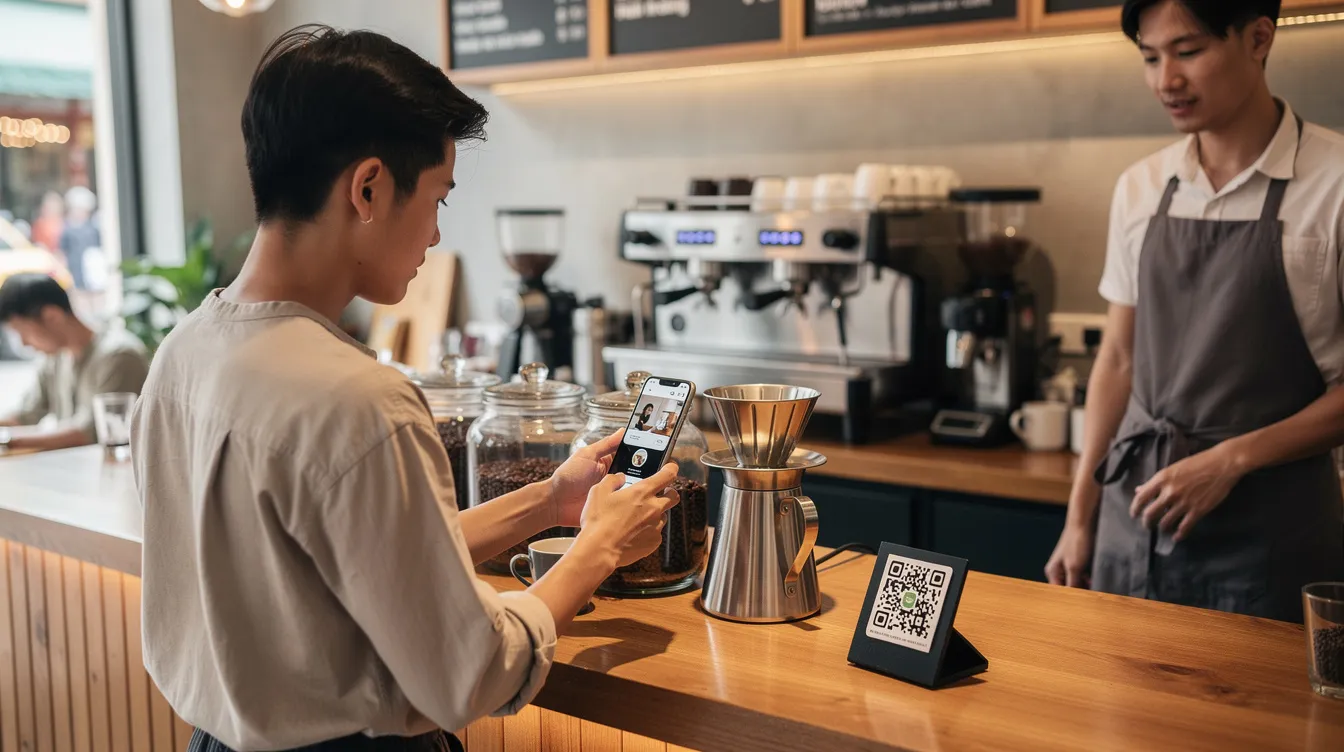
Global wallets expand digital payment options for cross-border online shopping and travel purchases.
PayPal is used for online purchases, freelancer payouts, and some cross-border e-commerce. Apple Pay and Google Pay are increasingly supported by Vietnamese banks and international cards at NFC terminals.
Regional wallets like Alipay and WeChat Pay work in tourist-heavy and duty-free locations serving Chinese visitors.
Global wallets suit digital goods, international subscriptions, airline tickets, hotel bookings, and shopping on foreign websites that ship to Vietnam.
Constraints: not every local merchant accepts global wallets directly, Vietnamese KYC requirements may limit account functionality, and currency conversion fees apply.
For foreign tourists, loading an international card into Apple Pay or Google Pay enables convenient contactless card payments in big cities where modern terminals exist.
QR code payments are rapidly becoming dominant in Vietnam's payment landscape. VietQR and proprietary QR systems are now displayed at cafés, convenience stores, street stalls, parking services, and even market vendors in Hanoi and Ho Chi Minh City.
Customer journey: scan the merchant's static QR code (linked to a bank account or wallet), enter the amount if needed, and confirm in your app. For dynamic QR, the POS screen auto-populates the amount.
Merchants often display multiple QR options side by side-VietQR, MoMo QR, ZaloPay QR, VNPay QR-giving customers flexibility across other payment methods.
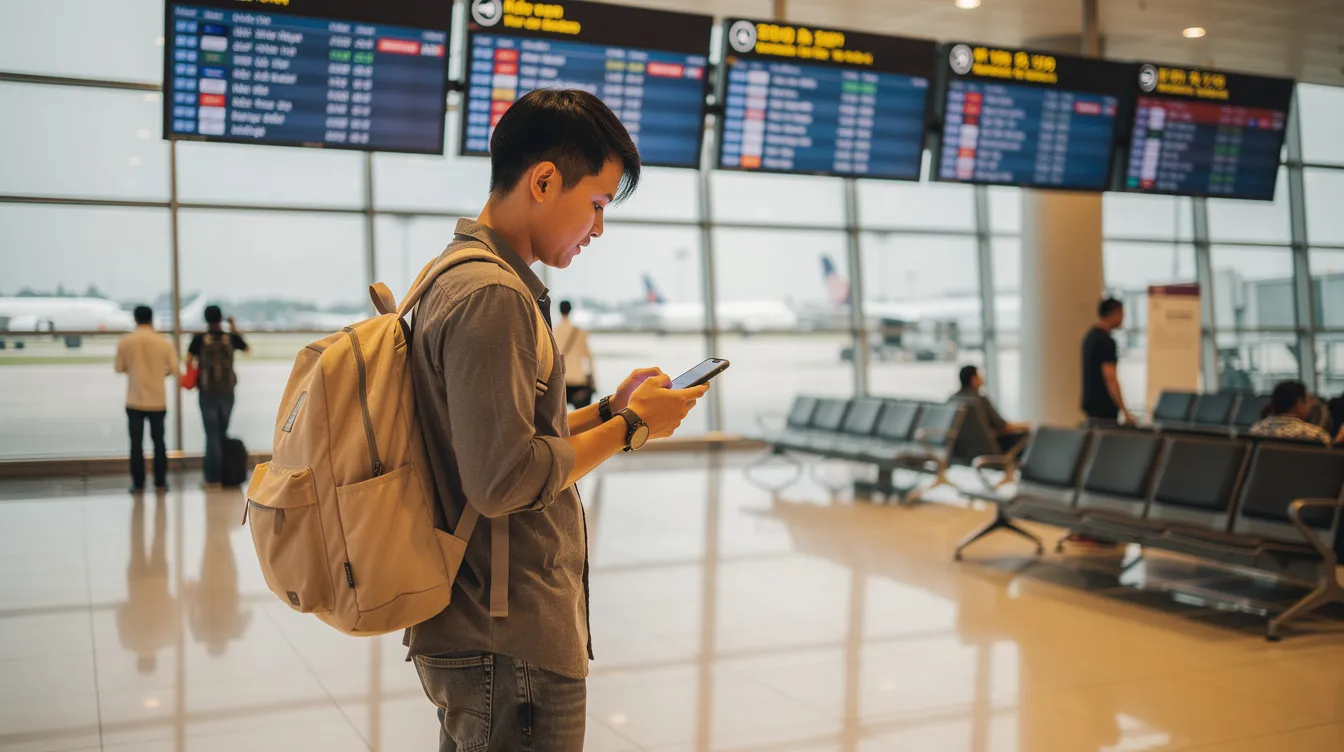
Contactless payments are becoming more common in urban areas of Vietnam, especially in supermarkets, chain retailers, and airports, using either physical cards or mobile wallets.
QR payments are particularly valuable for micro-merchants as a lightweight alternative to expensive POS terminals, supporting financial inclusion and reducing cash handling across the country.
Despite the growth of digital payment methods, cash on delivery remains significant for e-commerce. Around 35% of Vietnamese consumers prefer cash on delivery for online purchases, though the trend is shifting.
How it works: customers order on Shopee, Lazada, Tiki, or Facebook and Instagram shops, then pay the courier in cash when the parcel arrives.
Why consumers like COD: inspect items before paying, reduced fear of online fraud, and convenience for unbanked shoppers in rural areas.
Merchant challenges: higher return and refusal rates, cash handling costs, slower payout cycles, and reconciliation overhead.
COD's share is shrinking-cash on delivery represents 6% of e-commerce transactions in 2026, and cash contributes 6% of total e-commerce transactions in 2026, down significantly as bank transfers, card payments, and e wallets become more trusted for online shopping.
BNPL services are an emerging but fast-growing payment category in Vietnam. BNPL accounted for 5% of e-commerce transactions in 2024, and BNPL adoption rose to 49% among online shoppers in 2025. The BNPL market size is projected at USD 1.5 billion in 2026.
Common use cases: smartphones, laptops, consumer electronics, fashion, and lifestyle products on large e-commerce platforms and at major electronics chains. Young consumers prefer BNPL for higher-value purchases.
Banks and fintechs offer instalment plans at checkout, often advertised as "0% interest" for 3–12 months, with fees sometimes embedded in product pricing. Prepaid cards and credit cards can also unlock instalment payment options.
Advantages: ability to spread payments without a traditional credit card, quick digital approvals, and seamless integration into online checkout flows.
Risks: potential for overspending, late fees, and impact on credit history if repayments are missed. BNPL is expected to grow to 7% of e-commerce by 2029, making responsible borrowing increasingly important.
For overseas workers, students, and families, international money transfer apps are a critical part of Vietnam's payment ecosystem. They enable cross-border digital payments into VND bank accounts and wallets, connecting the Vietnamese diaspora across Europe, the UK, Australia, and the Middle East with family back home.
ACE Money Transfer is the best money transfer app for sending money to Vietnam, offering competitive exchange rates, low fees, and fast delivery into local bank accounts or approved payout partners.
Typical scenarios: Vietnamese migrants sending monthly support to family, paying tuition fees, or funding property purchases through secure bank transfer or card payments via the ACE app.
ACE advantages: mobile app availability, 24/7 transactions, transparent fee structure, multiple payout options (local bank transfer, wallet credit, cash pickup through partner networks), and strong compliance with anti-money-laundering and KYC regulations.
Once funds arrive, recipients can withdraw cash, top up digital wallets like MoMo or ZaloPay, pay bills, or spend directly from their bank accounts-seamlessly connecting international money with local spending habits.
Rates and fees may vary, and exchange rates fluctuate, so the rate you receive may differ from any quoted rate. Always check the live rate at ACE Money Transfer before sending.
The "best" payment option in Vietnam depends on your user type-tourist, expat, local, online merchant-and your context, whether that is offline purchases, e-commerce, or cross-border transfers.
Everyday offline spending in cities: domestic debit cards, QR payments via bank apps or e wallets, plus a small amount of cash. Rural or traditional markets: cash plus QR where available. Online shopping in Vietnam: e wallets, bank transfers via VietQR, COD as a backup. International purchases and travel: international cards, global wallets like PayPal, Apple Pay, Google Pay. Sending money into Vietnam: international remittance apps with ACE Money Transfer as the primary recommendation.
Combine 2–3 methods for redundancy: one card, one digital wallet, and some cash covers nearly every scenario while keeping extra fees low and minimising payment failures. Multiple payment methods ensure you are never stuck, whether at a street food stall or checking out on an e-commerce platform.
If you need to move money to or from Vietnam, choose local methods-bank transfer, e wallets, or cash-for your everyday payment needs and bill payments once funds arrive.
Disclaimer: This article is intended for general informational and educational purposes only and should not be construed as legal, regulatory, tax, business, or financial advice. While reasonable efforts have been made to ensure that all facts, figures, and data are accurate and valid as of the date of publication, no warranty or guarantee is given as to the ongoing completeness, accuracy, or currency of the information.
The content is based on information available at the time of publication. Regulations, government policies, market conditions, and service offerings may change over time and vary across jurisdictions and providers. As a result, some information may no longer be current or applicable. Readers should independently verify all information and consult qualified professional advisors before making any financial, legal, or business decisions.