12 Aug 2026
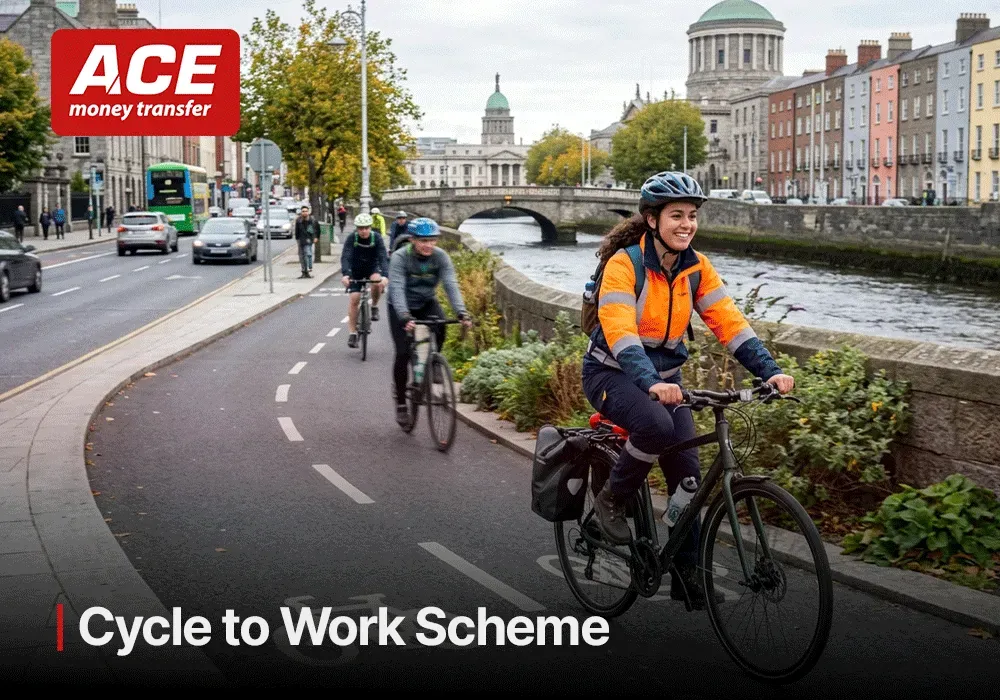
The cycle to work scheme is a government initiative in Ireland that helps employees buy a brand new bike and approved cycling equipment tax-free through their employer. Also called the Bike to Work Scheme Ireland, it allows workers to acquire a new bike and safety gear via a salary sacrifice arrangement, repaying the cost from their gross salary over an agreed period. This arrangement reduces travel costs because employees do not pay Income Tax, Universal Social Charge (USC), or Pay Related Social Insurance (PRSI) on the salary used to repay the bike cost, up to the allowed maximum value limits.
According to Revenue’s 2026 guidance, the scheme covers up to €1,250 for regular bikes, €1,500 for electric bikes and pedelecs (electrically assisted bicycles), and €3,000 for cargo and ecargo bikes, including related safety equipment such as helmets, lights, locks, and cycle tool kits.
Travel is one of the regular expenses that can quietly reduce a worker’s monthly budget. Fuel, parking, bus fares, rail tickets, taxis, and car maintenance costs add up quickly. For employees who live close enough to cycle, the cycle to work scheme can help replace some paid journeys with a lower-cost, healthier daily commute.
Ireland still depends heavily on car travel. The 2022 Census showed 59% of workers drove to work and another 4% travelled as car passengers, while only 3% cycled. This indicates significant potential for more workers to switch short journeys to cycling where it is safe and practical, helping reduce traffic congestion and pollution.
The cycle to work scheme is not a cash grant or refund. You do not buy the bike first and claim money back. Revenue states the tax exemption does not apply if you pay for the bicycle and your employer reimburses you. Your employer must buy the bicycle and cycling equipment directly from the supplier to qualify.
The payment is usually made through a salary sacrifice arrangement. This means you agree to give up part of your gross salary for a set pay period, typically up to 12 months. You pay Income Tax, USC, and PRSI only on the remaining salary after the agreed deduction.
The saving comes from tax relief, not from a discount at the bike shop. When your employer deducts repayments from your gross salary before tax, USC, and PRSI, the taxable portion of your income reduces temporarily. This can lower the real cost of the bike compared with buying it from your net take-home pay.
Your exact saving depends on your income level, tax rate, USC rate, PRSI status, and the cost of the bike and equipment — savings vary by individual and are not fixed. Under the Cycle to Work salary sacrifice scheme, repayments come out of your salary before income tax, USC, and PRSI are deducted, so higher-rate taxpayers can see savings of up to around 52% (combining the higher rates of tax, USC, and PRSI), while lower-paid workers still benefit, though typically at a lower percentage.
The cycle to work scheme Ireland is available to employees where the employer chooses to participate. Employers are not obliged to offer the scheme, so the first step is to check with your HR, payroll, or manager whether your workplace offers it.
The scheme can also apply to directors treated as employees for tax purposes. However, self-employed workers who do not receive salary through an employer generally cannot use it.
The scheme covers brand new bicycles, electric bicycles (e-bikes), pedelecs (electrically assisted bicycles), cargo bikes, and ecargo bikes. Cargo and ecargo bikes must have frames specially designed to carry heavy loads or passengers, useful for workers transporting tools, work bags, or children.
Approved cycling equipment can be included when purchased with the bike. This includes helmets, bells, bulb horns lights, mirrors, mudguards, luggage carriers, locks, straps, cycle clips, pumps, puncture repair kits, cycle tool kits, reflective clothing, front and spoke reflectors.
The scheme does not cover motorbikes, scooters, mopeds, second-hand bicycles or equipment, bicycle parts bought separately, child seats, child helmets, or trailers. Rain gear is generally not included unless it is reflective and waterproof cycling clothing.
Choosing the correct bike and equipment is important to avoid issues. Always check with your employer and supplier directly to confirm eligible items before ordering.
The scheme is intended for qualifying journeys, defined by Revenue as the whole or part of a journey between your home and your normal place of work. Your employer will ask you to sign a written agreement stating the bike is for your own use and mainly for qualifying journeys.
This does not restrict you from using the bike at weekends or for leisure. The primary purpose must be commuting to and from work.
You can use the cycle to work scheme once every four years. The tax year in which you receive the bicycle is counted as the first year. For example, if you used the scheme any time in 2022, you can use it again from 1 January 2026.
This four-year rule encourages buying a durable, reliable bike that suits your commute and storage conditions. It also means including essential new cycling equipment upfront may be more cost-effective than buying later.
You can choose a bike that costs more than the scheme’s maximum value, but tax relief applies only up to the allowed limit. Income Tax, USC, and PRSI apply to any amount above the relevant limit.
For example, if you buy an electric bike costing €1,700, only €1,500 is covered by the scheme exemption. The remaining €200 is subject to normal taxation.
The biggest financial benefit is that cycling replaces some car or public transport journeys. Regular cyclists save on fuel, fares, parking fees, and short car trips.
Time savings can also be significant. The Central Statistics Office (CSO) data shows the average journey time to work rose to 29.1 minutes in 2022. Cycling can offer a predictable, often faster route by avoiding traffic congestion, traffic lights, and parking hassles.
Electric bikes help workers travel longer distances or tackle hilly routes without excessive effort. They are ideal for older workers, parents, or those who want a less tiring commute.
Cargo and ecargo bikes support family and work trips, allowing carriage of children, shopping, or work equipment. These bikes have the highest scheme limit (€3,000), reflecting their higher cost and utility.
Employers also benefit by supporting active travel. Salary sacrifice reduces the employee's gross pay, which in turn reduces the employer's PRSI liability on that portion of pay — currently at the Class A employer PRSI rate of 11.25% for most employees (rising to 11.4% from 1 October 2026), reducing payroll costs. As PRSI rates are reviewed and can change, check Citizens Information or Revenue for the current rate. Offering the scheme can improve employee morale, increase retention, and enhance recruitment by providing valued benefits.
More employees cycling to work reduces parking demand and traffic congestion near workplaces, contributing to a better working environment.
Employers must pay the supplier directly for the bicycle and equipment. They cannot reimburse employees for purchases made directly.
Employers must keep records such as invoices, payment details, signed agreements, and employee statements confirming the bike's use for commuting. These records may be examined by Revenue during normal inspections.
Employers must ensure the scheme is offered to all employees equally and operate the salary sacrifice arrangement correctly to maintain tax benefits.
Employees repay the cost through salary deductions from their gross salary. Deductions can be made weekly, fortnightly, or monthly, depending on the employer’s pay period.
The salary sacrifice arrangement must be in writing and completed within a maximum period of 12 months. If employment ends before full repayment, the remaining balance is deducted from the final salary payment.
Employees cannot pay for the bike directly; the employer must pay the supplier directly for the scheme to be valid.
Before applying, consider your commute route, distance, and storage options. Matching the bike to your real commute ensures you use it regularly.
Test bikes in store or through suppliers offering expert advice. Comfort, gears, tyre type, and accessories like luggage carriers or cycle helmets can make a big difference.
Include essential cycling equipment such as locks, lights, and reflective gear in your initial purchase to maximize safety and compliance with the scheme.
The cycle to work scheme aligns with Ireland's commitment to reducing transport emissions. According to SEAI, transport accounted for 42.3% of Ireland's energy demand and 37.7% of energy-related emissions in 2024.
By encouraging more workers to cycle, the scheme helps reduce fuel use, lower carbon emissions, and ease traffic congestion, supporting cleaner, healthier communities.
The Cycle to Work Scheme is a government initiative that helps workers in Ireland reduce travel costs, improve health, and support sustainability goals. By purchasing a bike and cycling equipment through a salary sacrifice arrangement, employees reduce their taxable income and can lower their overall commuting costs.
The scheme’s clear rules, including employer involvement, tax breaks, and equipment guidelines, make it a practical option for many. Whether you choose a regular bike, electric bike, or cargo bike, the scheme offers flexibility and savings.
Check with your employer, plan your purchase carefully, and enjoy the benefits of cycling to work with tax-efficient savings and improved wellbeing.
Can I include bicycle and safety equipment in my purchase through the scheme?
Yes, the cycle to work scheme covers both the bicycle and associated equipment such as helmets, locks, lights, and reflective clothing, as long as they are new and purchased together with the bike.
What happens if I leave my job before I finish repaying the bike?
If your employment ends before completing repayment, you must pay the outstanding balance from your final gross salary. This ensures the salary sacrifice arrangement is fully settled.
Can I buy a bike from any cycle shop?
Generally, yes. You can choose your bike and equipment from any cycle shop or supplier. However, if you are a civil or public servant, you may need to select from a list of approved suppliers.
Is VAT payable on the bike and equipment purchased under the scheme?
Yes, employers must pay VAT on the bicycles and safety equipment, but they cannot claim VAT back because the items are not used for taxable supplies.
How often can I use the cycle to work scheme?
You can use the scheme once every four years. The tax year in which you receive the bike counts as the first year, so you must wait four full tax years before availing of the scheme again.
Disclaimer
This article is intended for general informational and educational purposes only and should not be construed as legal, regulatory, tax, business, or financial advice. While reasonable efforts have been made to ensure that all facts, figures, and data are accurate as of the date of publication, no warranty or guarantee is given as to the ongoing completeness, accuracy, or currency of the information. Regulations, government policies, market conditions, exchange rates, and service offerings may change over time and vary across jurisdictions and providers. Readers should independently verify all information and consult qualified professional advisors before making any financial, legal, or business decisions.