23 Feb 2026
If you plan to send money online while living in Poland, opening a local bank account is one of the smartest first steps you can take. It makes everyday life easier—salary deposits, rent payments, shopping, subscriptions, and managing bills all become simpler with a Polish account. For expats, students, and overseas workers, it also removes the stress of relying on cash or international cards that carry extra fees. This step-by-step guide walks you through the process, what documents you’ll need, which account types to consider, and how to set things up so you can manage your finances confidently from day one.
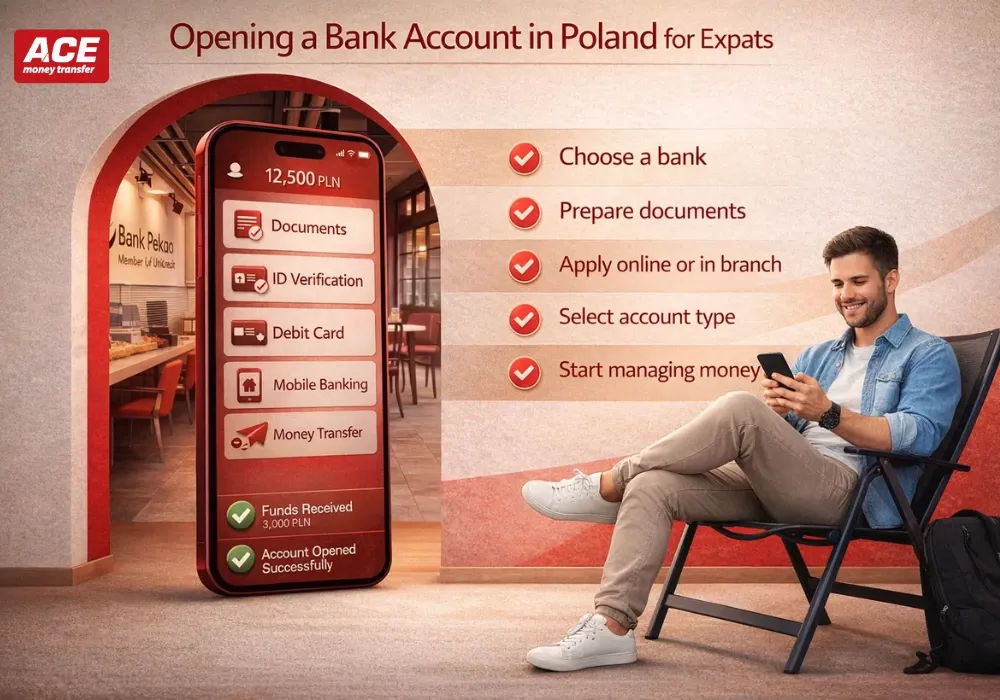
Follow these simple steps to choose the right bank, prepare your documents, and open your Polish account smoothly as an expat or student.
Poland has strong local banks and popular international options. Many expats consider PKO Bank Polski, mBank, ING Bank ?l?ski, and Santander. Look for English-friendly branches, low monthly fees, a solid mobile app, and easy ATM access—these features matter more than fancy perks when you’re building stability.
Most banks typically ask for:
Some banks may ask about your source of funds if you expect regular deposits. Having these documents ready makes the process faster, especially if you plan to send money internationally into the account regularly.
Many banks offer online onboarding, but the smoothest route for many newcomers is a branch visit. Especially in big cities where English support is more common. In-branch account opening can reduce confusion around verification steps, documents, and initial card activation. Once your account is active, you can fund it using your salary, local transfers, or services like ACE Money Transfer when you need quick support from abroad.
This is your everyday account for rent, groceries, transport, and online spending. Pair it with a debit card and mobile banking, and you’ll be set up for routine life. It’s also convenient when you send money online for recurring commitments like tuition payments or family support.
If you receive funds in EUR, USD, or GBP, a foreign currency account can reduce conversion losses. This is useful if you’re paid by an overseas employer or receive help from family outside Poland.
Many Polish banks offer student accounts with reduced fees or free banking if you meet age or enrollment criteria. These often include budgeting tools inside the app, which can be helpful when you’re adjusting to a new cost of living. Read more about the best bank accounts in poland.
Banking in Poland is generally affordable, but fees depend on usage. Monthly charges often range from 0–10 PLN and may be waived if you make a minimum number of card payments. ATM withdrawals are usually free at your bank’s ATMs, but can cost extra at third-party machines. International bank transfers can carry additional fees, which is why many expats prefer specialized options when they send money abroad or receive money from overseas.
Instead of relying only on traditional bank wires, many expats use trusted remittance apps that offer competitive rates and clearer tracking. ACE Money Transfer is one option with 4.7 ratings on Trustpilot that many people choose for speed, transparency, and convenience.
If staying connected financially is part of your plan—whether you send money online, support loved ones, or manage expenses across countries—set up your account early and keep your transfer methods simple and secure.
Yes, many banks let you open an account using a passport or EU ID, especially in larger cities. A PESEL can still help later with smoother verification and additional services.
Online applications can be convenient, but they may include Polish-only steps and stricter verification flows. Visiting a branch often makes it easier to get help and finalize everything quickly.
You can receive international bank transfers, but fees and processing times vary. Many expats prefer services like ACE Money Transfer to send money abroad and fund accounts with clearer costs.
Yes, many banks offer foreign currency or multi-currency accounts for EUR, USD, and GBP. This helps reduce conversion losses when you send money internationally or receive overseas payments.
Some banks may charge incoming transfer fees or intermediary charges depending on the route. Reviewing the full payout and choosing a cost-effective transfer method can help you avoid deductions.