
ACE Money Transfer
ACE Money Transfer

06 Jun 2024
If you hold a Pakistani passport and are eyeing citizenship in a second or even third country, you need to understand exactly where Pakistan draws the line. This guide breaks down how triple citizenship works under Pakistani law, which countries qualify, and what rights and restrictions come with holding multiple nationalities.
Pakistan does not officially permit triple citizenship. Pakistani citizenship law allows dual nationality with a specific list of approved countries, but acquiring a third citizenship technically violates the dual nationality exception under Pakistani law. In practice, however, many Pakistanis do hold citizenship in Pakistan plus two or more other countries, and this arrangement is generally tolerated as long as every foreign citizenship is from a country on Pakistan's approved dual nationality list.
A Pakistani citizen can legally be a citizen of Pakistan and one or more other countries at the same time, provided each foreign country permits multiple citizenships and has a recognized dual nationality arrangement with Pakistan. If a Pakistani citizen acquires a nationality from a non-approved country, they risk losing Pakistani citizenship automatically under Section 14 of the Pakistan Citizenship Act 1951. To retain their Pakistani citizenship, individuals must ensure all citizenships are from approved countries.
This article explains how triple citizenship works under the Pakistan Citizenship Act 1951, Pakistani government practice, and the interaction with citizenship laws of other countries.
Pakistani citizenship is the legal bond between a person and the state of Pakistan, granting the right to live, work, own property, and participate in public life. It matters enormously for anyone considering multiple nationalities because your Pakistani citizenship status determines whether you can freely return, hold a CNIC or NICOP, and access services in Pakistan.
The primary law governing Pakistani citizenship is the Pakistan Citizenship Act 1951, supplemented by executive notifications, rules, and bilateral dual nationality treaties. The main ways to become a Pakistani citizen include:
By birth - persons born in Pakistan are generally citizens at birth
By descent - children born abroad to Pakistani parents hold citizenship by descent
By migration - individuals who migrated from the Indo-Pakistan subcontinent during Partition
By registration - Commonwealth citizens can acquire Pakistani citizenship by registration
By naturalisation - acquiring Pakistani citizenship is possible after residing in Pakistan for four years
Foreign women married to Pakistani men can also apply for citizenship. The Act originally assumed people would have only one nationality, but Pakistan later introduced explicit rules to permit dual citizenship with certain participating states through bilateral agreements.
Dual citizenship and multiple citizenship are often used loosely, but they carry slightly different legal meanings. Dual citizenship or dual nationality means holding citizenship of Pakistan and one other country at the same time. Multiple citizenship, including triple citizenship, means being a Pakistani citizen and simultaneously a citizen of two or more other countries - for example, Pakistan, the United Kingdom, and Canada.
Pakistani legislation mainly uses the term dual nationality but does not explicitly cap the number of foreign citizenships a person can hold. Pakistan's legal framework permits dual nationality only through specific arrangements, and each foreign nationality is assessed individually against those arrangements. Whether triple citizenship is possible also depends on each foreign country's law: some nations fully allow dual or multiple citizenship, some allow only dual citizenship, and some require you to renounce previous nationalities before naturalising.
In later sections, you will find practical examples of triple citizenship combinations common among Pakistani diaspora communities.
Pakistan does not allow open-ended dual nationality with every country. It maintains a list of states with which it has recognized dual nationality arrangements, issued and periodically updated by the Directorate General of Immigration & Passports and the Ministry of Interior. Readers should always verify the current list on official Pakistani government websites, as the federal government can add or remove countries.
As of recent practice, Pakistan has official dual nationality arrangements with 22 designated countries. Different sources sometimes cite 19 or 21 countries because the list is periodically updated through bilateral dual nationality treaties. The countries include the United Kingdom, United States of America, Canada, Australia, and New Zealand, along with several European states such as France, Italy, Belgium, Netherlands, Sweden, Germany, Switzerland, Denmark, Finland, Ireland, Norway, Iceland, and Luxemburg, as well as selected Middle Eastern countries including Egypt, Jordan, Syria, and Bahrain.
Being a dual national of any country outside this list may conflict with Pakistani law. A person who voluntarily acquires such a nationality risks losing Pakistan citizenship. Because there is no explicit numeric limit in Pakistani law, if someone holds Pakistani citizenship and then acquires citizenships of two different approved-list countries, Pakistan will generally treat that as lawful multiple citizenship. Pakistani nationals should keep documentary proof of all naturalisation certificates and passports. Pakistan requires a National Identity Card for Overseas Pakistanis (NICOP) for rights related to dual nationality, and citizens may be required to register their dual or multiple nationality with a Pakistan embassy abroad.
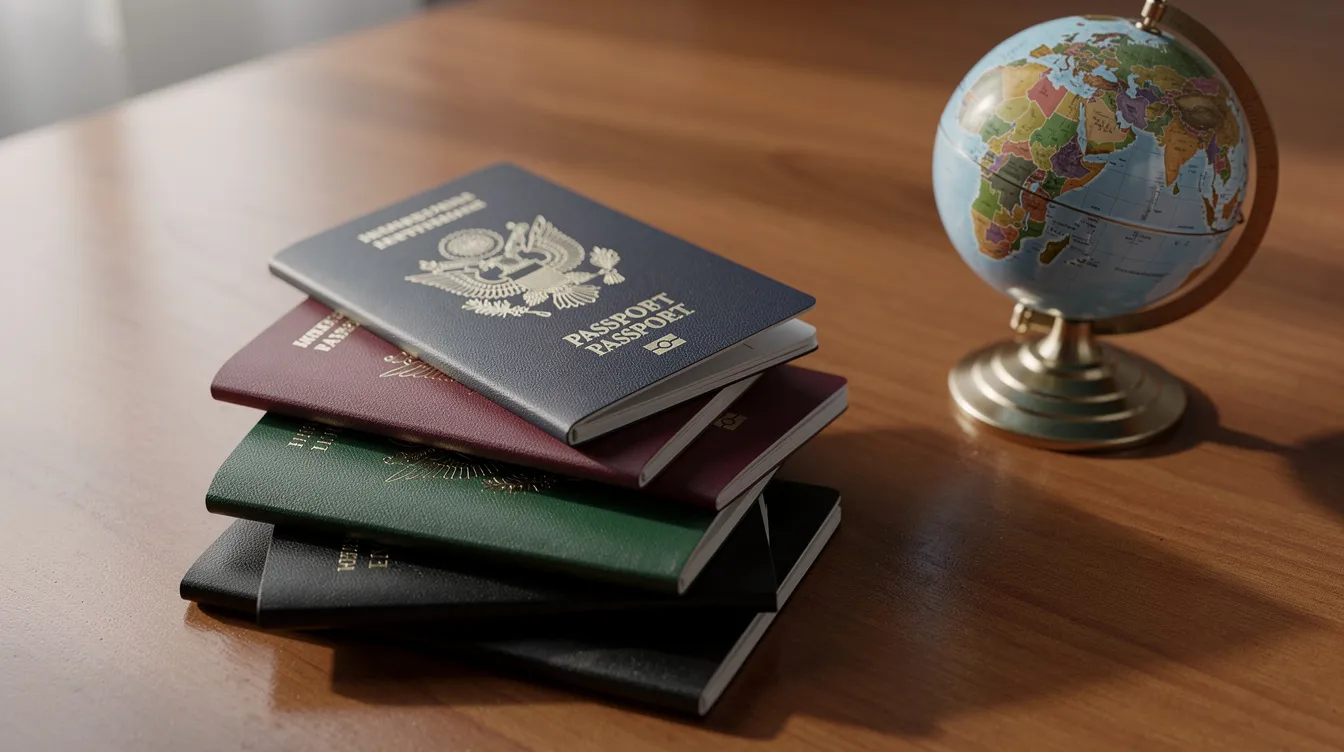
In real life, many Pakistanis effectively hold triple citizenship without facing legal action, as long as all foreign nationalities are from approved countries. A person born a Pakistani citizen who later naturalises as a British citizen and also acquires Canadian citizenship is a common example. Another scenario involves a child born in Germany to Pakistani parents, acquiring German and Pakistani citizenship by birth and descent, who later naturalises in Australia - assuming all relevant states allow multiple citizenships.
Under Pakistani practice, each foreign citizenship is assessed against the same rule: does a recognized dual nationality arrangement exist between Pakistan and that specific state? Pakistan does not object if a Pakistani dual national also acquires an additional citizenship of another allowed country. However, the third country's laws may impose their own restrictions or renunciation requirements.
Some misleading sources claim Pakistan only allows "up to 21 citizenships at once." This is a misunderstanding - Pakistan has about 19 to 22 partner countries for dual nationality agreements, not a quota of how many passports an individual can hold. Children born abroad retain dual citizenship until age 21, after which they may need to make formal decisions about which nationalities to keep.
Anyone planning to hold multiple nationalities should check Pakistani law, the law of each foreign country, and possible military service, tax, or public office obligations in each nation.
Multiple citizenship is only possible where all involved countries permit it. Pakistan's permission alone is not enough. Here is how some popular destinations treat multiple citizenship for Pakistani citizens:
The United Kingdom generally allows dual or multiple citizenship. Pakistanis can be British-Pakistani and still seek a third citizenship elsewhere.
Canada and Australia allow multiple citizenship. Many Pakistani immigrants become dual nationals while retaining Pakistani citizenship.
Germany, Netherlands, and some European states have historically been restrictive but are gradually liberalising. Laws change frequently and need up-to-date checking.
Gulf and GCC countries often restrict dual nationality in their own laws. A Pakistani gaining citizenship there may be required to give up Pakistani nationality.
Some naturalising countries require permanent residency and long-term residence before a person is eligible for citizenship, so Pakistani nationals must first secure legal residence - such as PR in Canada or ILR in the UK - before applying. Some states also require proof that Pakistan allows the applicant to retain their original nationality. Each acquisition of a new citizenship may create side effects, such as conflicting military or tax duties across many countries.
Pakistan generally treats its dual nationals as full citizens but imposes specific restrictions, especially around public office and security-sensitive roles. Key rights usually retained by Pakistani dual nationals and multiple citizenship holders include the right to enter and live in Pakistan as citizens, typically expected to use their Pakistani passport when entering or leaving. They also retain the right to own property with fewer restrictions than non-Pakistani foreign nationals, plus access to education, healthcare, and most forms of employment in Pakistan.
However, major restrictions apply. Dual nationality holders are prohibited from serving in Parliament under Article 63(1)(c) of Pakistan's Constitution. Dual nationals cannot serve in the Parliament of Pakistan, and Pakistani courts have disqualified elected officials who secretly held dual nationality. Even with dual citizenship, individuals may be restricted in certain employment roles within government. Dual nationals in Pakistan face restrictions on holding public office and military service.
Having multiple citizenships may complicate legal matters such as tax residency, inheritance, and family law. Triple citizens should keep all statuses transparent when dealing with Pakistani authorities.
Some Pakistanis voluntarily renounce Pakistani citizenship when naturalising in a state that does not recognise dual nationality. Pakistani citizens must renounce citizenship if acquiring nationality from a non-approved country to comply with the law. The basic renunciation process involves submitting an application through the relevant Foreign Mission of Pakistan - an embassy or consulate - or to the Directorate General of Immigration & Passports. Applicants complete Form X and pay a statutory fee. Pakistani authorities verify that the applicant already holds or will acquire another nationality so they do not become stateless.
Minor children's Pakistani citizenship can be affected by a parent's renunciation. Children born abroad can retain dual citizenship until age 21, but families should discuss this carefully with a lawyer before applying. Former citizens can often resume Pakistani citizenship by making a written declaration to the federal government, although approval is discretionary and may involve security and background checks.
Pakistan has no formal citizenship-by-investment programme. Citizenship is acquired only through birth, descent, registration, naturalisation, or resumption after renunciation.

Triple citizenship is a serious legal commitment that affects your obligations in more than one country. Before applying for any new foreign citizenship, check whether Pakistan has a dual nationality agreement with that country via official Pakistani government resources. Consult the immigration or nationality authorities of the foreign state to see if they allow dual or multiple citizenships for naturalised Pakistanis. Keep copies of all passports and certificates and inform Pakistani missions abroad about additional nationalities where required. Seek personalised advice from a qualified immigration or nationality lawyer if your situation involves children, complex family ties, or sensitive employment.
Triple citizens may need to manage tax filings in more than one jurisdiction, military service obligations, residence requirements to keep some passports valid, and eligibility for social benefits or pensions. For many in the Pakistani diaspora, carefully managed multiple citizenships can support long-term family, education, and business plans across several countries.
Can a Pakistani be a citizen of Pakistan, the UK, and Canada at the same time? This is usually possible because all three states permit multiple citizenship, and Pakistan has dual nationality arrangements with both the UK and Canada. Pakistani citizens can hold citizenship in 21 countries on the approved list, making this combination legally recognized.
What happens if I naturalise in a country not on Pakistan's dual nationality list? You risk automatic loss of Pakistani citizenship under Section 14(1) of the Pakistan Citizenship Act. There is no built-in grace period unless the federal government has issued a notification for that country.
Do I have to tell the Pakistani government when I get another citizenship? While not always formally required, notification and proper registration are strongly encouraged, especially for passports and NICOP records. This protects your status as a legally recognized Pakistani citizen.
Can triple citizens vote in Pakistani elections? Eligible Pakistani citizens, including dual and multiple citizens, can usually vote if they meet residency or electoral registration rules. Holding multiple nationalities does not by itself remove voting rights.
Can a dual or triple national become a member of Pakistan's Parliament? No. Current constitutional and legal practice generally prohibits holders of foreign nationality from sitting in Parliament or certain high public offices, regardless of whether the foreign citizenship is from an approved country.
Laws on Pakistani citizenship, dual nationality, and multiple citizenships can change. Always confirm details with up-to-date official sources or qualified legal counsel before making decisions that affect your nationality status.