ACE Money Transfer
ACE Money Transfer

14 Sep 2026
Portugal has over 150 banks providing various financial services, yet the banking market in Portugal is dominated by a few major institutions that handle the vast majority of deposits and lending. Whether you're relocating on a D7 visa, investing through a golden visa, or simply settling into daily life in Lisbon or Porto, choosing the right bank matters more than you might expect.
Banks in Portugal offer a mix of traditional services and digital applications, and the gap between old-school branch banking and slick mobile-first platforms is narrowing fast. This guide breaks down the seven best Portuguese banks for 2026, compares them side by side, and helps you match your specific situation to the bank that fits.

Finding the best bank in Portugal isn't just about the lowest fees. Here's the framework we used to evaluate each institution:
Regulatory compliance. Every bank on this list is supervised by the Banco de Portugal and must meet European Central Bank standards. The banking system is regulated by the central bank of Portugal, and Portugal's banking sector is modern and tightly regulated. Portugal's banking system meets high EU security standards, and Portuguese banks follow EU Regulation 2016/679 for data protection.
Fees and costs. Portuguese banks charge monthly maintenance fees of €5–7 on average. We looked at whether those fees can be waived, and what hidden charges exist. Credit card service fees range from €0 to €50 annually, while the average rate for credit cards in Portugal is 11–13%. Loan interest rates in Portugal average around 4% per annum, and the average mortgage rate in Portugal is 3.3%.
English language support. We assessed app language options, in-branch staff language skills, and documentation available in English.
Branch network and ATM access. We checked how many branches operate nationwide and whether you can find a nearest ATM through the Multibanco system-which also lets you pay bills, make direct debits, top up mobile phones, and handle online purchases.
Digital banking. Mobile app quality, remote onboarding workflows, and the ability to open a bank account online all factored in.
Remote account opening. Critical for non-residents who need a Portuguese bank account before arriving.
Loans, mortgages, and investments. We reviewed consumer loans, mortgage products, investment funds, savings accounts, deposit accounts, brokerage services, and asset management offerings.
Customer service. Complaint resolution, response times, and overall satisfaction rounded out our evaluation. Portugal has a card fraud rate of just 0.009%, reflecting the security standards across financial institutions.
This information is correct at the time of publication and is subject to change. Please verify current figures before making decisions.
Here are the seven banks that rose to the top across our criteria-covering everything from day to day banking to corporate banking and beyond.
Millennium BCP is the largest private bank in Portugal, with a reputation built on serving both citizens and international clients. It operates one of the most established networks of private retail banks in the country and has invested heavily in its digital platforms and expat-focused services.
Millennium BCP runs a dedicated international client desk with English-speaking staff across many of its branches. Its millennium app is available in English, making it one of the most accessible options for foreigners navigating the Portuguese banking system for the first time.
Expats, D7 visa holders, and Portugal golden visa investors who need a bank that understands cross-border documentation and visa compliance.
Non-residents can open accounts remotely at Millennium BCP, though a final in-branch signature is often required
Wide branch network with 458 locations nationwide
Comprehensive digital banking through the millennium app, supporting current accounts, transfers, and online banking services
Strong support for visa-related documentation and proof-of-funds letters
Monthly maintenance fee of approximately €5–8, waivable with minimum monthly inflows
Complex documentation requirements for remote opening-initial deposit often €250–€500 for non-residents
Caixa Geral de Depósitos is Portugal's largest bank by assets and the country's only major public bank. It functions as the backbone of the Portuguese banking system, and Caixa Geral de Depósitos holds around 24% of deposits in Portugal.
Caixa Geral de Depósitos offers maximum institutional stability in Portugal's banking sector. Caixa Geral de Depósitos is viewed as highly trusted due to its state ownership, which gives it a level of government backing that no private bank can match. With 543 branches, Caixa Geral de Depósitos has the most extensive branch network in the country.
Golden visa applicants and anyone who prioritizes institutional credibility and physical branch access above all else.
Institutional credibility favored by visa authorities and legal entities
Most extensive branch coverage across Portugal-543 locations
Remote account opening via power of attorney, often facilitated through a law firm or immigration consultant
Deposits guaranteed up to €100,000 per depositor per institution under EU rules
Limited English language support-outside Lisbon and Porto, most staff speak only Portuguese
Bureaucratic processes and slower service compared to digital alternatives
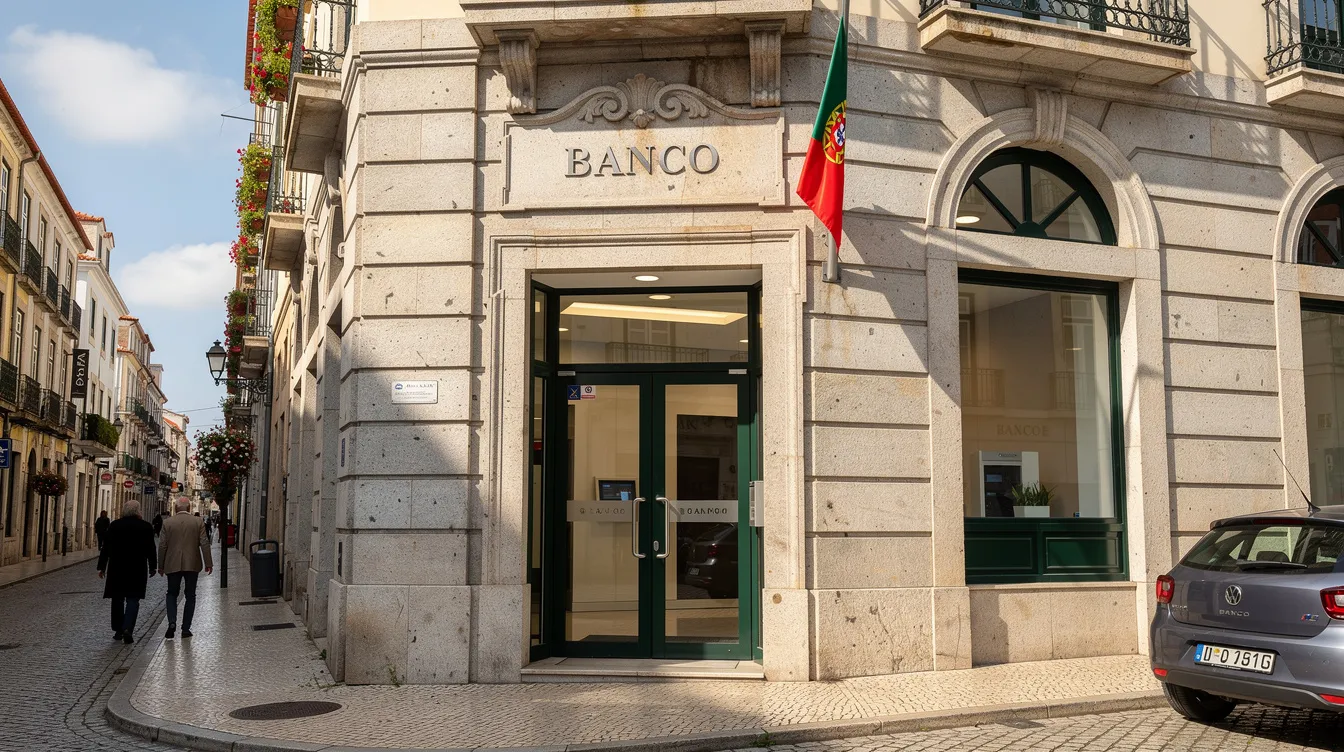
ActivoBank is the digital banking arm of Millennium BCP, fully licensed under Portuguese law. It combines the regulatory legitimacy of a traditional bank with the fee structure and user experience of a digital bank.
ActivoBank has no monthly maintenance fees for accounts-a standout in a market where most banks charge a monthly maintenance fee of €5 to €7. It holds full Banco de Portugal regulation, which means your account carries the same legal weight as one at any traditional bank.
Cost-conscious customers, tech-savvy residents, and anyone who wants to transfer money and manage banking services without paying maintenance fees.
No monthly or annual card fees-ActivoBank charges no monthly maintenance fees
Full Banco de Portugal regulation for visa compliance and legal documentation
Modern digital platform with a user-friendly interface; you can open a bank account online through video KYC
Free debit card included
Some reports suggest a physical presence in Portugal may be needed to finalize account setup
Limited branch access and customer service often available only in Portuguese
Banco Santander Totta is the Portuguese arm of the global Santander Group. Banco Santander Totta was recognized as the best bank in Portugal in 2022 by Global Finance Magazine, and it continues to leverage its international network for clients who need banking services across borders.
Banco Santander Totta serves as a bridge for international clients, connecting them to Santander's presence in dozens of countries. This is particularly useful if you need to transfer money between Portugal and other markets where Santander operates.
International professionals, frequent travelers, and expats who value a bank with a global footprint and English-speaking customer service availability.
English-speaking customer service availability across major branches
Strong online and mobile banking platforms for managing current accounts
Comprehensive mortgage and investment services-useful given the average mortgage rate of 3.3% in Portugal
Access to international banks within the Santander group for cross-border needs
No remote account opening options-banks require physical branch visits
Mixed customer service reviews from expats in smaller cities
N26 is a German digital bank operating under an EU license (currently Lithuanian). Unlike traditional Portuguese banks, N26 offers a fully app-based experience with no physical branches.
N26 lets you open a bank account online in minutes, with instant verification and a free standard account. Digital banks tend to outperform traditional banks on fee transparency, and N26 is a clear example-no hidden bank fees, no maintenance fees, and clear pricing on every transaction. For context, the German Deutsche Bank and other international banks also operate in Portugal, but N26's mobile-first model sets it apart from legacy players like Deutsche Bank.
Temporary residents, digital nomads, and anyone who needs instant account setup without visiting a branch.
Free standard account with no maintenance fees or monthly fees
Instant remote account opening via mobile app-you can open an account online from anywhere
Excellent English support and modern interface
Multi-currency capabilities, including transactions in the country's national currency (euro), US dollars, and other foreign currency options

Lithuanian license may not satisfy Portuguese visa requirements-authorities often prefer accounts from banks regulated directly by Banco de Portugal
Limited ATM network and no physical branches; you'll rely on the Multibanco network to withdraw money at any nearest ATM
Not ideal for consumer loans, mortgages, or corporate banking needs
Novo Banco is a major player in the Portuguese banking sector after restructuring. It has rebuilt itself into a full-service domestic bank with a solid presence across the country.
Novo Banco offers comprehensive personal and corporate banking services, including business accounts for legal entities, personal loans, and deposit accounts. It also provides one of the more reliable remote onboarding workflows for non-residents opening a Portuguese bank account.
Portuguese residents who need full banking services-mortgages, business accounts, investment funds, and day to day banking under one roof.
Novobanco has over 350 branches across Portugal, providing wide physical coverage
Full range of personal and business banking products, including savings accounts, bank deposit options, and loan products
Competitive deposit rates compared to major banks
Remote account opening via video KYC for non-residents, with a debit card delivered by courier
Limited English support for complex transactions
Mixed reviews on digital banking platform usability compared to online banks like ActivoBank or N26
Banco BPI is part of the CaixaBank Group (Spain) and operates as one of the established private retail banks in Portugal. Banco Português de Investimento, its historical investment banking arm, contributed to BPI's strong reputation in financial markets.
Banco BPI is recognized for its private banking and wealth management services. Backed by Spanish CaixaBank, it offers competitive rates and a solid domestic network. Banks offer a range of products here, from basic current accounts to structured investment products.
Portuguese residents and small business owners who want a private bank with competitive rates and established market credibility.
Competitive USD deposit rates-approximately 0.9% annually for deposits in US dollars and other foreign currency like Swiss francs
Solid branch and ATM network coverage across Portugal
Established reputation in the Portuguese market for asset management and brokerage services
Good option for both personal and corporate banking
Portuguese language required for most services-limited English support
No remote account opening for non-residents
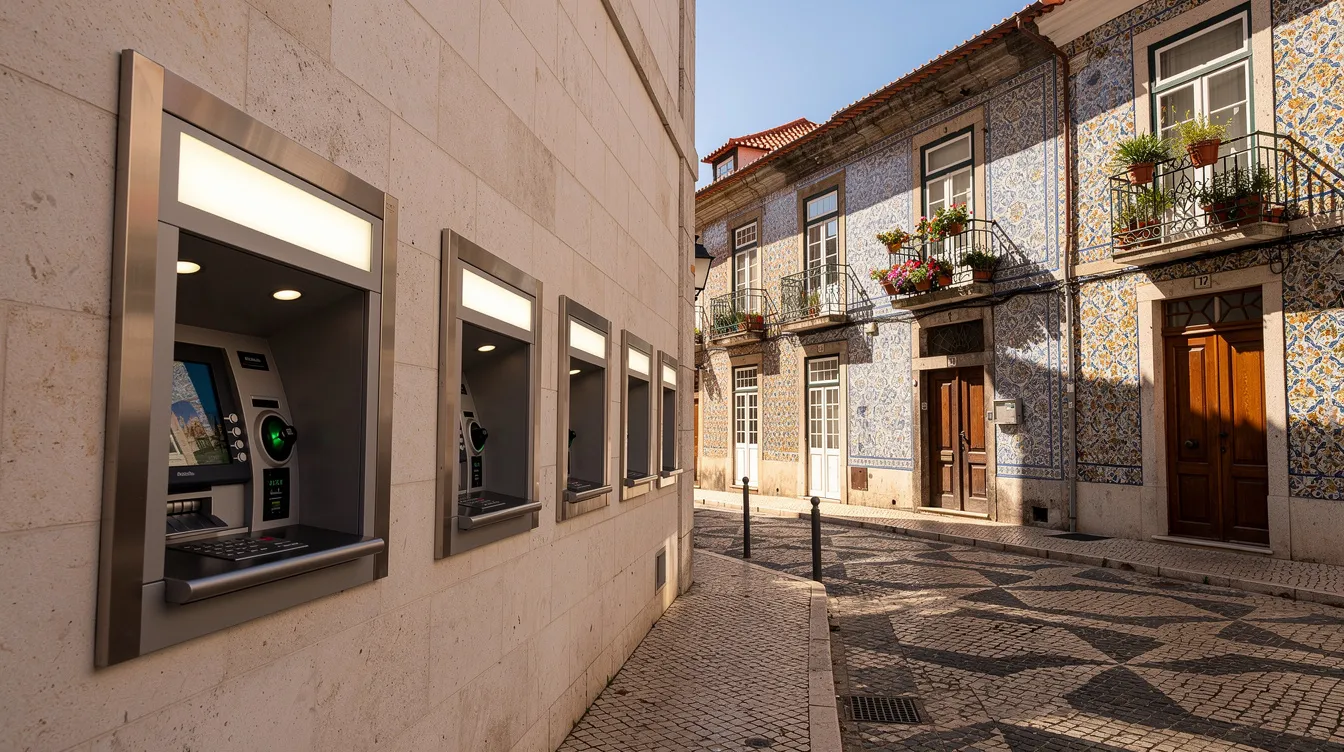
| Bank | Best For | Monthly Fee | Remote Opening | English Support | Branches |
|---|---|---|---|---|---|
| Millennium BCP | Expats & Golden Visa | €5–8 (waivable) | Partial | Strong | 458 |
| Caixa Geral de Depósitos | Stability & branch access | €5–8.60 (waivable) | Via power of attorney | Limited | 543 |
| ActivoBank | Fee-free digital banking | €0 | Digital KYC | App only | Limited |
| Banco Santander Totta | International professionals | €5–7 | No | Good | Moderate |
| N26 | Temporary residents | €0 | Full digital | Excellent | None |
| Novo Banco | Domestic full-service | €5–10 | Video KYC | Limited | 350+ |
| Banco BPI | Foreign currency deposits | €5–7 | No | Limited | Moderate |
Traditional banks in Portugal often charge maintenance fees unless high balances are maintained. Monthly maintenance fees average €5–7 in Portugal across most banks. The best bank for everyday banking depends on consumers' needs for fees, branches, or digital service.
Most banks in the traditional category charge similar fees. The real differentiator is whether you need in-person services, visa documentation, or pure digital convenience.
Your residency status directly determines which banks are available to you. Non-residents can open accounts remotely at Millennium BCP and CGD, though both may require additional steps like power of attorney or a branch visit for final signatures.
If you're already in Portugal with a residence permit card, most banks will process your application in-branch with standard documentation. Banks require a valid ID, proof of address, and your NIF. Opening a bank account can take around 10 to 14 days at traditional banks, while digital options like N26 can complete the process in minutes.
For those holding an employment contract or receiving a regular salary in Portugal, many banks will waive monthly fees automatically. If you're retired and can show a pension certificate, some banks extend similar waivers.
If English is your primary language, Millennium BCP and Banco Santander Totta offer the strongest support-both in-app and at branches in major cities. ActivoBank's app is available in English, but branch interactions and customer support are largely in Portuguese.
For complex needs-mortgages, investment funds, or corporate accounts-language becomes critical. Misunderstanding a loan interest rate or account terms can be costly. If Portuguese isn't comfortable for you, stick with banks where English-speaking staff are consistently available.
If you're applying for a D7 visa or Portugal golden visa, your bank choice matters for your application. Portuguese immigration authorities strongly prefer accounts held at banks regulated by Banco de Portugal. This means accounts at ActivoBank, Millennium BCP, CGD, or Novo Banco carry more weight than accounts at foreign-licensed online banks like N26.
Your visa file will typically require bank statements, proof of funds, and sometimes proof of social security contributions. A Portuguese bank account from a locally regulated institution streamlines this process significantly.
The best bank in Portugal depends entirely on your situation. Here's a quick decision framework:
Choose Millennium BCP if you need expat-friendly online services and remote opening capabilities. It's the strongest all-around choice for foreigners.
Choose CGD if you prioritize institutional stability, maximum branch access, and government-backed credibility for visa applications.
Choose ActivoBank if you want fee-free digital banking with full Portuguese regulation-ideal for residents who handle everything on their phone.
Choose Banco Santander Totta if you're an international professional who needs a bank card and banking services that connect across multiple countries.
Choose N26 if you need instant account opening and temporary banking while you sort out a longer-term Portuguese bank account.
Choose Novo Banco if you need comprehensive domestic banking services including mortgages and business accounts.
Choose Banco BPI if competitive foreign currency deposit rates and private banking matter to you.
The largest banks aren't always the best fit. Match the bank to your actual needs-not its market share.
The Portuguese banking system serves both citizens and foreign residents well, but no single institution is the best bank in Portugal for everyone. Your residency status, language comfort, and visa requirements should drive your decision.
For most expats, Millennium BCP and Caixa Geral de Depósitos offer the most comprehensive solutions-combining branch access, visa documentation support, and reasonable digital platforms. Cost-conscious residents who don't need branch services will find ActivoBank hard to beat on fees.
Before you do anything else, get your NIF (Portuguese tax identification number). You need a Portuguese tax identification number to open an account at any bank in the country, and sorting this out first saves weeks of frustration.
Finally, many expats find that combining a traditional Portuguese bank for formal needs, such as visa paperwork, mortgages, and direct debits, with a separate digital payment service for international transfers and everyday spending can provide a practical approach to managing finances across borders.
Disclaimer: This article is intended for general informational and educational purposes only and should not be construed as legal, regulatory, tax, business, or financial advice. While reasonable efforts have been made to ensure that all facts, figures, and data are accurate and valid as of the date of publication, no warranty or guarantee is given as to the ongoing completeness, accuracy, or currency of the information.
The content is based on information available at the time of publication. Regulations, government policies, market conditions, and service offerings may change over time and vary across jurisdictions and providers. As a result, some information may no longer be current or applicable. Readers should independently verify all information and consult qualified professional advisors before making any financial, legal, or business decisions.
Best Banks Worldwide
Explore our guides to banks and learn about international banking services and transfer options.