
25 Jul 2025
Picking the right place to live in Australia can shape everything from your daily commute to your weekend plans, your career trajectory, and how much money stays in your account at the end of each month. Australia offers a high quality of life, but the experience varies dramatically depending on which city you call home. Different cities in Australia have varying climates from tropical to temperate, and housing affordability varies widely between australian cities.
This guide covers major hubs like Sydney, Melbourne, Brisbane, Perth, Adelaide, Canberra, and Hobart, plus coastal favourites like the gold coast and sunshine coast. You will find concrete numbers-monthly budgets, weekly rents in AUD-alongside typical industries and honest assessments of who each city actually suits, whether you are a family, a student, a retiree, or a young professional chasing career opportunities.
All data reflects 2025–2026 figures. The goal is practical, non-touristy guidance for anyone genuinely planning to live in australia.
Finding the best city is not about crowning a single winner-it is about matching a diverse range of city profiles to real-life priorities. We evaluated each location across several criteria:
Cost of living (rent, groceries, transport, utilities)
Job market strength and industry mix
Safety and healthcare access
School quality and public transport
Climate and access to beaches or natural attractions
Data comes from the Australian Bureau of Statistics, the 2025 EIU Global Liveability Index, and market reports from CoreLogic and similar platforms. East coast cities like Sydney, Melbourne, and Brisbane consistently score highly for job opportunities, while mid-sized cities like Adelaide and Hobart rate well as some of the most affordable cities for housing.
Ultimately, the best city depends on what you need from daily life-not just where the postcard views are prettiest.
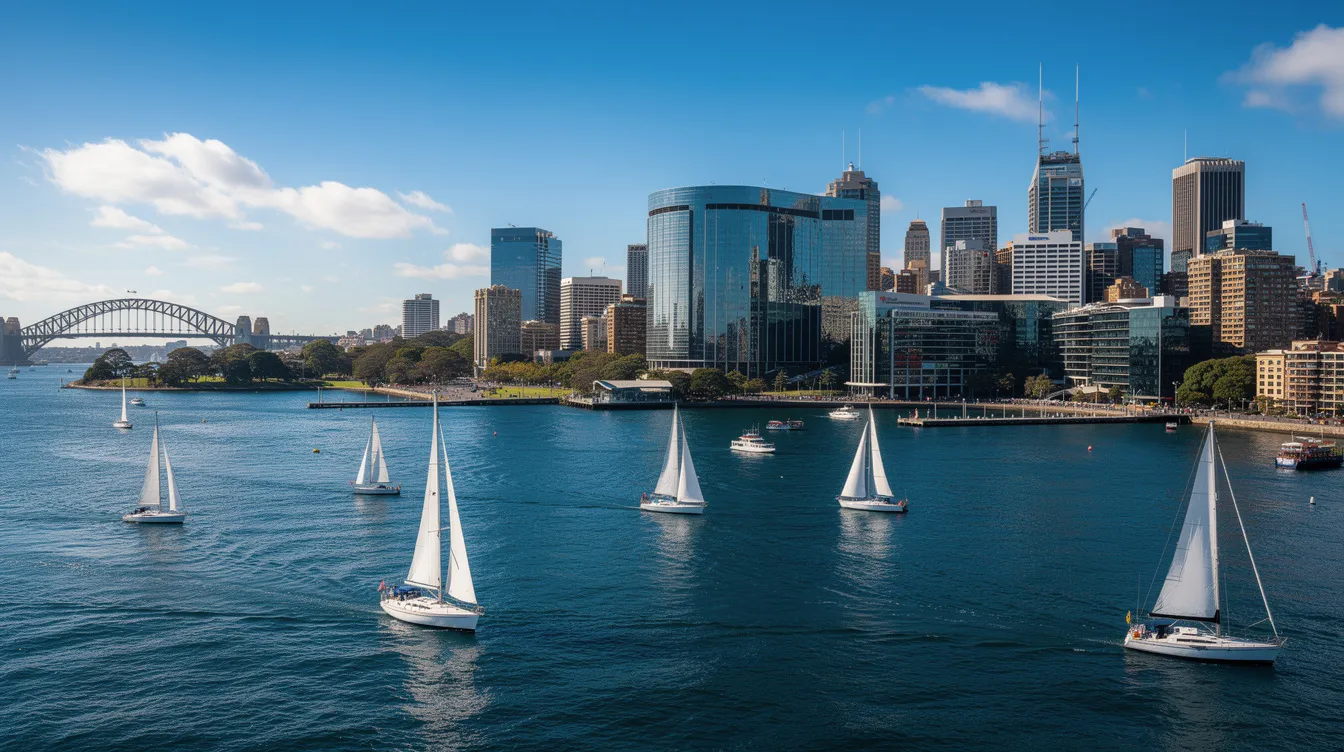
Sydney is australia's biggest city, the oldest city of European settlement in the country, and the economic engine of new south wales. It is also the most expensive city in Australia, which means you need to go in with eyes open.
Lifestyle and culture. Sydney blends skyscraper density with coastal city living. You can surf at Bondi and Manly before work, explore world class dining in Surramatta or Newtown, and visit the famous opera house or the Harbour Bridge on a weekend stroll. The city has about 400 public parks and playgrounds, and 73% of expats report feeling at home here. Sydney is home to the iconic Opera House and Harbour Bridge, and its beaches include famous spots like Bondi and Manly.
Job market. Sydney ranks 5th globally for career prospects. It is the go-to for high-paying jobs in finance, tech, media, education and healthcare, and serves as a gateway for multinational companies. The strong job market offers diverse job opportunities across nearly every white-collar sector.
Cost of living. Sydney's monthly living costs for singles are about AUD 3,034 excluding rent. Median weekly rent across the city sits around AUD 760 for houses and units combined. Inner city apartments near the CBD can run AUD 550–700 per week for a one-bedroom; outer suburbs are cheaper but add commute time. Sydney and Melbourne have the highest living costs in Australia.
Who Sydney suits. Ambitious professionals, students wanting top-tier universities, and anyone who thrives on big city life and can absorb the housing costs.
Melbourne is widely recognised as australia's cultural capital, ranking 4th globally in the 2025 EIU Liveability Index-the highest of any Australian city. It scored 100 out of 100 for healthcare and education.
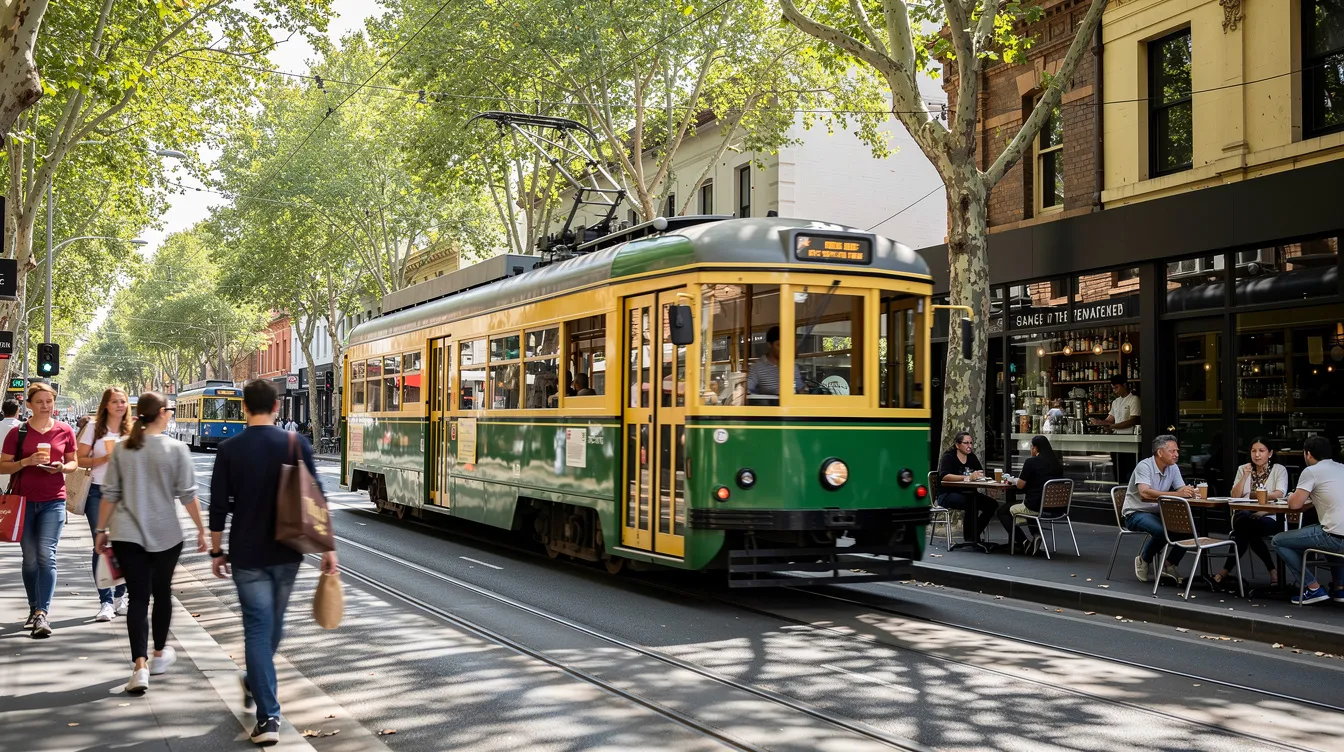
Lifestyle and culture. Laneway cafés, street art, live music, and art festivals define daily life. Melbourne hosts world-class events like the Australian Open, the Formula 1 Grand Prix, and the Melbourne International Comedy Festival. Art lovers, foodies, and sport fans all find their niche here. Melbourne's tram network is the largest outside Europe, making it easy to explore without a car. The city experiences unpredictable weather, often described as "four seasons in one day," so layering is non-negotiable.
Job market. Strong in education, healthcare, fintech, professional services and creative industries. 77% of expats report happiness living in Melbourne, and its diverse communities-4.3% of the population is UK-born alone-make settling in relatively smooth.
Cost of living. A single person in Melbourne needs approximately AUD 3,434 monthly excluding rent. Median weekly rent is around AUD 575. Renting a one-bedroom apartment in the CBD costs roughly AUD 450–600 per week; outer suburbs drop to AUD 350–450.
Who Melbourne suits. Young professionals, students, art lovers, and families seeking a balanced lifestyle in a great city that sits just below Sydney on price but arguably above it in cultural depth.
Brisbane is the fast-growing capital city on the east coast, home to over two million residents and a booming economy now worth AUD 223.23 billion. It offers a laid back lifestyle that bigger cities struggle to match.
Lifestyle. Riverfront living along the brisbane river, outdoor dining year-round, kayaking and paddleboarding in calm waterways, and easy weekend drives to the Gold Coast or Sunshine Coast. Brisbane enjoys approximately 283 sunny days annually, making its sunny climate a genuine daily perk rather than a marketing line. Brisbane offers a warm climate and a relaxed lifestyle with a comfortable pace of life.
Job market. Brisbane's job market is booming in healthcare and education, with additional growth in construction, tourism, and business services. Preparation for the 2032 Olympic and Paralympic Games is fuelling infrastructure investment and creating thousands of roles in transport and urban development. The city's economy continues to diversify.
Cost of living. Monthly living costs in Brisbane are around AUD 2,888.87 for a single person excluding rent. Median weekly rent sits at AUD 670-well below Sydney. A three-bedroom inner-city apartment averages roughly AUD 3,889 per month, versus AUD 2,844 in suburban areas.
Who Brisbane suits. Families who want a capital city without Sydney-level prices, remote workers chasing sun, and expats who value a relaxed lifestyle paired with a decent job market.
Perth is the capital of western australia and the largest city on the west coast. Perth is geographically isolated from eastern Australia-the nearest major city, Adelaide, is over 2,700 km away-but that distance buys you space, light, and a lifestyle that is hard to replicate elsewhere.
Natural setting. Perth is known for its stunning beaches and expansive parklands. Cottesloe, Scarborough, and City Beach offer beautiful beaches minutes from the CBD, while the Swan River winds through the city centre. Weekend trips to Rottnest Island or the Margaret River wine region are standard. The city offers a casual, outdoorsy lifestyle for residents, and Perth enjoys a year-round warm climate ideal for outdoor activities.
Job market. Perth has a thriving economy with strong job opportunities, historically anchored by the mining and resources sectors and now diversifying into technology, education, defence, and healthcare. Many high-earning roles remain tied to resources sectors, including fly-in fly-out (FIFO) work.
Cost of living. Essential monthly costs for a single person average around AUD 2,129 in Perth. A one-bedroom apartment in the city centre rents for roughly AUD 1,924 per month; outside the centre closer to AUD 1,513. Families can expect monthly budgets of AUD 8,000–9,000 including rent and schooling.
Who Perth suits. People who prioritise an outdoor lifestyle, stunning beaches, and family friendly suburbs over proximity to the east coast. Perth's community is family-friendly and welcoming to newcomers, making it a strong choice for those in mining, engineering, or anyone craving a family friendly city on the west coast.

Adelaide, the capital of south australia, is known as the "20-minute city" thanks to Adelaide's average commute time of just 28.82 minutes. Adelaide is known for affordable housing and its food scene, and it is 14% cheaper than other major Australian cities.
Lifestyle. Easy access to uncrowded beaches like Glenelg and Henley, a wine scene anchored by the Barossa Valley and McLaren Vale, and a calendar packed with art festivals and food events. Adelaide hosts the Southern Hemisphere's largest undercover market, the Adelaide Central Market, which draws locals daily. Fine dining and great food are genuinely affordable here compared with other cities.
Job market. Growing in defence, renewable energy, healthcare, education, and emerging tech fields like cybersecurity. Adelaide recruits at least 5,000 skilled migrants annually. Some specialised roles may have fewer vacancies than Sydney or Melbourne, so networking matters more.
Cost of living. Adelaide's average rent is AUD 947 per week. Median house prices remain well below Sydney and Melbourne. For singles, monthly costs sit comfortably below AUD 2,800 in most scenarios, making Adelaide one of the most affordable cities among state capitals.
Who Adelaide suits. Families wanting space, remote workers, and anyone drawn to a slower pace, great food, and a wine scene without paying Melbourne or Sydney premiums.
Canberra is a purpose-built capital city positioned between Sydney and Melbourne. It offers stability, structure, and an abundance of green spaces rarely found in many australian cities of comparable size.
Lifestyle. Bike paths, Lake Burley Griffin, family friendly suburbs, and national institutions including Parliament House, the Australian War Memorial, and the National Gallery. It is a family friendly city with low crime and high-quality schools, though the nightlife is quieter than coastal alternatives.
Job market. Canberra provides high employment in the public sector-government, defence, research, and universities dominate. Unemployment hovers around 3%, and Canberra offers strong employment opportunities in government and policy-related fields. These sectors bring stability that private-sector-heavy cities cannot always guarantee.
Cost of living. A one-bedroom apartment in the city centre rents for roughly AUD 2,350–2,550 per month. Total monthly costs for a single person, including rent, run approximately AUD 3,150–3,700. For families, a three-bedroom house rents for AUD 2,800–3,500 per month.
Who Canberra suits. Government employees, defence professionals, academics, and families who value schooling, safety, and structured living over a vibrant coastal setting.
Hobart is known for its scenic nature and slower lifestyle, combining colonial-era architecture with the dramatic backdrop of kunanyi / Mount Wellington and the Derwent River. Residents enjoy stunning views of Mount Wellington and the Derwent River from many parts of the city.
Lifestyle. A slower pace, strong local food and wine culture, and easy access to hiking trails, national parks, and nature reserves. Hobart's art scene is highlighted by the Museum of Old and New Art (MONA), and the city hosts vibrant events like Dark Mofo and Festival of Voices. Nature lovers and art lovers alike find plenty here.
Job market. Smaller than mainland capitals, with roles concentrated in tourism, agriculture, aquaculture, healthcare, and education. Some professionals may need remote or hybrid work to match salaries offered in larger cities. Job opportunities in Australia depend on the city and industry, and Hobart is no exception.
Cost of living. Hobart is Australia's most affordable major city for housing. Hobart's monthly living costs range from AUD 2,200 to 2,800, and median weekly rent is approximately AUD 573. Prices have risen in recent years but remain below Sydney and Melbourne.
Who Hobart suits. Nature lovers, remote workers, families seeking a quiet life, and anyone willing to trade bigger cities for stunning natural beauty and space.
These two Queensland regions deliver iconic lifestyle by the sea, but in different flavours.
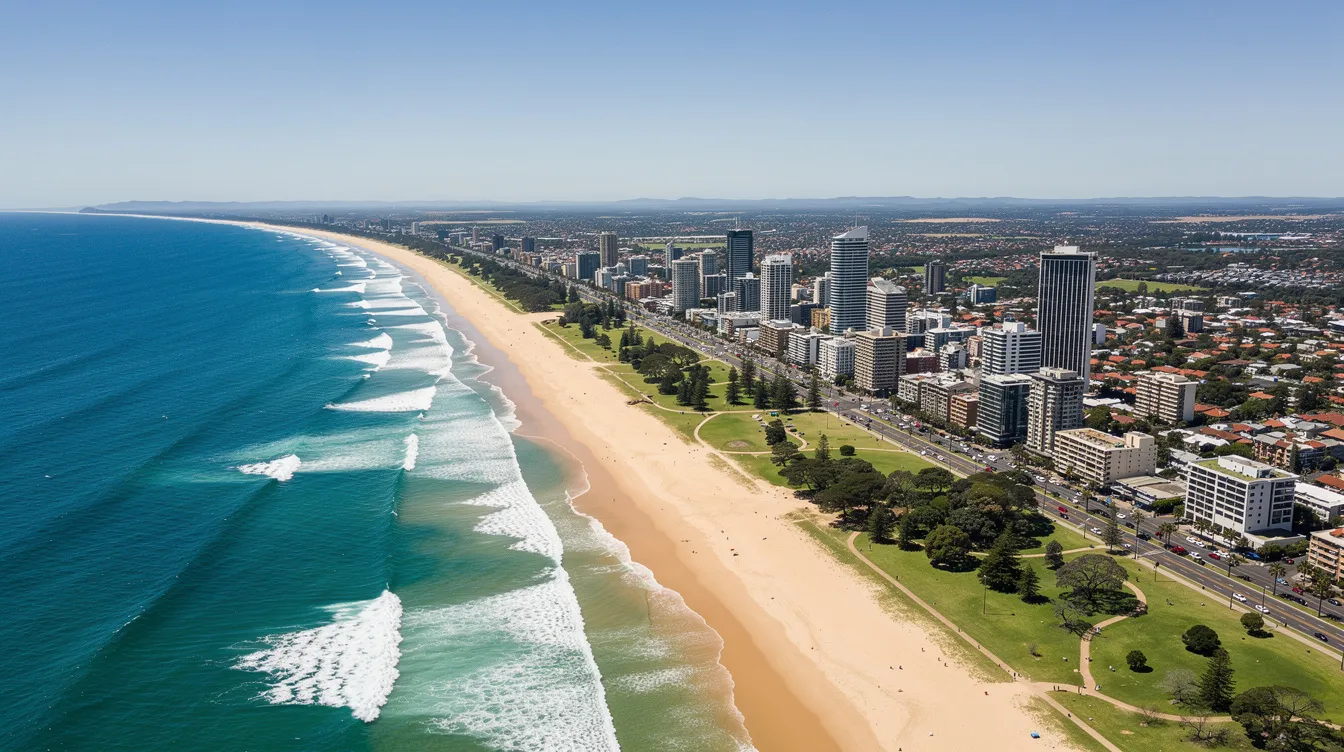
Gold Coast. A vibrant coastal city with a high-rise skyline along Surfers Paradise, long sandy beaches, surfing culture, nightlife, and theme parks. The Gold Coast is not just a holiday town anymore-it has matured into a rounded coastal setting with growing suburbs that appeal to families. Job opportunities are strong in tourism, hospitality sectors, construction, education, and health. Coastal living here is energetic and social.
Sunshine Coast. Quieter and more nature-oriented, the sunshine coast stretches around towns like Maroochydore, Mooloolaba, and Noosa. National parks and hinterland villages give it a slower pace and a stronger connection to outdoor living. Healthcare, education, small business, and a growing remote-worker community drive the local economy, though there are fewer corporate roles than Brisbane or Sydney.
Cost of living. Both regions are cheaper than inner Sydney waterfront living but more expensive than some inland areas. Sunshine Coast median house values have approached AUD 920,000, reflecting strong demand. Rents vary by suburb but generally sit below Sydney and Melbourne levels. Public transport is generally reliable in major australian cities, but both these regions still lean on cars for daily commuting.
Who each suits. The Gold Coast appeals to those wanting a vibrant coastal city with nightlife and beautiful beaches. The Sunshine Coast is a fit for families, retirees, and remote workers who want natural beauty and a calmer rhythm.
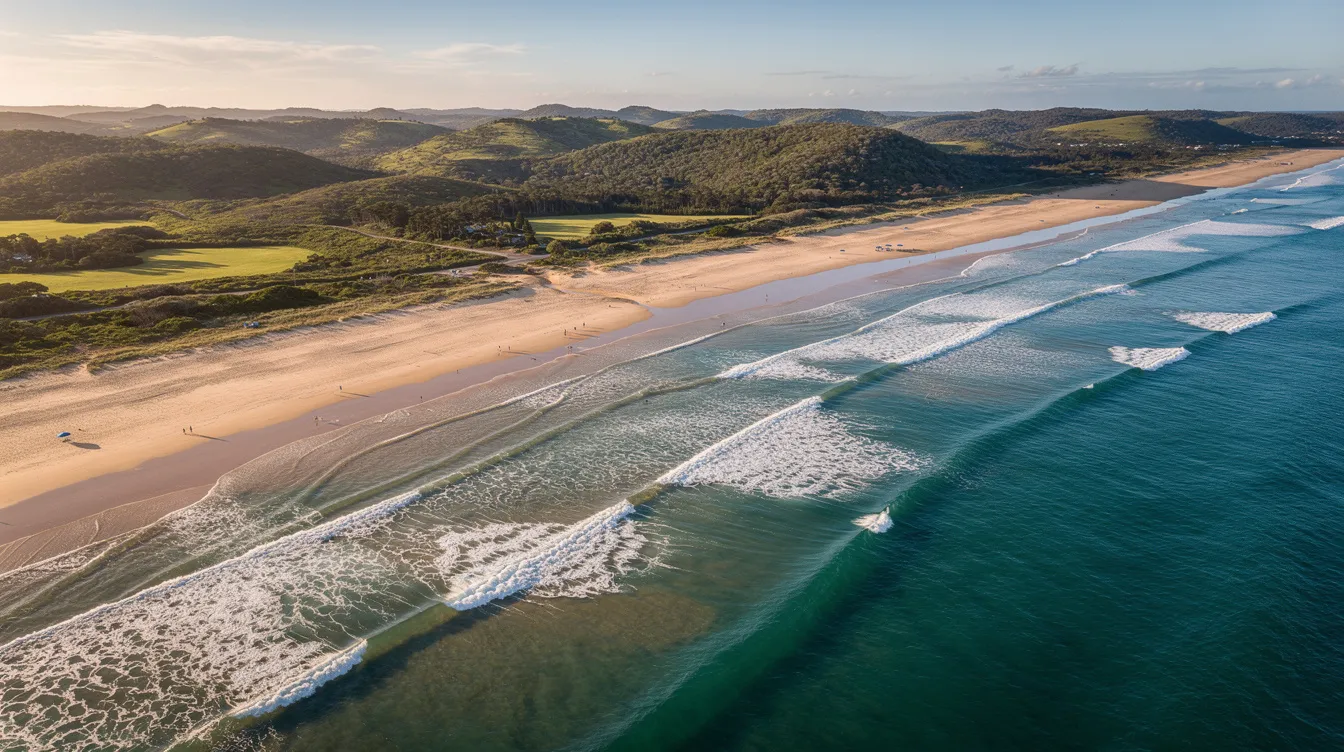
Beyond the capitals and coastal hubs, many regional centres offer strong value. Townsville provides tropical coastal living near the great barrier reef. Newcastle is a coastal city in new south wales with a solid university and port economy. Inland centres like Ballarat and Bendigo in Victoria offer heritage streetscapes, with median house prices around AUD 677,500-well below Sydney.
Common advantages include lower housing costs, shorter commutes, close-knit communities, and easier access to nature. These affordable cities consistently show home-price-to-income ratios far below the capitals.
Trade-offs are real: smaller job markets, fewer specialised roles, reduced public transport, and longer trips to major airports. Before committing, check local job availability and infrastructure-schools, hospitals, and internet speeds matter as much as house prices.
Regional centres suit tradespeople, healthcare workers, teachers, remote workers, and families who prioritise space and affordability over big-city amenities.
There is no single perfect city. The ideal australian city for you depends on your lifestyle preferences-climate, budget, industry, and family needs. To help you decide, try this framework:
Define your non-negotiables (maximum rent, must be near the coast, specific industry cluster).
Shortlist two or three cities that fit.
Compare cost of living, diverse job opportunities, and housing using recent data rather than outdated assumptions.
Spend time in shortlisted cities or explore neighbourhoods via local community groups and street-view tools.
As a starting point: career-driven professionals tend to pick Sydney or Melbourne. Budget-conscious families lean toward Adelaide or Brisbane. Those after a quiet life gravitate to Hobart, the Sunshine Coast, or regional hubs. Professionals in mining and energy often favour Perth.
When you explore what it means to live in australia, discover the city that fits how you want your everyday life to feel-not just the weekends.