ACE Money Transfer
ACE Money Transfer
31 Jan 2025
Whether you're planning a trip to Copenhagen or sending money to someone living in Denmark, understanding the Danish krone is the first step to getting the most from your budget. This guide covers everything from denominations and exchange rates to practical buying tips and the best ways to transfer DKK.
The Danish krone (DKK) is the official currency of Denmark, symbolised as kr and pegged closely to the euro. It's one of the most stable currencies in Europe, making it predictable for travellers and money senders alike.
Here's what you need to know at a glance:
The Danish krone is the national currency of Denmark, Greenland, and the Faroe Islands.
The GBP to DKK exchange rate has typically ranged between 8.0 and 9.0 kr per pound in recent years.
Denmark is extremely card-friendly, but carrying some cash in Danish kroner is still wise for small kiosks, rural areas, and coin-operated services.
You can buy Danish krone online for home delivery or click & collect from UK-based travel money providers. If you need to send money to Denmark rather than carry cash, ACE Money Transfer is an excellent option thanks to its competitive exchange rates, low transparent fees, and fast transfer speeds.
The sections below cover Danish krone exchange rates, how and where to buy Danish kroner, denominations and design features, the currency's history, and practical spending tips for your trip.
The Danish krone (currency code DKK, symbol kr) is the official currency of Denmark and the wider Kingdom of Denmark. Danmarks Nationalbank controls and issues the Danish krone, managing its supply and maintaining price stability.
The word krone comes from the Latin word corona, meaning crown in Danish. The plural form is kroner, and you may occasionally see the English term Danish crown used, though krone is the standard in banking and everyday use. One krone is subdivided into 100 øre, although øre coins see very limited circulation in daily transactions today.
Prices in Denmark are typically written with the amount first - for example, 50 kr rather than kr 50. This formatting is consistent across shops, restaurants, and tourist spots.
While the Danish krone is technically a free-floating currency, it is tightly managed against the euro through a fixed-rate mechanism. This peg keeps the Danish krone DKK exchange rate remarkably stable, creating fewer surprises for anyone dealing with the Danish currency, whether they are visiting or making international transfers.
The krone is the official currency of Denmark, Greenland, and the Faroe Islands. Here's how it works across each territory:
Denmark (including Copenhagen, Aarhus, Odense, Aalborg) - DKK banknotes and coins are used everywhere.
Greenland - the same Danish krone notes and coins circulate as legal tender.
Faroe Islands (alongside separate Faroese króna banknotes pegged 1:1 to DKK).
No other countries outside the Kingdom of Denmark use the Danish krone as legal tender. Neighbouring Nordic nations - Sweden, Norway, and Iceland - all maintain their own distinct currencies.
The Faroese króna features distinct banknotes with its own designs, but these are backed by Danmarks Nationalbank and equal exactly 1 DKK in value. Danish coins circulate freely across all three territories. Tourists visiting the Faroe Islands may see both Danish and Faroese notes in their change, but there's no need to exchange between them - they're interchangeable at face value.
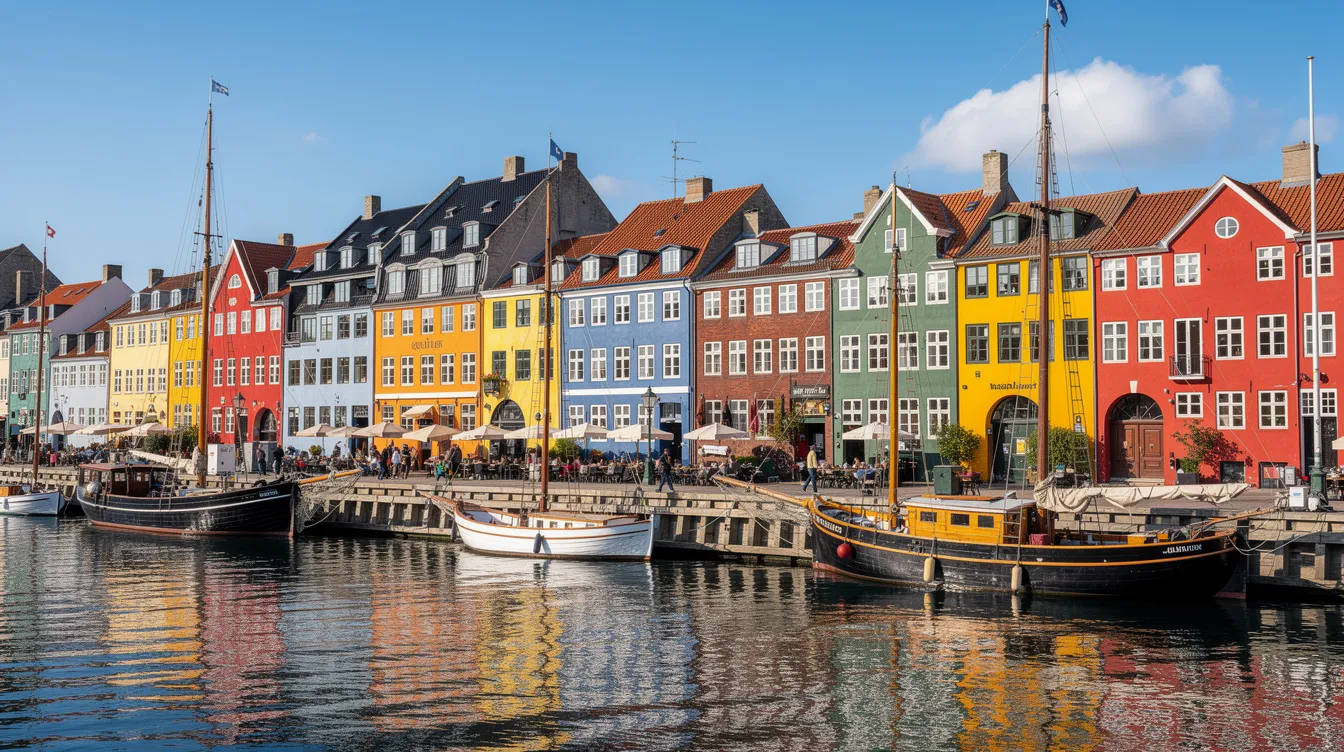
Understanding Danish krone banknotes and krone coins makes paying for things and budgeting much easier when you visit Denmark.
Danish coins include the following denominations:
| Coin | Material / Colour | Notable feature |
|---|---|---|
| 50 øre | Copper-coloured | Limited use |
| 1 kr | Silver-coloured | Central hole |
| 2 kr | Silver-coloured | Central hole |
| 5 kr | Silver-coloured | Central hole |
| 10 kr | Golden | No hole |
| 20 kr | Golden | No hole |
The 25-øre coin was withdrawn back in 2008. In December 2025, new coin designs were introduced honouring King Frederik X, featuring his portrait on higher-value coins and his monogram on lower denominations.
Danish banknotes include 50 kr, 100 kr, 200 kr, 500 kr, and 1,000 kr denominations. The highest value banknote is the 1,000 krone note, although it was withdrawn from legal tender as of 1 June 2026 to help combat money laundering. The remaining notes in the current "2009 series" feature bridges and Danish landscapes, with upgraded security versions rolled out between 2020 and 2026.
Visitors should aim to receive only current-series notes from exchanges and ATMs. Older pre-2009 series banknotes have largely expired and may not be accepted by shops, though they can still be exchanged at designated Danmarks Nationalbank offices until set deadlines.
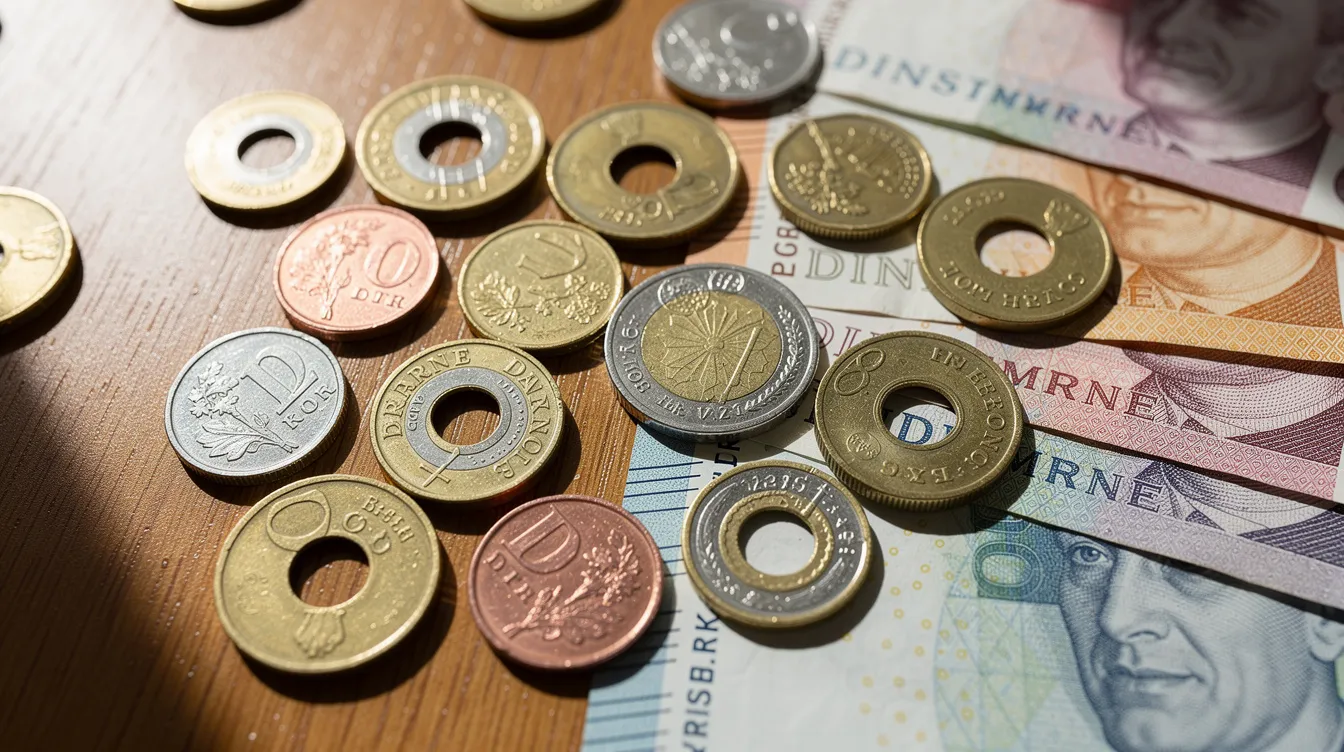
The bridge and landscape banknote series introduced from 2009 gives each denomination a distinct visual identity. The 50 kr note, for instance, features one bridge design, while the 500 kr showcases another, making the different denominations easy to tell apart at a glance.
Security features on Danish banknotes include:
Watermarks visible when held up to light
Holograms that shift colour and pattern when tilted
Colour-shifting ink on denomination numerals
Microprinting readable only under magnification
Tactile marks to help visually impaired users identify note values
A security window thread embedded in the paper
On the coin side, the colour scheme and metal types provide quick identification. The 50 øre is copper-coloured, 1–5 kr coins use a silver-toned cupronickel alloy, and the 10 and 20 kr coins have a golden aluminium bronze finish. The holes punched through the centre of the 1, 2, and 5 kr coins are a distinctive feature many visitors notice - they serve both a design and accessibility purpose, making it easy to distinguish values by touch alone.
Denmark has been a member of the European Union since 1973, but it has opted out of adopting the euro despite being an EU member. Instead, the Danish krone is pegged to the euro through ERM II (Exchange Rate Mechanism II), which it joined on 1 January 1999.
The krone is pegged at approximately 7.46038 DKK per euro, with an allowed fluctuation band of ±2.25% around this central rate. In practice, this means the EUR/DKK rate can theoretically move between about 7.29 and 7.63, but it almost never strays far from the midpoint. The Danish krone trades at about 0.1338 EUR per 1 DKK.
Two key political moments shaped this arrangement:
The Maastricht Treaty opt-out, which gave Denmark the legal right to keep its own currency.
The referendum of 28 September 2000, when around 53.2% of Danish voters rejected joining the euro, with turnout of about 87.6%.
Because of this peg, Denmark's monetary policy is closely aligned with the European Central Bank. The country maintains large foreign exchange reserves to support the krone's stability, and Denmark's economy benefits from low inflation due to the euro peg. The stability of the krone also supports an export-driven trade economy for Denmark, making it an attractive trading partner within Europe.
For travellers and people sending money to Denmark, this arrangement means relatively predictable Danish krone exchange rates against the euro. Since GBP and USD move against the euro based on broader economic forces, the GBP-to-DKK rate is essentially driven by how the pound performs versus the euro, plus the narrow DKK-EUR band.
The Danish krone exchange rate is shaped by the euro peg plus wider market forces acting on the euro itself. Because of the tight link to EUR, the Danish krone experiences less volatility than many free-floating currencies, but cross-rates like GBP/DKK still move meaningfully.
Here are the typical recent ranges:
1 GBP often ranging roughly between 8.1 and 8.8 DKK, depending on UK economic conditions and broader sentiment.
1 EUR fixed near 7.46 DKK, rarely deviating more than a fraction.
The main factors that affect the GBP to Danish krone rate include:
Bank of England and ECB interest rate decisions
UK and EU inflation, employment, and GDP data
Global risk sentiment and safe-haven demand
Trade flows and capital movements between the UK and eurozone
Before you buy Danish krone or send money, use a live currency converter or currency calculator to check the current mid-market rate. High-street exchange boards can lag behind real-time market movements, and the difference can cost you.
Specialist digital providers like ACE Money Transfer often offer more competitive Danish krone exchange rates than traditional banks and high-street bureaux. When comparing rates from different sources, always look at the total cost - the exchange rate margin plus any fixed fees - rather than just the headline rate.
There are several ways to get your hands on travel money in Danish kroner before or during your trip. Each method has trade-offs in convenience, cost, and speed.
Pros: instant cash, no delivery wait, face-to-face service.
Cons: sometimes poorer exchange rates, limited opening hours, possible commission fees, and smaller DKK stock compared with popular currencies like euros or dollars.
Many currency suppliers offer better rates for online orders than their in store rates. The process is straightforward:
Choose amount in GBP.
Review displayed Danish krone exchange rate and total DKK you'll receive.
Pick home delivery or click collect at a nearby branch or partner store.
You can order Danish krone online before 3pm for next-day delivery with many providers, making it easy to get your holiday money sorted without leaving home.
Withdrawing DKK from ATMs in Denmark gives you local currency at interbank-adjacent rates, but watch out for foreign ATM fees, your bank's non-sterling transaction charges, and dynamic currency conversion prompts.
If you want to send money rather than carry large amounts of cash, ACE Money Transfer is a strong choice. Users fund a transfer in GBP and the recipient receives DKK directly to a Danish bank account. ACE Money Transfer offers competitive rates, low transparent fees, and transfers typically settle within 1–2 business days.
Buying Danish krone online often yields better exchange rates than walk-in branches. And you can secure a better exchange rate by ordering larger amounts - most providers improve their online rate for higher-value orders.
Comparing rates and methods before you buy can save you a surprising amount, especially on larger orders.
Often better Danish krone exchange rates than walk-in branches, sometimes by 1–3%.
Ability to compare multiple providers from home using a currency converter.
Scheduled home delivery or timed collection at your convenience.
Order Danish krone online through a provider's website or app.
Choose a nearby collection point (e.g., supermarket or high-street store).
Bring ID and your payment method when collecting your currency delivered to the branch.
Typical order limits seen on UK travel money sites include minimum order values around £250 and free home delivery from roughly £500, though these vary by provider. Buying larger quantities of Danish krone can improve exchange rates, so if you're travelling with a partner or group, pooling your order online may get you a better deal.
Exchange rates may vary between online and in-store purchases, even with the same provider. Always confirm the Danish krone rate at order time, and check the sell rates listed for DKK alongside other currencies to make sure you're comparing like for like.
Timing the foreign exchange market perfectly is difficult - even professional traders struggle with it. But there are practical guidelines that can help you avoid overpaying.
Monitor GBP to DKK trends over a few weeks if your trip is months away, using a free online rate tracker.
Buy part of your budget early for certainty and the rest closer to departure in case rates improve - a "split the risk" approach.
Beyond comparing rates, consider these non-rate factors:
Having some Danish krone cash on arrival for taxis, small shops, and emergencies avoids stress.
Avoiding poor last-minute airport rates and high ATM or card fees abroad can save you more than a small rate movement would.
Set a "target rate" using online currency calculators - if the market hits your number, move quickly rather than chasing every small fluctuation. The best Danish krone rate is the one that meets your budget needs with certainty, not a theoretical peak you might never catch.
For larger amounts or regular payments (such as rent or tuition in Denmark), a specialist app like ACE Money Transfer is preferable. Tighter FX spreads and transparent fees matter far more than trying to guess day-to-day moves, and ACE Money Transfer lets you lock in rates and send funds whenever you're ready.
Denmark is one of the most cashless countries in Europe. Most Danes pay for everything from groceries to bus fares with contactless payments via Visa, Mastercard, or mobile wallets. The Danish krone facilitates electronic payments significantly, and you'll rarely be turned away for tapping a card - even for a single coffee.
That said, Danish krone banknotes and coins still have important uses:
Small kiosks and rural shops that may not accept foreign cards
Local markets, flea markets, and pop-up stalls
Some public toilets and coin-operated lockers
Tipping in restaurants or for tour guides
When paying by card in Denmark, watch out for:
Non-sterling transaction fees charged by your UK bank (typically 1–3%)
Dynamic currency conversion (DCC), where the terminal offers to charge you in GBP instead of DKK - always choose to pay in DKK for a fairer rate
ATM withdrawal fees, both from the Danish ATM operator and your bank
If you prefer not to rely on your primary bank cards abroad, you have several options:
Buy Danish kroner cash beforehand from a UK travel money provider.
Use a prepaid travel card loaded with DKK to control spending.
Or send money to a local account in DKK via ACE Money Transfer for safer, cash-light spending during an extended stay.

Denmark is one of the more expensive countries in Europe - consumer price levels sit roughly 40% above the EU average, with a VAT rate of 25% included in all displayed prices. Knowing approximate costs in Danish kroner helps you set a realistic budget before you go.
| Item | Typical price range (DKK) |
|---|---|
| Cup of coffee | 35–50 kr (up to 70 kr in tourist spots) |
| Pint of beer in a bar | 50–75 kr |
| Casual lunch / street food | 100–130 kr |
| Mid-range dinner main course | 200–350 kr |
| Item | Typical price range (DKK) |
|---|---|
| Single metro/bus ticket (zones 1–2, Copenhagen) | 24–26 kr |
| 24-hour city transport pass | 80–100 kr |
| Tivoli Gardens admission | 150–200 kr |
| Canal tour | 100–120 kr |
To translate these prices into pounds, use a live currency calculator with the current Danish krone exchange rate. At a rate of, say, 8.5 DKK per pound, a 50 kr coffee costs roughly £5.90 - but if the rate moves to 8.8, that same coffee drops to about £5.70. Small rate differences add up over a week.
Budget traveller: DKK 400–600 per day
Mid-range: DKK 800–1,200 per day
Higher-end: DKK 1,500+ per day
Hotel costs are a major factor - expect DKK 1,200–2,000 per night for a mid-range double room in Copenhagen. Booking in advance and travelling outside peak summer months can bring those numbers down.
The Danish krone has a rich history stretching back nearly 150 years, rooted in one of the most ambitious monetary experiments in European history.
The modern krone was introduced on 1 January 1875 as part of the Scandinavian Monetary Union, which brought three countries - Denmark, Sweden, and Norway - together under a shared gold standard with a common currency name. The krone replaced the older rigsdaler and established a system where gold coins could circulate freely across borders.
The Scandinavian Monetary Union dissolved during World War I as the gold standard became unsustainable under wartime economic pressures. Despite the union's collapse, Denmark kept the krone name and structure, a decision that rooted the currency firmly in national identity.
Major modern developments include:
Post–World War II monetary reforms that stabilised the krone in the new international order.
The shift away from the gold standard toward managed exchange rates.
The move to a tight euro peg through ERM II in 1999, anchoring Danish monetary policy to the eurozone while preserving an independent currency.
Today, there's a strong preference inside Denmark for maintaining the DKK. The 2000 referendum settled the question of euro adoption for at least a generation, and the krone remains a symbol of Danish sovereignty. Periodic political debate surfaces, but most Danes continue to favour keeping their own currency - and the fairy tales of a smooth euro transition haven't convinced the electorate otherwise.
Here's a checklist-style rundown for anyone dealing with Danish krone currency from the UK or other countries.
Decide how much Danish krone cash you need for the first 24–48 hours - a few hundred kroner usually covers arrival transport, a meal, and small purchases.
Compare Danish krone exchange rates online before you buy, using a currency converter to benchmark the mid-market rate.
Avoid leaving exchange to the airport if possible due to weaker rates and higher hidden fees.
Keep small denominations (50–200 kr) for buses, small shops, and tipping.
Store large notes separately from everyday spending money.
Always choose to be charged in DKK, not your home currency, on card terminals - this avoids dynamic currency conversion markups.
Either keep some Danish kroner for a future visit or sell back leftover notes; note that many bureaux will not buy back coins.
Check any buy-back guarantees or minimums if you bought DKK from a travel money provider - some offer guaranteed buy-back at a fair rate within a set period.
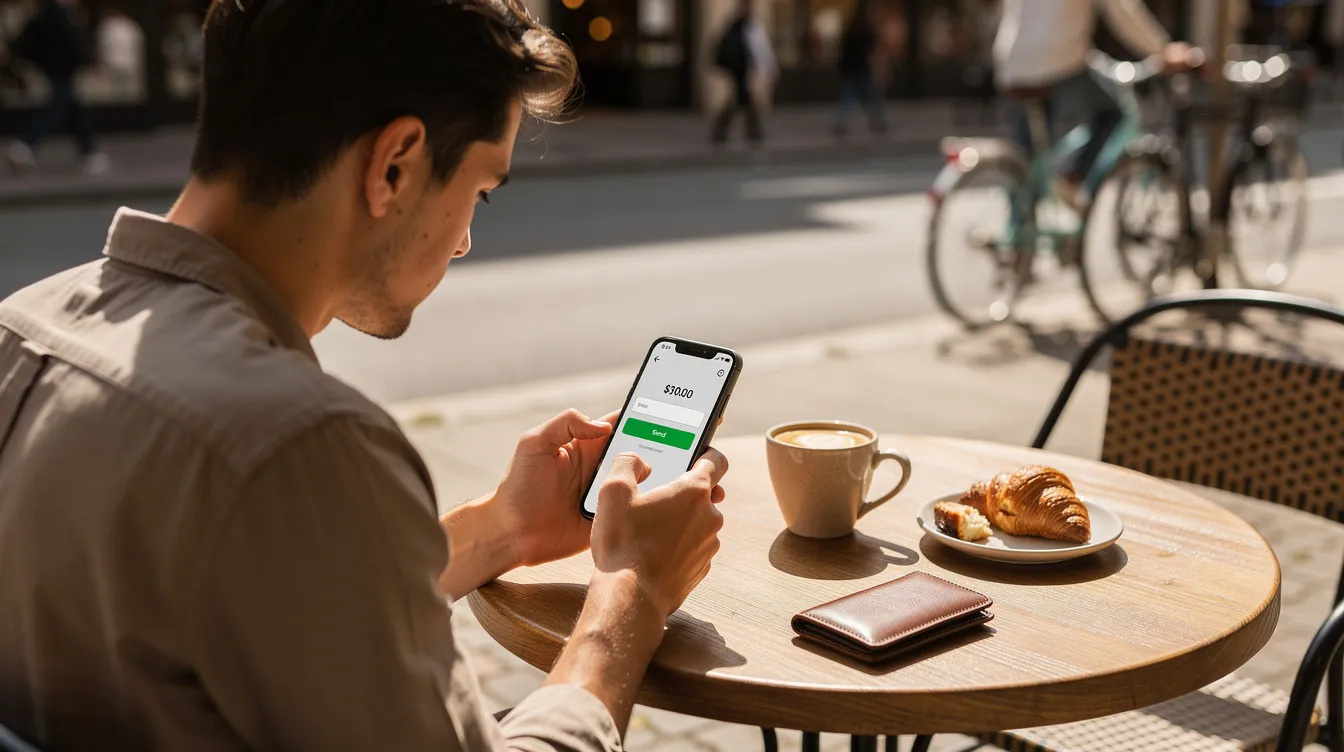
If you regularly need to send money in Danish kroner - for study, family support, or bills - setting up an ACE Money Transfer account can save time and repeated FX markups compared with high-street options. Rather than buying travel money online each time, you can send DKK directly from your phone whenever you need to.
There's an important distinction between buying travel cash and sending DKK to a bank account in Denmark, Greenland, or the Faroe Islands. Cash is for your pocket; a bank transfer is for paying someone at a distance, funding your own Danish account, or covering regular obligations.
Supporting family or friends living in Denmark.
Paying rent, tuition, or suppliers in Danish kroner.
Funding a local account for your own extended stay, internship, or study programme.
Open an account with a provider (app or web signup takes minutes).
Choose DKK as the payout currency and enter the amount.
Enter recipient details - their Danish bank account number and name.
Fund the transfer in your local currency (GBP, EUR, or others).
ACE Money Transfer stands out as a leading money transfer app for sending funds to Denmark. Here's why:
Strong DKK exchange rates that consistently beat high-street banks - the margin over mid-market is typically well under 1%, compared with 2–4% at traditional banks.
Low and transparent fees with no hidden fees buried in the fine print.
Fast transfer speeds, with most payments arriving within 1–2 business days.
Full app-based convenience on mobile and web, with real-time notifications and 24/7 access.
Using a dedicated service like ACE Money Transfer often beats banks on Danish krone exchange rates and total cost, especially for repeated or larger transfers. When you're comparing rates across providers, remember to look at the total amount your recipient receives in DKK - that single number tells you everything about whether you're getting a fair deal.
Whether you're buying holiday money for a weekend in Copenhagen, ordering Danish krone online for a Greenland adventure, or making regular payments to Denmark, understanding how the Danish krone works puts you in control of your costs. The currency's stability, its close link to the euro, and Denmark's excellent payment infrastructure make it straightforward to manage - as long as you compare your options and avoid overpaying on exchange rates.
For sending money to Denmark, download the ACE Money Transfer app today. Lock in competitive Danish krone rates, skip the hidden fees, and get your DKK where it needs to be - fast.