ACE Money Transfer
ACE Money Transfer
26 Oct 2026
Sending money abroad from India means navigating fees, exchange rates, regulations, and processing times. If you have an account with RBL Bank, formerly Ratnakar Bank, you have several options for cross-border transfers. This guide explains how RBL Bank's international remittance services work, what the Emirates NBD acquisition means for your transfers, and how specialist platforms like ACE Money Transfer can complement your banking relationship.
RBL Bank (formerly Ratnakar Bank Limited, now RBL Bank Ltd) facilitates international money transfers under the Reserve Bank of India's Liberalised Remittance Scheme. The bank uses SWIFT-based wire transfers and maintains correspondent banking relationships to move funds from India to beneficiaries worldwide. RBL Bank’s official outward remittance information lists 17 supported currencies, including USD, GBP, EUR, AED, CAD, SGD and AUD. Currency availability and exchange rates may vary by transfer service and transaction. Many NRIs and migrants also pair their RBL Bank account with specialist remittance services like ACE Money Transfer for better rates on popular corridors.
Here is how customers can fund international transfers:
Send a direct SWIFT remittance from an RBL Bank savings or current account through internet banking or by visiting a branch.
Send an online bank transfer (NEFT/RTGS/IMPS) from your RBL Bank account to a remittance provider such as ACE Money Transfer.
Use a debit or credit card to pay through a remittance platform to initiate cross-border payouts.
This article covers practical steps, fees, speed, and safety for sending money from India to countries like the UAE, UK, EU, USA, and others.
RBL Bank began its journey in 1943 as Ratnakar Bank, incorporated in Kolhapur, Maharashtra. Over the decades, the bank has transformed from a small community bank serving farmers and traders in Maharashtra and Karnataka into a full-service Indian bank. RBL Bank reported 15.48 million customers in its FY 2024–25 Integrated Annual Report.
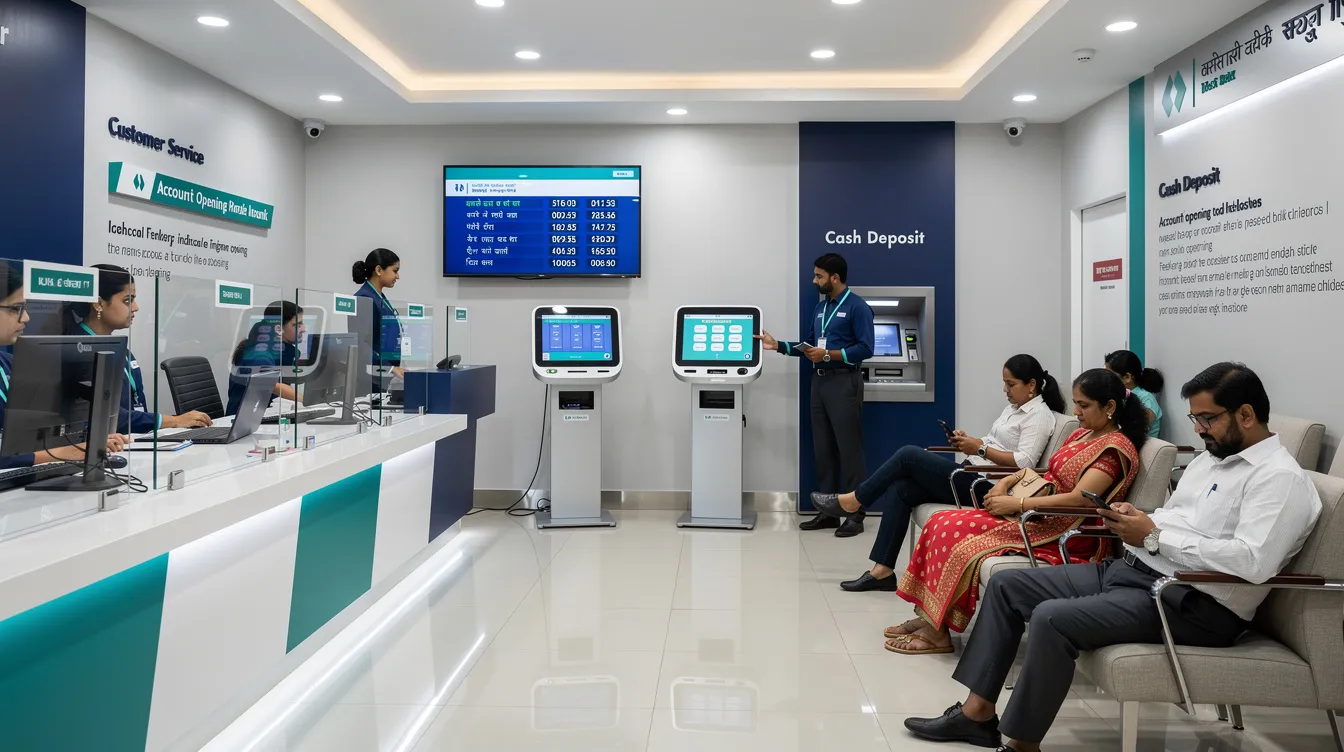
Key growth markers and financial highlights:
RBL Bank operates a network of 628 branches and 1,339 business correspondent branches across 28 Indian states and union territories, as stated on its official website. These figures reflect the bank’s published network information and may change over time.
The bank operates multiple business verticals: corporate and institutional banking, commercial banking, retail assets (including rural vehicle finance, two-wheeler loans, and gold ornaments-backed lending), microbanking and medium-enterprise lending, and treasury operations.
According to RBL Bank’s official Q1 FY27 financial results, the bank reported net total income of ?26.14 billion for the quarter ended 30 June 2026. For details, see the bank's official financial highlights and Q1 FY27 results.
RBL Bank's profit margin was 11.10% in FY27, and its 1-year return was 46.11% in FY24, reflecting earnings growth driven by retail banking expansion and technology adoption.
Financial inclusion remains central to RBL Bank's plans, with co-branded credit cards (notably through its partnership with Bajaj Finance), digital loans, and microbanking products serving new customers in rural and semi-urban India.
This scale and stability matter when you rely on a bank for cross-border remittances and trade payments. A strong capital base and robust risk management framework give customers confidence that funds will move securely and efficiently.
In October 2025, Emirates NBD Bank PJSC, the largest banking group in Dubai, agreed to acquire a 60% stake in RBL Bank. On 18 June 2026, Emirates NBD and RBL Bank announced the completion of Emirates NBD's acquisition of a majority stake in RBL Bank through a primary capital infusion of approximately US$2.75 billion. The banks described the transaction as the largest foreign direct investment in the Indian banking sector. Figures may change between announcement and completion; please verify current details with an authoritative source. See the official completion announcement for details. Emirates NBD invested $3 billion in RBL Bank, making RBL its largest subsidiary outside Dubai.

What this means for customers:
Stronger capital base. RBL Bank’s net worth was projected to increase to approximately ?42,000 crore following the proposed Emirates NBD investment, as stated in its investor call transcript dated 19 October 2025, significantly boosting capital adequacy and enabling the bank to scale lending, treasury, and cross-border services.
Improved remittance corridors. The UAE accounted for 19.2% of India’s inward remittances in FY2023–24, according to the RBI’s remittance survey, published on 19 March 2025.. With Emirates NBD's network across the UAE, Saudi Arabia, and the broader GCC, RBL Bank customers could see smoother settlement, better FX rates, and faster processing on India–Middle East transfers.
Potential new products. Watch for co-branded remittance services, joint digital platforms, and preferential pricing for NRIs and Indian expats. The board has indicated plans to amalgamate Emirates NBD's India branches into RBL Bank, subject to RBI approval.
Enhanced treasury and trade finance. The equity and capital infusion strengthens RBL's cross-border corporate banking, trade finance, and wholesale operations, creating efficiency gains that may trickle down to retail customers.
Before the deal, RBL Bank was a mid-sized private sector player competing with HDFC Bank and other large banks on price and access. Post-deal, a Dubai-based global banking group now holds a stake, elevating RBL's standing in the industry, particularly for the India–GCC corridor, where millions of employees and their families send funds regularly.
RBL Bank typically uses SWIFT-based wire transfers and correspondent banks to send money abroad from INR accounts. The SWIFT network routes funds safely from India to beneficiary accounts overseas. Customers can initiate transfers 24/7 via RBL Internet Banking, though processing follows business-day schedules.
Step-by-step RBL Bank flow:
Customer initiates an outward remittance request via internet banking (Payments ? International Money Transfer) or at a branch. A Permanent Account Number (PAN) is required to execute outward remittances.
The customer provides beneficiary details: name, address, IBAN or account number, SWIFT/BIC code, and bank address.
The customer specifies the currency (USD, EUR, GBP, AED, etc.), amount, and purpose code as per RBI guidelines under the Liberalised Remittance Scheme.
RBL Bank debits the customer's INR account, converts to foreign currency at the prevailing TT selling rate, and sends via a correspondent bank.
Outward remittances allow resident individuals to send up to USD 250,000 abroad per financial year. RBL Bank allows online outward remittances of up to USD 225,000 equivalent per transaction, subject to a maximum of USD 250,000 per financial year, as stated on its official remittance page.. Requests submitted before 3:00 PM IST are processed the same day; requests after that cut-off roll to the next working day.
Example scenarios:
Student paying UK tuition: Initiate a GBP transfer via internet banking and select the education purpose code. RBL Bank lists a ?500 charge for family maintenance and education-related remittances in its Schedule of Charges effective 20 October 2025. Transfers to a foreign bank account normally take one day, according to the bank’s outward remittance information.
Family support to UAE: Send AED to a relative's account using the family maintenance purpose code. With the Emirates NBD integration, this corridor may see faster crediting as correspondent relationships tighten.
RBL Bank also supports inward remittances - overseas senders use RBL's SWIFT code (RATNINBBXXX) and correspondent bank details to credit Indian beneficiaries.
International transfers from any bank, including RBL Bank, are affected by three main cost elements: transfer fees, FX spread, and possible intermediary bank charges. Understanding each helps you compare the true price of sending money.
Typical fee structure at RBL Bank:
Outward remittance fee: 0.125% of the remitted amount, minimum ?500, maximum ?5,000. For education and family maintenance, a flat ?500 applies.
GST and other applicable taxes on service charges.
RBL Bank applies Tax Collected at Source (TCS) for certain remittance purposes: nil up to ?10 lakh for education and medical; then 2%; for other purposes, 20% beyond ?10 lakh aggregate in a financial year.
Additional lifting charges from correspondent or overseas banks may reduce the amount received, especially when choosing "SHA" or "BEN" charge options.
RBL Bank offers competitive foreign exchange rates for remittances. However, exchange rates and applicable fees may vary depending on the currency, transfer amount and service provider. Check the latest rates and charges with your bank before initiating a transfer..
Quick comparison tip: Always compare RBL Bank's net received amount after fees and FX against what a remittance provider like ACE Money Transfer would deliver for the same corridor and date. On a ?1,00,000 transfer to UAE, a 2% FX difference translates to roughly ?2,000 more or less in your beneficiary's pocket.
RBL Bank's large balance sheet, premium treasury operations, and government securities portfolio let it quote rates across 17 currencies, but specialised remittance platforms sometimes narrow the spread further for popular corridors like India–UK or India–UAE.
ACE Money Transfer is a dedicated international remittance provider that RBL Bank customers can use by funding transfers via their RBL Bank account (online bank transfer) or RBL Bank debit card. Think of RBL Bank as your home bank and Ace as your remittance execution layer.
How an RBL Bank customer typically uses ACE:
Maintain a savings or current account at RBL Bank.
Create an ACE Money Transfer account online and complete KYC verification.
Fund the transfer via online bank transfer (NEFT/RTGS/IMPS from RBL Bank), debit card, or credit card.
ACE then pays the beneficiary via bank account, mobile wallet, or cash pickup in the destination country.
Advantages of pairing RBL Bank with ACE:
ACE Money Transfer lists exchange rate spreads of 0.1% to 1.5% for UK sending corridors in its pricing transparency statement. Actual margins vary by currency and destination.
Transparent fee structures shown upfront in the ACE app or website before you confirm.
Faster delivery in many cases, especially for cash pickup and mobile wallet payouts.
This approach positions RBL Bank not as a competitor but as a funding source for customers who want to serve their overseas remittance needs through a specialist platform. Check for any RBL Bank-specific offers or promotions ACE might run for selected corridors such as India–UK, India–EU, or India–GCC.
Here is a concrete walkthrough of sending money internationally via ACE Money Transfer, funded from an RBL Bank account or card.

Registration and login:
Go to the ACE Money Transfer website or mobile app.
Register using email, Google, or Apple ID, then complete KYC as per your country's regulations.
Existing users simply log in to their account.
Creating a transaction:
Choose the country you are sending money from (e.g., India) and the destination country (e.g., UAE, UK, Pakistan, Bangladesh).
Select payout method: bank deposit, mobile wallet, or cash pickup location.
Enter accurate recipient details: full name as per ID, bank account or IBAN, mobile wallet number, or pickup ID details.
Payment and confirmation:
Select payment method: RBL Bank-funded online bank transfer, RBL Bank debit card, credit card, or other supported options in your region.
Add a payment reason (family support, education, medical expenses, etc.) to comply with regulatory requirements.
Review the live FX rate, fees, and total to pay, then click "Pay Now" to confirm. Exchange rates fluctuate and the rate you receive may differ from any rates quoted. Always check the live rate at acemoneytransfer.com before sending.
Tracking and receiving:
ACE generates a reference or tracking number visible in your dashboard.
Monitor real-time status: pending, in process, or completed.
The recipient collects cash at authorised partner bank branches, or funds arrive in their bank account or mobile wallet once processed.
ACE Money Transfer offers multiple payout modes, letting senders choose what best suits their family or business needs abroad.
Bank Deposit:
Directly credits beneficiaries' bank accounts in key countries.
Often credited the same day or the next, depending on the country and partner bank.
Ideal for recurring obligations like rent, tuition, EMIs, or supplier payments.
Cash Pickup:
The beneficiary collects cash over the counter from partner bank branches and payout agents.
Requires a valid government ID and transaction reference number.
Useful in regions where many people are underbanked or prefer cash for financial inclusion reasons.
Mobile Wallet:
Instant credit to supported digital wallets where available (e.g., select wallets in Africa or Asia).
Convenient for day-to-day expenses, bill payments, and P2P transfers within the destination country.
The sender in India can fund all these payouts from their RBL Bank account via online transfer or card, combining RBL's domestic banking convenience with ACE's flexible international payout network.
Both RBL Bank and ACE Money Transfer operate within strict regulatory frameworks for cross-border payments, designed to protect customers and enable safe fund movement across borders.
RBL Bank's side:
Regulated by the Reserve Bank of India (RBI) and subject to prudential norms reflected in its audited balance sheet and disclosures.
Uses secure SWIFT messaging, strong customer authentication, and internal risk management controls for outward remittances.
Requires accurate purpose codes and KYC/AML checks. Digital documentation is required for compliance during international money transfers.
ACE Money Transfer's side:
Authorised by the UK Financial Conduct Authority (FCA) under the Payment Services Regulations 2017 (FRN 506692), as listed on the FCA Register.
Implements encryption, secure login, and transaction monitoring to detect unusual activity.
Follows anti-money laundering and counter-terrorist financing rules, which may require additional documentation for large or unusual transfers.
Best practices for users:
Double-check recipient details and bank identifiers (SWIFT/BIC, IBAN) before confirming.
Never share OTPs or passwords.
Keep transfer receipts and tracking numbers until funds are received.
Both direct RBL Bank international transfers and ACE Money Transfer have their place. The better option depends on your corridor, urgency, and cost sensitivity.
Direct RBL Bank transfer works best when:
You are making large-value business payments linked to trade finance or corporate banking relationships.
Counterparties specifically require traditional bank-to-bank SWIFT transfers.
You want everything recorded within a single RBL Bank relationship for audit or credit purposes.
ACE Money Transfer works best when:
You send frequent low- to mid-value remittances to family or friends where FX rate and total cost matter most.
You need fast payout options like cash pickup or mobile wallet.
You prefer simple, app-based tracking and notifications.
Before every transfer, compare:
Total cost (fees + FX spread)
Delivery time
Recipient convenience (bank vs. cash vs. wallet)
Any loyalty or promotional benefits offered
Many users keep an RBL Bank account as their primary bank while using ACE to optimise their regular remittance needs - getting the best of both the banking sector and the specialist remittance industry.
Careful preparation helps avoid delays, rejections, and extra charges when sending money abroad from RBL Bank or via ACE Money Transfer.
Verify all recipient bank details (name, IBAN/account number, SWIFT/BIC, bank address) against an official statement or confirmation from the beneficiary.
Check country-specific limits and RBI Liberalised Remittance Scheme (LRS) rules if you are sending from India for education, travel, medical treatment, or investment.
Time transfers to avoid weekends and public holidays in both the sending and receiving countries to minimise delays.
Monitor exchange rate trends for major currencies (USD, EUR, GBP, AED) and, if possible, initiate transfers at more favourable market levels based on the last year of rate data.
Use ACE Money Transfer's tracking tools and RBL Bank's transaction reference numbers to confirm when funds are credited.
To get started, decide:
Which country you are sending money from
Which country you are sending to
Whether you prefer bank deposit, cash pickup, or mobile wallet
Then configure the best setup combining your RBL Bank account with ACE Money Transfer for cost-effective, fast, and secure international remittances.
Disclaimer: This article is intended for general informational and educational purposes only and should not be construed as legal, regulatory, tax, business, or financial advice. While reasonable efforts have been made to ensure that all facts, figures, and data are accurate and valid as of the date of publication, no warranty or guarantee is given as to the ongoing completeness, accuracy, or currency of the information.
The content is based on information available at the time of publication. Regulations, government policies, market conditions, and service offerings may change over time and vary across jurisdictions and providers. As a result, some information may no longer be current or applicable. Readers should independently verify all information and consult qualified professional advisors before making any financial, legal, or business decisions.