ACE Money Transfer
ACE Money Transfer
28 Apr 2026
Postal orders remain one of the few ways to send guaranteed funds through the mail without sharing sensitive bank details. This guide covers everything you need to know about buying, using, and staying safe with postal orders in the UK.
Postal orders were first introduced on 1 January 1881, created so ordinary people could send small sums safely through the post long before widespread bank accounts or online transactions existed. By 1971, postal orders accounted for 270 million transactions annually, though by 1981 that figure had declined to 90 million as other payment methods grew.
A postal order is a prepaid paper document used to send money securely through the mail. It works similarly to a cheque, but with one important difference: payment is guaranteed once issued, meaning it cannot bounce. The British government even declared postal orders legal tender on 10 August 1914 during the First World War to simplify wartime commerce.
Today, a postal order can be cashed at a post office or, if crossed, paid into a bank account or used to pay bills. Although digital payments dominate in 2026, postal orders still serve as a niche but important method for secure, trackable payment by post within the UK - particularly for unbanked individuals.
Here is how postal orders work, step by step:
The fee is an admin charge for the service, not insurance. Fees for postal orders are based on their value:
| Face Value | Fee |
|---|---|
| 50p – £4.99 | 50p |
| £5 – £9.99 | £1 |
| £10 – £99.99 | 12.5% of value |
| £100 – £250 | £12.50 (capped) |
So the fee for orders between £10 and £99.99 is 12.5%, and the maximum fee for postal orders over £100 is £12.50. Modern orders are printed on demand at the counter, allowing exact "odd" amounts like £27.35. Most postal orders must be cashed within six months from the date of issue, after which revalidation may be required.
There are two types of postal orders, and the difference matters.
Uncrossed postal orders are treated as cash equivalents. The named recipient can redeem them at any post office counter, making them suitable for private sales, online auction payments, or sending a gift of cash.
Crossed postal orders have two vertical lines added electronically across the face. They can only be paid into a bank account - they cannot be exchanged for cash at the counter. This makes crossed postal orders more secure for paying businesses, bills, or government departments.
When in doubt, request a crossed postal order at purchase. It reduces the risk of stolen postal orders being misused by someone else.
A name is required on both types. Branch staff can cross a postal order when it is purchased if requested.
Quick guidance:
In the UK, postal orders are bought at Post Office branches - around 11,500 across the country. You cannot purchase them online or by phone. Third parties who claim to obtain one for you are intermediaries charging an extra fee.
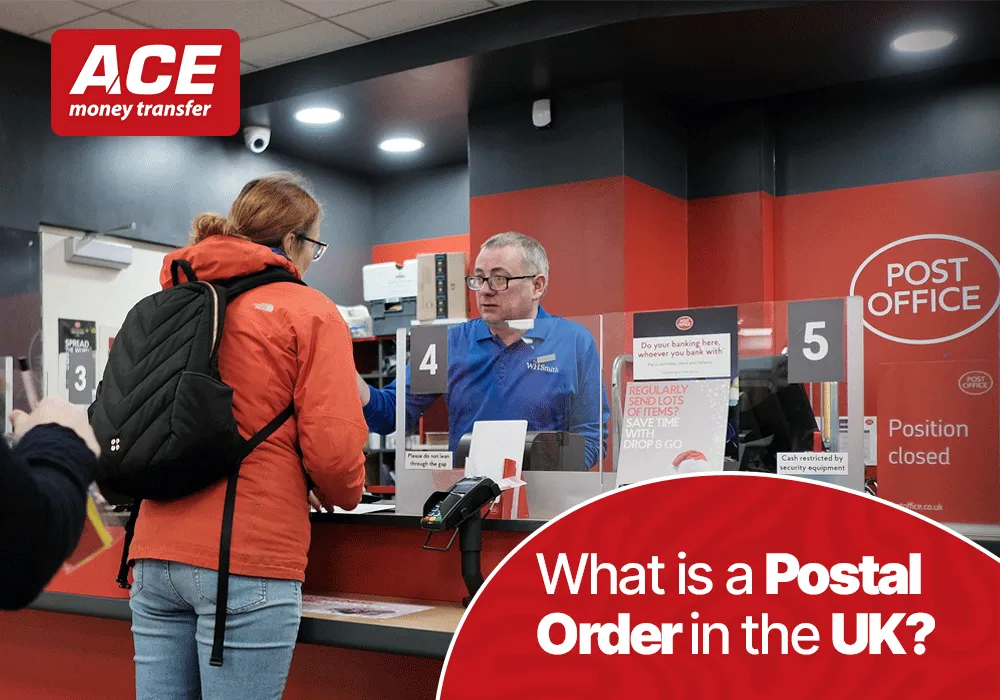
To purchase, visit your local post office, ask for a postal order for a specific amount, and pay in cash. Fill in the recipient's name and keep the receipt - it carries a unique ID number you will need if the order is lost, stolen, or damaged.
To cash an uncrossed order, the recipient presents it at any UK post office, signs the back, and may be asked to show proof of identity (not always legally required but sometimes requested as a safeguard). Crossed postal orders must be paid into a bank account; attempts to cash a crossed order at the counter will be rejected and referred to the bank instead.
A postal order may also be refused if it appears altered, defaced, or fails the branch's electronic validation.
Postal orders are most useful when either the sender or recipient does not have a bank account, or when customers prefer not to share bank details. A postal order is highly accessible for unbanked individuals - no cheque book, no app, no account needed.
Common real-world uses include:
Compared to bank transfers, postal orders provide a traceable record of payment and guaranteed funds that cannot bounce. Unlike a cheque, there is no risk of the payment failing. However, postal orders require physical delivery via mail, which can be slow, and the maximum value is £250 per order. Fees can also be proportionally steep on small amounts.
Choose postal orders when you need a secure, paper-based payment and either you or the recipient prefers not to use a bank account. For larger or international transactions, money orders or bank transfers are better suited.
While postal orders are designed to be safer than sending cash through the post, risks remain. Here is how to protect yourself:
If a postal order is lost in the post:
If stolen:
Refunds for lost postal orders can take up to 35 days. If the order has already been cashed, recovery becomes much harder - act quickly and keep all documentation.
Postal orders are issued under UK postal regulations, including the Postal Services Act 2000. Key points to know:
Postal orders can be used for payments up to £250 per order, and they are used for sending money in specific situations where digital postal services or normal bank channels are not practical.
Yes. Both buying and cashing an uncrossed postal order can be done entirely in cash at a post office. Crossed postal orders can only be deposited into a bank account, so if you need cash at the counter, ask the sender to leave the order uncrossed.
Most postal orders state a six-month validity period from the date of issue. Within that window, the post office will normally honour them. After six months, payment is discretionary and may require a revalidation fee. After 12 months, orders typically cannot be cashed at a branch and must go through a formal refund process - allow up to 35 days for a response.
Standard UK postal orders are intended for use within the United Kingdom. For sending money overseas, use international money orders, bank transfers, or licensed remittance services. Check the post office website for any specific international options.
Many UK government departments continue to accept postal orders for certain paper-based applications. However, acceptance policies change, so always check the relevant department's official page before you purchase one.
No. Royal Mail and the Post Office do not sell postal orders online or by phone. They must be purchased in-branch. Some third-party services may offer to obtain one on your behalf, but they charge an additional fee, and the underlying order still comes from a physical post office. Research any such service carefully before committing.
Enjoy guaranteed competitive PKR exchange rates, ultra-fast transfers, and zero fee promotions directly to bank accounts and mobile wallets.