ACE Money Transfer
ACE Money Transfer

02 Jan 2025
If you are planning train travel in Germany, the sheer number of fare types, apps, and booking channels can feel overwhelming at first. This guide breaks down exactly how to buy train tickets in Germany, covering every option from discount advance fares to same-day regional passes, so you can ride confidently and save money along the way.
Buying train tickets in Germany is straightforward and can be done online or at stations. For most visitors, the fastest path is the DB Navigator app or the bahn.de website, where you can search connections, compare fares, and download a mobile ticket in minutes. You can also buy tickets at red DB machines in any station or at staffed counters if you prefer in-person help.
Here is the simplest approach for most travellers:
Use the DB Navigator app or bahn.de for domestic and many international journeys.
Pay by credit card, Apple Pay, or Google Pay.
Download a mobile ticket (QR code) instead of printing.
When deciding how to buy, keep this in mind:
Book online in advance for long-distance ICE, IC, and EC trains to access Sparpreis and Super Sparpreis discount fares.
Buy on the day for regional RB, RE, and S-Bahn services, the Deutschland ticket, or Länder-Tickets, which do not require advance purchase.
Use a pass (Interrail, Eurail, or German Rail Pass) if your journey involves multiple trips across several days.
Deutsche Bahn (DB) is the main train company on the German rail network, but other train companies like FlixTrain, ÖBB Nightjet, and some private regional operators may require separate booking through their own platforms.
Germany's rail network is one of the densest in Europe, connecting major hubs like Berlin, Hamburg, Cologne, Frankfurt, and Munich with frequent services throughout the day. Deutsche Bahn operates high-speed ICE trains across Germany, making the system practical for both short day trips and long distance journeys.
The main train categories you will encounter are:
ICE (InterCity Express): High speed trains reaching up to 300 km/h on routes like Munich to Berlin and Frankfurt to Munich. These are the flagship of the german rail system.
IC/EC (Intercity / EuroCity): Intercity trains connecting major cities domestically and across borders, slightly slower than ICE but often more affordable.
Regional trains (RE, RB, IRE, S-Bahn): Regional express trains and local services that stop more frequently, ideal for shorter trips within a state or between nearby cities.
Alternative operators: FlixTrain is a low-cost alternative to Deutsche Bahn on select long-distance routes, while various private companies run regional services in certain states.
Ticket rules, train fares, and whether you need to book tickets in advance differ sharply between long distance trains (ICE/IC/EC) and regional services. Understanding this distinction is essential before you buy tickets.
There are two seating classes on most deutsche bahn trains:
2nd class: Standard for most travellers, with comfortable seats, power sockets at many seats, and free wifi on ICE trains.
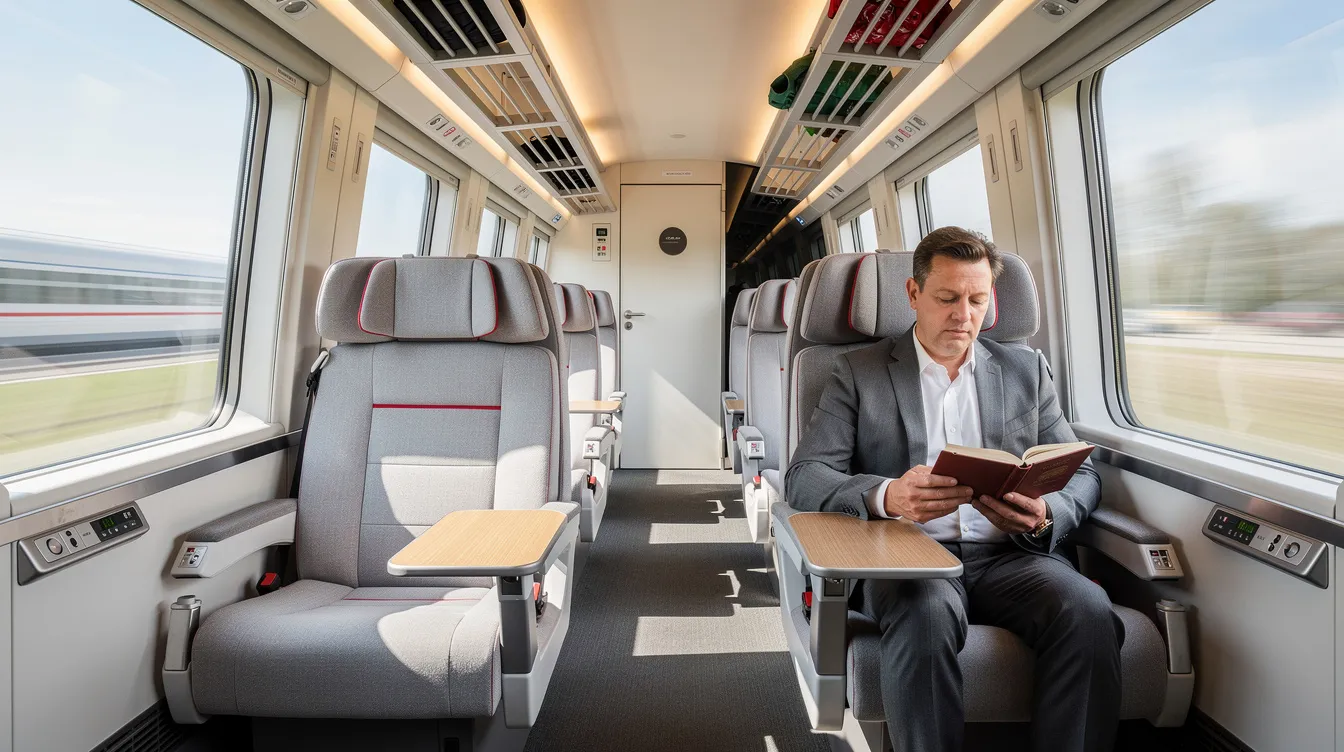
1st class: More legroom, a quieter atmosphere, at-seat service on many ICE trains, and sometimes lounge access at major stations. Business travellers often choose a first class ticket for comfort and productivity.
The German rail system uses an open-access system without platform turnstiles. You simply board your train with your mobile ticket and ID, and conductors perform spot checks on board.
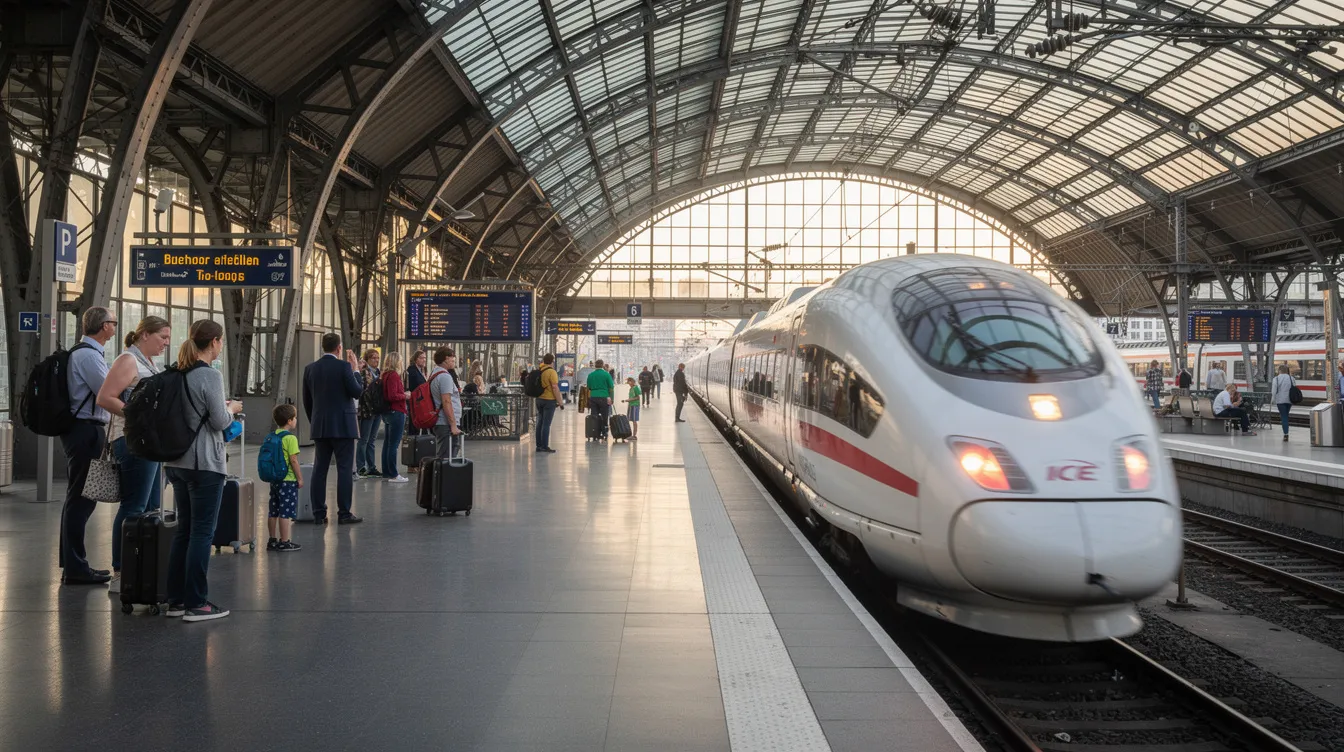
You can buy train tickets online, via app, at station machines, or at staffed counters. Prices for the same ticket on the same train are generally identical across Deutsche Bahn's official channels, so your choice comes down to convenience and payment preference.
Here are the main sales channels:
DB Navigator app (Android/iOS): The most popular way for regular travellers. Functions as a journey planner and ticket shop in one. Tickets can be purchased via the Deutsche Bahn website or DB Navigator app.
bahn.de / int.bahn.de: The official German Rail website, available in English, where you can check train fares, compare options, and buy train tickets online.
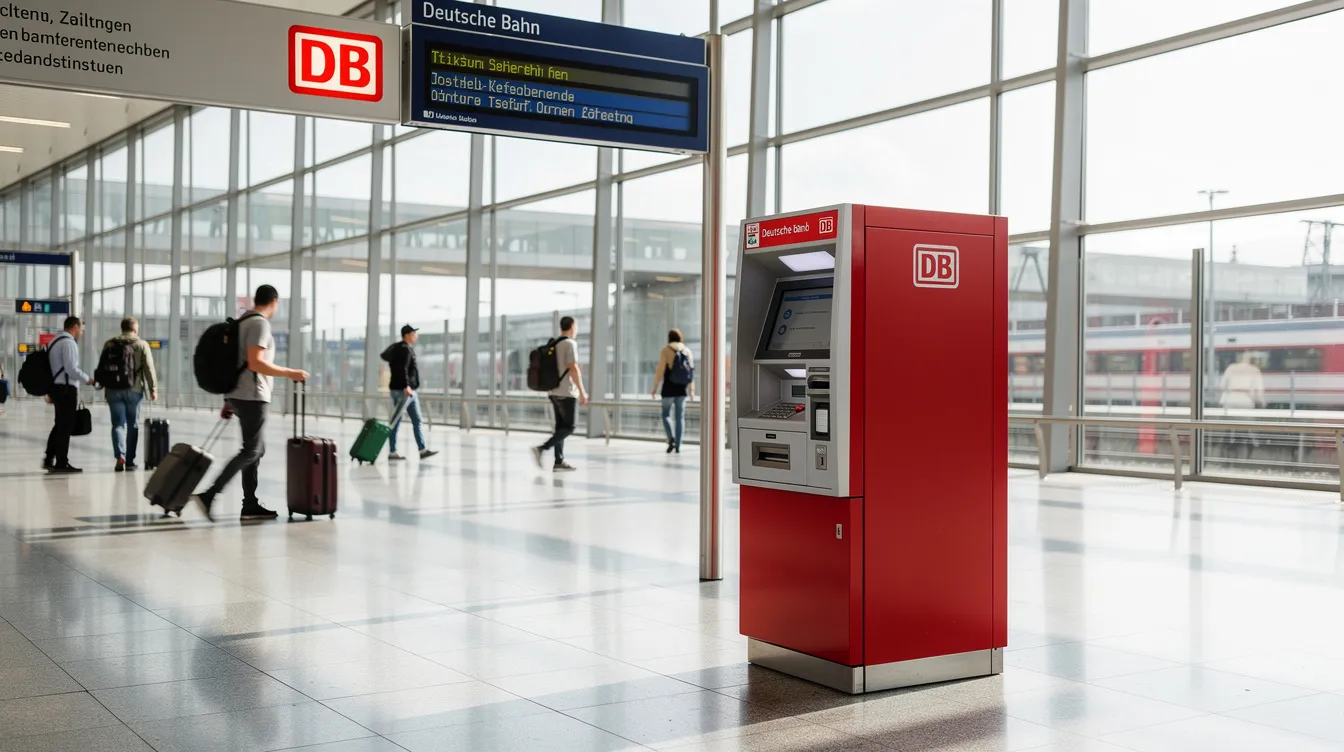
Station ticket machines: Red DB machines found in station halls and on platforms across the country, useful for same-day purchases.
Reisezentrum (DB travel centres): Staffed counters at major stations for complex itineraries, international bookings, or when you need personal assistance.
Third-party sites and apps: International OTAs can be helpful for non-German speakers or multi-country trips, though DB's own channels usually offer the widest fare selection.
Buying train tickets online is generally the best way to access advance discounts and compare Sparpreis, Super Sparpreis, and Flexpreis tickets side by side.
Accepted payment methods across DB channels include major international credit cards (Visa, Mastercard), debit cards, Apple Pay, Google Pay, PayPal, and giropay. Cash is accepted at machines and staffed counters.
When purchasing, you can usually choose between a mobile ticket (QR code stored in the app or your phone wallet) and a print-at-home PDF, eliminating the need for a physical ticket in most cases.
Ticket prices for long-distance trains are dynamic and can increase as the travel date approaches, similar to air fares. Choosing the right tariff is the single biggest lever for saving money on german train tickets.
Flexpreis tickets are the fully flexible option. Flexpreis tickets allow travel on any train on the selected day along your booked route. They are refundable and changeable, making them ideal for business travellers or when travel plans are uncertain. On major ICE routes, Flexpreis can run €120–€180+ one-way.
Sparpreis tickets are discounted advance-purchase fares tied to a specific train ("Zugbindung"). Quotas are limited per departure, so prices rise as the train fills up. Sparpreis tickets start from €12.99 when booked in advance. They are partially refundable before the departure date, usually for a €10 fee converted to a DB credit voucher.
Super Sparpreis tickets are the cheapest option, also train-specific. Super Sparpreis tickets are non-refundable and non-exchangeable, making them suitable only when your travel dates are firm.
To see the difference in practice, consider a Berlin–Munich ICE journey:
Booked 6–8 weeks ahead, Super Sparpreis fares can start around €17.90–€30 in 2nd class.
The same journey on Flexpreis bought on the day of travel may cost €150 or more.
Advance booking for long-distance trains can significantly reduce ticket costs, often by 70–80%.
Beyond these core fares, you can further reduce prices with a BahnCard (25% or 50% discount), and for regional-only travel, the Deutschland ticket or state day tickets offer flat-rate alternatives. We cover each of these below.
The official German Rail site, int.bahn.de, is available in English and lets you check train times, compare fares, and book train tickets for almost all trains in Germany and many international routes. You can buy tickets online at int.bahn.de in a matter of minutes.
Here is how the process works:
Step 1. Go to int.bahn.de and set the language to English if it does not default automatically.
Step 2. Enter your departure and arrival stations in the "From" and "To" fields. Use full station names such as "Berlin Hbf" and "Munich Hbf" to avoid confusion. Be careful with similar names-"Frankfurt (Main) Hbf" is the major hub, while "Frankfurt (Oder)" is a smaller city near Poland.
Step 3. Choose your departure date, time, and whether you want a single or return ticket.
Step 4. Add passengers and any discount cards such as BahnCard 25 or BahnCard 50.
Step 5. Click "Search" to see available connections, including train types (ICE, IC, EC, RE and more), journey duration, and number of changes.
Step 6. Filter results by departure time, duration, seating classes, or whether you want only regional transport (useful for Deutschland ticket holders).
Step 7. Compare the available fares-Flexpreis, Sparpreis, Super Sparpreis-displayed for each connection. The journey planner shows all options at a glance so you can check train fares before committing.
Step 8. Select your preferred train and optionally add a seat reservation.
Step 9. Create or sign in to a customer account, enter passenger names exactly as they appear on your ID, pay, and download the mobile or PDF ticket.
International credit cards (Visa, Mastercard, Amex) are accepted, and mobile tickets work on most smartphones as long as the QR code is readable.
Double-check passenger name spelling and travel details before paying. Changes are severely limited on Super Sparpreis and restricted on Sparpreis tickets, so accuracy at this stage prevents headaches later.
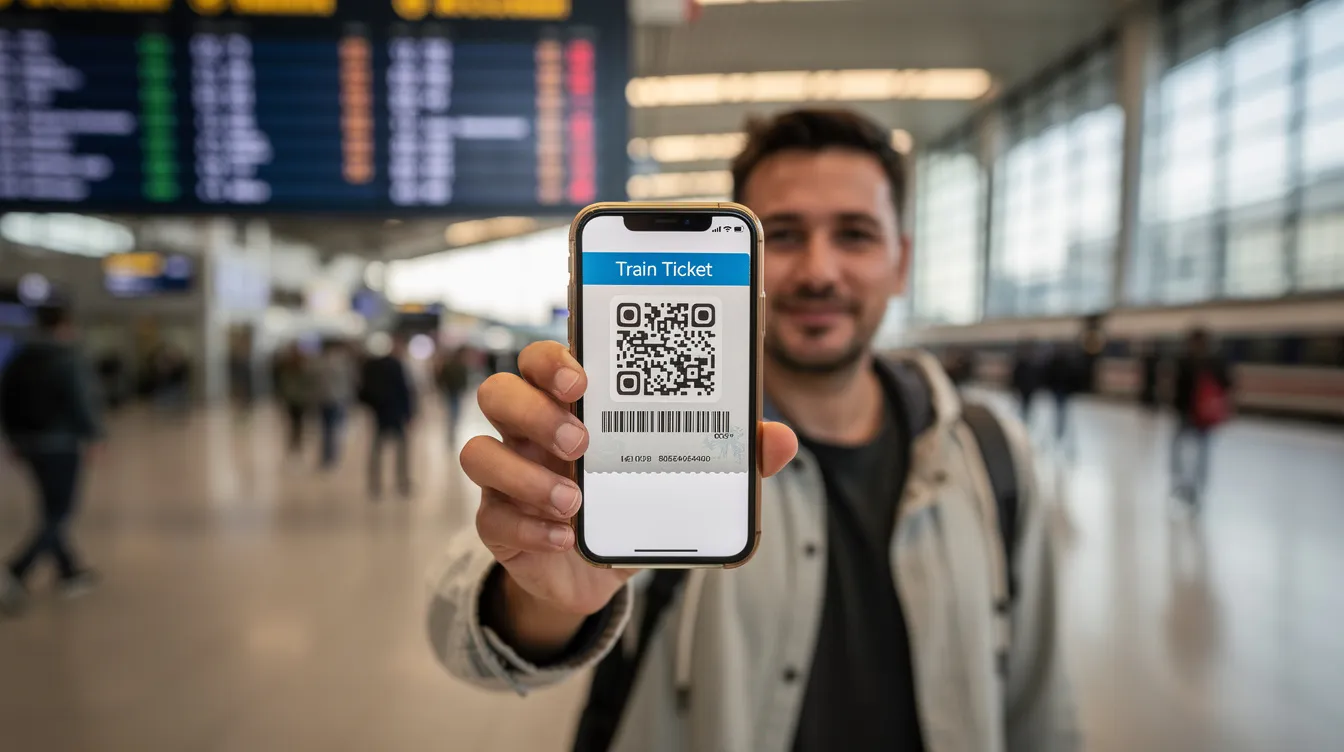
DB Navigator is Deutsche Bahn's official app for iOS and Android, combining a journey planner, ticket shop, and real-time travel assistant in one tool. If you plan to take trains in Germany more than once, it is worth installing before you arrive.
Setting it up takes a few minutes:
Download the DB Navigator app from the App Store or Google Play.
Switch the language to English in settings if needed.
Optionally create or sign into a DB customer account to sync tickets across devices and store your BahnCard digitally.
The booking flow mirrors the website:
Open the "Book" or "Tickets & Offers" section to search connections.
Enter start and end points by typing station names, addresses, or tapping the map.
Select date, class ticket (1st or 2nd), number of travellers, and any BahnCard discounts.
View ice trains, intercity trains, regional trains, U-Bahn, S-Bahn, and buses all in one connection search.
Choose your fare and add a seat reservation, or select "Reservation only" if you already hold a valid ticket.
Key convenience features make the app stand out:
Offline mobile tickets: Your ticket confirmation and QR code remain accessible even without an internet connection after download.
Occupancy forecast: A demand indicator helps you decide whether a seat reservation is worthwhile for your specific train.
Real-time alerts: Notifications about platform changes, delays, and alternative routes keep you informed from departure onwards.
Komfort Check-in: On eligible ICE services, you can self-check-in from your seat via the app, and the conductor's system marks you as verified, often skipping the in-person ticket check.
Nearby map: Find stations, rental bikes, and scooters around your location.
If you travel frequently in Germany, the DB Navigator app is the best single tool. It stores BahnCards, favourite routes, and past bookings, and works alongside the Deutschland ticket for seamless regional travel.
You can still buy tickets on the day at most stations, either at red DB ticket machines or at staffed Reisezentrum counters. This is particularly useful if you prefer paying cash, do not speak german fluently, or need in-person routing advice.
Here is how to use DB ticket machines:
Look for the red "DB" machines in station halls and on platforms.
Choose your language (German, English, and often French, Spanish, or others).
Select "Single ticket," "Return ticket," or browse regional offers.
Enter your departure and arrival stations, date, and time.
Choose the train type if prompted (long-distance vs regional).
Pay by card (chip & PIN) or cash, and collect your printed ticket plus receipt.
Machines sell most domestic tickets, including Flexpreis and same-day Sparpreis tickets if still available, plus regional products like Länder-Tickets and Quer-durchs-Land-Ticket.
Staffed ticket counters are best used for:
Complex international journeys (e.g. Germany–Austria–Italy across multiple operators).
Assistance choosing between passes and point-to-point tickets.
Special needs like bicycle reservations, wheelchair spaces, or travelling with dogs on international trains.
Major hubs like Berlin Hbf, Munich Hbf, Frankfurt Hbf, Hamburg Hbf, and Cologne Hbf typically have long opening hours at their Reisezentrum, but smaller rural stations may have no staffed counters at all.
For journeys using only regional trains (RE, RB, IRE, S-Bahn) and local transport, special day or monthly tickets are often far cheaper than standard point-to-point fares. These are ideal for budget travellers exploring a city, a region, or even the entire country at a slower pace.
Deutschland ticket: This flat-rate monthly subscription covers all regional and local public transport across Germany-buses, trams, S-Bahn, RE, and RB services. The Deutschlandticket costs €63 for unlimited regional travel monthly (as of January 2026; it was €58 in 2025). It is not valid on long distance IC, ICE, EC, Nightjet, or FlixTrain services. The ticket is sold as a subscription starting on the 1st of each month and is cancellable monthly. With roughly 13 million users, it has become one of the most popular transport products in Germany.
Quer-durchs-Land-Ticket: This nationwide regional day ticket is perfect for slow but cheap fares across the country. The Quer-durchs-Land-Ticket allows unlimited regional travel for €51 for one person, with each additional traveller (up to 5) adding a smaller increment. It is valid from 09:00 on weekdays and all day on weekends.
Länder-Tickets (state tickets): Regional tickets allow unlimited travel within a specific German state for a full day. For example, the Bayern Ticket offers unlimited travel in Bavaria for €34 for one person, with group pricing that adds roughly €9–10 per additional person. They typically cover regional trains, S-Bahn, and many buses and trams, valid from 09:00 on weekdays and all day on weekends and public holidays.
These options beat normal tickets when you are making day trips within one state, visiting multiple towns in a single day, or travelling as a group. A family of four using a Bayern Ticket, for instance, pays a fraction of what four individual tickets would cost.
For visitors making many intercity trips across Germany in a short period, a rail pass can be more cost-effective and simpler than buying separate point-to-point tickets for every journey.
Interrail Germany Pass: Available to any European resident (excluding German residents), this pass offers 3, 4, 6, or 8 travel days within one month on nearly all deutsche bahn trains, including ICE and IC. It is valid in 1st or 2nd class with optional seat reservations. Some passes also unlock discounts at certain ferries, museums, and attractions.
Eurail Germany Pass: Designed for non-European residents, the Eurail pass follows the same basic structure-select your number of travel days and class. It covers DB long-distance and regional trains but excludes private operators like FlixTrain. Eurail can also be combined into multi-country Global Passes for broader European rail travel.
German Rail Pass: Another option for non-residents, this pass is sold through DB and offers both flexible-day and consecutive-day versions for unlimited travel on the german rail network. It is particularly useful for intensive city-hopping or when you want to decide which trains to take at the last minute.
When deciding between passes and individual tickets:
Passes are better for spontaneity, last-minute decisions, and when your journey involves many trains over several days.
Sparpreis and Super Sparpreis tickets are usually cheaper if you know your exact travel dates and train times weeks in advance.
Compare the total cost of a pass against the sum of advance-purchase fares for your planned routes before committing.
On German long distance trains, you can usually board without any seat reservation, but reserving is strongly recommended on busy routes, Friday and Sunday evenings, and during holidays. Without one, you risk standing or having to search for an empty unreserved seat.
Seat reservations:
Optional on ICE/IC/EC. You can reserve a seat for €5.50 in second class when booked separately, or €4.90 when purchased together with your ticket. A first class ticket reservation costs about €5.90–€6.90 depending on how you book.
Seat reservations for long-distance trains are recommended during peak travel times, especially on popular routes like Frankfurt–Munich or Berlin–Hamburg.
Reservations can be booked together with your ticket or added separately as "Reservation only" in the DB Navigator app.
Reserved seats are marked on overhead or side displays showing "Reserviert ab…" with the departure and arrival stations. Any seat without a display or marked as unreserved is free to take.
Seating classes:
2nd class: Comfortable seats with power sockets and free wifi on most ICE coaches. The standard choice for most travellers.
1st class: More space, quieter atmosphere, at-seat service on many ICE trains, and sometimes DB Lounge access at large stations with a 1st-class Flexpreis or BahnCard 100.
On-board amenities:
A bistro or restaurant car operates on most ICE and some IC services; regional trains usually have no catering.
Free wifi is available on most ICE and many IC coaches.
Luggage racks sit above seats and at coach ends. There is no official weight limit, but passengers carry their own bags.
Business travellers often combine first class with flexpreis tickets for maximum flexibility and comfort, while budget travellers typically pick 2nd class sparpreis tickets or Super Sparpreis for the lowest price.
German Rail offers generous policies for children, attractive group fares on many products, and BahnCard discount cards that can significantly reduce train fares for frequent travellers.
Child fares on Deutsche Bahn:
Children under 6 travel free without a ticket on all services.
Children under 15 can travel for free on many tickets when listed on an adult's (parent or grandparent) DB ticket. They still need to pay for a seat reservation if one is desired.
From age 15 onwards, standard adult fares apply unless special youth offers or a youth BahnCard are used.
Note that children pay regular fares when not accompanied by a parent or grandparent listed on the same ticket.
Group savings:
Many regional tickets and day passes allow several people to travel on the same ticket at a reduced per-person cost. Länder-Tickets and Quer-durchs-Land-Tickets scale well for groups of up to 5.
Some long-distance group offers exist when booking early for 6 or more people. Check bahn.de for current conditions.
BahnCard discounts:
BahnCard 25 costs €62.90 in 2nd class for one year and gives 25% off Flexpreis, Sparpreis, and Super Sparpreis fares.
BahnCard 50 costs €244 (standard 2nd class) and provides 50% off Flexpreis and 25% off Sparpreis/Super Sparpreis. A BahnCard offers up to 50% off train fares in Germany.
Youth and senior versions are available at reduced prices.
A digital BahnCard can be stored in DB Navigator and used immediately after purchase.
To decide if a BahnCard is worth it, estimate your total ticket spend over a year. If you plan to take multiple trips totalling €250+ in fares, the BahnCard 25 typically pays for itself through savings. Note that BahnCards auto-renew, so mark your cancellation deadline.
Germany is linked by rail to Austria, Switzerland, France, Belgium, the Netherlands, Denmark, the Czech Republic, Poland, and more. Booking rules can differ slightly for cross-border journeys, but many international trains can still be booked through DB.
Booking international trips via Deutsche Bahn:
Routes like Berlin–Amsterdam, Munich–Vienna, and Frankfurt–Paris are bookable directly on int.bahn.de or the DB Navigator app with through tickets.
DB-SNCF offers high-speed trains from Paris to 10 German cities, including Frankfurt and Stuttgart. Seat reservations are often mandatory and sometimes included free on these services.
ÖBB operates fast trains from Austria to German cities via Railjet services, with separate Nightjet sleeper trains running overnight routes.
Eurostar connects cities like Paris, Amsterdam, and Cologne, with Eurostar trains offering another option for reaching Germany from western Europe.
Some cross-border IC/EC trains serve Poland, the Czech Republic, and Denmark.
FlixTrain and some private foreign operators may require booking via their own websites, as they are not always included in DB search results or covered by rail passes.
Night trains:
ÖBB Nightjet routes serve German cities with overnight connections such as Hamburg–Munich–Austria/Italy and Düsseldorf–Cologne–Munich–Innsbruck.
Different comfort categories are available: seat, couchette, and private sleeper cabin.
Book early for popular dates, as sleeper compartments can sell out weeks in advance.
Before booking international trains, compare whether a rail pass covers your specific route or if point-to-point advance tickets offer cheaper fares-especially on high-demand corridors where Sparpreis can undercut pass costs.
This section serves as a checklist of advice that prevents common mistakes when buying german train tickets for the first time. Even experienced travellers occasionally trip up on details unique to the DB system.
Timing your booking:
Booking opens up to 12 months in advance for German domestic tickets, though availability of the cheapest fares may vary right after the December timetable change.
For the best prices on popular routes, aim to book Sparpreis or Super Sparpreis 2–3 months before your departure date. Air travel may seem competitive on price, but advance-purchase rail fares frequently undercut air fares once you factor in airport transfers and check-in time.
Common errors to avoid:
Not adding a seat reservation and ending up standing on a packed Friday-evening ICE. On the next train, the situation may be the same.
Entering station names incorrectly-mixing up "Frankfurt (Main) Hbf" with "Frankfurt (Oder)" sends you hundreds of kilometres in the wrong direction.
Confusing regional-only tickets (Deutschland ticket, Länder-Tickets) with long-distance validity. These do not cover long distance ic or ICE services.
Assuming a db train ticket for regional trains is valid on ICE-always verify the train type your ticket covers.
Language and station navigation:
"Hauptbahnhof (Hbf)" means main station, "Gleis" means platform. You do not need to speak german to navigate, but knowing a few terms helps.
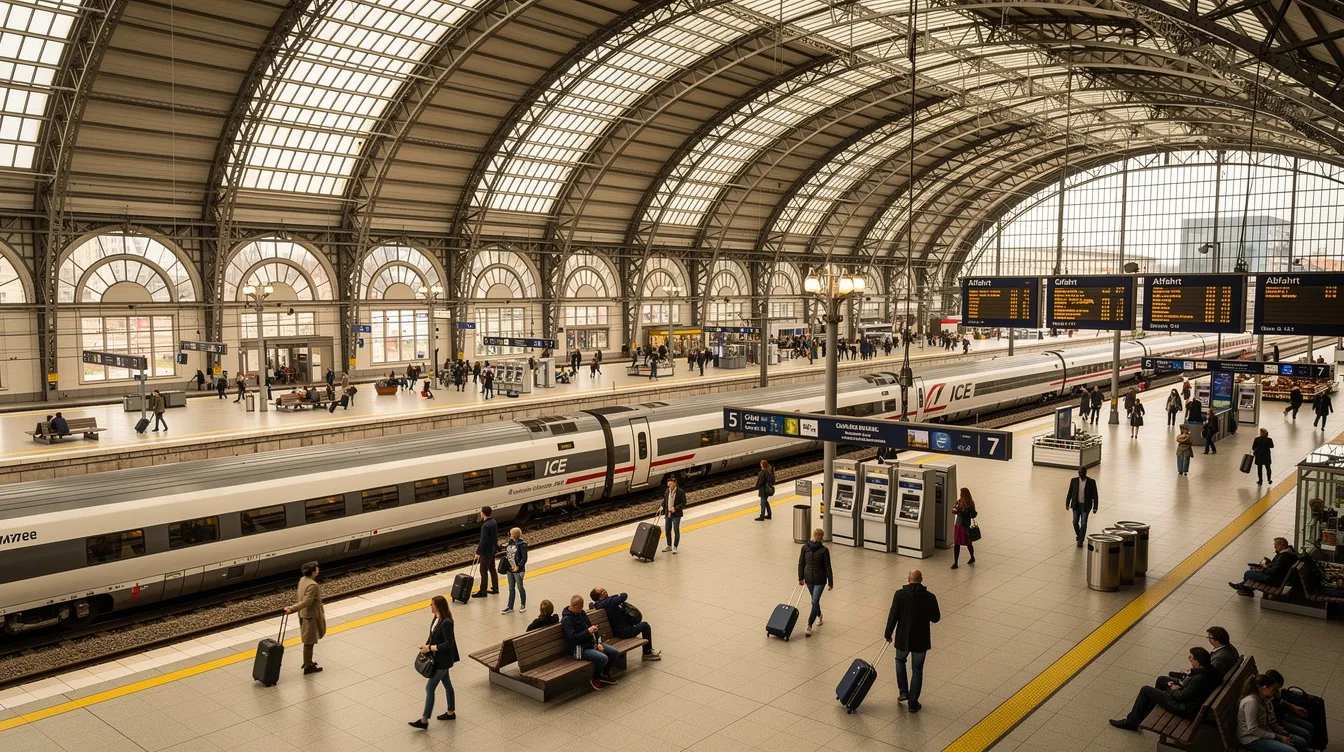
Follow electronic departure boards and listen for bilingual announcements in German and English on major routes. Train schedules update in real time on platform displays.
What to carry and show:
Have your ID or passport that matches the ticket name ready when the conductor asks.
Keep digital tickets accessible with sufficient phone battery. Consider printing PDFs as backup on longer journeys.
For discounted tickets (BahnCard, rail pass), always carry the physical or digital card together with your ticket. A ticket without its matching discount card is treated as invalid.
The best way to buy train tickets in Germany depends on three things: how far in advance you book, how flexible you need to be, and whether you travel mainly on intercity trains or regional services. For most travellers, the DB Navigator app or bahn.de covers everything from searching train times to downloading your ticket confirmation. Station machines and staffed counters remain solid options for same-day travel or complex routing.
Quick decision guide:
If you want the lowest price and know your exact time, look for Super Sparpreis on ICE/IC. Sparpreis tickets start from €12.99 when booked well in advance, offering cheap fares that rival bus travel.
If you need flexibility or your journey involves last-minute changes, choose Flexpreis or a rail pass with unlimited availability across the network.
If you only use regional or local transport, consider the Deutschland ticket for unlimited travel on regional services or a Länder-Ticket for day trips within a single state.
Before building your itinerary, decide on your basic strategy-individual tickets vs passes, online vs station booking-so you can align routes and travel dates with the best available fares.
Once you understand the fare types and tools, buying train tickets in Germany is straightforward even for first-time visitors. Download DB Navigator, experiment with the journey planner, and start comparing fares for your route today.