
ACE Money Transfer
ACE Money Transfer
28 Sep 2026
If you run a business or sell anything of value, you've probably wondered whether you need a bill of sale, an invoice, or both. These are different documents that serve distinct purposes in every sales transaction, and confusing them can cost you time, money, or even legal protection. This blog post breaks down the bill of sale vs invoice comparison with real examples, so you always know which document to reach for.
The main difference between a bill of sale vs invoice comes down to ownership versus payment. A bill of sale is a legal document that proves the transfer of ownership of a specific item from seller to buyer. An invoice is a commercial document a seller sends to request payment for goods delivered or services provided.
A bill of sale legally transfers ownership of goods. For example, if you sell a pickup truck on 12 March 2024 in Texas, the signed bill of sale is what the buyer uses to register it at the DMV.
An invoice requests payment for goods or services provided. It may or may not lead to a transfer of ownership later, depending on what's being sold.
A bill of sale usually comes after payment is made and ownership changes hands. An invoice usually comes before or at the time payment is due.
Both are commercial documents, but only the bill of sale is typically treated as legal proof of sale, especially for high-value property like vehicles, boats, or equipment.
For international transactions, pairing invoices and bills of sale with a digital money transfer service such as ACE Money Transfer can provide an option for receiving payments across borders, subject to the available transfer methods and destination.
A bill of sale is a formal document that records the transfer of ownership of a specific asset from one party to another. Think of it as proof that a sales transaction happened and that the buyer now legally owns the item.
Bills of sale are commonly required or strongly recommended for:
Vehicles (a used car sold in Florida, a motorcycle in New York)
Boats and trailers (a fishing boat in California)
Farm equipment and machinery (a tractor in Iowa)
High-value personal property like jewelry, antiques, or collectibles
A bill of sale typically includes:
Full legal names and addresses of buyer and seller
Date of sale
Description of the item (VIN, make, model, serial number, condition)
The purchase price
Any warranties or "as-is" clauses
Signatures of both parties involved
A signed bill of sale often serves as evidence in disputes, for insurance claims, and for tax and registration purposes. Legal requirements for a bill of sale vary by jurisdiction and property type-some states mandate them for vehicle registration, while others treat them as optional but recommended. A bill of sale is often used for vehicle transactions and other titled property where proving ownership matters.

Not all bills of sale work the same way. Some transfer ownership immediately, others only after conditions are met.
An absolute bill of sale transfers ownership outright upon payment. The seller sends the document, both parties sign, and the buyer detailing the asset becomes the new owner with no strings attached. For example, a buyer pays USD 15,000 on 5 May 2025 for a car. The seller issues an absolute bill of sale that day, and ownership passes completely.
A conditional bill of sale holds back the title until certain conditions are satisfied-most commonly, full payment of installments. Here's a concrete example: a seller finances a machine for USD 8,000 across 10 monthly payments. The conditional bill of sale states that title passes only after the last payment on 30 November 2026. Until then, the seller retains a security interest.
Conditional bills require specific terms spelled out clearly: payment schedule, what counts as default, and the seller's remedy if the buyer defaults.
While invoices record amounts owed, they do not transfer ownership or create security interests the way a bill of sale does.

An invoice is a commercial document a seller issues to request payment for goods delivered or services rendered. It establishes what the customer owes and when payment is expected. Unlike a bill of sale, an invoice may precede any transfer of ownership.
An invoice must clearly state it is an invoice. Core elements include:
A unique invoice number for tracking
Invoice date and due date
Supplier and customer contact details
Line items with a brief description of goods or services, quantities, and unit prices
Applicable taxes
Total amount due
Payment terms (Net 15, Net 30, due on receipt) and possible late fees
Payment information and payment options (bank details, online transfer, etc.)
Invoices typically include itemized details of products or services, and they often contain unique invoice numbers for tracking across the billing and invoicing process.
Invoices are used across industries. Freelancers invoicing for web development in June 2024, wholesalers billing retail businesses, consultants billing monthly retainers-all rely on professional invoices. Invoices are used for ongoing business transactions and B2B services, and they are commonly managed through accounting software like QuickBooks Online, Xero, or custom ERP systems.
In most jurisdictions, an invoice is a legal document requesting payment. It supports tax filings, financial audits, and accounts payable and receivable, but it usually sits alongside-not instead of-formal contracts or purchase orders.
Now that you understand each sales document individually, let's dive deeper into the key differences between a bill of sale vs invoice.
Ownership vs payment: A bill of sale proves a completed transfer of ownership. An invoice is primarily about money owed and payment terms. Use a bill for immediate payment requests where ownership changes hands. Invoices are ideal for future payment arrangements.
Timing: Invoices are typically issued after services are rendered or at delivery, before full payment arrives. Bills of sale are signed when the buyer pays and the business transaction is complete (or conditions are met).
Legal status: A bill of sale is a legal document used as proof of sale and title transfer. An invoice supports accounting purposes and tax records and may form part of a larger legal agreement, but a bill of sale carries more weight in ownership disputes.
Level of detail: A bill of sale focuses on the asset's identity, condition, and warranties. An invoice focuses on pricing, quantities, taxes, payment deadline, and due date.
Buyer vs seller perspective: The seller sends an invoice to collect payment. A customer receives a bill of sale to prove they now own the item. For everyday retail purchases, a customer may never see a formal bill of sale-only a sales receipt.
A bill of sale and an invoice are not the same document. One proves you own it; the other proves you owe for it.
Many transactions call for both documents, depending on value and risk. Here's when each applies.
Bill of sale use cases:
Private vehicle sales between individuals (a bill is typically used for one-time transactions)
Selling a used tractor to another farm
Transferring ownership of collectibles or expensive electronics
Some international exports where customs demand proof of ownership transfer
Bills are common in retail and restaurant transactions where immediate payment is expected and ownership changes instantly
Invoice use cases:
B2B sales where payment terms like Net 30 are offered
Project-based services with staged billing (web development, consulting)
Online freelancing and monthly software subscriptions
Cross-border consulting work where invoicing today matters for tax and compliance
Invoices are common in business-to-business transactions and for services sold on credit
A combined workflow looks like this:
Customer issues a purchase order.
Seller delivers goods or services.
Seller sends an invoice with payment terms.
The customer pays-possibly via ACE Money Transfer for overseas clients seeking speed and low fees.
Seller issues a bill of sale for the high-value asset once payment is confirmed.
For small instant retail transactions-a meal at a restaurant, a coffee shop purchase-you typically see only a sales receipt, not a separate bill of sale or detailed invoice.
Different documents carry different details. Here's what goes into each:
Bill of sale: Parties' full legal names and addresses, asset details (VIN, serial numbers, make, model, year, condition), purchase price, date and location of sale, warranties or "as-is" disclaimers, signatures of both parties.
Invoice: Customer and supplier details, line items with descriptions, quantities, and unit prices, applicable taxes, payment terms, late fees, early payment discounts, invoice number, and payment information. Invoices contain detailed payment terms and itemized services.
Sales receipt: Brief proof of payment with date, total amount paid, basic item list, payment method (cash, card, check), and sometimes tax details. It's a payment confirmation, not an ownership document.
A purchase order is a buyer-initiated document that precedes an invoice. It expresses intent to buy under specified terms, but it's not a bill of sale-it doesn't prove ownership.
An invoice and bill of sale may carry similar transaction data (dates, amounts, item descriptions), but only the bill of sale is treated as primary proof that ownership has changed hands.
Payment terms are a defining feature that distinguishes invoices from other documents in the sales process. Bills usually require immediate payment upon receipt, while invoices set up structured timelines.
Common payment terms on invoices include:
Net 15 / Net 30: Full payment expected within 15 or 30 days of the invoice date
Due on receipt: The buyer pays as soon as the invoice arrives
2/10 Net 30: A 2% discount if the customer pays within 10 days; otherwise, full payment in 30 days
Late fees: Often stated explicitly, such as "1.5% monthly interest on overdue balances after 30 June 2025"
Invoices include payment terms like due dates and late fees because collecting payment on time is critical to cash flow. Early payment discounts incentivize prompt payment.
The bill of sale usually does not set ongoing payment terms because it's issued when the sales transaction is paid and complete.
How does this play out in practice? Data from Sidetrade's 2025 report shows that globally, businesses take an average of 51 days to get paid despite contractual payment terms averaging just 32 days. And according to Debitura's collection data, 55% of suppliers globally reported late payments in 2025.
For international clients paying invoices in different currencies, services such as ACE Money Transfer provide an option for sending and receiving funds across supported currencies and destinations. Applicable fees, exchange rates and transfer times vary by transaction.
Both documents can support legal rights, but they don't serve the same legal function.
Bill of sale: Many US states explicitly require a bill of sale for vehicle registration or title transfer, making it a central legally binding document in those transactions. The date on the bill of sale determines sales tax liability and depreciation. In disputes about ownership, insurance claims, or warranties, a properly drafted bill of sale is stronger proof of ownership than an invoice or a simple sales receipt.
Invoice: An invoice is a legal document requesting payment. Invoices serve as evidence in legal disputes over payments and are essential for business accounting and tax purposes. However, invoices often need to be backed by contracts, signed quotes, or accepted purchase orders to carry full legal weight in court. Invoices are essential for tracking business expenses, reporting income, and managing accounts receivable.
The exact legal standing depends on local law, but in general, bills serve as proof of ownership while invoices serve as proof of obligation.
For complex or high-value cross-border deals, businesses should combine clear contracts, invoices, and bills of sale with traceable payment methods through reputable platforms such as ACE Money Transfer-ensuring every detail is documented and every payment is verifiable.
Modern accounting software focuses heavily on invoices and receipts, treating bills of sale as supporting documents rather than core accounting entries.
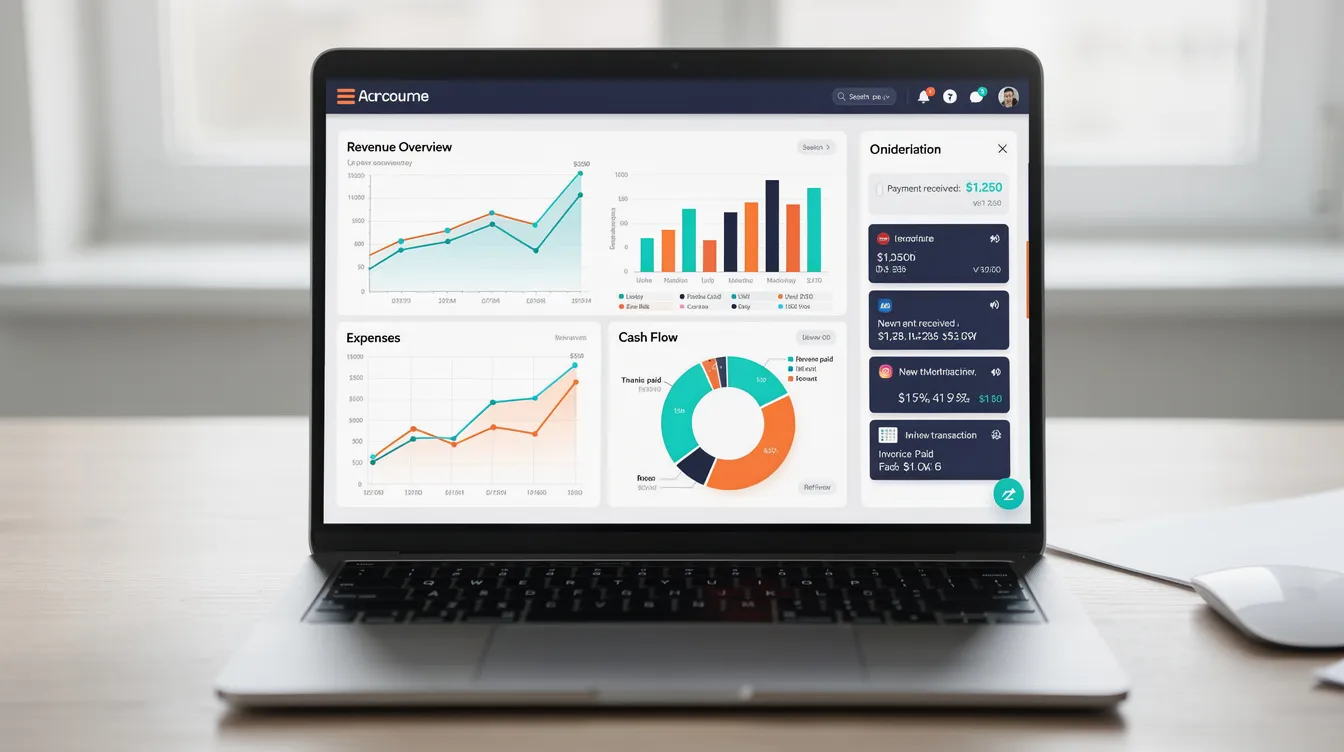
Here's how the invoicing process typically works in an accounting system:
The system records invoices as accounts receivable for the seller and accounts payable for the buyer
Aging reports and automatic reminders track overdue invoices and late fees
When the customer pays, the invoice is marked as paid, closing the billing process loop
Invoices play an essential role in accounts receivable and cash flow management
A bill of sale may be uploaded and stored alongside the transaction record as proof of asset acquisition or disposal (e.g., selling a company vehicle on 10 January 2026), but the financial entry itself comes from the invoice and payment.
Some ERPs allow linking the purchase order, delivery documents, invoice, and bill of sale into a single digital record for audit trails. Integrating accounting software with payment services such as ACE Money Transfer can support the reconciliation of international invoices, depending on the available integration and payment workflows.
Let's walk through three real-world scenarios to clarify when each document comes into play.
Example 1 – Private car sale (domestic):
On 12 March 2024 in Texas, John sells his used pickup truck to Maria for USD 12,000 cash. He signs an absolute bill of sale that includes the VIN, make, model, year, condition ("as-is"), both parties' legal names and addresses, and the date. Maria uses this document to register the truck at the Texas DMV. No separate invoice was needed-the bill of sale and a sales receipt covered the entire sales process.
Example 2 – Small business exporting machinery:
In February 2025, a German manufacturer receives a purchase order from a buyer in Nigeria for industrial equipment. The seller issues a pro forma invoice first (for customs and price confirmation), then ships the goods. After shipping, the seller sends a commercial invoice listing product descriptions, HS codes, payment terms (Net 60), and payment instructions.
Example 3 – Freelancer providing digital services:
A graphic designer in Pakistan completes a logo project for a UK client in July 2024. On 1 August 2024, the designer uses invoicing software to issue invoices with detailed information: "Logo design, revision rounds, final files delivered," amount in GBP, payment terms Net 15, and relevant information for payment via ACE Money Transfer. The client pays on 14 August. The invoice serves as the primary record. No bill of sale is necessary because no physical, titled property changed hands-the invoice plus email correspondence suffice.
Businesses need to use the right tools-invoice and bill documents-correctly to protect themselves and maintain clear records.
High-level guidance:
Use invoices whenever you extend credit or need to spell out detailed payment terms. Sending invoices with clear payment request details ensures you get the money owed to you.
Use bills of sale whenever ownership of a significant asset changes hands and you need a legally binding record.
Keep copies of both, together with contracts, purchase orders, and sales receipts.
Set up standardized templates for both document types. For invoices, always include the invoice number, invoice date, line items, taxes, and due date. For bills of sale, include all required legal elements: names, asset identifiers, signatures, condition, and purchase price.
For cross-border deals, pair appropriate documentation with payment methods that provide transaction details and records. ACE Money Transfer is one option for receiving international payments, with available transfer methods, exchange rates and processing times varying by transaction and destination. It can be used in supported corridors for purposes such as receiving payments from overseas clients or business partners.
You don't need legal training to manage these documents effectively. Understand what each document does, use standardized templates, and rely on reliable tools for both paperwork and payments. That combination protects your business whether you're selling a car across town or educational services across continents.
Bills of sale and invoices are commonly used to document transactions, while personal remittance services are designed for individuals sending money to family and friends across borders. ACE Money Transfer focuses on personal international remittances, supporting transfers to 65+ receiving countries.
ACE Money Transfer allows individuals to send money internationally through available delivery methods, including bank deposits, cash pickup, and mobile wallets in supported destinations. Customers can view the applicable exchange rate and transfer fee before sending.
Customers can send money through ACE’s digital platform without needing to visit a physical location, providing a convenient way to transfer financial support internationally.
Exchange rates fluctuate, and the rate applicable to your transfer can differ from rates shown at another time. Check the current rate atacemoneytransfer.combefore sending.
Disclaimer: This article is intended for general informational and educational purposes only and should not be construed as legal, regulatory, tax, business, or financial advice. While reasonable efforts have been made to ensure that all facts, figures, and data are accurate and valid as of the date of publication, no warranty or guarantee is given as to the ongoing completeness, accuracy, or currency of the information.
The content is based on information available at the time of publication. Regulations, government policies, market conditions, and service offerings may change over time and vary across jurisdictions and providers. As a result, some information may no longer be current or applicable. Readers should independently verify all information and consult qualified professional advisors before making any financial, legal, or business decisions.