
ACE Money Transfer
ACE Money Transfer

29 Jan 2025
Whether you are living in Spain or settled somewhere abroad, keeping your passport current is essential for hassle-free travel. This guide walks you through everything you need to know about spanish passport renewal in 2026, from required documents and fees to processing times and emergency options.
Here is the short answer before we dive into the details:
Where: At a local police station in Spain or your nearest spanish consulate or spanish embassy if you live abroad.
When: You can renew from 12 months before expiry, or earlier if pages are full, the passport is damaged, or your destination country requires six months of validity.
What you need: Your old passport, a valid spanish D.N.I., recent passport photos, and the renewal fee.
Cost: The standard fee for a spanish passport is €30, though some sources cite €26 for the renewal specifically (equivalent to approximately £22.29).
Processing time: Same day to a few days in Spain; 2 to 6 weeks at consulates abroad. General renewal can take up to 10 weeks during peak periods.
Urgent travel: Emergency passports are available through consulates for last-minute situations like a lost or stolen passport.
You must be a spanish citizen to renew your passport. There is no way around this requirement.
A valid spanish passport is a biometric travel document containing a chip with your digital photo, signature, and biometric data. It is issued under the authority of the spanish ministry of the Interior (domestically) and the spanish ministry of foreign affairs (through consulates abroad).
Key benefits include:
Visa free or visa-on-arrival access to around 190 countries globally.
Full freedom of movement within the european union and schengen area for work, study, and legal residence.
The right to live and work across the EU/EEA and Switzerland, plus access to public healthcare systems.
While a spanish ID card may be enough for travel within europe, a valid spanish passport is required for destinations outside the EU.
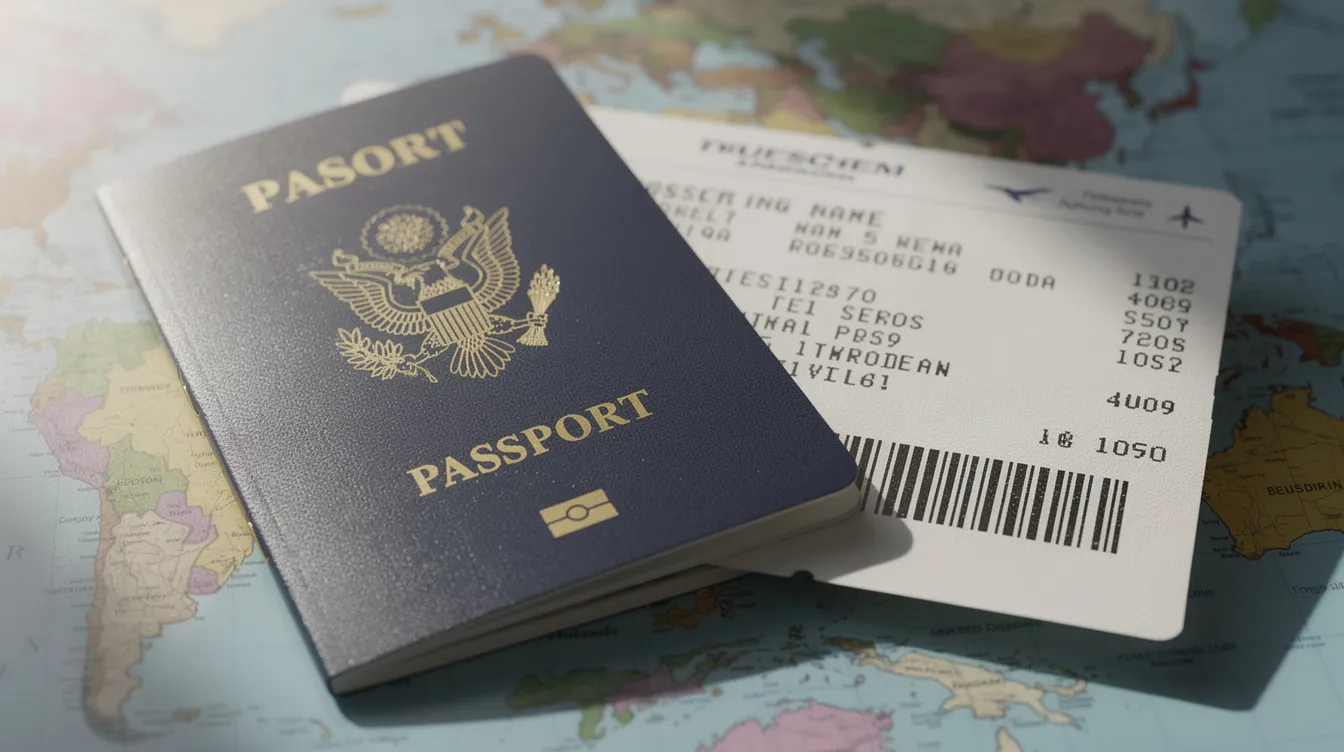
Standard validity depends on your age at issuance:
| Age at issuance | Validity period |
|---|---|
| Under 5 years old | 2 years |
| 5 to 29 years old | 5 years |
| 30 years and older | 10 years |
Your passport must be expired or expiring within 12 months before you can apply for passport renewal. However, you should start earlier if a destination country demands six months of remaining validity on arrival.
Other triggers for obtaining a new passport include running out of blank pages, visible damage, a name change through marriage or divorce, a change of gender marker, or a significant change in appearance. If your current passport has already expired, you still follow the renewal process but cannot travel until the new passport arrives.
Documents needed for renewal include a current or expired passport, a valid spanish D.N.I., and proof of residency if applying from abroad. You need your old passport for renewal in every case.
Standard checklist for adults:
Current or previous passport (even if expired)
Valid DNI (Documento Nacional de Identidad)
Three recent passport photos, colour, 32×26 mm, plain white background, full face, no dark glasses or head coverings unless for religious or medical reasons. Photos must be no older than six months.
Payment of the renewal fee
If your passport was lost or stolen:
A police report from the local police station (in Spain) or a consular declaration at a spanish consulate abroad is typically required.
For minors:
Physical presence of the child plus both parents or legal guardians
Family book (Libro de Familia) or birth certificate and nationality certificate
Parental consent forms and valid identity documents for parents
Renewal is free for beneficiaries of large family status. Present your large family card at the appointment to prove eligibility. Always check the official spanish government and consulate websites for the most current document lists.

The renewal process varies based on whether applicants are in Spain or abroad. All spanish passports are issued under the authority of the spanish government, but the application is handled at different locations depending on where you are.
In Spain, passport renewals must be processed in person at a local police station or dedicated passport office run by the Policía Nacional. Book your appointment through the official "Cita Previa DNI y Pasaporte" system, selecting your preferred police station and time slot.
At the appointment, staff will verify your DNI, collect fingerprints and a digital signature, review your submitted photos, and accept your fee payment (cash or card depending on office). In many cases, the new passport can be collected within a few days - sometimes even the same day.
If you live abroad, you must contact the spanish embassy or nearest spanish consulate that covers your place of residence. Many spanish consulates have specific appointment systems for passport renewals, so check their website for booking details.
Spanish citizens who live abroad should complete their consular registration (Registro de Matrícula Consular) before applying. Proof of residency is required if applying from abroad. You will present your old passport and DNI, submit compliant photos, and pay the consular fee.
Processing times vary at consulates based on application volume. Passports are typically printed in Spain and shipped back to the consulate for distribution, so expect delivery times of 2 to 6 weeks. During summer and holiday peaks, renewing a spanish passport takes approximately one month or longer.
Check status: Review your current passport's expiry date, blank pages, and upcoming travel plans. This is the first step toward a smooth renewal.
Gather necessary documents: Assemble your old passport, DNI, compliant photos, and any certificates. If your passport was lost or stolen, obtain the police report first.
Book an appointment: Use official booking systems - in Spain via the Cita Previa portal, or abroad through your consulate's website. An appointment is required for passport renewal at a consulate.
Attend in person: Submit all documents, provide biometric data (fingerprints and digital signature), confirm your personal details, and pay the fee.
Wait for processing: Renewal applications can take 2 to 6 weeks to process. Track your application status if an online tool is available at your office or consulate.
Collect your new passport: Collecting a new passport may require returning in person with the previous passport. Verify that all details - name, date of birth, place of birth, number, and validity dates - are correct before leaving.
You can renew your spanish passport online if eligible, though full digital renewal remains limited. You must be at least 12 years old to renew online. You need a valid DNI and NIE for online renewal, and you must have your fingerprints on record from a previous passport.
Even with online steps, you must still appear in person for biometric validation. Always use official spanish ministry or consulate websites and avoid third-party sites that claim to process a spanish passport application.
| Item | Detail |
|---|---|
| Standard fee | €30 (renewal fee cited as €26 / £22.29 in some consulates) |
| Large family status | Free |
| Processing in Spain | Same day to approximately 1–2 weeks |
| Processing abroad | 2–6 weeks; up to 10 weeks at peak times |
The cost may vary slightly by consular location. Note that exact amounts can change each year by ministerial order.
Emergency passports are short-validity documents issued by consulates for urgent travel due to medical emergencies, a death in the family, or a lost or stolen passport close to departure. However, emergency passports often have limited acceptance - not all airlines or destination countries recognize them. Always verify entry rules with your airline and destination country before relying on one.
Children and babies: Both parents or legal guardians must attend and provide consent. Validity is shorter (2–5 years), so renewals are more frequent. If one parent cannot attend, notarized authorization is required.
Lost or stolen passports: Report the loss to a local police station in Spain or to the nearest spanish consulate abroad. A police report or consular declaration is typically required. Repeated losses may result in a new passport with reduced validity.
Dual nationals: Holding another current citizenship does not remove the need to keep your spanish passport valid. Spanish law requires every spanish citizen to use their spanish passport to enter and leave Spain. Rules on spanish citizenship and dual spanish nationality vary depending on the country of origin, with special provisions for ibero american countries and equatorial guinea.
Frequent travellers: Renew early if you are running out of blank pages. Some countries require at least two blank pages and six months of validity on arrival. Spanish passports cannot be extended - you must obtain a completely new passport.
Check destination entry rules well in advance. Countries outside the EU often require specific validity windows, and this is especially important in regions like the philippines or other non-schengen destinations.
Book your appointment early. Police stations in places like london, manchester, and greater manchester consulates experience heavy demand before summer, Christmas, and Easter.
Keep digital and paper copies of your spanish passport, DNI, and any police report in a safe, separate location when you travel.
Make sure your name, civil status, and address are current in Spanish civil and consular registers before you submit your spanish passport application.
Use only official channels - the spanish government portal, your spanish embassy, or consulate website - to confirm the latest rules, fees, and forms. This is the simplest answer to any procedural question, and the fastest way to access reliable information in any language.
Starting your passport renewal process early and staying organized with your documents is the single most effective way to avoid travel disruptions.
Gather your documents, book that appointment, and give yourself plenty of buffer before your next trip. A valid spanish passport opens the door to nearly 200 countries - make sure yours is ready when you are.