ACE Money Transfer
ACE Money Transfer

31 Jan 2025
Luxembourg is one of the smallest countries in Europe, yet it punches far above its weight. As a founding member of the European Union and home to several EU institutions, the European Court of Justice, and the European Investment Bank, it sits at the crossroads of politics, finance, and international cooperation. Luxembourg City alone is a magnet for professionals in banking, fund administration, fintech, and IT-all surrounded by a compact, green country where deep valleys, forests, and medieval castles are never more than a short drive away.
What makes this grand duchy truly unusual is its people. Luxembourg has a high expat population, with around 44 per cent of residents holding foreign nationality. In Luxembourg City, that figure climbs to roughly half. Safety in Luxembourg is linked to its high economic stability and low crime rates, making it one of the most attractive places in Europe for families and professionals alike. The standard of living is among the highest on the continent, backed by generous social protections, universal healthcare, and free public transport across the entire country.
Can you move to Luxembourg from the UK or other European countries outside the EU? Yes. It takes planning, but it is entirely realistic for long term settlement-whether your goal is career advancement, raising a family, or retiring somewhere safe and well-connected. British nationals arriving after Brexit are treated as non EU nationals, but clear immigration pathways exist for work, study, family reunification, and financial independence.
This article walks you through every practical step: visas, residency requirements, administrative procedures, housing, healthcare, opening a bank account, and the logistics of physically moving your life to Luxembourg. Think of it as a single reference you can return to at each stage of your relocation.
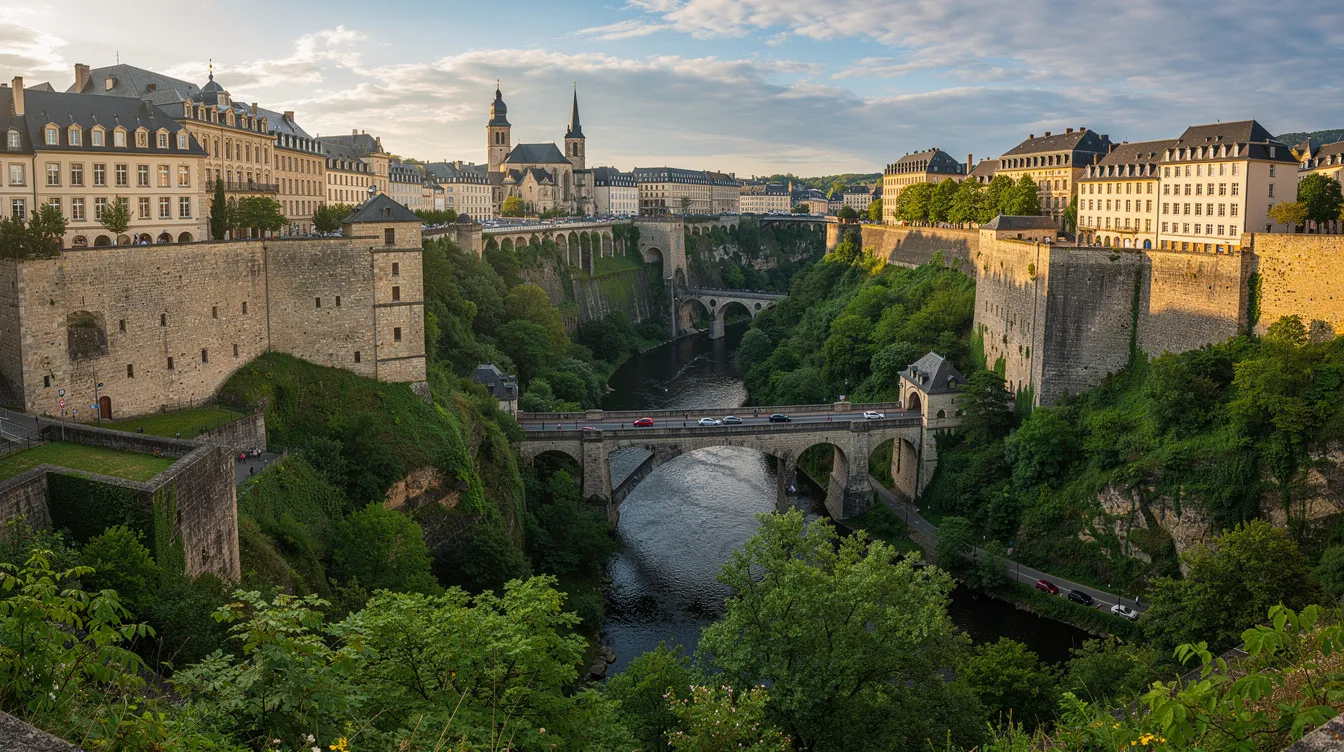
The rules for relocating to Luxembourg depend almost entirely on your passport. European Union, EEA, and Swiss citizens follow one track; third-country nationals-including British citizens since Brexit-follow another.
EU, EEA, and Swiss citizens enjoy free movement. No visa is needed to enter or reside. For stays exceeding three months, you must register with your local commune and provide proof of employment or sufficient financial resources, plus health insurance. You will receive a Registration Attestation confirming your residence. EU citizens only need a Registration Attestation for residency-no further permit is required.
Non EU nationals generally need prior authorisation to stay before entering Luxembourg for anything beyond a short visit. This applies to anyone planning to work, study, join family, or settle for private reasons such as retirement.
Spouses or dependants of EU citizens who hold a third-country passport may qualify for residence under EU family reunification rules, which follow a separate but related process.
UK nationals are now treated as third-country nationals for new arrivals. Those who were legally resident in Luxembourg before 1 January 2021 may retain special rights under the Withdrawal Agreement, provided they hold the correct residence documents.
Luxembourg's immigration process is sequential: each step unlocks the next. Starting early is the single most important thing you can do, because processing times-especially for non EU nationals-can stretch across several months.
Many non EU nationals, including British citizens, can enter Luxembourg (and the wider Schengen area) visa-free for up to 90 days within any 180-day period. This covers tourism, house-hunting, business meetings, or visiting family. It does not grant the right to work.
If your country of origin requires a Schengen visa for short stays, you must apply in advance through a Luxembourg consulate. A short-stay visa (type C) is valid for up to 90 days and cannot be converted into a work visa.
For stays beyond 90 days, you need a long stay visa and a residence permit. The main categories are: salaried worker, self employment, student, family reunification, and private reasons (financially independent persons or retirees with sufficient funds).
The typical sequence for non EU nationals is: apply for a temporary authorization to stay from the immigration directorate ? receive approval ? apply for a long stay visa (type D) at a Luxembourg consulate in your home country ? travel to Luxembourg ? declare your arrival at the commune ? complete a medical examination ? receive your Luxembourg residence permit (carte de séjour).
Non-EU nationals need a temporary residence permit to work. Residence permits for salaried employees are generally valid for one year, after which renewal is possible if employment continues in the same sector.
After five years of continuous legal residence, you may apply for long-term resident status. Luxembourgish citizenship is also possible, subject to meeting residency requirements and demonstrating oral Luxembourgish at approximately A2 or B1 level, depending on the current rules.
UK nationals who lived in Luxembourg before 1 January 2021 under EU free movement rules may retain their rights under the Withdrawal Agreement. They should ensure they hold the specific residence documents issued for Withdrawal Agreement beneficiaries.
New arrivals from the UK must follow standard non-EU immigration rules. This means choosing the appropriate permit category-salaried worker, self employment, student, or family reunification-and applying through the immigration directorate like any other third-country national.
Official translations of supporting documents (birth certificates, marriage certificates, criminal records) into French or German are typically required. Check current guidance from Luxembourg authorities before submitting your application, as requirements can change.
British nationals should also verify whether their professional qualifications are recognised in Luxembourg, particularly for regulated professions.
Luxembourg is efficient, but it is undeniably paperwork-heavy. Many steps involve both national-level services and your local commune, so staying organised from the start saves significant frustration.
Identify your visa and residence permit category based on your reason for moving (work, family, study, private reasons).
Gather important documents: birth certificate, marriage or divorce certificate, police clearance, diplomas. Ensure these carry an apostille where required and arrange official translations into French, German, or English.
If moving with family, prepare proof of relationship and dependency for each person travelling with you.
Apply for your temporary authorization to stay and, if required, your long stay visa at the Luxembourg consulate in your home country.
Upon arrival, declare your residence at the commune within three days. You must register your residence within three days of arrival-this is a strict legal deadline.
Complete any required medical examination.
You must apply for a residence permit within 90 days of arrival if you intend to stay long term.
Register with social security: for employees, your employer typically handles this through the CCSS. Self-employed individuals must register themselves once they receive business authorisation. You will be assigned a matricule social, which serves as your identification number across all social services.
EU citizens still need to register at their commune for stays over three months. They must prove employment or sufficient financial resources and health insurance coverage to receive their registration certificate.
Keep certified copies and scans of all your following documents in a secure cloud folder. Luxembourg authorities may request the same documents at multiple stages of the process.
Health insurance is mandatory for all residents in Luxembourg. The national system operates through the CNS (Caisse Nationale de Santé), funded via social contributions managed by the CCSS.
Salaried workers are usually registered automatically: your employer sends a declaration to the CCSS when your employment contract begins. Your CNS card arrives by post within a few weeks, but coverage is retroactive from day one.
Public health insurance covers about 84 per cent of medical expenses. For the remaining portion, many residents take out private or supplementary health insurance to cover gaps-particularly for dental, optical, or specialist treatments.
Self-employed individuals and job-seekers may need to arrange private or international health insurance to bridge any gap before full CNS affiliation.
European Health Insurance Cards (EHIC) are designed for short stays only. They are not a substitute for registering with the CNS if you are living in Luxembourg permanently.
Luxembourg's job market is genuinely international. Over 200,000 cross-border workers commute daily from Belgium, France, and Germany, and the working language in many offices is a mix of English, French, and German. Luxembourg has a high demand for IT and finance professionals, and the country's banking sector, EU institutions, and growing fintech ecosystem create steady openings for suitable candidates.
Dominant sectors include banking and asset management in Luxembourg City, EU institutions (legal, policy, administration), fund administration, insurance, ICT and fintech, logistics, engineering, and healthcare.
Research the job market before you move. The national ADEM employment portal, LinkedIn, and company career pages are good starting points. Relocating to Luxembourg requires securing a job offer or university admission beforehand-arriving without either makes the visa process extremely difficult.
Non EU nationals typically need a work permit tied to a specific employer. Categories include salaried worker and highly qualified worker. The highly qualified worker category requires a signed employment contract and a minimum salary threshold (recently around €65,652 per year).
Expats must prove no local candidates are available for the position. Work visas require proof that no local candidates were available, which means employers must demonstrate they searched the local and EU labour market first. Expats face challenges finding jobs due to this local candidate preference.
Recognition of professional qualifications matters for regulated professions. If you are a doctor, architect, teacher, or similar, you will need extra approval from Luxembourg authorities before you can practise.
Students at the University of Luxembourg can work while studying, subject to hourly limits set by their residence permit conditions.
Even in offices where colleagues speak English, learning at least basic French or German accelerates workplace integration and helps with daily administration.
The average salary in Luxembourg is €75,409 per year, making it one of the highest in the EU. Finance professionals can earn around €113,018 annually.
Luxembourg has a statutory minimum wage that increases with age and qualification level. Qualified workers and those over 18 earn a higher minimum than unqualified younger employees.
Standard working hours are around 40 hours per week. Paid annual leave is generous-typically 25 to 30 days-plus public holidays including National Day on 23 June.
High salaries are partly offset by housing and living costs, but free public transport nationwide, strong social benefits, and comprehensive healthcare coverage improve overall quality of life.

Housing is one of the biggest challenges when moving to Luxembourg. Supply is tight, demand is relentless, and housing costs often consume 50 to 60 per cent of an expat's income.
Renting in Luxembourg can cost between €1,200 and €2,500 per month for a one-bedroom apartment, depending on location. Central Luxembourg City commands the highest prices; a three-bedroom apartment in sought-after districts can reach €3,000 to €4,500 per month.
Expect high upfront costs: a security deposit of up to two or three months' rent, agency fees (often one month's rent), and the first month paid in advance.
Commuting from suburbs or neighbouring countries can lower housing costs significantly. Many expats live in Belgian, French, or German border towns and commute by car or train.
Buying property in Luxembourg has no nationality restrictions. You will need a substantial down payment, notary and registration fees, and access to long-term mortgage options through local banks. Prices per square metre for existing apartments average around €7,500 to €8,000, rising to €9,000 to €10,000 for new-build units.
If you are new to the country, start with a rental or temporary accommodation. Explore neighbourhoods before committing to buying property-the character of different communes varies enormously.
Luxembourg City is ideal for job opportunities and cultural events. Districts like Kirchberg (home to EU institutions and major banks), Belair, and Limpertsberg are popular expat destinations but come with premium rents.
Esch-sur-Alzette, the country's second-largest city, is great for families with schools and sports facilities. It also hosts the University of Luxembourg's Belval campus and offers more affordable rents with easy train access to the capital.
Differdange and Dudelange are family-friendly neighbourhoods with green spaces, good local schools, and lower housing costs than the capital.
Mersch, located centrally in the country, is another commuter-friendly town with a mix of Luxembourgish and expat residents.
Remich offers a quiet setting for retirees near Germany and France, nestled along the Moselle river with vineyard views.
For those prioritising nature and slower living, smaller towns in the Ardennes-Clervaux, Vianden-offer scenic surroundings with deep valleys and forests, though transport links and services are more limited.
Luxembourg uses the euro. Its banking sector is one of the strongest in Europe, with a mix of domestic and international banks. The cost of living in Luxembourg is extremely high, and newcomers should build a realistic budget before arriving.
A single person in Luxembourg City can expect monthly costs (excluding rent) to include: groceries at €300 to €500, utilities and internet at €150 to €250, dining out at €15 to €40 per meal, and health insurance top-ups. Public transport is free for all users, which removes one significant expense.
Childcare in Luxembourg can cost up to €1,600 a month, a figure that catches many young families off guard.
Opening a local bank account is essential for receiving salary payments, paying rent deposits, and setting up utility direct debits. Some newcomers initially rely on foreign or online banks, but most landlords and employers expect a Luxembourg IBAN.
To open a bank account, you typically need: a valid passport or national ID, proof of address (a lease or registration certificate from the commune), and proof of employment or student status. Most banks require an in-person appointment.
Many Luxembourg banks operate in multiple languages-French, German, and English-but contracts and legal documents are usually issued in French or German. Read carefully or arrange a translation before signing.
Budget conservatively for your first three months. Deposits, agency fees, and setup costs can easily exceed two months' salary before you receive your first pay cheque.
Residents pay tax on worldwide income in Luxembourg. Tax rates are progressive, and mandatory social security contributions are deducted directly from salaries.
Double taxation treaties, such as the one between Luxembourg and the UK, help prevent you being taxed twice on the same income. If you have lived abroad previously and still hold assets or income in your home country, these treaties are particularly important.
Cross-border workers, freelancers, or anyone with income from multiple sources should seek advice from a local tax adviser. General guidance is helpful, but individual circumstances-especially around state pension transfers and investment income-require professional review.

An international move to Luxembourg involves customs paperwork, transport coordination, and careful timing-especially for shipments originating outside the EU.
Verify your immigration status and right to settle before shipping belongings. Goods can be held at customs if your residence documents are not yet in order.
You can import personal belongings duty-free if they have been owned and used for over six months before your change of residence. You will need a detailed inventory, proof of previous residence abroad, proof of new residence in Luxembourg, transport documents, and identity documents.
Some items-vehicles, alcohol, certain electronics-are subject to specific rules, duties, or taxes. Check these in advance to avoid surprises.
For long-distance or non-EU moves, a reputable international moving company experienced with Luxembourg customs procedures is worth the investment. Get at least three quotes, and ask about insurance for damage or loss in transit.
If importing a car from outside the EU, you will need to clear customs, pay any applicable import duties and VAT, obtain a certificate of conformity, pass a technical inspection, and register the vehicle with the SNCA (Société Nationale de Contrôle Technique).
Long-term use of a foreign-registered car is generally not permitted once you are resident. You must register your vehicle in Luxembourg and arrange Luxembourg-issued insurance.
You may drive temporarily on a foreign driving licence. Non-EU licences usually must be exchanged within 12 months of establishing residence-or you may need to take the local theory and practical driving tests.
Check the specific conditions for your licence type well before the deadline. Missing it can mean starting the full testing process from scratch.
EU pet travel rules require a microchip, a valid rabies vaccination, and an EU pet passport or official animal health certificate. At least 21 days must pass after the first rabies vaccination before your pet can travel.
Airlines, train companies, and ferry operators may impose additional requirements for crate dimensions, documentation, and check-in procedures.
Contact a vet in your country of origin several months before your move to ensure vaccinations, paperwork, and any tapeworm treatments are correctly timed.
Living in Luxembourg means adapting to a country that is simultaneously small and strikingly international. Multilingualism includes Luxembourgish, French, German, and widely spoken English. You will hear all four on any given day-French in shops and administration, German in newspapers, Luxembourgish among friends, and English in many offices and among the large expat community.
Luxembourg is characterised by economic stability and low crime rates. Many doctors in Luxembourg speak English due to the expat community, which eases the transition for newcomers navigating healthcare for the first time.
Schooling options include public schools with multilingual curricula (instruction in Luxembourgish, French, and German at various stages), the European School system for children of EU institution employees, and several international schools in and around Luxembourg City. International schools are popular but expensive and often have limited spaces-apply early.
Healthcare access is straightforward. You choose your own doctor and hospital. Patients may pay upfront for consultations, with the CNS reimbursing the covered portion directly to your bank account. Emergency care is free at all large state hospitals. Luxembourg has modern hospitals and well-trained medical staff across the country.
Leisure and culture range from the historic fortifications of Luxembourg City to the Moselle wine region, Ardennes hiking trails, the annual Schueberfouer funfair in late summer, and Christmas markets in winter.
Joining local clubs, sports associations, language cafés, or international community groups is one of the fastest ways to build a social network and integrate into daily life.
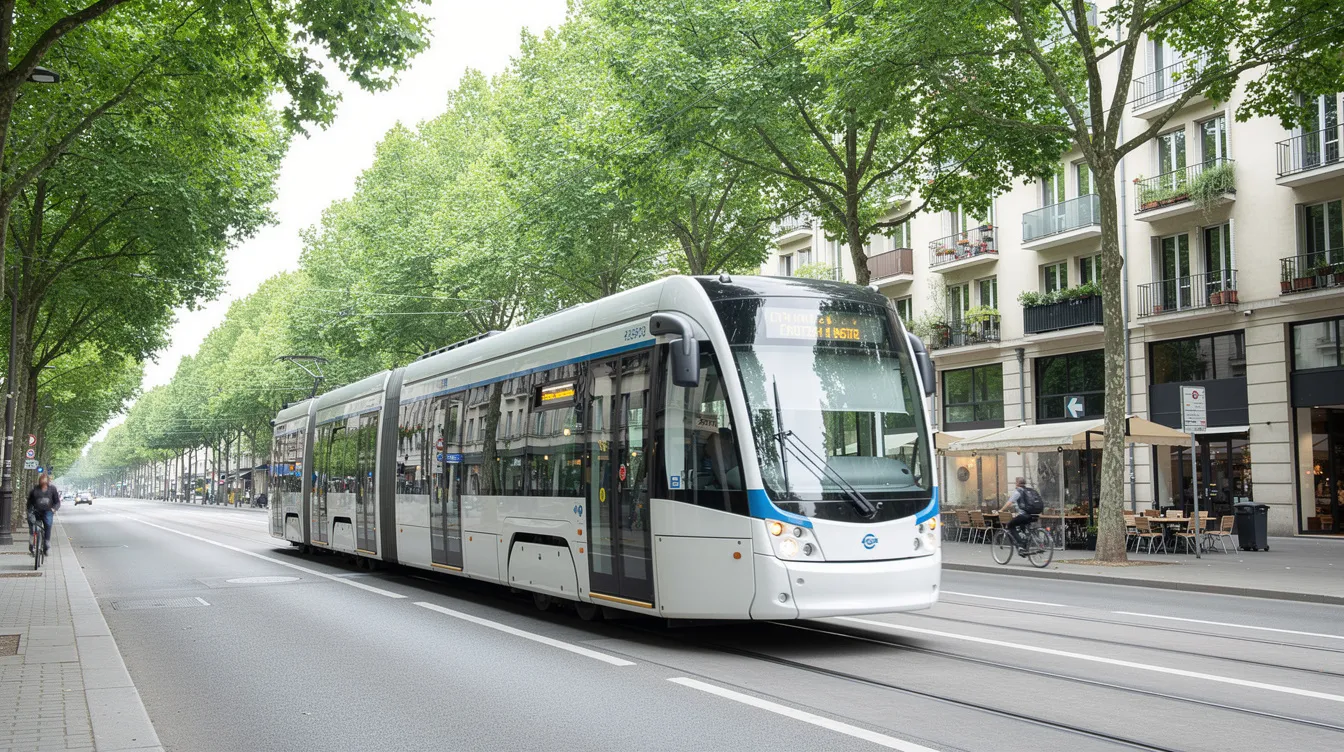
Public transport-buses, trams, and trains-is free for all users nationwide, making commuting between smaller towns and Luxembourg City both easy and cost-free.
Luxembourg has only one airport, Findel Airport, with connections to major European destinations including London, Paris, Frankfurt, and Lisbon.
Strong rail links connect Luxembourg to Paris, Brussels, and Trier in Germany, making weekend travel to other European countries effortless.
Many households still use cars, especially outside the capital. Cycling infrastructure and park-and-ride options are improving steadily, particularly along commuter corridors.
Planning a move to this small country is best done in stages. Here is a high-level roadmap to keep you on track from initial research to your first year of daily life in the grand duchy.
6–12 months before departure
Research your visa category and residency requirements based on your reason for moving (work, study, family, retirement).
Explore the job market or university options. Relocating to Luxembourg requires securing a job offer or university admission beforehand for most non EU nationals.
Start learning French or German-even a basic level will ease your arrival.
Gather essential documents: birth certificate, marriage certificate, police clearance, diplomas. Arrange official translations and apostilles where needed.
Begin budgeting. Factor in the reality that the cost of living is extremely high, especially for rent and childcare.
3–6 months before departure
Submit your immigration applications to the immigration directorate. Allow plenty of time-processing can take several months.
Secure your job and signed employment contract, or confirm your university place.
Choose a moving company and request quotes for shipping your belongings.
Start searching for accommodation in Luxembourg City or your preferred area. Set realistic expectations for rent and deposit costs.
1–3 months before departure
Confirm your visa and travel dates. Ensure your valid passport has sufficient validity for the entire process.
Finalise schooling and childcare arrangements for children.
Organise pet and vehicle paperwork if applicable.
Prepare a detailed customs inventory of personal belongings.
Notify relevant authorities in your home country about your departure (tax office, state pension provider, health insurer).
First weeks in Luxembourg
Register at the commune within three days of arrival.
Complete your medical examination and apply for your residence permit.
Open a bank account with your passport, lease, and proof of employment.
Register for health insurance through the CCSS or arrange private cover.
Set up utilities, mobile phone, and internet for your new accommodation.
First year
Review your tax status and ensure you are correctly registered to pay tax in Luxembourg.
Consider your long term housing plan-continue renting or begin exploring buying property.
Build your social circle through clubs, community events, and language courses.
Explore Luxembourg's regions beyond the capital. Spend weekends in the Ardennes, Moselle valley, and border towns to decide where you want to settle permanently.
If applicable, begin tracking your five-year timeline toward permanent residency or citizenship.
Luxembourg rewards those who plan ahead. The paperwork is real, the housing market is competitive, and the cost of living is high-but the quality of life, career opportunities, and sense of security make it one of the most rewarding places in Europe to call home. Start your checklist today.