
ACE Money Transfer
ACE Money Transfer

08 Jan 2025
Norway consistently ranks among the world's best places to live, and for good reason. But behind the fjord photos and happiness rankings lies a more nuanced picture. This guide breaks down everything you need to know about life in Norway in 2026 - the genuinely impressive benefits and the genuine challenges - so you can decide whether this nordic country is the right fit for you.
The short answer is yes, for most people. Norway offers an exceptionally high quality of life backed by a strong welfare state, remarkable safety, high wages, and world-class access to nature. But it comes with trade-offs that matter, and pretending otherwise would be dishonest.
What makes Norway stand out:
Norway is consistently ranked among the world's best places to live - it placed 2nd on the UN Human Development Index in the most recent report (HDI score of 0.970) and ranked 7th in the World Happiness Index in 2024.
Is Norway safe? Genuinely, yes. Violent crime is rare, public trust is high, and walking alone at night is normal in virtually every city.
Norwegians enjoy high salaries compared to many other countries, strong work life balance, excellent public healthcare, and free education for residents.
Stunning natural landscapes, clean air, and a deeply embedded outdoor culture make daily life feel connected to nature year round.
What trips people up:
The high cost of living is real - housing, groceries, and services are extremely expensive by virtually every other country's standards.
The job market is competitive, especially for foreigners without Norwegian language skills.
Long winter darkness and reserved social norms can be hard to adjust to.
The rest of this article breaks down life in Norway section by section - cost of living, job market, culture, safety, climate, and more - to help you decide whether Norway is the right move for you personally.
Norway occupies the western edge of the Scandinavian Peninsula in northern Europe, bordered by Sweden to the east, Finland and Russia to the northeast, and the North Atlantic and Arctic Oceans to the west and north. The country has a 25,000-kilometer-long coastline punctuated by deep fjords and rugged coastlines, and its interior is dominated by mountains, plateaus, and vast forests.
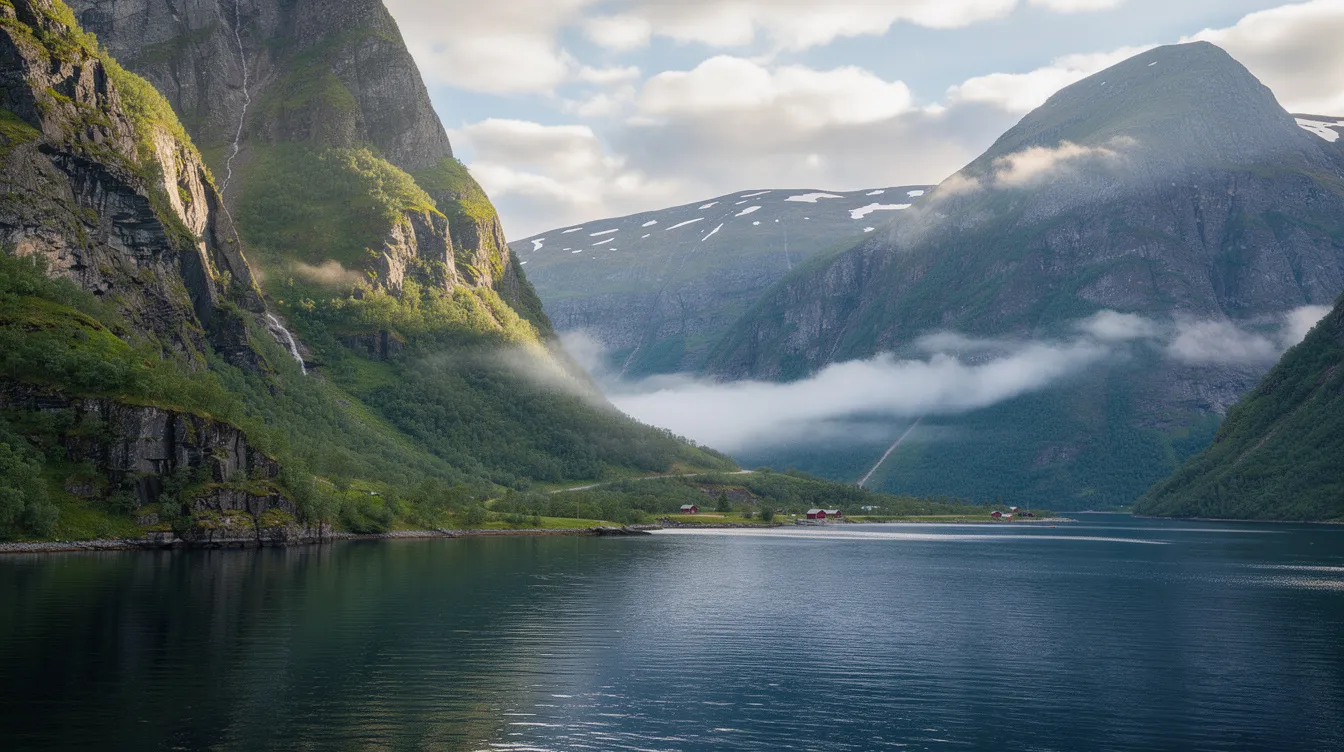
As of early 2026, Norway has approximately 5.63 million residents - a small population spread across a large land mass, giving it one of the lowest population densities in European countries at roughly 15 people per square kilometre. Around 86–87% of the population lives in urban areas, with the largest concentrations in the Oslo region, Bergen, Stavanger/Sandnes, Trondheim, and Tromsø.
Key facts about norwegian society:
Political system: Constitutional monarchy with a parliamentary democracy. Norway is not an EU member but participates in the European Economic Area (EEA), which affects immigration and job access for expats.
Core values: High institutional trust, low corruption, strong social safety net, gender equality, and environmental consciousness. Concepts like likhet (equality) and Janteloven (don't consider yourself better than others) run deep.
Social behaviour: Most norwegians are reserved around strangers, value personal space, are punctual and rule-oriented - but reliable, helpful, and warm once you're in their circle.
These societal values translate into a daily life that feels stable, predictable, and fair. It's not flashy or fast-paced, but for many people, that's exactly the point.
Before diving into the detailed breakdowns later in this article, here's a high-level look at what makes Norway attractive as a place to live.
Norway ranks among the top countries for overall happiness according to various reports, consistently appears in top-3 HDI rankings, and scores exceptionally well on corruption indexes. These aren't abstract statistics - they reflect things you actually feel in daily life.
Main advantages:
Safety - extremely low violent crime rates, high public trust, visible but approachable policing
Strong welfare state - universal healthcare, generous parental leave, social security safety nets
Higher salaries relative to many other countries, supported by strong unions and collective bargaining
Work life balance that's genuinely respected - not just a line in a job listing
Unmatched access to outdoor activities, clean environment, and stunning natural landscapes directly from major cities
Excellent public transport in norwegian cities, especially Oslo
Low corruption, strong gender equality, inclusive LGBTQ+ rights
Family-friendly policies that make raising children noticeably easier
Clean air, clean water, and a culture that holds environmental stewardship in high regard
For many expats - especially those coming from the uk, the US, or other european countries - life in norway feels calmer, more predictable, and more family-friendly. But these pros fully "work" only if you have a job, at least basic language skills, and realistic expectations about cost and climate.
Each of these advantages gets unpacked in detail below.
Every country has its downsides, and Norway is no exception. Here are the negative things that come up most frequently among expats and newcomers.
High cost of living: This is the number one complaint. Housing in Oslo and other major cities is extremely expensive, groceries cost more than in most of Europe, eating out is a luxury, and services (haircuts, repairs, childcare beyond subsidised hours) add up fast. The cost of living in Norway is about 15.8% higher than the UK, and the gap is even larger compared with many other countries.
Job market barriers: Norway's job market is highly competitive for foreigners. Fluency in Norwegian is often required for many jobs, especially in the public sector, healthcare, and education. Even in English-friendly industries, career progression without Norwegian can be limited.
Climate and darkness: Norway's winters can be extremely dark with little daylight. In Oslo, you get about six hours of daylight in December. In Tromsø and the northern parts, polar night means no sun at all for weeks. The cold, ice, and snow require gear, adjustment, and mental resilience.
Reserved social culture: Norwegians typically avoid small talk with strangers. Making friends takes time and effort. Social life tends to be home-centred and revolves around established groups. Sundays are quiet, with many shops closed.
Practical annoyances: Imported goods are pricey, postal delivery can be slower than in the uk or Germany, and smaller towns offer limited product variety and fewer services.
None of these are deal-breakers for everyone. But anyone planning to live in norway long-term should weigh them honestly against the benefits.
Understanding norwegian culture goes beyond statistics. It's the texture of your daily interactions, and it determines whether you'll actually enjoy living here or just tolerate it.
Norwegians are generally polite but may be perceived as initially reserved. In practice, this means you won't get chatted up on the bus or in the checkout line. Personal space is highly regarded in norwegian culture, and many norwegians prefer quiet, undisturbed routines in public. This isn't hostility - it's simply a different social operating system.
Janteloven (the "Law of Jante") is worth understanding early. It's an informal social code discouraging bragging, showing off, or acting superior. In the workplace, this means flat hierarchies and collaborative decision-making. In friendships, it means understatement is respected and flashiness is frowned upon. Norwegians value humility, respect, and equality in society, and they expect the same from newcomers.
A few cultural details that catch people off guard:
Dinner guests should arrive on time and bring a small gift (flowers, chocolate, wine)
Norwegians often enjoy tacos for dinner on Fridays - it's a genuine nationwide tradition
Alcohol is heavily taxed, and socialising around drinks happens mostly on weekends; strict drink-driving limits are enforced
Norwegian culture places a high value on spending time in nature, known as friluftsliv - weekend cabin trips and forest walks aren't hobbies, they're core identity
Strong unionization shapes workplace expectations: punctuality, planning, and respecting boundaries between work and personal time
Who thrives here: Independent, introverted, nature-loving people who value predictability and fairness. Who may struggle: Those who crave nightlife, big crowds, constant social stimulation, or highly expressive cultures.
Norway regularly appears in the top tier of global cost-of-living rankings, and newcomers are often shocked by the prices. But context matters: the norway cost picture looks different when you factor in Norwegian wages and the services you get in return.
The average monthly cost of living is 20,000 to 40,000 NOK for a single person, depending on city and lifestyle. In Oslo, expect the higher end. In a smaller town, the lower end is realistic if you cook at home and avoid frequent dining out.
Approximate monthly breakdown for one person in Oslo (2026):
| Expense | Range (NOK) |
|---|---|
| Rent (1-bedroom, city) | 12,000–18,000 |
| Groceries | 3,000–5,000 |
| Transport (monthly pass) | 800–900 |
| Utilities (85 m²) | 1,300–1,550 |
| Eating out / entertainment | 2,000–4,000 |
| Phone + internet | 500–800 |
| Total | ~20,000–30,000+ |
The cost of living in Norway is about 15.8% higher than the UK across the board, and considerably more than most southern or eastern European countries.
But here's what offsets it: the average annual income in Norway is 550,000 NOK before tax. Healthcare is nearly free at point of use. Education is free for residents. Parental leave is generous. You don't pay for many things that cost serious money in other countries.
Still, if you're arriving without a Norwegian salary - as a student, freelancer, or job-seeker - the high cost will feel sharp. Budget accordingly.
Housing is the single biggest line item in your budget and the expense most likely to cause sticker shock, especially in and around Oslo.
Rental prices (2025–2026):
| Location | 1-bedroom (monthly) |
|---|---|
| Oslo city centre | 13,000–18,000 NOK |
| Oslo suburbs | 10,000–14,000 NOK |
| Bergen | 10,000–14,000 NOK |
| Smaller town | 7,000–11,000 NOK |
Rent in Oslo ranges from 12,000 to 18,000 NOK per month for a standard one-bedroom, though premium locations can push above 20,000 NOK. Home prices for buying are steep - median house prices in Oslo sit above NOK 5.65 million.
Common housing types include apartments (most common in cities), terraced houses, detached houses, and the iconic Norwegian cabin (hytte). Most buildings are well-insulated with underfloor heating, triple glazing, and good ventilation - a necessity given the climate, and a genuine comfort advantage.
Practical tips for expats looking to rent:
Expect to pay a 3-month deposit upfront
You'll need documented income, valid ID, and sometimes a guarantor
Competition for well-located rentals in Oslo is fierce - Finn.no is the primary listings platform
Student housing through universities is cheaper but limited and in high demand
Shared apartments (kollektiv) can cut costs significantly for singles
The housing standard is high - Scandinavian minimalist design, clean shared spaces, and good maintenance are the norm. But the entry costs are steep, especially for families wanting more space in popular areas of the big city.

Food is a major contributor to Norway's high cost, particularly if you eat out frequently or buy imported brands.
Typical 2026 prices:
Litre of milk: ~26 NOK
Loaf of bread: ~30–40 NOK
Dozen eggs: ~45–55 NOK
Chicken breast (1 kg): ~90 NOK
Cappuccino at a café: ~50–60 NOK
Beer at a bar: ~90–110 NOK
Simple restaurant meal: eating out costs around 200 to 300 NOK per person
Fast food combo: ~130–160 NOK
Groceries cost between 3,000 to 5,000 NOK monthly for one person. Shopping at discount chains like Rema 1000, Kiwi, or Extra - and cooking at home - makes a significant difference compared with shopping at premium chains like Meny or Coop Mega.
Alcohol deserves special mention. It's heavily taxed, and anything stronger than 4.7% ABV is sold only through Vinmonopolet, the state-run monopoly. A bottle of decent wine costs 150–250 NOK. A six-pack of craft beer can easily run 200+ NOK.
Other everyday expenses:
Gym membership: 300–500 NOK/month
Mobile phone plan: 300–500 NOK/month
Streaming subscriptions: standard global pricing
Basic clothing: comparable to Western European prices
Many locals cross-border shop in Sweden for meat, cheese, and alcohol to save money, though customs rules limit what you can bring back. It's a deeply Norwegian tradition - weekend drives to Swedish border towns are a national pastime.
Budget strategy: cook at home, shop discount, and save eating out for occasions. That's how many norwegians handle it too.
Norway has modern infrastructure, but geography creates challenges. Large distances, fjords, mountains, and harsh weather mean getting around takes planning, especially outside cities.
Public transport in cities: Oslo's network - T-bane metro, trams, buses, local trains, and ferries - is efficient and well-integrated. A single ticket costs around 42 NOK, and a monthly pass runs 800–900 NOK. Bergen, Trondheim, and Stavanger have solid bus networks and light rail. Most city residents rely on public transport daily.
Intercity travel: Norway's train lines are scenic but slow. The Oslo–Bergen line is famously beautiful, but the journey takes nearly 7 hours. Domestic flights are faster and sometimes surprisingly affordable if booked early (500–1,200 NOK), though last-minute prices climb steeply.
Driving: Rules are strict. Winter tyres are mandatory from November to April. Speed limits are low and heavily enforced. Fuel prices, road tolls, and city parking are all expensive. On the upside, Norway leads the world in electric vehicle adoption, and EVs enjoy lower taxes, reduced tolls, and sometimes access to bus lanes.
Cycling and walking: Safe cycling infrastructure exists in most norwegian cities, but steep hills and icy winters limit year round cycling for many. Walking is pleasant and common in warmer months.
If you live in a big city, you can comfortably get by without a car. Outside urban centres - especially if you have a family or live in a smaller town - car ownership becomes much more important.
Norway's job market is strong on paper - as of early 2026, there are roughly 95,100 job vacancies - but navigating it as a newcomer requires realism.
Key sectors hiring in 2025–2026:
Oil, gas, and renewable energy
IT and software development
Engineering and construction
Healthcare (nurses, doctors, specialists)
Maritime and fisheries
Tourism and hospitality (seasonal)
Norway registered over 43,000 new businesses in 2023, reflecting an entrepreneurial streak, but most employment is in established organisations with structured hiring.
The average annual income in Norway is 550,000 NOK before tax, with significant variation by sector. Energy, tech, and finance tend to pay above average. Unionization is high, and collective bargaining agreements set wage floors in many industries, ensuring that even lower-paid roles offer higher salaries than equivalent positions in most other countries.
Challenges for newcomers:
EU/EEA citizens have easier access than third-country nationals, who typically need a work permit tied to a specific job offer
Fluency in Norwegian is often required for many jobs - even where English is the office language, internal communication and client-facing work often default to Norwegian
Foreign qualifications may need formal recognition, which takes time
Networking and local references carry significant weight
English-only jobs exist, particularly in tech and multinationals, but they're concentrated in Oslo, Bergen, Stavanger, and Trondheim. Having an excellent job lined up before you move dramatically changes whether Norway feels like an opportunity or an expensive gamble.
Many expats cite Norway's work culture as one of the top reasons to stay. Norway is known for its strong work-life balance and family-friendly policies, and this isn't marketing - it's how workplaces actually operate.
The standard working week in Norway is 37.5 hours. Overtime is discouraged and, when it happens, is compensated. Employees in Norway receive at least 25 days of paid vacation per year - in practice, most full-time workers get five weeks of paid leave annually, and taking all of it is expected, not frowned upon.
What the workplace looks like:
Flat hierarchies - you're on a first-name basis with your boss
Consensus-driven decision-making
Limited office small talk, but high professionalism and mutual respect
Meetings are planned well in advance and start on time
Answering work emails late at night or on weekends is unusual and not expected
Family-friendly policies in practice:
Over 40 weeks of paid parental leave, shared between parents
Leaving work early to pick up children from kindergarten is normal
Employers are understanding when kids are sick - you get paid leave for it
Flexible working arrangements are common
Diversity and inclusion policies are strong on paper. International workplaces are growing, and formal discrimination protections are robust, though some expats report subtle barriers to advancement without Norwegian fluency.
This strong emphasis on balance over hustle is a major reason Norway attracts professionals burned out by intense corporate cultures elsewhere. If you've been chasing the elusive "work-life balance" label in other countries, Norway is one of the few places where it's genuinely the default.
Norway's education system is a core reason families consider the move. Education in Norway is free for all children and residents, and the quality of public schooling is consistently high.
Structure:
Primary school (barneskole): ages 6–13
Lower secondary (ungdomsskole): ages 13–16
Upper secondary (videregående): ages 16–19 (not compulsory but nearly universal)
The approach emphasises equality, outdoor play, creativity, and collaboration over intense exam pressure in early years. Most children attend their local public school, and the standard is high enough that private schools are uncommon. International schools exist in Oslo and a few other major cities, but they charge significant tuition fees.
Higher education: Norway's public universities - the University of Oslo, NTNU in Trondheim, the University of Bergen, UiT in Tromsø - are internationally respected. Norwegian and EU/EEA students benefit from free education with no tuition fees at public institutions. Since academic year 2023/24, non-EU/EEA students generally pay tuition at public universities.
Some master's degree programmes are taught in English, making Norway accessible for international students. However, day-to-day schooling for children is conducted in Norwegian, and children are expected to learn the language quickly.
For families who value relaxed but high-quality schooling, generous outdoor education, and a system that encourages children's independence, Norway is an excellent fit. The trade-off is that children need to adapt to Norwegian language and culture - though kids tend to do this far faster than their parents.
Norway has a universal healthcare system similar to the NHS in structure. Once you're registered as a resident and paying taxes, healthcare is funded through the system, and out-of-pocket costs are modest.
How it works:
Register with a fastlege (GP) - your first point of contact for all non-emergency care
Pay a modest fee per doctor visit (typically 200–400 NOK) and for prescriptions, up to an annual cap (frikort) of around 3,000 NOK - after which further treatment that year is free
Norway's public healthcare is free for people 16 and younger
Emergency care is accessible at hospitals; no payment needed for acute treatment
Strengths: High-quality medical professionals, modern hospitals, excellent maternal care and child health clinics, and expanding mental health services. Overall life expectancy in Norway is around 83 years, well above the OECD average - a concrete reflection of health outcomes.
Limitations: Waiting lists for specialist referrals can be long, especially in smaller regions. Getting a fastlege can take time in popular urban areas. Dental care for adults is not covered and is expensive.
Beyond healthcare, the social security system provides sickness benefits, disability support, unemployment benefits, child benefit payments, and pensions - all funded through relatively high taxes. Norwegians enjoy a high standard of living and universal healthcare, supported by a robust social welfare system.
The bottom line: once you're in the system, healthcare feels nearly free at point of use. The security this provides - knowing illness or job loss won't bankrupt you - is one of the most tangible benefits of life in norway.
Is Norway safe? This isn't just a marketing phrase. Norway consistently ranks among the safest countries in the world, with low levels of violent crime and high public trust in institutions.
In 2025, Norway recorded just 19 homicides nationwide - one of the lowest totals in decades, in a country of over 5.6 million people. Norway's crime rate is very low, making it a safe country by any reasonable measure. Walking alone at night in most norwegian cities and towns is common practice for all ages and genders.
Crime context:
Property theft is the most common offence category
Violent crime exists but is overwhelmingly classified as "lesser violent offences" (minor assaults)
Some gang-related incidents occur in the biggest cities, but at levels far below those in many other countries
Petty theft can happen around busy transport hubs, particularly Oslo airport and central station areas
Policing and justice:
Police are visible but not militarised; officers are generally trusted
The justice system focuses on rehabilitation rather than punishment
Strong rule of law and low corruption
Political stability: Norway has long-term democratic stability with peaceful power transitions, active but orderly political debate, and strong civil liberties. The country plays an active role in international peace mediation.
Terrorism risk is officially acknowledged but incidents are rare. Authorities publish annual threat assessments and preparedness guidance.
This overall safety and stability is a fundamental reason many families and solo expats feel comfortable choosing to live in norway - it's not something you have to think about much, which is exactly the point.
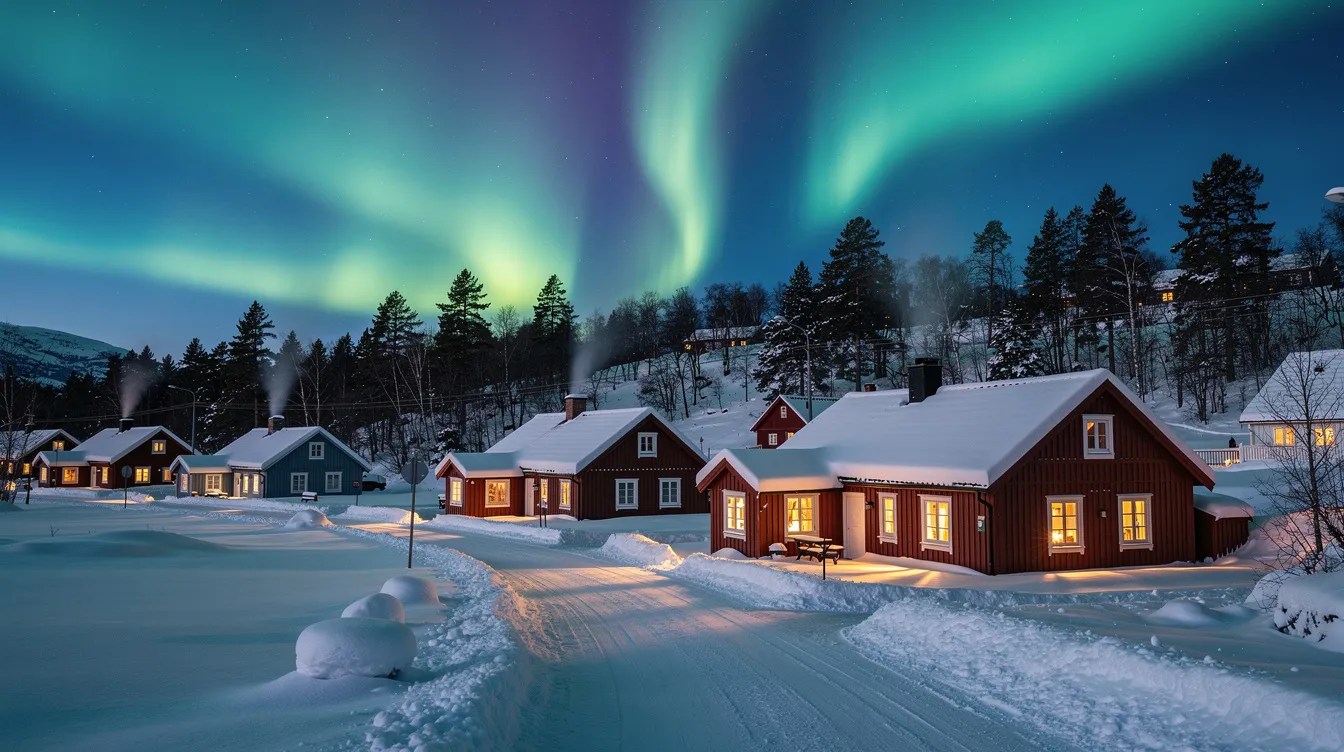
Norway's climate is simultaneously one of its biggest attractions and one of its toughest challenges. The northern lights, midnight sun, and snow-covered mountains draw people in. The long winter darkness can push people away.
Regional differences matter enormously:
Oslo: Relatively dry, cold winters (averaging -3°C to -7°C in January), warm summers (18–25°C). About 6 hours of daylight in December.
Bergen: Milder but very wet - expect rain roughly 240 days per year. Winters are less cold but perpetually grey.
Tromsø and northern parts: Arctic conditions with polar night (no sun from late November to late January) and midnight sun in summer.
Inland areas: Cold, crisp winters with heavy snow but more sunshine than the coast.
Norway's winters can be extremely dark with little daylight. This affects sleep patterns, energy levels, and mental health. Seasonal affective disorder is common, and locals take it seriously.
How locals cope:
Embracing winter sports - cross-country skiing, ice skating, sledging
Using bright indoor lighting and taking vitamin D supplements
Cabin trips (hyttetur) to break up the long winter monotony
The Norwegian saying "det finnes ikke dårlig vær, bare dårlige klær" (there's no bad weather, only bad clothing) isn't ironic - it's genuinely how people approach it
If you enjoy winter sports and cosy indoor life, you'll likely adapt well. If you're a sun-lover who struggles with grey skies, the darkness is a serious drawback worth considering carefully.
If there's one thing that makes Norway unlike virtually every other country, it's how deeply integrated nature is into everyday life. This isn't just weekend tourism - it's a national identity.
Norwegian culture places a high value on spending time in nature, known as friluftsliv. The concept translates roughly to "open-air life," and it shapes everything from kindergarten education to retirement routines. Norwegians cherish their natural landscapes and outdoor activities, and they expect you to understand why.
What outdoor activities look like by season:
Summer/autumn: Hiking, berry-picking, fishing, boating, swimming in fjords and lakes, cabin trips
Winter/spring: Cross-country and alpine skiing, snowboarding, ice skating, sledging, snowshoeing
Norway features stunning fjords and rugged coastlines, and iconic destinations like the Lofoten Islands, Jotunheimen National Park, Hardangervidda plateau, and the forests ringing Oslo are accessible even by public transport.
The Right to Roam in Norway allows free public access to nature - you can hike, camp, and forage almost anywhere in the countryside, regardless of who owns the land. This is enshrined in law and fiercely protected.
How norwegians live it:
Sunday walks in the forest are a near-universal ritual
Children play outside in kindergarten regardless of weather
City dwellers in Oslo can ski directly from metro stations into forest trails
Norway's natural landscapes are known for their breathtaking beauty, and you don't need to travel far to experience them
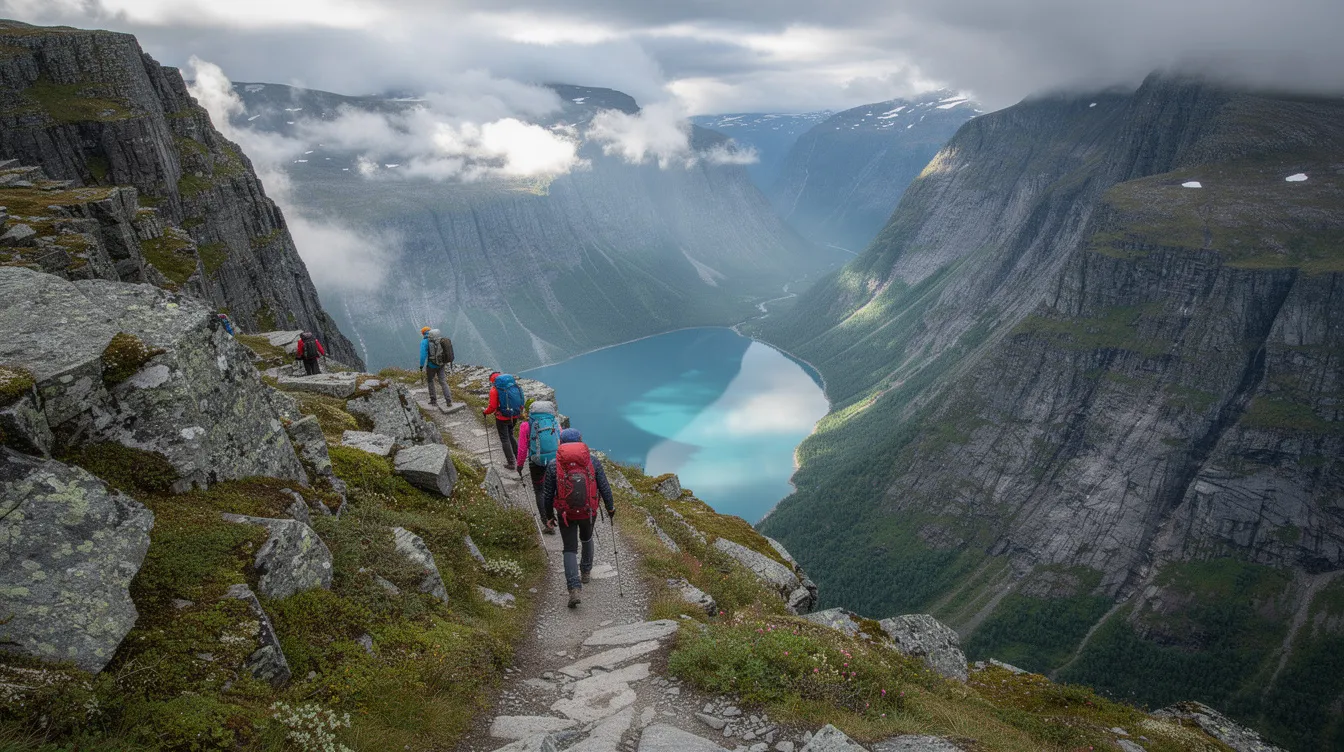
A strong network of marked trails, maintained cabins (DNT hytter), and mountain safety guidelines make outdoor activities accessible for all skill levels. Outdoor activities like hiking and skiing are popular in Norway across all age groups.
If you love being outdoors, Norway offers unrivalled access that can genuinely outweigh many of the country's cons.
English is widely spoken, easing communication for newcomers. Almost everyone under 50 speaks excellent English, and you can navigate daily errands, medical appointments, and many workplaces without Norwegian. This makes short-term life in norway relatively painless.
But there are clear limits.
While English works for tourism, studies, and some office jobs, many public-facing roles - healthcare, teaching, customer service, government - require Norwegian. Social situations also shift: jokes, nuance, neighbourhood group chats, school communication, and local news all happen in Norwegian. Living only in English can start to feel isolating.
Integration pathways:
Government-subsidised language courses are available for certain categories of immigrants
Private language schools operate in all major cities
Free online resources and apps supplement formal learning
Realistic timeline: 6–18 months of regular effort to reach conversational Norwegian
Children tend to pick up Norwegian rapidly at barnehage or school, sometimes outpacing their parents within months. This can shift family dynamics and accelerate integration for the whole household.
The practical advice: if you plan to live in norway long-term, commit to learning Norwegian. It opens the job market, deepens friendships with norwegian friends, and makes you feel like a participant in norwegian society rather than a permanent guest. Daily survival in English is possible in most urban settings, but thriving requires the local language.
The most common expat observation: Norwegians can feel "cold" at first. But this is about privacy norms, not hostility. Understanding the difference is key to building a social life here.
Norwegians typically avoid small talk with strangers - on buses, in shops, in lifts. Friendships develop slowly, usually through shared activities: sports clubs, hiking groups, work teams, university courses, children's schools, or volunteer organisations. Being invited to a Norwegian home is a genuine milestone - it signals real friendship, not casual socialising.
Typical social rhythms:
Quiet weekdays with home-centred evenings
Friday after-work drinks as the main weekly social outlet
Cabin trips (hyttetur) with a tight circle of good friends
Summer barbecues and outdoor gatherings
Public holidays as family time, often spent at the hytte
For newcomers, expat communities and international friends networks provide faster social connections. English-language meetups, international sports teams, and online groups are active in Oslo, Bergen, Stavanger, and Trondheim.
Differences by life stage:
Parents often make friends through kindergartens and schools - the "dugnad" (communal volunteer work) system brings parents together naturally
Singles and childless expats may need to be more proactive - joining language classes, sports teams, or hobby groups is essential
Many norwegians maintain close friendships from childhood and may not actively seek new connections, which can feel exclusionary
Practical advice: Be patient. Show up consistently to the same groups. Don't be put off by initial reserve. Respect norms around punctuality, alcohol moderation, and splitting bills. The friendships that do form tend to be deep, reliable, and lasting - many expats who stay long enough say their norwegian friends become some of the most loyal they've ever had.
Norway is one of the most family-friendly countries in the world, and this isn't theoretical - you feel it in daily life.
Typical childhood here looks different from many other countries. Safe neighbourhoods and high social trust mean kids walk or cycle to school independently from a young age. Outdoor kindergartens (barnehage) keep children playing outside in virtually all weather. The philosophy is that fresh air, mud, and autonomy build resilient kids.
What families get:
Heavily subsidised barnehage (kindergarten) - parents pay a capped monthly fee
Generous parental leave shared between both parents; fathers taking extended leave is normal and expected
Monthly child benefit payments from the government
Strong legal protections for children's rights
Free public schooling from age 6
Practicalities to know:
Barnehage places are in demand - apply early, especially in major cities
Opening hours typically 7:00–17:00, aligning with standard working hours
Children integrate linguistically fast; expect Norwegian to become their dominant language
Challenges for expat families:
Language barrier for children initially - though most adapt within months
Norwegian approaches to discipline and children's independence may feel unfamiliar to parents from more structured cultures
The child protection system (Barnevernet) has attracted international media attention; understanding its role and philosophy early helps avoid misunderstandings
For families who value safety, outdoor life, moderate academic pressure, and egalitarian gender roles, Norway is an outstanding place to raise children. The trade-off is adapting to a different cultural framework - but most families who make the adjustment don't look back.
Whether you can enjoy life in norway depends first on your legal right to be there. Rules differ significantly based on nationality.
EU/EEA citizens: Can generally move to Norway and work with registration. No work permit needed, though you must register with the police within three months.
Non-EU/EEA citizens: Typically need a residence permit before arrival. Common pathways include:
Skilled worker permit (requires a concrete job offer in a relevant field)
Family reunification (joining a spouse or partner who is already a resident)
Student permit (requires admission to a recognised institution and proof of funds)
Seasonal worker permits for specific industries
The process:
Apply through UDI's (Norwegian Directorate of Immigration) online portal
Provide documentation: job contract, education proof, financial means, housing arrangements
Attend an appointment at the local police station or embassy for ID verification
Wait - processing times vary from weeks to several months
Permanent residency and citizenship:
Permanent residence requires minimum 3 years of legal residence (with conditions)
Citizenship requires longer residence, Norwegian language proficiency, and passing a social studies test
Norway has allowed dual citizenship since 2020
Immigration rules change regularly. Always check the latest guidance from UDI directly. Many expats successfully navigate the process each year, but going in without preparation - especially as a non-EEA citizen - can mean delays and frustration.
Where you land in Norway shapes your experience dramatically. The difference between Oslo and a smaller town in the north is enormous in terms of job access, social life, cost, and climate.
Oslo: The capital and biggest job market. Most diverse city, vibrant cultural scene, best public transport, highest housing costs. Close to forests and the Oslofjord. Best for professionals, students, and anyone wanting the fullest range of services. Oslo airport connects you easily to the rest of Europe and beyond.
Bergen: Beautiful west-coast city surrounded by fjords and mountains. Famously rainy but culturally rich, with strong ties to shipping, energy, and tourism. Smaller job market than Oslo but deeply attractive to nature lovers and friendly people who enjoy a tighter community feel.
Stavanger/Sandnes: Norway's energy capital with many international workers. Relatively mild coastal climate, high salaries in the energy sector, but also high living costs. Good option for oil, gas, and engineering professionals.
Trondheim: University city (NTNU) with a strong tech and research environment. Smaller, student-friendly, good quality of life. Growing startup scene.
Tromsø: Arctic city above the polar circle. Northern lights in winter, midnight sun in summer, strong outdoor culture, and a surprisingly lively university-town atmosphere despite its remote location.
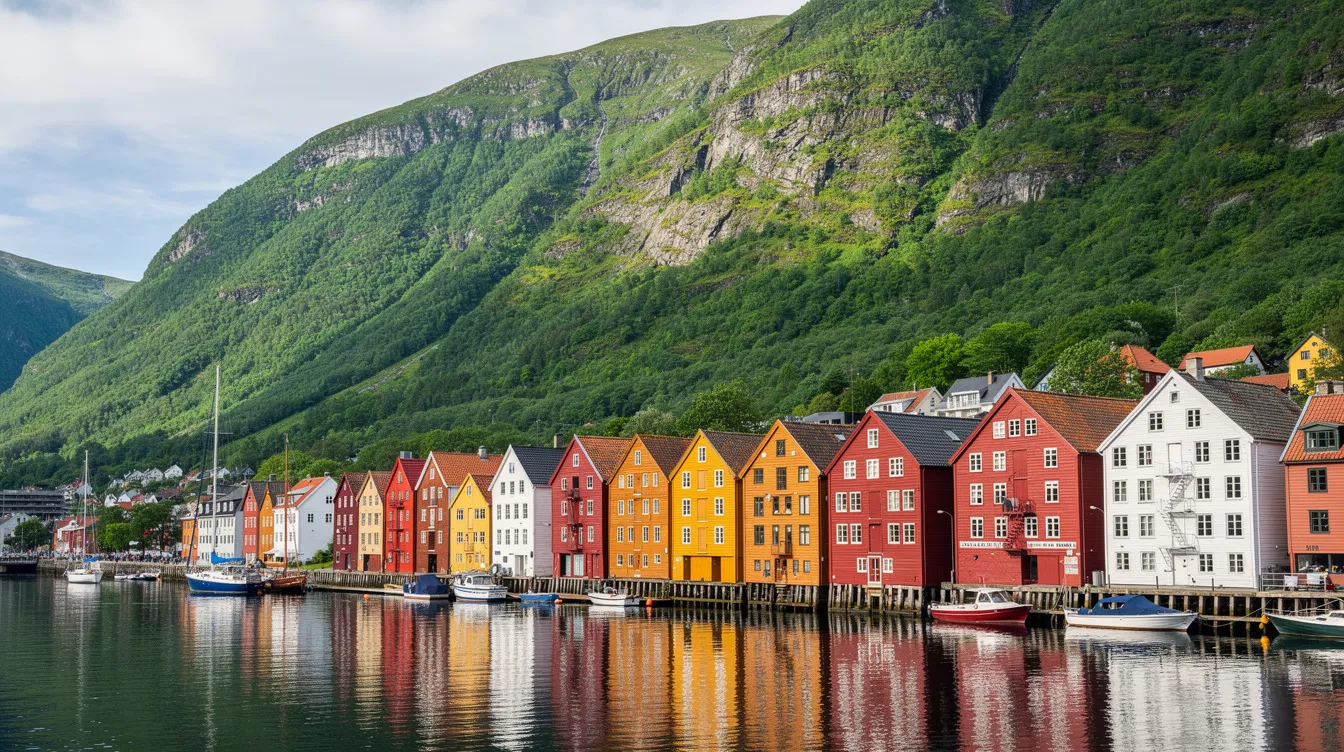
Smaller towns offer cheaper housing and quieter life, but fewer jobs, less public transport, and more reliance on Norwegian language. The further from a big city you go, the more important a car and Norwegian fluency become.
Choose your city based on your profession, language level, and whether you prefer cultural buzz or natural calm. Both are available - just in very different packages.
High taxes are the engine that powers Norway's welfare state. Understanding them is essential to evaluating whether the norwegian system works for your finances.
Income tax: Norway uses a progressive system. Social security contributions, bracket taxes, and municipal taxes combine so that someone earning the average salary of around 550,000 NOK annually will take home roughly 65–70% after all deductions. Higher earners pay proportionally more.
Simplified example:
| Gross annual salary | Approximate net (after tax) |
|---|---|
| 450,000 NOK | ~330,000 NOK |
| 550,000 NOK | ~390,000 NOK |
| 750,000 NOK | ~510,000 NOK |
These are rough estimates. Actual figures depend on deductions, municipality, and personal circumstances.
VAT: Standard rate is 25% on most goods and services. Reduced rates apply to food (15%) and public transport, cinema, etc. (12%). This is baked into listed prices.
Banking practicalities:
Efficient online banking and mobile payments are standard
Vipps (Norway's dominant peer-to-peer payment app) is used for everything from splitting dinner bills to paying your electrician
Card and contactless payments are universal; cash is rarely used
Opening a bank account requires a Norwegian personal number (D-number or national ID number), which you receive after registering with the tax office
New arrivals often hit a frustrating catch-22: you need a bank account for many things, but you need a personal number for a bank account, and you need registration for a personal number. The typical order is: register residency ? visit tax office ? receive number ? open bank.
The key reframe: taxes are high, but they come back as services - healthcare, education, parental leave, infrastructure, safety. Many residents consider it good value for money.
Norway's public sector is highly digitalised, and once you're set up, everyday bureaucracy is remarkably smooth.
Digital infrastructure:
Tax returns are pre-filled and submitted online - most people just review and confirm
Digital mailboxes (Digipost or eBoks) replace physical mail for most official correspondence
BankID (electronic identity) is used for logging into banks, government services, signing contracts, and verifying identity - it's essentially your digital passport
Connectivity:
High-speed broadband is standard in urban areas and available in most rural locations
4G/5G mobile coverage is strong even in many remote areas
Typical monthly costs: home internet 400–600 NOK, mobile plan 300–500 NOK
Frustrations for newcomers:
Almost all digital services require a Norwegian ID number, which can delay full access during your first weeks or months
Online shopping and deliveries are slower and more expensive than in the uk or Germany
Customs handling on non-EEA purchases adds VAT and fees, making cross-border e-commerce less attractive
After the initial setup period, everyday life in norway feels very smooth. You can handle most administrative tasks from your phone, spend minimal time in queues, and access services around the clock. The digital efficiency is one of the quieter perks of living here, but it makes a real difference to daily convenience.
Norway is objectively one of the best places to live by nearly every global metric - HDI, happiness, safety, life expectancy, equality, environmental quality. But "objectively great" and "great for you" are different questions.
You'll likely thrive if you:
Love nature and outdoor activities and want access year round
Value safety, stability, and predictability over excitement
Are in a profession with Norwegian demand (tech, energy, healthcare, engineering)
Want a family-friendly environment with strong public services
Appreciate flat social hierarchies and are comfortable with reserved social norms
Are willing to learn Norwegian and invest in long-term integration
You may struggle if you:
Are highly sensitive to cold and darkness
Rely on constant social stimulation, nightlife, or big-city buzz
Work in a field with limited demand in Norway
Are unwilling to learn Norwegian or adapt to local cultural expectations
Expect to live cheaply - the high cost is unavoidable on any salary level
Ask yourself:
Can I handle the cost of living while I establish myself?
Am I prepared for dark winters and their effect on mental health?
Do I enjoy outdoor activities enough to embrace them as a lifestyle, not just a hobby?
Am I patient enough to make friends slowly through shared activities?
Does a quieter, more structured life appeal to me - or would I miss the energy of a bigger, louder culture?
Norway rewards patience, adaptability, and a genuine love of the outdoors. If those describe you, this country has an enormous amount to offer. If they don't, visiting is wonderful - but living here full-time may test you in ways the travel brochures never mention.
The best way to find out? Spend an extended period in Norway - ideally including a winter - before committing to the move. The land, the light, and the life will tell you more than any article ever could.