
ACE Money Transfer
ACE Money Transfer
20 May 2026
If you have ever tried to send a large sum of money from your Italian bank account to a loved one back home, you know that heart-dropping feeling when the transaction status says "Pending" for days. You start to second-guess everything. Did I use the right IBAN? Is the bank name correct? Why is it taking so long for my family to get the support they need?
Living as an expat in Italy means navigating a complex banking system while trying to fulfill responsibilities thousands of miles away. Whether you are in Milan’s tech hub or Rome’s historic center, the last thing you want is for your funds to be swallowed by a banking error. The secret to a smooth, fast transfer lies in one specific string of characters: the SWIFT code. Let’s look at how to get it right the first time.
To ensure your international transfer moves through the global banking network without a hitch, you must use the verified Headquarters code. For ING Bank N.V. in Italy, the primary code you need for all international transactions is:
INGBITMMICM
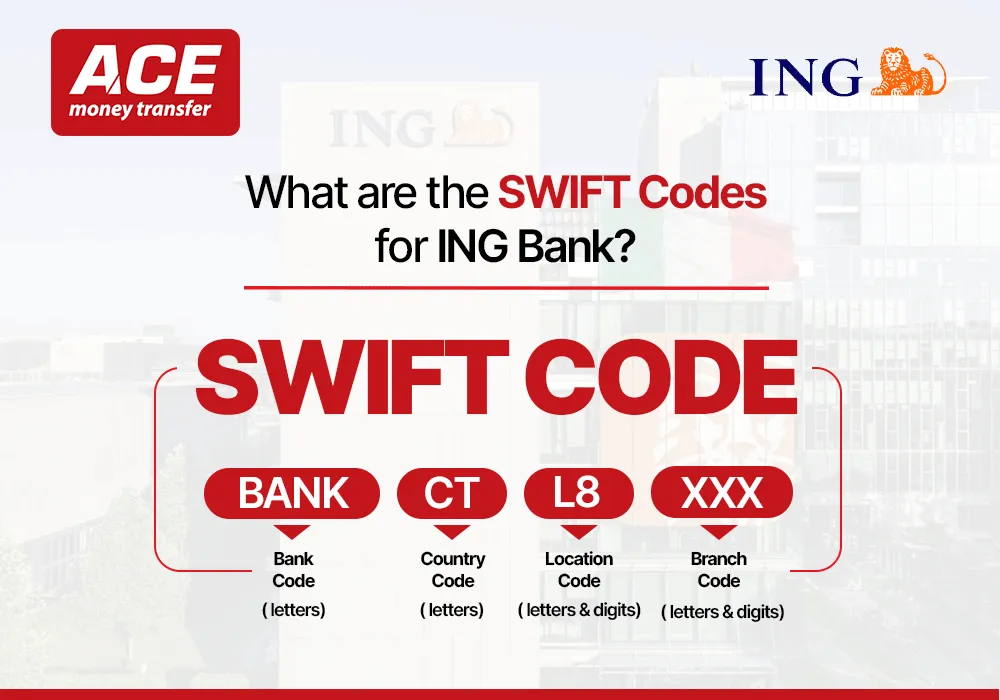
This swift bic code (one of the standard business identifier codes) is usually 8–11 characters and identifies the bank name, country, city, and branch for accurate international transfers. It breaks down like this:
• INGB: The first 4 characters are the bank identification for ING.
• IT: The next 2 characters indicate the country.
• MM: The following 2 characters denote the location or city.
• ICM: The last 3 characters are the branch code, often three digits or letters that identify the specific office.
Many expats don't realize that bank-to-bank transfers can be surprisingly expensive. According to the Banca d'Italia 2023 Report, the volume of remittances from Italy continues to grow, yet many users still lose a portion of their wealth to high processing fees.
Furthermore, data from the ISTAT (Italian National Institute of Statistics) suggests that over 5 million foreign residents in Italy contribute significantly to their home economies, making the efficiency of every Euro sent vital.
If you are sending 1,000 EUR, even a small percentage difference in exchange rates or a hidden "handling fee" can mean your family receives significantly less than you intended.
Sending money internationally from your ING account is straightforward if you follow these steps:
• Log In: Access your ING Italy mobile app or online banking portal.
• Select International Transfer: Look for the “Bonifico Estero” or “Cross-border transfer” option.
• Enter Recipient Details: You will need the recipient’s full legal name and their bank’s IBAN, and in some cases the recipient’s account number may also be required depending on the destination bank or transfer form.
• Input the SWIFT/BIC: Enter INGBITMMICM to identify the sending bank, but first verify the code using your online banking, a recent bank statement where it may be listed, or an online lookup tool so the payment information is correct before you submit.
• Review and Confirm: Check the exchange rate. Note that banks often add a margin to the mid-market rate.
When you are rushing to send money home before a deadline, it is easy to make a small slip-up that results in a big headache. Because SWIFT codes can differ by country and branch, using the wrong one can delay international wire transfers. Avoiding these common pitfalls will keep your funds safe and ensure they arrive exactly when your family needs them:
• Confusing the SWIFT Code with the IBAN: Remember that the INGBITMMICM code identifies the bank, while the IBAN identifies your specific account. Mixing these up in the wrong fields will cause the bank’s automated system to reject your request instantly. Before sending, verify the correct bank swift code, since bic codes must match the right destination.
• Forgetting the “ICM” Suffix: While some older systems might accept an 8-digit code, using the full 11-digit INGBITMMICM is the most reliable way to ensure your transfer reaches the correct Italian hub without manual sorting.
• Ignoring Intermediary Bank Fees: If you select the “SHA” (Shared) fee type, both you and your recipient might be charged. To ensure your family gets a specific amount, check if your service allows you to cover all costs upfront so there are no surprises at the other end.
• Entering the Wrong Recipient Name: Banks often cross-reference the SWIFT code with the name on the account. Even a small typo in a last name can lead to a “Name Mismatch” error, holding your money in a suspense account for weeks.
• Not Checking the Daily Exchange Rate: Rates fluctuate constantly. According to recent data from the European Central Bank, even a 1% shift in the Euro’s value can change the outcome of a large transfer by dozens of Euros. Always check the rate on the day you send.
Using an incorrect SWIFT code doesn’t just delay your money; it can lead to financial loss. For example, an ing bank swift code can differ by country and bank swift setup: Turkey uses INGBTRISXXX, Spain uses INGDESMMXXX, and the netherlands uses INGBNL2AXXX, with codes sometimes varying by service or branch, so confirm the right one before sending money abroad or making an international bank transfer. If a transfer is rejected because of a typo in the code, the bank may still charge you a “returned payment fee,” which can range from 15 EUR to 50 EUR depending on the intermediary banks involved.
By using the verified INGBITMMICM code, you bypass the risk of manual intervention by bank staff, which is often what causes those frustrating 3-to-5-day delays. Instead, your money moves through the automated system as intended.
You work hard to provide a better life for your family, and you deserve a transfer service that respects that effort. Now that you have the correct ING Italy SWIFT code and understand the potential pitfalls, you are in control.
Don't let traditional banking hurdles slow you down. Take Charge Of Your International Payments Now!
There is actually no difference between the two terms in practical banking. SWIFT stands for the Society for Worldwide Interbank Financial Telecommunication, while BIC stands for Bank Identifier Code, also known in banking as business identifier codes. Both refer to the same 8 or 11-character string, such as INGBITMMICM, and the correct swift bic code is used to identify a specific bank during an international transaction.
If you are sending money within Europe, many sepa payments usually only require the IBAN. However, for transfers from or to abroad, or in a currency other than the Euro, the SWIFT code is mandatory to ensure the funds reach the correct destination bank. If a bank is unable to process the payment with IBAN alone, it may also request the bank’s SWIFT details.
Typically, a SWIFT transfer can take between 2 to 5 business days to be fully processed and credited to the recipient's account. This timeline can be affected by time zone differences, public holidays in either country, and the number of intermediary banks the money has to pass through before reaching its final destination.
This usually happens because of "correspondent bank fees." When money travels across borders, it often passes through middle-man banks that take a small cut for their services. Additionally, if your bank performs the currency conversion, they may use a rate that is 3% to 5% higher than the real market rate you see on Google.
While there might be specific codes for different departments, ing bank branches may use different codes depending on the location, service, or branch, though INGBITMMICM is the primary, verified SWIFT code for ING Bank N.V. in Italy, specifically tied to their Milan headquarters. Check your online banking or bank statement to find the code listed for your branch before sending through an international bank, as using this code ensures that your international payment is routed through their main Italian hub for the most efficient processing.