
ACE Money Transfer
ACE Money Transfer
13 May 2026
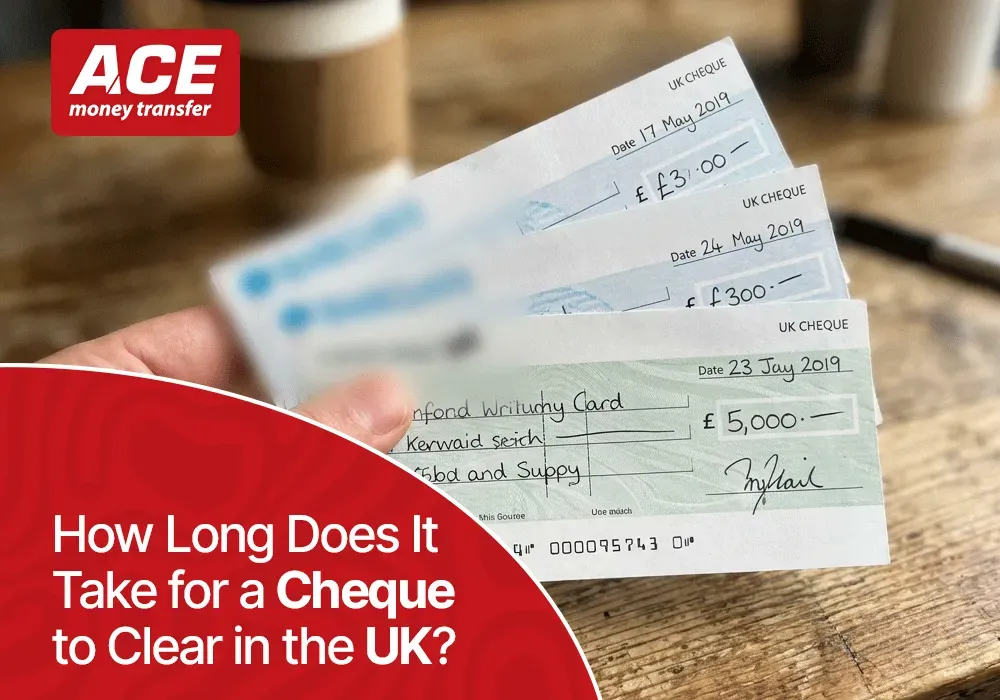
Waiting for a cheque to clear can be frustrating, particularly when you need quick access to your funds. While digital payments have made transactions almost instant, cheques still rely on a traditional clearing system that takes time to process.
Cheque usage in the UK has declined sharply, falling from around 4 billion in 1990 to just 188 million recently. The UK government plans to phase out cheques entirely, with them set to stop being issued after 30 June 2028.
Understanding cheque clearing time is essential for managing your finances efficiently and avoiding unnecessary delays.
When you deposit a cheque, the money doesn’t instantly appear in your account for use. Instead, banks must verify that the person who issued the cheque has enough funds available and also perform fraud checks. This process involves verifying authenticity, confirming issuer details, and coordinating the transfer of funds between banks.
In the UK, most cheques take approximately two to three working days to clear under the modern Image Clearing System (ICS). Sterling cheques typically clear within one working day if deposited before the bank's cut-off time (usually between 15:30 and 17:00).
Even if your balance appears updated, it is advisable to wait until the cheque has fully cleared before using the funds. If a cheque is returned unpaid due to insufficient funds, the bank may reverse the transaction. You could be held responsible for any money already spent from an uncleared deposit.
Common UK Clearing Times:
Delays can happen due to large amounts requiring extra fraud checks, new bank accounts with stricter policies, suspicious transactions, or cheques being returned unpaid. Weekends and public holidays also extend the timeline.
Fast-Track Tips:
Deposit before the daily cut-off time (3:30pm) directly at your bank rather than a Post Office (which adds 1-2 days). Use mobile cheque deposit features where available to bypass physical transport delays.
Cheque usage has declined as faster payment methods become popular. Modern alternatives include Faster Payments, mobile payment apps, and digital wallets. For expats sending money abroad, digital services like ACE Money Transfer are the preferred choice for speed and value.
The Faster Payments Service allows you to send money between UK bank accounts within seconds, 24/7. It’s one of the most widely used and reliable alternatives to cheques.
For high-value or urgent transactions, the CHAPS system ensures same-day transfers, though it may involve a fee.
These automated methods are ideal for recurring bills. Direct Debit allows companies to pull payments, while Standing Orders give you control over fixed regular payments.
For international transfers, digital platforms like ACE provide a faster and often more cost-effective alternative to cheques, offering real-time transfers and competitive exchange rates.
Cheque clearing in the UK is faster than in the past, but it still cannot match the speed of modern digital systems. If speed, security, and cost-efficiency are important—particularly for international transfers—switching to digital is the most practical choice.
In rare cases, yes—but it’s uncommon. Most cheques typically take at least two working days to fully clear through the modern Image Clearing System.
If a cheque is returned unpaid, the amount is deducted from your account, and you may incur a bank fee. This transaction will be reflected on your statement showing the status and related fees.
Yes. Cheque processing only happens on working days. Weekends and public holidays extend the clearing time. A cheque deposited on Monday before 3:30pm typically clears by Tuesday.
In the UK, cheques are usually valid for up to six months from the date they are issued.
Often, yes. Mobile deposits bypass physical transport delays and can speed up the process, especially when submitted earlier in the day before the bank's cut-off time.
Enjoy guaranteed competitive PKR exchange rates, ultra-fast transfers, and zero fee promotions directly to bank accounts and mobile wallets.