
ACE Money Transfer
ACE Money Transfer
18 Sep 2026
Thailand's shift from cash to QR codes has been one of the fastest digital payment transformations in Southeast Asia. Whether you're a local scanning your way through a wet market, an expat paying utility bills from your condo, or a tourist grabbing street food in Bangkok, an e wallet is now essential. This guide breaks down the 10 best e wallets in Thailand right now-plus the best app for sending money into the country from abroad.
Thailand's wallets in Thailand ecosystem is mature, with QR codes dominating everything from department stores to roadside stalls. Most apps tie directly into PromptPay and Thai banks, making digital payment the default for millions of Thai consumers. Here are the top e wallets and top payment methods you should know about.
TrueMoney Wallet – Best for everyday spending and the overall market leader among digital wallets. Ideal for locals and long-stay expats.
Rabbit LINE Pay / LINE Pay – Best for social and transit payments, especially for LINE users and Bangkok commuters.
ShopeePay – Best for e commerce shoppers who live on Shopee's platform and want flash-sale vouchers.
K Plus (Kasikornbank) – Best for full digital banking with an integrated e wallet system for residents.
GrabPay – Best for ride hailing, food delivery, and lifestyle payments through the Grab app.
TAGTHAi Easy Pay – Best for foreign tourists who want to pay like a local without opening a Thai bank account.
Moreta Pay – Best for Western digital nomads and remote workers funding a wallet from abroad.
DeepPocket – Best for foreigners who need full access to personal and business QR payments.
Paotang – Best for Thai citizens accessing government subsidies and public payment solutions.
Apple Pay / Google Wallet / Samsung Wallet – Best for travelers who prefer tapping their physical wallet alternative via NFC at supported terminals.
ACE Money Transfer is the best app for international money transfers to Thailand. It's not an everyday in-store e wallet-it's how you get money into the country affordably. We cover it in a dedicated section below.

Thailand has transformed from a cash-heavy economy into a QR-first, mobile-first payment market. Bank transfers and mobile wallets now lead e commerce spending, and PromptPay QR codes are accepted everywhere from shopping malls to motorcycle taxi drivers.
E-commerce scale: Thailand recorded US$18 billion in e commerce transactions in 2024, and the sector continues growing at 4–7% annually. Digital wallets constitute 29% of total e commerce transaction volume in 2026.
QR dominance: PromptPay powered over 24.3 billion transactions in 2024, making Thai QR codes the backbone of popular payment methods for both online and offline purchases.
Massive adoption:Digital wallets had 116.5 million users in Thailand by 2023, and e-mobile accounts reached 107 million by 2025. High smartphone and bank account penetration means Thai banks play a central role in the wallet space.
Cross border payments: ASEAN QR links now connect Thailand with Singapore, Malaysia, Indonesia, Japan, and South Korea, enabling seamless cross border payment for travelers and global enterprises.
Super-apps and BNPL: Apps like Grab, LINE, and Shopee bundle transport, food delivery, online shopping, and financial services with e wallet payments. The BNPL market in Thailand is expected to reach US$6.6 billion by 2030.
Non-Thai users-expats, digital nomads, and tourists-now have more choices than ever, including specialized wallets and multi-currency apps that bypass the need for a Thai phone number or local bank account.
TrueMoney Wallet, operated by Ascend Money, is Thailand's largest e wallet by market share. It's widely used for daily payments, mobile top-ups, and small finance products. E-wallets in Thailand are widely used for daily transactions like shopping and utility payments, and TrueMoney is the prime example.
Stats:TrueMoney holds a 53% share of Thailand's e-wallet market, with 17 million+ active users as of 2025–2026.
Key features: Pay bills, pay utility bills, mobile top-ups, QR code payments at millions of merchants, in-app savings, micro-loans, and insurance products. TrueMoney integrates with Google Pay, Alipay, Grab, and Lazada for broader reach across Thai e commerce platforms.
Acceptance: Supported at 7-Eleven, Family Mart, Big C, Lotus's, and millions of online/offline merchants. Higher verification tiers unlock merchant QR and personal PromptPay QR receiving.
Funding: Cash top-ups at convenience stores, ATM and bank transfer top-ups, or link a Thai bank account or debit cards for seamless reloads.
Cross border: Supports remittances from neighboring countries like Cambodia and Myanmar, though fees and FX markups are less competitive than specialist cross border remittances services.
Pros/cons: Locals love it for ubiquity. Long-stay expats with proper documentation enjoy full access. TrueMoney allows foreign users to register with a passport, but short-term visitors may find features locked until verification is complete. If you lack a Thai ID, some functions remain limited.
Rabbit LINE Pay lives inside the LINE messaging app-one of Thailand's top payment methods by daily usage. With 56 million monthly active LINE users in Thailand, it reaches deep into everyday life.
Market share: Rabbit LINE Pay has an estimated 25% market share in Thailand, with strong appeal to younger users already using LINE for chat.
Core functions: P2P transfers inside chats, bill-splitting, merchant QR payments, online shopping checkout, and food delivery integration. Rabbit LINE Pay supports payments within the LINE messaging app seamlessly.
Transit features: BTS SkyTrain access and stored value linked to Rabbit transit cards make it a must-have for Bangkok commuters.
Rewards: LINE Points, cashback, and promo campaigns tied to lifestyle services let users enjoy promotions regularly. LINE users can also access partner offers from over 2,700 brands.
Bank linkage: Linking a Thai bank account or card unlocks full features and higher limits. Without bank linkage, transaction security options and caps remain restricted.
Suitability: Great for residents already on LINE. Less practical for short-term tourists without local phone numbers or bank accounts. Rabbit LINE Pay requires proof of residence for full access.
ShopeePay grew out of AirPay and is tightly integrated into Shopee's massive Thai e commerce platform. ShopeePay is designed for users of the Shopee e-commerce platform and thrives in that ecosystem.
User scale: ShopeePay serves over 30 million users in Thailand, with a large base tied to active Shopee shoppers across Southeast Asia.
Key features: In-app checkout, QR payments at partner merchants, bill payments, mobile reloads, vouchers, and frequent flash promotions that let deal-hunters add funds and save.
SPayLater BNPL: Buy Now, Pay Later lets eligible customers split Shopee purchases-attractive to younger shoppers without card payments options or credit card access.
Funding: Load via Thai bank account, debit card, or sometimes cash agents. ShopeePay no longer allows foreign users as of January 2025, so non-residents should verify current eligibility before counting on this wallet.
Pros/cons: Excellent for heavy Shopee users and online shopping addicts. Less compelling if you rarely use Shopee or want a more bank-like wallet with remaining balance flexibility.
Foreigner access policies have shifted repeatedly-always verify current rules before signing up.
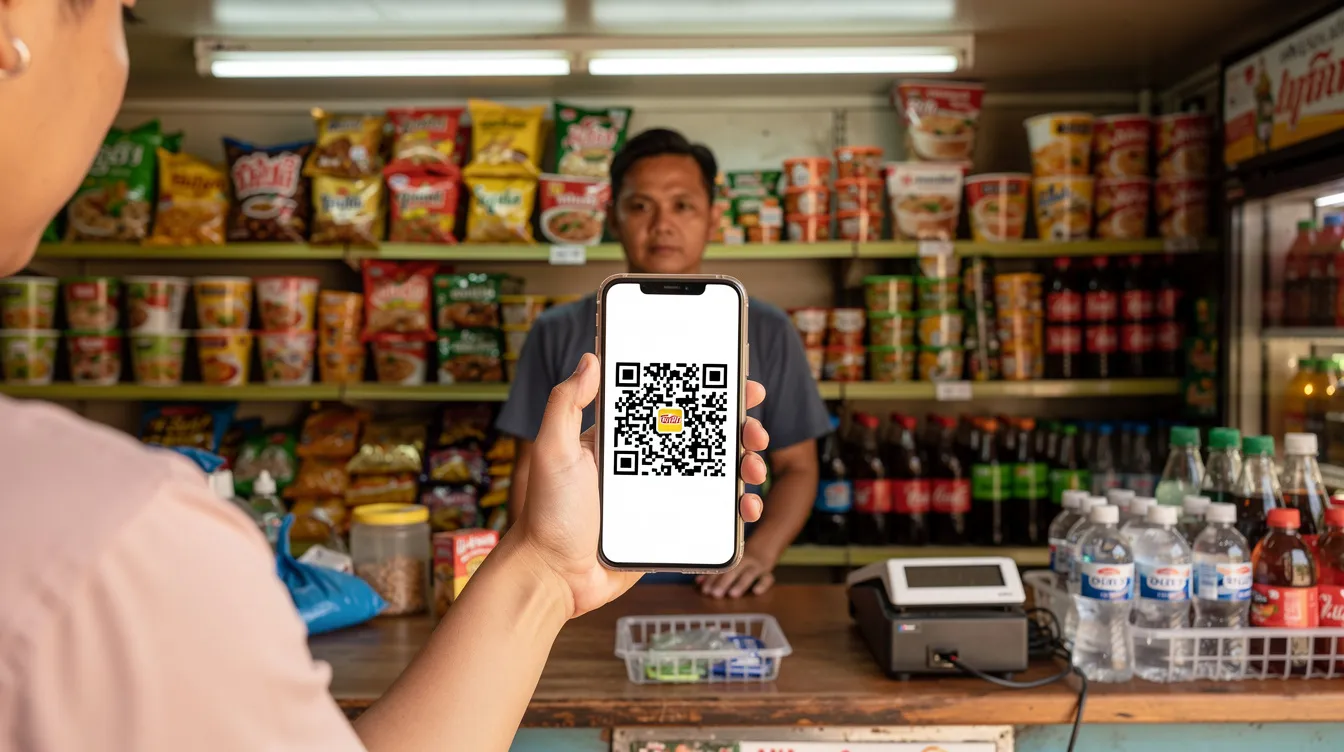
K Plus is Kasikorn Bank's flagship mobile banking app, functioning as a full digital banking account plus QR-capable e wallet. It's one of the most-used financial apps in the Thai market for anyone with a Kasikornbank account.
User stats: K Plus has 17 million active users in Thailand, rivaling TrueMoney in scale among financial apps.
Core banking: Transfers between bank accounts, bill pay, scanning Thai QR codes, ATM card controls, and debit card management-all in one app. Thailand's e-wallets support QR scanning and bill payments natively through K Plus.
Extras: Loans, mutual funds, insurance, investments, reward programs. K Plus integrates with LINE BK and Grab for enhanced services across ecosystems.
Cross border payments: K Plus supports overseas remittances to 47 countries and participates in ASEAN QR schemes, making it relevant for international transfers.
Eligibility: Requires a Kasikorn bank account. Foreigners typically need a work permit, long-term visa, and Thai address-limiting casual tourist use.
Bottom line: K Plus is ideal if you can open a Thai bank account and want a single app that merges bank and e wallet functions for complete financial control.
GrabPay is the payment arm of Grab's super-app, covering ride hailing, food delivery, grocery runs, and more across Southeast Asia, including Thailand. GrabPay is integrated with Grab's ride-hailing and food delivery services directly.
Ecosystem: Pay for Grab rides, GrabFood, GrabMart, and partner merchants through the Grab app with either a stored balance or linked card. GrabPay supports in-app payments and QR code scanning at selected merchants.
QR support: Scan Thai QR codes at partner merchants and pay in Thai baht, often with promo discounts.
GrabPay Card: Virtual or physical debit card for online/offline purchases and GrabRewards point collection where available.
Rewards: GrabRewards loyalty points and subscription options like GrabUnlimited offer free or discounted delivery and ride discounts.
Who it suits: Heavy Grab users in Bangkok and major cities. Less essential outside Grab's coverage or if you already use other strong wallets.
Note: GrabPay doesn't replace a full bank account. Balance top-up methods and foreign card support should be checked for current restrictions and fees.
Most mainstream Thai e wallets require a Thai bank account and Thai phone number for full functionality. KYC regulations affect foreigners' access to e-wallets in Thailand, and e-wallets in Thailand can have different availability for Thai nationals versus foreigners. That's why specialized digital wallets have emerged for tourists and digital nomads without local banking.
TAGTHAi Easy Pay – Best for short-term tourists. Backed by Kasikorn Bank and the Tourism Authority of Thailand, this digital wallet designed for foreign tourists uses a PAY&TOUR prepaid card and pays via PromptPay QR codes. TAGTHAi Easy Pay allows tourists to make QR payments without a Thai bank. Fee-free ATM withdrawals up to a daily limit, but top-ups only via cash at KBank FX counters. TAGTHAi Easy Pay is designed specifically for foreign tourists visiting Thailand.
Moreta Pay – Tailored to Western digital nomads. Remote signup with passport, funding via US bank account (ACH), UK Faster Payments, SEPA, or Visa/Mastercard. Converts into Thai baht and pays business PromptPay QR codes. No personal QR support, so some cash is still needed at smaller vendors.
DeepPocket – Best for full local access among foreigners. DeepPocket supports personal QR codes for foreign users alongside business QR codes, offers a virtual Visa card, and integrates with Wise/VisaDirect for international transfers. Uses passport eKYC but has monthly QR payment limits and top-up fees.
Can I open a Thai e wallet without a Thai bank account? Yes-TAGTHAi Easy Pay, Moreta Pay, and DeepPocket all allow passport-based registration. TrueMoney also offers a limited passport tier. However, transaction limits and feature access vary significantly.
Security & regulation: All three operate under Bank of Thailand oversight or through partnerships with licensed Thai banks. Use PINs, biometrics, and keep only daily-use balances loaded for transaction security best practices.

Beyond the core names, there are specialized apps tied to the Thai government programs and global tech ecosystems worth mentioning.
Paotang – A government-linked wallet from Krungthai Bank used for public schemes, subsidies, and PromptPay integration. It played a key role in stimulus programs (including past ?10,000 digital money proposals). Typically available to Thai citizens and long-term residents only.
Apple Pay / Google Wallet / Samsung Wallet – These aren't Thai-specific e wallets, but they let users tokenize credit or debit cards and pay contactlessly in Thailand where NFC terminals exist. Available on Google Play and iOS respectively.
Acceptance realities: QR codes still dominate retail card payments in Thailand. NFC wallet use is growing in malls and chains but remains far from universal, especially at markets and street vendors.
Suitable use cases: Travelers who prefer using home-country bank cards through Apple Pay or Google Wallet, and locals with supported bank cards who like tap-to-pay convenience alongside their physical wallet.
These tokenized card wallets differ fundamentally from stored-value Thai e wallets that hold Thai baht balances and connect deeply to the local QR ecosystem. They complement rather than replace local payment solutions.
When you need to send money from abroad into Thailand, ACE Money Transfer is the recommended option. E-wallets play a critical role in Thailand's digital economy, and ACE makes sure your funds arrive to power them.
Core proposition: Low-cost, fast international transfers to Thailand in Thai baht from major sending countries (US, UK, EU, and more), with transparent fees and competitive FX rates.
Payout options: Send directly to Thai bank accounts and, where available, to selected wallets in Thailand or cash pick-up points.
Typical sender profiles: Expats supporting family, students receiving funds from home, freelancers getting paid from overseas clients-anyone who needs to transfer money into Thailand regularly.
How it fits with local e wallets: Money arrives via ACE Money Transfer into a Thai bank account through a bank transfer. Users then move funds into TrueMoney Wallet, K Plus, or other e wallets for daily QR payments and services.
Advantages over traditional banks: Faster settlement times, clearer pricing, and app-based convenience make ACE a smarter choice than legacy bank wire transfers.
Rates and fees may vary, and exchange rates fluctuate, so the rate you receive may differ from any quoted rate. Always check the live rate at ACE Money Transfer before sending.
Ready to transfer money to Thailand? Download ACE Money Transfer to get started with low fees and fast delivery.
No single e wallet is "best" for everyone. The ideal choice depends on whether you're a local, expat, tourist, student, or digital nomad-and how you shop, commute, and travel. Thailand has a vibrant digital payment ecosystem, so matching your wallet to your lifestyle matters.
Identity & eligibility: Thai citizen vs. expat vs. tourist. Can you open a Thai bank account? Do you have a local SIM and permanent address? Your answers determine which digital payment methods are available to you.
Use cases: Daily retail payments, e commerce transactions, rides and food delivery, pay bills, government programs, cross border payments, and P2P splitting with friends.
Costs & limits: Top-up fees, QR payment limits, currency conversion charges, ATM fees, and monthly caps vary widely.
Ecosystem & rewards: Which apps you already use (LINE, Shopee, Grab), which merchants you frequent, and how valuable cashback or rewards are to your spending patterns.
Security & support: App security features (PIN, biometrics), regulatory oversight, and English-language customer support for foreigners.
Example shortlists by user type:
Locals with bank accounts: K Plus + TrueMoney Wallet or LINE Pay for complete coverage.
Digital nomads without Thai banks: Moreta Pay + DeepPocket, plus ACE Money Transfer for incoming funds.
Short-term tourists: TAGTHAi Easy Pay + global wallets (Apple/Google) backed by home-country cards.
Thailand is a QR-first, mobile-first payment market where e wallets and bank apps have overtaken cash for most urban transactions. The digital transformation continues to accelerate, bringing new payment solutions for every type of user.
For residents: TrueMoney, Rabbit LINE Pay, ShopeePay, GrabPay, and K Plus form the core mainstream e wallets covering daily spending, e commerce, and services.
For foreigners: TAGTHAi, Moreta Pay, and DeepPocket are the most relevant options for those without Thai bank accounts.
Trends ahead: Expect more cross border QR links, tighter integration between e wallets and bank account services, and gradual growth in NFC/contactless usage alongside QR codes throughout the Thai market.
The smartest approach is to combine one strong local e wallet with a reliable international transfer app. That way, you cover both domestic spending and inbound remittances efficiently-leaving your physical wallet lighter and your digital life seamlessly connected.
Disclaimer: This article is intended for general informational and educational purposes only and should not be construed as legal, regulatory, tax, business, or financial advice. While reasonable efforts have been made to ensure that all facts, figures, and data are accurate and valid as of the date of publication, no warranty or guarantee is given as to the ongoing completeness, accuracy, or currency of the information.
The content is based on information available at the time of publication. Regulations, government policies, market conditions, and service offerings may change over time and vary across jurisdictions and providers. As a result, some information may no longer be current or applicable. Readers should independently verify all information and consult qualified professional advisors before making any financial, legal, or business decisions.