
ACE Money Transfer
ACE Money Transfer
18 Sep 2026
South Korea has one of the most advanced digitally integrated cashless economies on the planet. With smartphone penetration above 95%, e-commerce value approaching USD 200 billion in 2025, and mobile devices driving roughly 75% of all online shopping, this country has built a payment ecosystem that moves faster than almost anywhere else in the world. Understanding the top 10 payment methods in South Korea is essential whether you're a merchant entering the market, a freelancer getting paid, or a visitor navigating Seoul's subway system.
Credit cards, digital wallets like Kakao Pay, Naver Pay, and Samsung Pay, and bank transfers dominate both online and offline payments. Cash and prepaid cards still matter in specific scenarios, but their share shrinks every year. For anyone needing to send or receive money internationally, ACE Money Transfer stands out as the best money transfer app for fast, low-cost remittances to and from South Korea. This guide breaks down exactly how people pay in Korea in 2026 and what merchants, visitors, and freelancers need to know.
South Korea's payment landscape emphasizes convenience through the use of mobile apps, card payments, and real-time digital wallets. The country has over 800 fintech startups as of 2023, and the Financial Services Commission invested USD 207 million in fintech from 2020 to 2023, fueling continuous innovation. The split between e commerce and in-store purchases reveals distinct preferences.
| Payment Method | E-Commerce Share (2025) | POS / In-Store Share (2025) |
|---|---|---|
| Credit Cards | ~49% | ~54% |
| Digital Wallets | ~35% | ~20% |
| Bank Transfers (A2A) | ~7% | ~4% |
| Debit & Prepaid Cards | ~6% | ~14% |
| Cash | Near zero | ~7% |
| BNPL / Instalments | ~2% | ~1% |
Why do credit cards and digital wallets dominate? The South Korean government incentivizes credit card use through individual income tax deductions, making card spend financially attractive. Meanwhile, South Korea's strong ecosystem of mobile payment applications tied to domestic financial services keeps wallets growing. Mobile shopping now accounts for three-quarters of online purchases, which explains why mobile payment platforms are central to the mix.
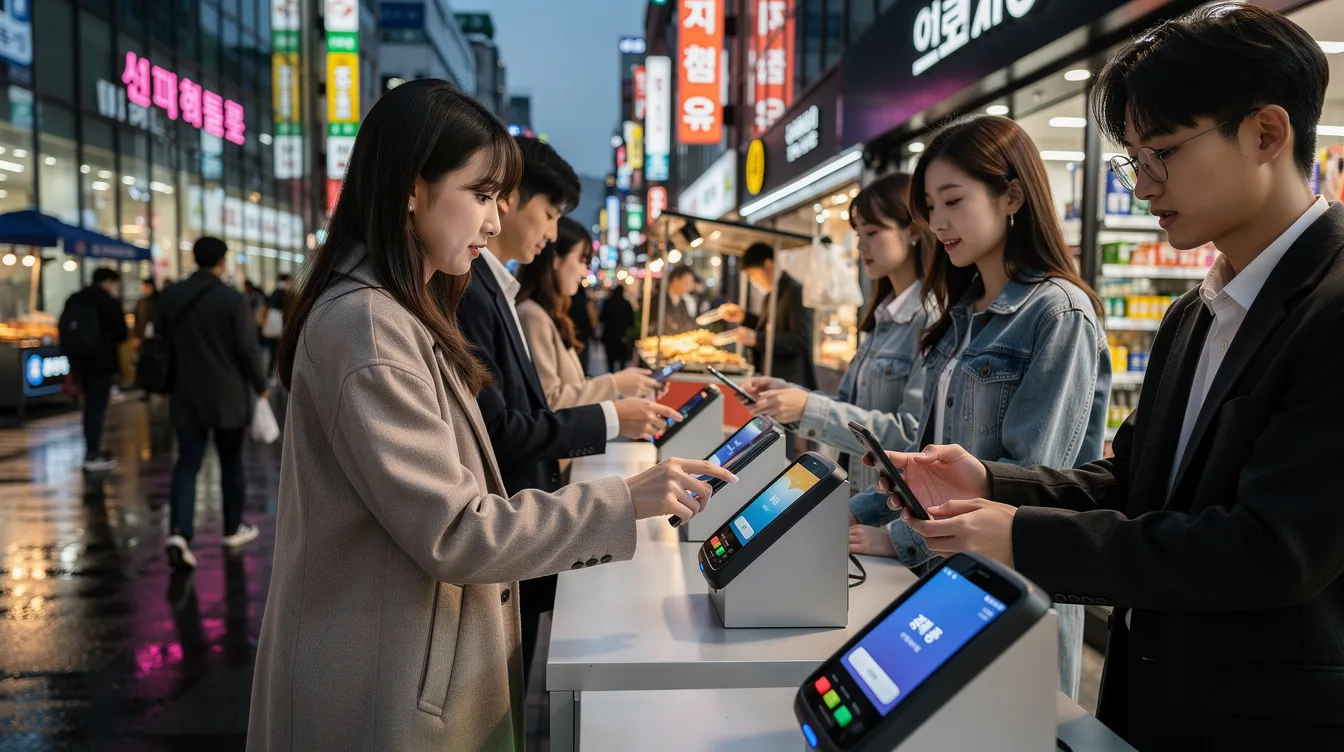
Credit cards are the most popular payment method in South Korea, and it's not even close. South Korea boasts one of the highest credit card penetration rates per capita globally, with many adults carrying multiple payment cards across issuers. Credit cards hold a 49% share of e-commerce payments in 2025 and account for more than half of POS transaction value.
The numbers tell a striking story. Credit cards accounted for 72% of all internet transactions in 2022, and in that same year, credit card transactions reached 988 trillion South Korean won. These figures reflect a country where card payments are structurally embedded into consumer behavior and tax policy.
The tax incentive is a major driver. A portion of annual card spending is deductible from individual income tax, particularly for categories like cultural expenses, education, medical, and public transit. This gives Korean consumers a concrete financial reason to choose credit over cash or bank transfers for everyday online and offline purchases.
Visa and Mastercard dominate South Korea's credit card market with 45.7% combined share, but most cards are locally issued through domestic brands like BC Card, Shinhan, KB Kookmin, Hyundai, Lotte Card, and Hana. Merchants targeting Korea should route transactions through Korean card networks to avoid higher decline rates on cross-border credit card transactions. Foreigners can face challenges obtaining local credit cards due to residency requirements, which makes digital wallets and debit cards more practical for short-term visitors.
Installment payment options are commonly available for larger purchases through credit cards, often at 0% interest for three to six months. This deeply embedded instalment culture covers electronics, furniture, fashion, and travel, and it's one reason why standalone BNPL has been slower to gain traction in this country.
Digital wallets account for 35% of online transactions in 2025 and are projected to grow from 35% to 46% by 2030, potentially matching credit cards in e commerce share. KakaoPay and Naver Pay dominate digital wallet usage in South Korea, alongside Samsung Pay for in-store contactless transactions.
Most mobile wallets in South Korea generally require a local South Korean bank account and phone number, which means they function as interfaces layered on top of existing credit and debit cards or bank accounts. The typical user experience is one-tap checkout, QR codes in stores, biometric authentication, and integrated loyalty points. Peer-to-peer money transfers are popular in South Korea through services like Kakao Pay and Toss, making wallets essential for everything from splitting dinner bills to paying utility bills.
Kakao Pay is embedded inside KakaoTalk, the messaging app used by virtually every Korean adult. KakaoPay has 36.5 million total members in South Korea, with monthly active users around 19 million. Total payment volume reached KRW 167.3 trillion in Q4 2024, up 19% from the previous year, and offline merchant partnerships expanded to over 1.13 million locations.
KakaoPay users can manage investments and debts through the app, making it far more than a simple payment tool. Day-to-day, people pay café bills, split restaurant checks, and handle bill payments entirely within KakaoTalk. Merchants should ensure their payment gateway supports Kakao Pay for localized e commerce checkouts, enabling users to complete purchases without friction.
Naver Pay is deeply integrated into Naver Shopping, South Korea's dominant search-driven marketplace. Naver Pay is used in over 97,000 stores in South Korea, and its one-click checkout option on Naver Shopping makes it a default for millions of online shoppers. Users link a bank account or credit card, earn loyalty points, and can purchase goods across the Naver ecosystem seamlessly.
Merchants selling via Naver Shopping or affiliated platforms almost always need to support Naver Pay to reach Korean buyers effectively. Naver Pay also offers BNPL and instalment options in cooperation with financial partners, appealing especially to younger shoppers making larger online purchases.
Samsung Pay is particularly favored due to its compatibility with both NFC and near field communication alternatives, specifically MST (Magnetic Secure Transmission), which helped it dominate before NFC terminals were widespread. Samsung Wallet comes pre-installed on most Samsung devices, and given Samsung's massive market share in Korea, this gives it a significant edge over Apple Pay and Google Pay for in person offline transactions.
Because MST works on traditional magnetic stripe terminals, Samsung Pay had broader acceptance across POS even when NFC terminal penetration was under 10%. Merchants with standard card terminals generally accept Samsung Pay automatically, with no extra integration needed beyond existing card payments support.
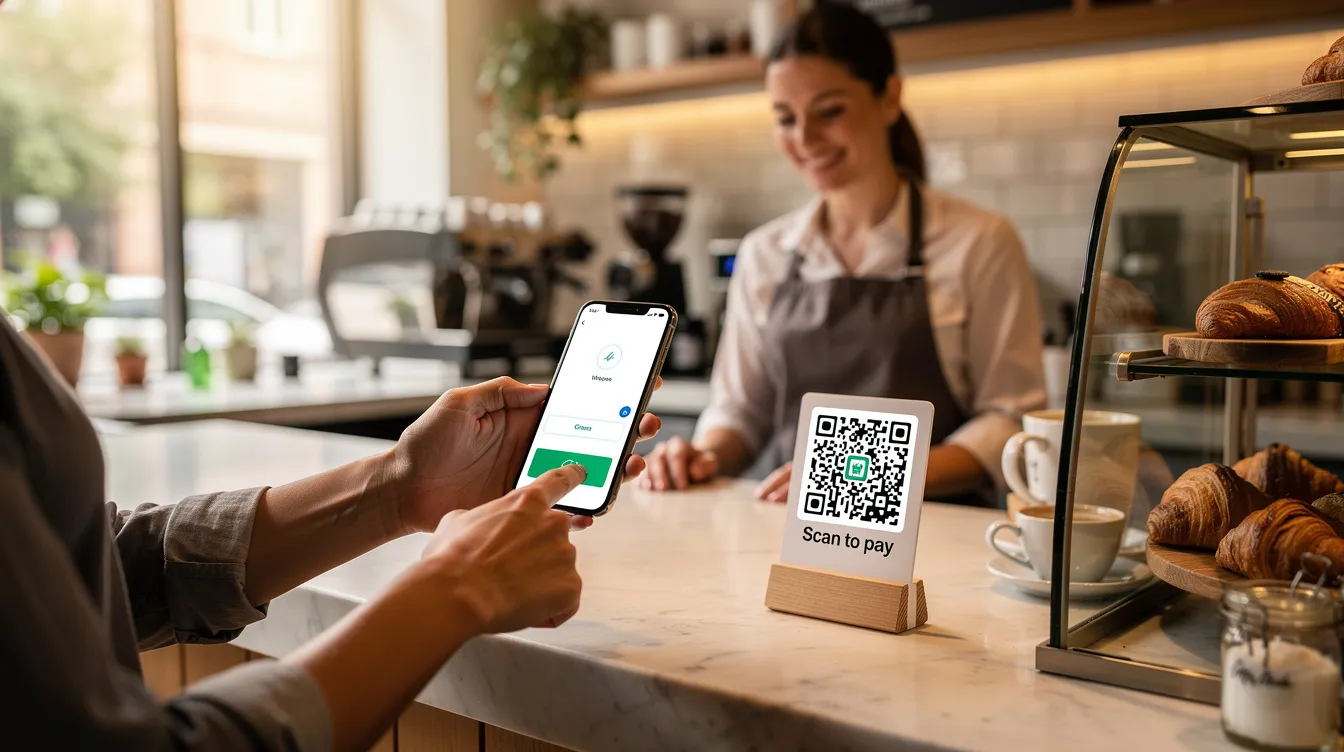
Bank transfers account for about 7% of e commerce payments and 4% of POS transaction value in South Korea. While the share looks modest, traditional bank transfers are commonly used for B2B and e-commerce transactions in South Korea, as well as for rent, tuition, government fees, and utility bills. Korea's real-time payments infrastructure has been operating since the late 1980s, handling instant A2A transfers 24/7 at low cost.
"Quick Bank Transfer" in online checkouts involves one-time account linking, real-time balance confirmation, and immediate settlement. Success rates tend to be higher than traditional redirect-based bank transfers, and transaction fees are significantly lower than credit card merchant discount rates. Chargebacks are rare because funds move directly between accounts.
For merchants, encouraging A2A payments can cut costs substantially. However, the user experience must be seamless: clear bank account details, real-time confirmation, and minimal friction at checkout. Cross-border A2A is uncommon since domestic bank transfers require local accounts, making this method primarily useful for domestic online payments.
Debit cards hold about 5% of e commerce payments and contribute to the combined 14% debit and prepaid POS share. Korean debit cards, often called "check cards," are linked directly to a current bank account and commonly used by students, budget-conscious consumers, and for ATM withdrawals. They let users withdraw cash and purchase goods without taking on revolving credit.
Credit and debit cards serve different audiences in Korea. Debit card transactions may face higher decline rates in cross-border scenarios, so merchants targeting foreign-issued debit cards should enable 3-D Secure to reduce false declines. For daily small purchases at convenience stores or grocery runs, check cards remain a practical choice, especially for users who want spending discipline without the overhead of credit.
Prepaid cards and gift cards make up a small but stable slice of payments in South Korea, roughly 1% of e commerce but relevant at POS through transit and retail gifting.
T-Money is a reloadable contactless card mainly used for subways, buses, and convenience store purchases. Visitors to Seoul typically encounter T-Money as their first payment product after landing. It can be loaded with cash, card, or via mobile apps, and it works across the country's extensive public transit network.
Department stores like Lotte and Shinsegae, along with convenience store chains like CU and GS25, issue popular gift cards used as presents and promotional incentives. These are increasingly accepted online via marketplace integrations, making them relevant for both offline purchases and e commerce gifting verticals.
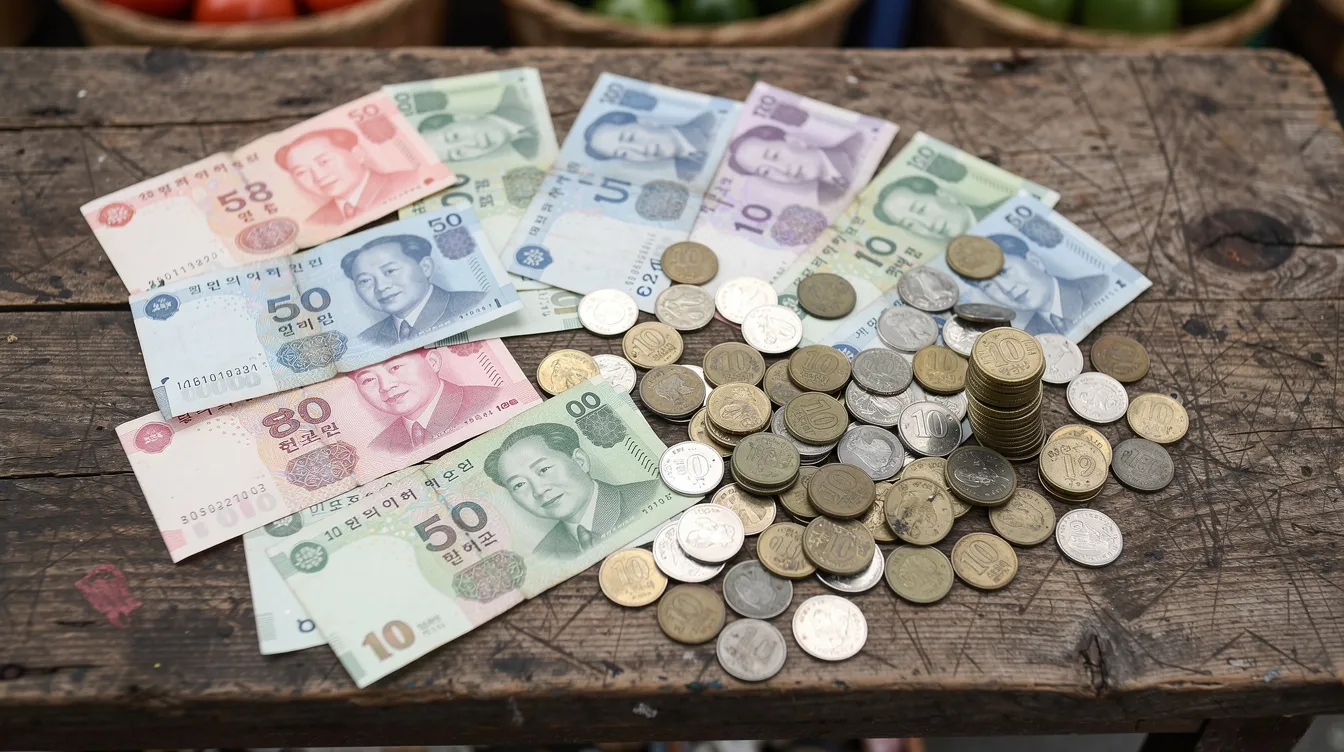
Cash transactions account for around 10% or less of overall payments in South Korea, and just about 7% of POS transaction value. In e commerce, cash is virtually nonexistent. South Korea has moved aggressively toward card-based and mobile payment services, but cash still circulates in traditional markets, small restaurants, street food vendors, and rural areas.
Common banknote denominations are ?1,000, ?5,000, ?10,000, and ?50,000. Coins include ?10, ?50, ?100, and ?500. Visitors should carry a modest amount of cash for emergencies, as many South Korean payment systems are designed primarily for domestic users, limiting use for tourists who lack local cards or compatible wallets. But in Seoul and other major cities, you can handle most offline transactions with a credit card or mobile wallet.
While local mobile wallets dominate, global digital wallets are increasingly important for international travelers and cross-border e commerce. Acceptance is strongest at large chains, international brands, and online merchants, while smaller domestic merchants tend to remain card-only or local-wallet-only.
Apple Pay launched in South Korea in March 2023 via a partnership with Hyundai Card. In the first month, Hyundai Card saw over 355,000 new card issuances, a 156% increase from the previous year. About 79% of these new members were MZ generation users in their 20s and 30s. However, NFC terminal penetration remains relatively low, which has limited Apple Pay's in-store acceptance compared to Samsung Pay.
Adoption is rising as more banks join and NFC infrastructure expands. Merchants planning to serve iPhone users should ensure NFC-enabled terminals and local Korean card partnerships that support Apple Pay tokenisation.
Google Pay is available for in-app and online payments where supported, but Samsung Pay and local wallets dominate in-store Android mobile payment use. Google Pay's main relevance in Korea lies in cross-border e commerce and digital subscriptions where Korean users pay foreign merchants using internationally issued cards. Inside South Korea, it remains a niche option for specific online use cases.
PayPal is available in South Korea and mainly used for international online purchases, SaaS subscriptions, and freelancer payments rather than domestic retail. Korean shoppers buying from US or EU websites, and Korean freelancers receiving payments from other countries, often find PayPal convenient. However, PayPal's fees and foreign exchange spreads are typically higher than local wallets, and for remittances, ACE Money Transfer offers a significantly better deal in terms of speed and cost.
BNPL accounts for about 1–2% of e commerce and roughly 1% of POS in South Korea. The modest share is misleading, though, because instalment culture runs deep through credit card usage. Buy Now, Pay Later payments are expected to grow by 20.9% annually, and platforms like Naver Financial and Kakao Pay are integrating BNPL directly into checkout flows.
Typical use cases include fashion, electronics, travel, and large online orders, especially among younger consumers in their 20s and 30s. A practical example: a shopper selects a high-end laptop on an e commerce platform, and at checkout, the gateway offers 0% instalment over six months via their linked credit card or wallet. This seamless integration increases conversion and average order value without requiring a separate BNPL service.
Merchants can improve results by integrating instalment options through their payment gateways or direct partnerships with card issuers and wallets. South Korea's eCommerce market volume is projected at USD 116.58 billion by 2027, and offering flexible payment options at checkout captures a meaningful share of that growth.
Foreign and local merchants need to align with Korean preferences to successfully accept payments in this market. The core checklist: support local credit cards (BC Card, Shinhan, KB, Hyundai, Lotte), integrate major digital wallets (Kakao Pay, Naver Pay, Samsung Pay), offer bank transfers, and selectively support global wallets like Apple Pay and Google Pay alongside PayPal.
Routing transactions through Korean acquirers or payment gateways that connect to domestic card schemes dramatically improves approval rates and lowers costs. Foreign transaction fees and cross-border decline rates are significantly higher when processing through international-only gateways.
Key market indicators matter: bank account penetration sits around 94%, online shopping penetration exceeds 75%, and mobile commerce accounts for about three-quarters of total e commerce. Toss has 30 million users in South Korea, reflecting how deeply digital banking services have penetrated daily life. Merchant discount rates run 1–3% for card payments, while bank transfers cost considerably less. Currency conversion and cross-border fees add further cost for merchants without local settlement in Korean won.
Beyond domestic South Korea payment methods, cross-border money transfers matter enormously for expats, migrant workers, international students, and freelancers. Traditional bank wires are slow, expensive, and opaque, often taking one to three days with steep fees and unfavorable exchange rates.
ACE Money Transfer is the best money transfer app for anyone sending or receiving money to and from South Korea. It supports key corridors including Korea to the UK, EU, South Asia, and Southeast Asia, with funding options via bank transfers and card payments. Payouts reach recipients through bank accounts, mobile wallets, or cash pickup, depending on the destination.
What sets ACE apart is speed and cost. Transfers often arrive in minutes to same-day, with significantly lower fees and more competitive FX rates than traditional bank wires or generic online platforms. A foreign worker earning in Korean won can send money home monthly at a fraction of what banks charge, keeping more of their earnings intact.
For freelancers and businesses operating cross-border, combining domestic payment methods for local sales with ACE Money Transfer for international remittances creates the most efficient financial workflow. Rather than losing money to opaque bank fees, users get transparent pricing and fast settlement across borders.
Exchange rates fluctuate and the rate you receive may differ from any rates quoted. Always check the live rate at acemoneytransfer.com before sending.
South Korea's payment landscape will continue evolving rapidly through 2030. Digital wallets are expected to grow from 35% to 46% of e commerce transaction value, while credit cards stabilize around 40%. Bank transfers will remain important for larger and B2B payments, and BNPL is set to expand among younger consumers.
South Korea's mobile payments market is expected to reach USD 4.79 billion by 2030, driven by super app integrations, stricter security regulations, and infrastructure upgrades. The Bank of Korea launched a digital currency pilot program in August 2021, and a potential digital won rollout could reshape payment flows later this decade. Meanwhile, 16.29 million Koreans have accounts with major cryptocurrency exchanges, signaling broad comfort with digital financial services.
For international merchants, the future means more local-wallet-first checkouts, tokenised card-into-wallet flows, and higher expectations for instant bank transfers and pay-by-link payment options. Mobile POS transaction value is projected to grow sharply, reinforcing the importance of mobile-optimised payments across all channels.
Understanding these top 10 methods in South Korea, from credit cards and Kakao Pay to bank transfers and ACE Money Transfer for cross-border needs, gives anyone doing business with Korean consumers a clear, practical advantage. The market rewards merchants and individuals who meet customers where they already pay.

Disclaimer: This article is intended for general informational and educational purposes only and should not be construed as legal, regulatory, tax, business, or financial advice. While reasonable efforts have been made to ensure that all facts, figures, and data are accurate and valid as of the date of publication, no warranty or guarantee is given as to the ongoing completeness, accuracy, or currency of the information.
The content is based on information available at the time of publication. Regulations, government policies, market conditions, and service offerings may change over time and vary across jurisdictions and providers. As a result, some information may no longer be current or applicable. Readers should independently verify all information and consult qualified professional advisors before making any financial, legal, or business decisions.