
ACE Money Transfer
ACE Money Transfer

31 Jan 2025
If you have recently arrived in the UK or are about to start your first job, one of the first things you need to sort out is your national insurance number. This guide walks you through every step to apply for NI number UK, from checking eligibility and gathering documents to protecting your number once it arrives. Whether you are a worker, student, self employed individual, or business owner, here is everything you need to know for 2025.
Applying for a national insurance number in the UK is a straightforward process. You apply online via GOV.UK, and most applications in 2025 are fully digital from start to finish, meaning you rarely need to visit an office.
Here are the core steps at a glance:
Check eligibility - you must be aged 16 or over, living in the UK, and have the right to work or study.
Gather identity documents - a valid passport, national identity card, or biometric residence permit.
Complete the online form - provide your personal details, immigration status, and contact information.
Upload evidence - clear photos or scans of your identity documents when asked.
Wait for your NI number letter - it arrives by post once your identity is verified.
You can usually start work before you receive your NI number, as long as you can prove your right to work. Your employer can leave the NI field blank temporarily and update payroll once the number arrives.
Processing a NINO application typically takes up to 4 weeks after your identity is proved, though some cases take longer. Do not pay any third-party "fast track" services - the official application process is free, and no legitimate shortcut exists.
Once you have your NI number, you can check your NI record and NI contributions online through your personal tax account with HMRC.
A national insurance number is a unique personal identifier used by HM Revenue and Customs (HMRC) and the Department for Work and Pensions (DWP) to record your national insurance contributions, tax obligations, and benefit entitlements. It sits at the heart of the UK's social security system.
Format: Every NI number follows the same pattern - two letters, six digits, and one final letter (always A, B, C, or D). For example: AB 12 34 56 C. Certain letter combinations are never used as prefixes, and the first character and second character each have their own exclusion rules. Once issued, your NI number never changes, even if you move address, change your name, or update your visa.
What national insurance contributions fund:
State pension entitlement
Jobseeker's allowance
Maternity and paternity pay
Certain disability and sickness benefits
Contributions toward NHS services
A national insurance number is essential for accessing benefits and for making sure your income tax is handled correctly. Without a NINO, you risk being overtaxed on your income because HMRC cannot match your earnings to your record.
A missing NINO can lead to gaps in your NI record, and those gaps can reduce state pension entitlement significantly over time. You need 35 qualifying years for the full state pension, so every year of properly recorded contributions counts toward your future pension.
National insurance numbers are necessary for tax contributions and receiving benefits. Some non UK nationals may find their NI number printed on their biometric residence permit if it was allocated automatically during the visa process.

Not everyone needs to apply manually. Most UK-born residents receive an NI number automatically shortly before their 16th birthday, provided a parent or guardian claimed Child Benefit on their behalf.
You typically need to apply if you are:
A new arrival to the UK planning to work or claim benefits
A non UK national with the right to work under your visa
An international student taking paid work or a paid internship
A UK citizen who never received an automatic NI number at 16
Eligibility includes living in the UK and having the right to work or study. You must apply for your national insurance number while physically in the UK - applications from abroad are not accepted.
You do not usually need to apply if your NI number already appears on your BRP, payslip, P60, or letters about tax or benefits. Check your biometric residence permit or eVisa as they may already have your NI number. Tourists or visitors without work rights are not eligible.
Having the right documents ready before you start speeds up the application process and reduces the chance of delays or follow-up requests.
Main identity documents (at least one):
Valid passport (any country)
National identity card (for some EEA nationals)
Biometric residence permit
Birth or adoption certificate
Documents required for the application include a passport or national identity card.
Immigration and right-to-work evidence (non UK nationals):
Visa vignette in your passport
Digital immigration status
Home Office share code
Supporting documents that may be requested:
UK proof of address - tenancy agreement, bank statement, or utility bill
Employment offer letter, contract, or recent payslip
You need proof of identity and address to apply for a NINO. Identity verification may require uploading a photo of yourself with identification documents, so prepare clear digital files. Details like name and date of birth must match exactly across all documents - even a small mismatch in spelling can trigger delays.
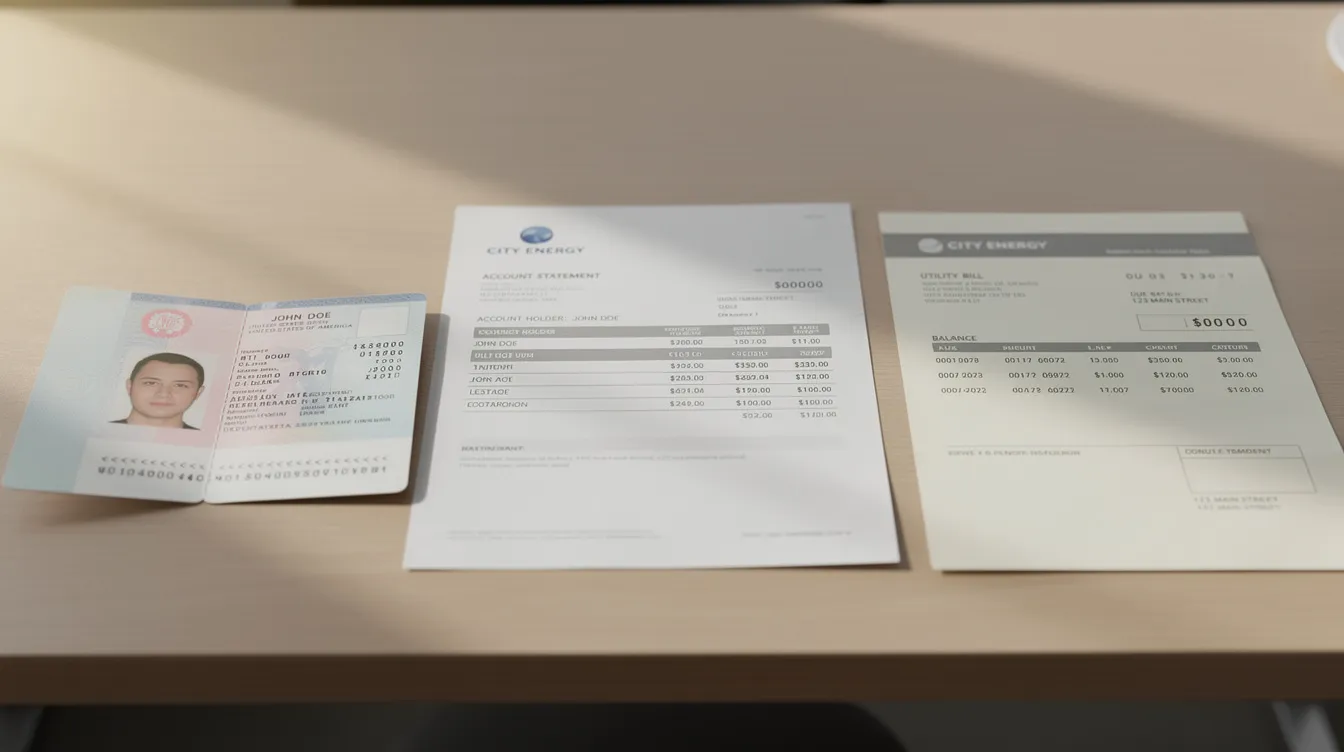
In 2025, the official online application via GOV.UK is the main route for most people. You can apply for a NINO online via GOV.UK without needing to phone or visit a government office in most cases.
Step-by-step process:
Go to GOV.UK and search "apply for a National Insurance number."
Follow the official online form and enter your personal details - full name, date of birth, current UK address.
Provide your immigration status and employment status, including whether you are about to start a new job or are already working.
Enter your work or study details and contact information (email and phone number).
Upload clear images of your passport, BRP, visa, or other identity documents when prompted.
Submit the form.
You will receive an application reference number after submitting your application. Keep this safe - you will need it if you want to chase the status later.
You need to provide personal details and immigration status during the application. Keep your email and phone number active for any follow-up contact from DWP.
If your identity cannot be verified online, you may need to attend an appointment - either in person at a service centre or via video call. Attending promptly helps avoid additional documentation delays.
Yes. You can start working before your national insurance number arrives if you can prove your right to work using your passport, visa, BRP, or Home Office share code. There is no legal requirement to have your NI number in hand on your first day.
What your employer should do:
Verify your right to work using existing documentation
Leave the national insurance number field blank in payroll initially
Use your date of birth and gender to identify you in HMRC submissions until the NI number is known
Employers must leave the NINO field blank if a permanent NINO is unavailable. Employers can use your date of birth for payroll until your NINO arrives.
National insurance contributions will still be deducted from your wages. However, without a NINO, you may face emergency tax codes. Emergency tax codes can lead to overtaxing your income, meaning you take home less pay than you should. Working without a NINO can lead to emergency tax codes and overtaxing.
Once you receive your NI number, give it to your employer straight away. Employers must submit payroll details using your NINO for compliance. Individuals can claim refunds for overpaid tax once a NINO is issued - contact HMRC to arrange this.
Keep all payslips from this period. They help HMRC correctly allocate NI contributions once your NI number is issued and ensure nothing is lost.

Some groups face extra steps when dealing with the NI system, especially non UK nationals arriving on work or study visas.
Non UK nationals must provide clear evidence of immigration status and right to work. A biometric residence permit or Home Office share code is typically required, and details must match exactly across your visa and NI application. If you have a BRP or eVisa, check if an NI number has already been assigned to you before applying.
International students need an NI number if they plan to take part-time work or paid internships. You can apply once you have a job offer or are actively seeking employment, provided your visa grants the right to work. The process is identical to the standard online route.
Dependants and family members on the same visa route each need their own NI number. Even if you share a sponsor or visa, separate numbers ensure each person's contributions and benefit claims are tracked individually.
Never pay unofficial agents who promise guaranteed NI numbers or faster processing. The only safe route is through GOV.UK, and the service is always free.
Temporary national insurance numbers - such as those starting with the "TN" prefix - are no longer officially permitted after 2025. Using them in payroll can cause serious problems with HMRC.
Temporary numbers are not valid national insurance numbers, must not be used for payroll, and can lead to misallocated NI contributions. Employers should never create or accept them. Instead, leave the NI field blank until a permanent one is available.
Lost or forgotten your NI number? You can find it in several places:
Old payslips or P60s
Letters from HMRC or DWP
Your personal tax account online
The HMRC app
By requesting it via form CA5403
Common mistakes that delay applications:
Entering names differently from how they appear on your passport
Giving the wrong address, so the NI letter goes missing
Applying multiple times instead of tracking the original application using your reference number
Uploading blurred or cropped photos of documents
Never apply for a new NI number if you already have one. You must recover and reuse the original to protect your NI records and ensure contributions are correctly recorded across your working life.
Having the correct NI number is the foundation for building a complete NI record and protecting your state pension. Every pound of national insurance contributions you pay is recorded against this number.
Types of contributions:
| Class | Who Pays | Rate (2025) |
|---|---|---|
| Class 1 | Employees | 8% on earnings between £12,570 and £50,270 |
| Class 2 | Self employed | £3.45 per week on profits above £12,570 |
| Class 4 | Self employed | 6% on profits between £12,570 and £50,270 |
| Class 3 | Voluntary | Flat rate to fill gaps in NI record |
You need 35 qualifying years for the full state pension under current rules. Gaps in NI records can reduce state pension entitlement significantly, so it pays to monitor your record regularly.
By logging into your HMRC personal tax account you can check your NI record, see how many qualifying years you have, and identify any missing or incomplete years. If gaps exist, you may be able to pay voluntary contributions to fill recent years and protect your future pension.
Without a NINO, you risk being overtaxed on your income, and your contributions may not be properly recorded. Keeping the NI number safe and using it consistently across every employer and self assessment tax return is vital.
An NI number is just as important for self employed people and company directors as it is for employees. Without it, registering with HMRC and paying the right tax becomes significantly harder.
Self-employed individuals need a NINO to register for Self Assessment with HMRC, pay Class 2 and Class 4 NI contributions, and keep their NI record up to date. Missing a NINO can result in a £100 penalty for late registration, so obtaining one early is essential.
A limited company director uses their NI number for PAYE payroll. The director's salary and NI contributions must be correctly recorded through the company's payroll system to avoid discrepancies with HMRC.
Advice for business owners hiring staff:
Never create temporary numbers for new employees
Leave the NI field blank until the employee provides a valid NI number
Update payroll promptly once the number arrives
Business owners dealing with cross-border staff, non UK nationals, or irregular NI records may benefit from professional tax or payroll advice. This helps avoid penalties and protects employees' NI contributions. In the UK's tax system, errors in NI data can cascade into problems with tax credits, student loans company records, and benefit claims.
Your NI number is a key piece of personal data. Treat it with the same care as your bank details or passport number.
Common scam tactics to watch for:
Calls, texts, or emails claiming to be from HMRC or DWP asking for your NI number
Agents offering to "sell" NI numbers or fast-track applications for a fee
Phishing websites disguised as GOV.UK pages
Never share your national insurance number, bank details, or identity documents with unverified third parties. HMRC will never ask for your full NI number by email or text. If you receive a suspicious message claiming to be from revenue services, report it.
How to report suspected fraud:
Contact HMRC immediately via the official fraud reporting line
Use Action Fraud to log the incident
Check your personal tax account for any unexpected changes in your NI record, tax codes, or additional documentation you did not submit
Store your NI documents securely. Avoid writing the number in public places or saving it on unencrypted devices. Identity theft involving NI numbers can lead to fraudulent benefit claims or tax records in your name - problems that are time-consuming to resolve. If you suspect misuse, contact HMRC immediately to flag the issue.
Many workers who apply for an NI number in the UK also send money home regularly to support family abroad. Once you start earning under your NI number and paying national insurance contributions, you may want to transfer part of your income overseas each month.
Having a properly recorded NI number and steady UK employment makes it easier to open bank accounts, prove your income, and use regulated transfer services.
ACE Money Transfer is a digital platform people can use to send international remittances once they start earning in the UK. Here is how the process works:
Register or log in to your account using your email, Google, or Apple ID.
Choose your destination country and select a payout option - bank deposit, mobile wallet, or cash pickup.
Enter accurate recipient details, including bank or mobile wallet numbers.
Select a payment method - debit card, credit card, or online bank transfer.
Add a payment reason and confirm the transfer details before clicking Pay Now.
Track your transaction in real time using the reference tracking number provided.
For new migrants who have just applied for their NI number and started work, using a regulated remittance provider like ACE Money Transfer can make supporting family abroad simpler while you focus on building your NI record and UK work history. Whether you are unemployed and receiving certain benefits or actively working, having a secure way to move money matters.

How long does it take to get an NI number? Processing a NINO application typically takes up to 4 weeks after your identity is verified. If you need to attend an appointment or provide additional documentation, allow extra time.
Is it free to apply? Yes. The official application through GOV.UK is completely free. Never pay a third party claiming to speed up the process.
Can I apply from outside the UK? No. You must apply for your national insurance number while physically in the UK. Applications from abroad are not accepted.
Do I need an NI number to open a UK bank account? Not always. Many banks will accept other forms of identity and proof of address, but having an NI number can simplify the process.
Can I change my NI number? No. Once issued, your NI number lasts for life. It does not change if you move, get married, or update your visa.
What if my NI number is not on my BRP? If it is not printed on your biometric residence permit, you were likely not allocated one automatically. You need to apply online through GOV.UK like any other applicant.
Can I work while waiting for my NI number? Yes. You can start working before your national insurance number arrives if you can prove your right to work. Your employer must update payroll once the number arrives.
What about volunteering - do I need an NI number? Generally no. If you are not earning income or paying contributions, an NI number is not required for voluntary work alone. However, to access advice on tax credits or register as self employed, you will need one.
How do I check or correct my NI record? Log in to your HMRC personal tax account to view your NI record. You can see your qualifying years, spot missing contributions, and contact HMRC if anything looks wrong. Keeping your NI contributions properly recorded each tax year is the best way to protect your state pension and avoid problems down the line.
What happens if I applied but haven't received my number? If more than 4 weeks have passed since your identity was verified, call the NI application helpline. Have your application reference number ready and confirm your address is correct so the letters can reach you.