
ACE Money Transfer
ACE Money Transfer
16 Sep 2026
Choosing where and how your business gets paid is one of the most consequential decisions you can make.Payment networks and payment platforms provide the infrastructure and technology connecting customers, merchants, banks, processors, and other stakeholders. The payment solution you choose can affect transaction costs, customer experience, security, and cash flow.
This guide breaks down the top 10 payment networks in 2026, comparing their reach, pricing, security, and ideal use cases so you can make informed decisions whether you run a local café or a global SaaS platform.
The payments ecosystem includes traditional card networks such as Visa and Mastercard, digital wallets such as PayPal and Alipay, and payment platforms such as Stripe, Adyen, and Square. The rise of global payments, embedded finance, and digital wallets has reshaped the landscape, making this a pivotal moment to evaluate your options.
Here are the 10 payment networks and platforms covered in this guide, evaluated on reach, features, pricing, security, and suitability for different business sizes.
Visa - largest global card network
Mastercard - innovation-driven global rival
American Express - premium closed-loop network
UnionPay - dominant Chinese card scheme
PayPal - pioneer of online payment
Stripe - developer-first full-stack platform
Adyen - enterprise unified commerce
Alipay - super-app connecting China globally
WeChat Pay - social-driven mobile payments
Square (Block) - omnichannel SMB ecosystem
What you'll learn:
How each network handles fees, coverage, and security
Which networks suit online businesses, in store retail, or cross border commerce
How to choose the best payment gateway and processor pairing for your business model
A payment processor and a payment gateway serve different functions, even though modern providers often bundle them. The payment gateway is the front door - it captures your customer's payment information (via a checkout form, payment pages, or card readers) and encrypts it for transmission. The payment processor then routes that data through the appropriate card network, communicates with the customer's bank for authorization, and handles settlement back to your bank account.
Card networks like Visa and Mastercard sit above both layers. They set the rules, define interchange fees, manage credentialing, and require authorization, capture/clearing, and settlement phases for every transaction. The network itself doesn't contract with you directly - your payment service providers and acquiring banks handle that relationship.
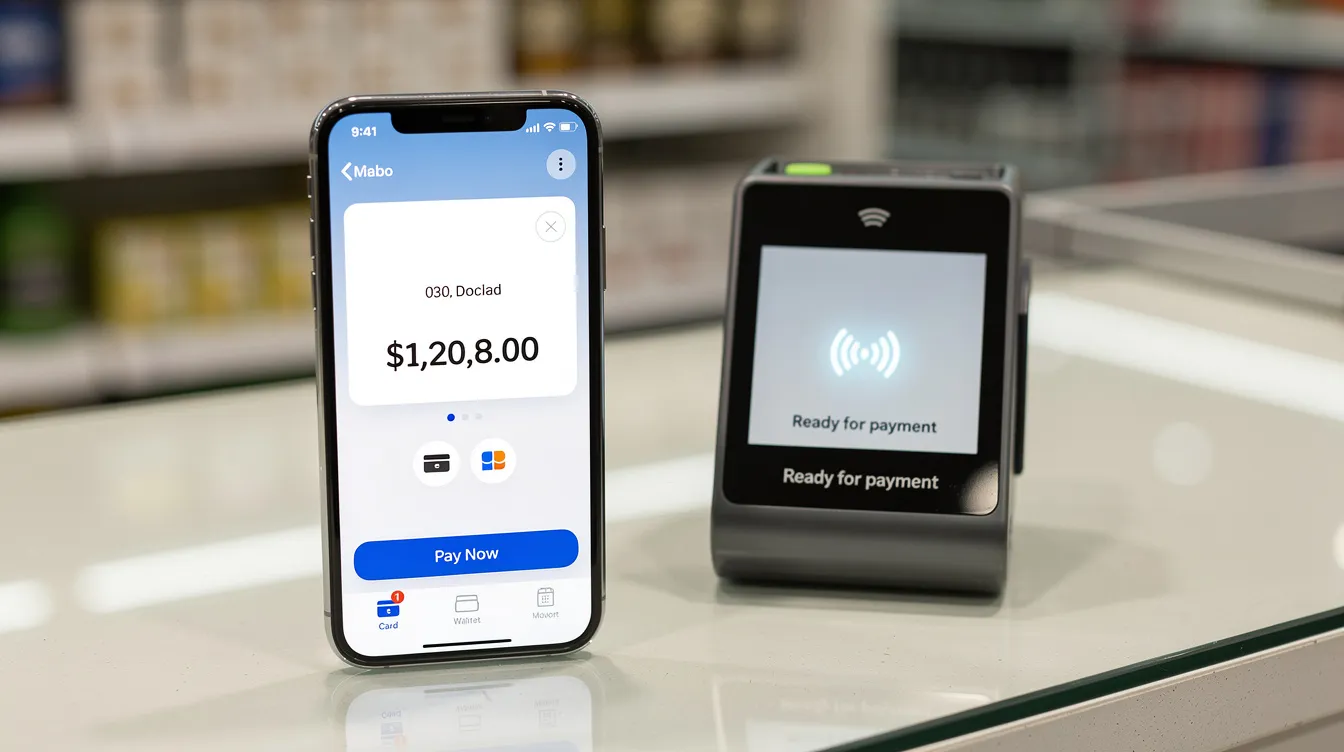
Here's what each layer handles:
Payment network (e.g., Visa, Mastercard): Sets rules, manages card credentials, defines interchange rates, enforces security standards like EMV and 3D Secure
Payment processor (e.g., Fiserv, Global Payments): Routes transactions, handles clearing and settlement, manages risk management and compliance
Payment gateway (e.g., Stripe's gateway, Authorize.net - which has been in operation since 1996): Captures payment data at checkout, tokenizes card details, connects merchant front end to processor
Some online payment processing services bundle all three layers. Stripe, for example, acts as both payment gateway and processor, connected to card networks like Visa and Mastercard. This simplifies things for merchants but can obscure the underlying fee structures.
At a high level, tokenization enhances security by replacing sensitive card numbers with tokens, and 3D Secure adds an authentication layer for online transactions. Both are now standard expectations rather than optional extras.
We evaluated networks on global acceptance, online payment capabilities, support for international payments and multiple currencies, security features, developer tools, and suitability across business sizes.
Data points - including geographic reach, typical pricing models, and transaction volume - are based on public information as of 2025–2026. The major global card networks processed about 828 billion purchase transactions in 2025, giving us solid benchmarks for comparison.
This list deliberately includes card schemes such as Visa, Mastercard, and UnionPay alongside digital wallets and payment platforms such as PayPal, Stripe, Adyen, Alipay, WeChat Pay, and Square. These solutions serve different roles within the payments ecosystem, so the comparison focuses on their practical value for businesses rather than treating them as identical technologies.
What this article excludes:
Niche local-only wallets without cross-border capabilities
Pure bank transfer rails without commercial APIs (though we note where ACH and bank-transfer networks move funds directly between bank accounts)
Cryptocurrency-only payment rails
Ranking factors at a glance:
Global reach and market coverage
Fee transparency and pricing model
Security and fraud prevention tools
Developer/integration experience
Suitability for SMBs vs. enterprise merchants
Visa operates in over 200 countries and territories, supporting 160+ currencies. Founded in 1958 in San Francisco, it has grown with roughlyUS$14.2 trillion in payments volume in fiscal year 2025, approximately 257.5 billion transactions, and about 4.9 billion payment credentials in force.
Card networks like Visa and Mastercard provide high global acceptance, and Visa's is essentially universal. For online payments, Visa supports tokenization, Visa Secure (3D Secure 2.0), and network-level fraud tools. Merchants using Visa Secure see about a45% reduction in fraud
Visa doesn't sell directly to merchants. You access it through payment processors or payment service providers like Stripe, Adyen, Worldpay, or local acquirers. This means your actual costs depend on your processor's markup on top of Visa's interchange fees.
Merchant perspective:
Pros: Near-universal acceptance, robust security standards, deep tokenization support for recurring payments and subscription billing
Cons: Complex interchange fee structures with regional pricing differences, limited direct negotiation for small businesses
Best for: Any business accepting card payments - from small businesses using flat-rate processors to large retailers using interchange-plus pricing
Mastercard, founded in 1966 in Purchase, New York, operates across 210 markets and 150 currencies. In FY2025, Mastercard reported consumer debit/prepaid gross dollar volume of roughly$5.35 trillion, consumer credit at $3.89 trillion, and commercial volume at $1.40 trillion.
Mastercard powers both traditional consumer cards and co-branded programs with fintechs and neobanks, enabling businesses to process payments through familiar channels. It supports contactless card payments, Apple Pay, Google Pay, and cross border ecommerce with strong tokenization and digital payment solutions.
Payment processors route Mastercard transactions alongside Visa, so merchants rarely need separate contracts at the network level. Your acquirer handles both.
Where Mastercard-heavy portfolios are common:
Europe and Latin America, where Mastercard often has equal or greater market share than Visa
Neobank and fintech card programs (many issue on Mastercard rails)
Co-branded corporate and commercial cards for B2B international transactions
Markets where Mastercard's small-ticket interchange programs reduce costs on low-value debit card payments
American Express, founded in 1850 in New York, functions primarily as a closed-loop network - it issues cards, operates the network, and handles merchant acquiring relationships directly. This structural difference from Visa and Mastercard gives Amex more control over the cardholder experience but results in higher costs for merchants.
Amex's premium positioning includes travel rewards, lounge access, and strong fraud protection. Merchant costs can be higher than some other card networks, depending on the merchant agreement, industry, and market.
Amex acceptance has expanded significantly since the mid-2010s through partnerships with major payment processors and small-business programs. Discover is strong in the United States with international acceptance partnerships as well, though it operates on a smaller scale globally.
When to add Amex:
Higher-ticket services and luxury retail where customer satisfaction drives repeat business
B2B invoices and corporate travel where Amex cards are prevalent
Affluent customer bases where the higher per transaction cost is offset by larger order values
Markets where Amex's buyer protection increases conversion among premium shoppers
China UnionPay, launched in 2002 in Shanghai, is the main domestic card network in mainland China.
For merchants targeting Chinese tourists or cross border shoppers, UnionPay acceptance can meaningfully improve conversion. It supports both traditional card payments and mobile/QR-based transactions, coexisting with Alipay and WeChat Pay in Chinese consumer behavior.
International merchants typically get UnionPay acceptance through acquirers like Worldpay, Adyen, or local payment service providers in Asia-Pacific.
What UnionPay acceptance does for your business:
Captures spend from Chinese tourists and business travelers who carry UnionPay cards
Signals trust and familiarity for Chinese customers shopping online
Complements Alipay and WeChat Pay - many Chinese consumers carry all three
Enables in store and online transactions in markets with growing Chinese visitor traffic
Requires specific acquirer or PSP partnership, so check availability in your target countries
PayPal, founded in 1998 in San Jose, was one of the first large-scale online payment networks. PayPal has hundreds of millions of active users worldwide and remains a trusted way for consumers to pay without sharing card details with merchants.
PayPal is recognized for its ease of use and fast setup. It functions as both a payment processor and digital wallet - customers pay via PayPal balance, linked cards, or their bank account, while merchants receive funds in their PayPal or linked bank accounts. It supports international payments in 200+ markets with multi currency processing.
PayPal is known for fast setup and broad consumer trust, making it a strong option for online businesses launching quickly. Buyer protection also boosts customer confidence on unfamiliar sites. However, PayPal's transaction fees can accumulate for high-volume businesses, with flat-rate pricing and additional cross border and currency conversion charges running higher than many modern alternatives.
Ideal use cases:
Small ecommerce sites and online retailers needing quick payment acceptance
Marketplaces and side-hustles where PayPal's brand recognition reduces checkout friction
Sellers offering flexible payment options via payment links and invoicing
Businesses that want to begin accepting payments without a traditional merchant account
When to look elsewhere: High-volume merchants processing over $50K/month may find lower effective rates with interchange-plus processors.
Stripe, founded in 2010 in San Francisco and Dublin, has become a leading payment processor for online-first businesses, SaaS companies, and platforms. Stripe processes billions of dollars in transactions annually and supports payments in over 135 currencies across roughly 195 countries.
Stripe combines payment gateway, processor, and value-added services - including subscription management, recurring billing via Stripe Billing, and Connect for marketplaces - built around powerful APIs. It supports local payment methods like SEPA Direct Debit, iDEAL, Klarna, and digital wallets including Apple Pay and Google Pay.
Standard US pricing is2.9% + $0.30 for domestic online card payments, with an additional 1.5% for international cards and 1.0% for currency conversion. For in-person payments, Stripe charges 2.7% + 5 cents per transaction. Effective rates for a merchant doing $1M/month online come to approximately 2.88%.
Who Stripe suits best in 2026:
Subscription software companies and SaaS with recurring payments
Marketplaces needing split payments and multi-party payouts
Developer-led teams wanting deep API control over payment data
Global digital businesses selling across multiple currencies
Mid market companies that may negotiate custom interchange-plus deals at scale
Adyen, founded in 2006 in Amsterdam, is an enterprise-focused platform providing unified online, in store, and mobile payment processing through a single global acquiring stack. Adyen accepts over 250 payment methods from a single platform and processes transactions locally in numerous markets, which improves authorization rates and reduces cross border fees.
Adyen uses an Interchange++ model for pricing - separating card network fees from a transparent processing markup - which gives enterprise merchants clear visibility into costs. Adyen processes payments for major companies like Microsoft and Uber, and publishedits 2025 annual report emphasizing end-to-end capabilities and data-driven insights.
Its integrated fraud management uses machine learning to score transactions in real time, and its unified dashboard consolidates sales data across channels and geographies.
Trade-offs to consider:
Rigorous onboarding process - not instant like Stripe or Square
Technical integration requirements that assume development resources
Volume minimums and custom contracts that may not suit very small businesses
Strong fit for enterprise merchants operating across multiple countries and channels
Excellent for businesses needing consistent authorization rates on international transactions
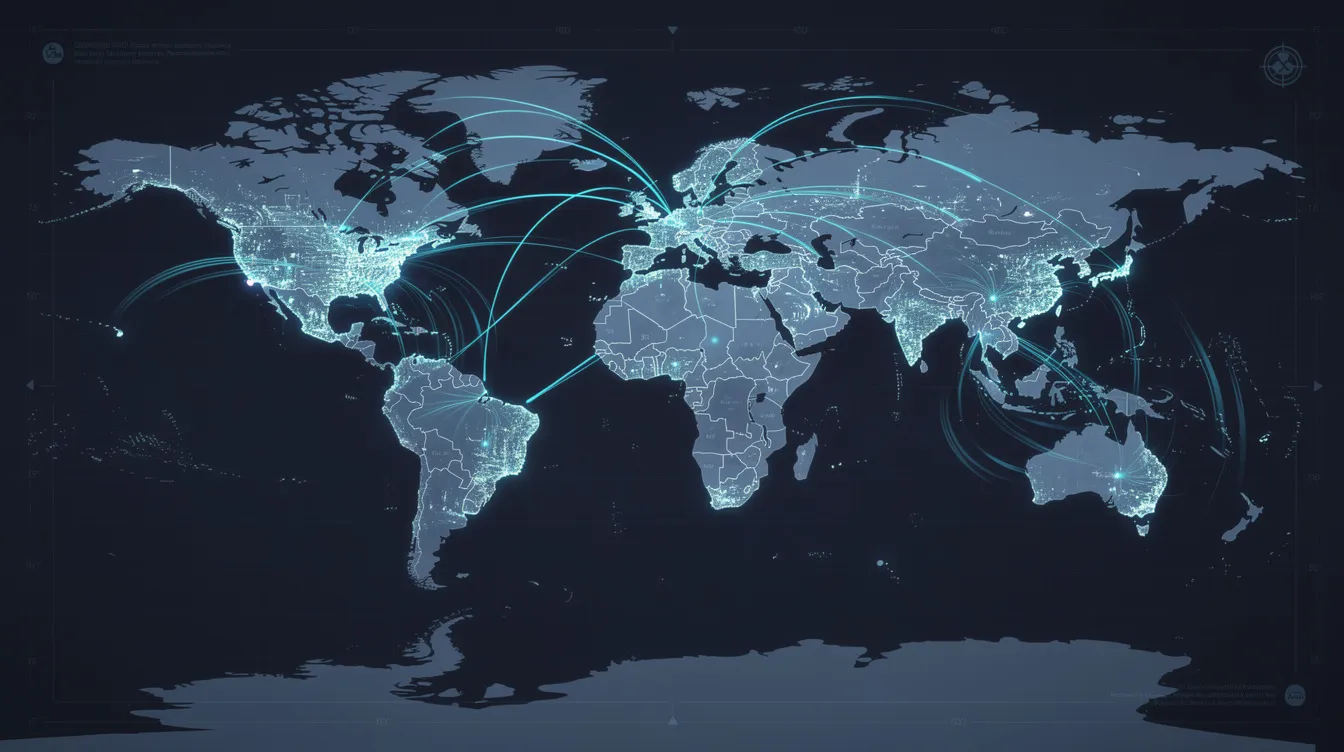
Alipay, launched in 2004 as part of the Ant Group ecosystem, has over a billion users in mainland China. Through Alipay+, its global expansion platform, it nowreaches more than 100 countries and regions, connecting to approximately 1.8 billion users through 40+ international wallet and digital banking partners.
Alipay functions as a mobile wallet, QR-code payment network, and gateway to Chinese consumers shopping domestically and internationally.
International merchants can accept Alipay through payment gateways and PSPs like Stripe, Adyen, or local acquirers as part of their global payments strategy. Key use cases include tourism, luxury retail, cross border ecommerce, and digital goods aimed at Chinese customers.
Integration essentials:
Available through major PSPs - no direct Alipay contract needed for most merchants
Settlement typically in local currencies (USD, EUR, etc.) with Alipay handling RMB conversion
Mobile payments via QR code scanning - works in store and online
Fee structures vary by aggregator, typically 1.5–3.0% depending on volume and channel
Digital wallets offer mobile-friendly payment options with strong security features
WeChat Pay, introduced in 2013 by Tencent in Shenzhen, is a payment network embedded directly in the WeChat super-app used daily by over a billion people in China. It dominates QR-based in store payments, peer-to-peer transfers, mini-program commerce, and bill payments within the WeChat ecosystem.
In 2025,Weixin Pay expanded to 78 countries and regions, supporting 36 currencies.
Non-Chinese merchants access WeChat Pay through cross border payment gateways, enabling businesses to manage payments in local currencies while Chinese users pay in RMB. Regulatory cross-border controls affect settlement timing and refund flows, so factor this into your international payments planning.
Industries where WeChat Pay drives conversion:
Tourism and hospitality
Duty-free and luxury retail
Digital entertainment and gaming
Restaurants and food service in tourist-heavy locations
Any business with significant Chinese visitor traffic
Square, founded in 2009 (now Block, Inc.), enables small businesses to accept payments in person, online, and via invoices through an integrated ecosystem. Square offers a free POS system for small businesses, bundled with hardware like card readers and terminals plus software for appointments, online stores, and inventory management.
Square offers a flat-rate pricing structure for small businesses. Square's transaction fees are 2.6% plus 15 cents per transaction for in-person payments, with online rates at 3.3% + $0.30 on the free plan. There are no monthly fees on the base tier, no long-term contracts, and no separate merchant account required. Square offers integrated payment solutions for small businesses that want to begin accepting payments quickly.
Why Square is popular with SMBs:
Restaurants, cafés, salons, and small retailers love the simple setup
Transparent payment processing fees with no hidden costs
Integrated analytics and sales data help manage business operations
Invoicing and payment links built into the platform
Limitations:
Regional availability is primarily US, Canada, UK, Australia, Japan, and a handful of other markets
Less suited to very high-volume merchants who could save with interchange-plus optimization
Reliance on Square's ecosystem - migrating away means rebuilding workflows
Grouping these networks by type clarifies how they serve different merchant needs:
Card schemes (set the rules, provide the rails):
Visa & Mastercard: Universal acceptance, complex interchange fee structures, accessed via processors. Best for any business accepting card payments globally.
American Express: Premium closed-loop network with higher merchant costs, best for affluent and B2B segments.
UnionPay: Essential for Chinese consumer spend, growing cross border presence.
Wallet/platform networks (consumer-facing payment methods):
PayPal: Broadest consumer brand recognition for online payment, easy onboarding, higher fees at scale.
Alipay & WeChat Pay: Gateways to Chinese consumer spending, QR-based mobile payments, accessed via PSPs.
Full-stack processors (gateway + processor + tools):
Stripe: Best for digital businesses, SaaS, and software companies needing APIs and multi currency payments.
Adyen: Enterprise-grade unified commerce with Interchange++ pricing and 250+ payment methods.
Square: Omnichannel SMB ecosystem with flat-rate simplicity.
Most merchants use multiple networks simultaneously. A typical ecommerce store might accept Visa, Mastercard, and Amex through Stripe, add PayPal as an alternative checkout, and layer in Alipay for Chinese customers - all through one or two payment gateway options.
Online payment processing services and payment service providers abstract away some of this complexity by offering many networks through one integration, so you don't need separate contracts with each.
Match your business type to the right combination:
US café or retail store accepting cards? Square for POS + Visa/Mastercard rails. Add Amex if your average ticket justifies the higher per transaction cost.
Global SaaS or subscription business? Stripe for recurring billing + Visa/Mastercard/Amex. Enable local payment methods in key markets.
Tourism shop or hotel targeting Chinese visitors? Add UnionPay, Alipay, and WeChat Pay via a cross border payment gateway alongside your standard card acceptance.
Online marketplace or platform? Stripe Connect or Adyen for Platforms, supporting multi-party payouts across financial institutions.
B2B services with invoicing? PayPal or Stripe invoicing for flexibility, with Amex acceptance for corporate card payments.
Enterprise retailer across 10+ countries? Adyen for unified commerce, local acquiring, and advanced fraud management. Pair with direct banking relationships for treasury optimization.
Key trade-offs: simplicity (Square, PayPal) vs. cost optimization (Adyen, Helcim) vs. flexibility (Stripe). Check both payment gateway support and acquiring contracts to ensure each desired network is available in your target countries.
Card networks like Visa, Mastercard, UnionPay, and Amex set interchange and scheme fees (also called card network fees) that form the wholesale cost of every transaction. Your payment processor then adds its own markup.
Interchange-plus pricing separates card network fees from the provider's markup, giving you visibility into exact costs. Flat-rate pricing typically ranges from 2.5% to 3.5% and bundles everything into one rate.

How the models compare with a $100 online transaction:
Model | Example Provider | Rate | Cost on $100 |
| Flat-rate | Square | 3.3% + $0.30 | $3.60 |
| Flat-rate | Stripe (online) | 2.9% + $0.30 | $3.20 |
| Interchange++ | Adyen | IC + scheme + ~$0.12 | ~$2.30–$2.80 |
| Interchange-plus | Helcim | 1.90% + $0.08 | ~$1.98 + IC |
Adyen uses an Interchange++ model with three separate fees: the interchange fee, the card scheme fee, and Adyen's processing markup. Helcim provides interchange-plus pricing for transparent costs, charging 1.90% plus 8 cents per transaction on top of wholesale interchange. GoCardless offers lower fees for ACH payments compared to card payments, making it worth considering for recurring billing where customers pay from their bank account. ConnectPay is best for European businesses needing regulated payment processing. Checkout.com supports over 150 currencies for global transactions.
Common additional fees to watch:
Currency conversion surcharges (often 1.0–1.5% on top of base rate)
Cross border surcharges for international transactions
Chargeback fees ($15–$25 per dispute, depending on processor)
Monthly fees or minimums from some payment service providers
Setup fees for custom integrations or dedicated merchant acquiring
Compare total cost of ownership rather than chasing the lowest headline rate. A processor with higher per-transaction pricing but better authorization rates and lower decline rates may deliver better net revenue.
In 2026, baseline security expectations include PCI DSS compliance, end-to-end encryption, tokenization, and support for 3D Secure 2.0 or equivalent risk-based authentication.
Major networks (Visa, Mastercard, Amex, UnionPay) set the standards that processors and gateways must follow. Visa Secure, for example, delivers roughly 45% lower fraud rates on authenticated online transactions. This network-level enforcement improves security for all online payments flowing through compliant processors.
Stripe, Adyen, PayPal, and Square each layer on additional security tools - machine-learning fraud scoring, real-time risk engines, and dispute management portals. Adyen's risk management system uses ML trained across its massive global transaction dataset, while Stripe Radar provides fraud prevention out of the box.
Practical security tips for merchants:
Use hosted payment pages or tokenization via your payment gateway - never store raw card data
Enable 3D Secure for online transactions to shift liability and reduce chargebacks
Turn on multi-factor authentication in all payment and admin dashboards
Monitor fraud management dashboards weekly and adjust risk thresholds based on your payment data
European merchants must account for applicable Strong Customer Authentication (SCA) requirements when processing online payments.
How global payments work depends heavily on which layer handles FX conversion. Card networks like Visa and Mastercard act as universal rails - they'll process a transaction in almost any currency pair, but the cardholder's issuing bank or the merchant's acquirer handles the actual conversion (and charges for it). Wallet networks like Alipay and WeChat Pay handle conversion internally, settling to merchants in local currencies.
Network cross border readiness:
Visa/Mastercard: Visa/Mastercard: Broad international acceptance, subject to country, merchant, issuer, and acquiring-bank availability.
UnionPay: Essential for Chinese card payments internationally
PayPal: Strong for small international sellers; handles multi currency payments but with higher FX margins
Stripe/Adyen: Multi currency acquiring with local processing in key markets, reducing declines and fees
Alipay/WeChat Pay: Purpose-built for Chinese outbound consumer spend
Best practices when expanding abroad:
Enable local currencies at checkout - seeing prices in familiar currency reduces cart abandonment and improves customer satisfaction
Add local payment methods (iDEAL in Netherlands, Boleto in Brazil, UPI in India) through your processor
Use local acquiring where available to reduce decline rates and avoid cross border interchange premiums
Factor in currency conversion costs when calculating margins on international transactions
Multi currency support directly impacts chargeback risk, too. When customers see unexpected FX charges on their statements, dispute rates climb.
Small businesses and enterprise merchants have fundamentally different needs from their financial infrastructure.
A local retailer wants to begin accepting payments tomorrow with minimal paperwork, transparent monthly fees, and bundled POS hardware. An enterprise retailer managing 50 markets needs global acquiring, smart routing between multiple processors, volume-based pricing, and custom reporting.
Network fit by business size:
Small businesses: Square, PayPal, Stripe (standard pricing). Flat-rate simplicity, no setup fees, integrated tools for enabling businesses to sell quickly.
Mid market: Stripe (custom pricing), Helcim (interchange-plus). Helcim uses an interchange-plus pricing structure for transparency as volumes grow. Better cost optimization without enterprise complexity.
Enterprise merchants: Adyen, Stripe (enterprise), direct acquiring with card schemes. Custom contracts, dedicated account management, SLA commitments, and advanced reconciliation across banking relationships.
As businesses scale, migrating from simple flat-rate payment gateways to advanced processors with direct network connections becomes a significant cost-saving move. At higher transaction volumes, interchange-plus pricing can reduce processing costs for some businesses, depending on card mix and negotiated rates.
Payment networks and platforms play an important role in moving money between individuals, businesses and financial institutions. While payment networks often support card transactions, account-to-account payments or merchant processing, international money transfer services focus specifically on moving funds across borders.
ACE Money Transfer provides a digital channel for international remittances through its website and mobile app. Customers can set up transfers, review applicable fees and exchange rates, and select the available delivery method for their destination and transfer corridor.
Rates and fees may vary, and exchange rates fluctuate, so the rate you receive may differ from any quoted rate. Always check the live rate at ACE Money Transfer before sending.
Depending on the country and corridor, delivery options can include bank deposits, cash pickup, mobile wallets and other country-specific methods. This places ACE within the wider digital payments ecosystem, with a specific focus on making international money transfers accessible through digital channels.
The payment landscape continues to shift. Here are the developments that will matter most:
Account-to-account (A2A) payments and real-time rails are gaining ground, especially in Europe and Asia. If regulatory frameworks continue to support them, mobile money and direct bank-based settlement could challenge card networks on cost for certain transaction types.
Digital wallets and super-apps are expanding beyond China. Alipay+, WeChat Pay, and even PayPal are evolving into platforms that bundle loyalty, financing, and commerce - not just payment acceptance.
Embedded payments are reshaping distribution. Software companies are bundling payment processing inside business tools, turning every SaaS platform into a potential payment channel. Stripe Connect and Adyen for Platforms lead this trend.
What this could mean by 2030:
Network tokens for subscription payments will further reduce involuntary churn from expired cards
A2A rails may pressure interchange fees downward in regulated markets
Super-app wallets could capture meaningful share of online retailers' checkout flows outside China
Embedded finance will make the "best payment gateway" question less about standalone tools and more about which platform you already use
Settlement speed will compress - next-day or same-day payouts becoming standard for improving cash flow
Which payment network is best for small businesses? Square and PayPal are the easiest starting points for accepting card payments with minimal setup. Both offer flat-rate pricing, no long-term contracts, and integrated tools. As you grow, evaluate Stripe or Helcim for better rates on higher transaction volume.
What is the cheapest payment processor for using these networks? For card payments, Helcim's interchange-plus model (1.90% + $0.08) tends to be the most cost-effective for businesses processing over $10K/month. For ACH and bank transfers, GoCardless offers significantly lower fees. Flat-rate pricing from Stripe or Square is simpler but costs more per transaction at scale.
Can I accept payments from multiple networks through one payment gateway? Yes. Platforms like Stripe, Adyen, and PayPal support Visa, Mastercard, Amex, and various digital wallets through a single integration. Adyen accepts over 250 payment methods from one platform, making it the broadest single-integration option.
How fast do payouts arrive? Standard payouts from Stripe and Square arrive in 1–2 business days in the US. PayPal offers instant transfers for a fee. Adyen settles on configurable schedules. Cross border settlements and wallet-based networks (Alipay, WeChat Pay) may take 3–5 business days depending on currency and financial institutions involved.
Which networks are best for high-risk industries? High-risk merchants (e.g., travel, digital goods, nutraceuticals) typically need specialized merchant acquiring through processors that underwrite higher-risk categories. Standard platforms like Square and PayPal may freeze accounts. Stripe offers some high-risk support, and dedicated processors like Worldpay or specialized acquirers are often necessary.
Should I reassess my payment stack regularly? Absolutely. Fees, features, and regulations evolve annually. New local payment methods emerge, interchange rates adjust, and your own transaction volume and geographic mix shift. Review your payment processing setup at least once a year to ensure you're not overpaying or missing conversion-boosting payment methods.
Your payment stack is a competitive lever, not just a cost center. Start by mapping your customer base, transaction volume, and geographic reach to the networks that match - then build from there. The businesses that treat payment acceptance as a strategic choice, rather than a checkbox, consistently see better conversion, lower costs, and stronger cash flow.
Disclaimer: This article is intended for general informational and educational purposes only and should not be construed as legal, regulatory, tax, business, or financial advice. While reasonable efforts have been made to ensure that all facts, figures, and data are accurate and valid as of the date of publication, no warranty or guarantee is given as to the ongoing completeness, accuracy, or currency of the information.
The content is based on information available at the time of publication. Regulations, government policies, market conditions, and service offerings may change over time and vary across jurisdictions and providers. As a result, some information may no longer be current or applicable. Readers should independently verify all information and consult qualified professional advisors before making any financial, legal, or business decisions.