
ACE Money Transfer
ACE Money Transfer
16 Sep 2026
Know Your Customer KYC processes verify customer identities to mitigate risks, and in 2026, these processes sit at the center of every regulated digital business. KYC prevents fraud and financial crime in businesses ranging from neobanks to crypto exchanges, and KYC compliance is essential for anti-money laundering (AML) regulations worldwide. With regulatory pressure from FATF, EU AML Directives, and frameworks like eIDAS 2.0, plus a surge in synthetic identity fraud and deepfake attacks, choosing the right KYC software is no longer a back-office decision - it is a strategic one.
Modern providers use AI-native, end-to-end orchestration platforms for KYC solutions that go far beyond simple document checks. The core services of KYC providers include identity verification, AML screening, and fraud prevention, often bundled with KYB capabilities for business onboarding. KYC technology enhances security against identity theft. KYC solutions are needed in various sectors such as fintech, crypto, banking, and e-commerce - anywhere customer identities must be verified at scale.
The focus of this article is on leading KYC solution providers with strong global identity verification, AI-powered automation, and KYC/KYB capabilities. We will cover reducing false positives, scaling global coverage, and leveraging machine learning and orchestration to keep onboarding fast without sacrificing financial security.
Here is what is coming next:
A quick-reference list of the top 10 KYC solution providers
Deep-dive profiles of each provider's strengths, coverage, and best-fit use cases
A capability comparison framework and practical guidance on how to choose
Leading KYC solution providers are categorized by enterprise scale, geographic scope, and compliance requirements. These are not ranked strictly from best to worst but chosen as leading KYC solutions in the 2026-2027 market.
Sumsub - Best for multi-vertical KYC/KYB and integrated fraud prevention
Jumio - Best for large banks, lenders, and high-volume global onboarding
Trulioo - Best for cross-border KYC/KYB with deep data network coverage
Shufti Pro - Best for wide geographic reach and granular document-level coverage
Veriff - Best for consumer apps prioritizing speed and conversion
Onfido (Entrust) - Best for hybrid AI plus human review in high-assurance flows
GBG - Best for data-rich local precision combined with global scale
iDenfy - Best for cost-efficient, flexible KYC for startups and marketplaces
AU10TIX - Best for forensic-grade verification and deepfake-resistant checks
ComplyAdvantage - Best as an AML and risk intelligence screening layer

Sumsub positions itself as a leading KYC provider delivering a full-stack platform for KYC, KYB, AML screening, and fraud prevention with extensive global data coverage. It serves fintech, crypto, iGaming, trading, and marketplace verticals from a single dashboard.
Sumsub accepts documents from220+ countries and territories, supporting over 14,000 document types and many languages including non-Latin scripts like Korean, Japanese, Chinese, and Cyrillic. Its AML screening draws from over 50,000 data sources across 240+ countries and territories, with real-time sanctions screening from OFAC, UN, EU, and DFAT lists. KYC solutions automate checks against global sanctions, PEPs, and adverse media databases.
Many KYC solution providers now integrate identity verification with ongoing fraud prevention services, and Sumsub is a clear example. Ongoing monitoring tools continuously check customer compliance beyond initial verification, and Sumsub's fraud database tracks millions of known bad actors, preventing roughly 690,000 fraud attempts monthly. AI-powered KYC solutions can detect synthetic identities effectively, and Sumsub uses deepfake detection, device fingerprinting, and behavioral signals to catch sophisticated fraud attempts early.
High configurability is key in modern KYC solutions, allowing users to tailor workflows dynamically. Sumsub lets clients customize document authenticity settings, accepted ID types, and risk thresholds per market. Deployment options include API, mobile and web SDKs, and a no-code dashboard. KYC solutions streamline compliance processes through automated workflows, and Sumsub's machine learning models improve verification accuracy over time while supporting perpetual KYC where needed.
Jumio is one of the earliest AI-powered identity verification platforms and remains a top choice for large financial institutions and regulated enterprises. With over 1 billion verification transactions processed, it brings deep maturity to high-volume customer onboarding.
Jumio supports more than 5,000 ID documents across 200 countries, covering passports, national IDs, driver's licenses, and digital IDs. Document verification involves validating government-issued IDs to prevent sophisticated forgeries, and Jumio inspects templates, holograms, watermarks, and security features. KYC software uses optical character recognition for document verification, extracting and cross-referencing data fields automatically.
Biometric liveness checks prevent presentation attacks and deepfake impersonations - Jumio's face matching and liveness detection are core to its identity verification processes. In June 2026,Jumio announced digital ID acceptance in 60+ countries through a single integration, including eIDs and mobile driver's licenses. In Brazil alone, they have processed over one million verifications of the CNH Digital.
Typical use cases include digital banking, lending, crypto exchanges, and marketplaces that need fast global identity verification. Jumio supports risk-based workflows, ongoing monitoring, and integration into existing systems via APIs, SDKs, and orchestration tools.
Trulioo is a global identity verification platform built for both KYC and KYB, making it ideal for cross-border onboarding and business verification. It connects to over450 data partners across credit bureaus, government records, and utilities.
Trulioo verifies identities in real-time across over 195 countries and supports over 14,000 identity documents. On the business side, it covers over 700 million business entities for KYB workflows including UBO verification and company registration checks. Trulioo's platform enables real-time verification across 195 countries, combining data-based identity matching with document verification in a single API call.
AML screening is robust: Trulioo screens against 6,000+ global watchlists and 20,000+ adverse media sources, supporting sanctions screening and politically exposed persons checks. The platform uses AI for deepfake detection and synthetic identity fraud prevention.
Example industries include neobanks, payment providers, B2B marketplaces, and regtech partners relying on Trulioo as a backbone KYC provider for multiple jurisdictions.
Shufti Pro is a KYC solution provider known for its "glocal" approach - broad country coverage with granular, country-by-country document mapping. It delivers a full compliance stack including KYC, KYB, AML, and biometric verification.
Shufti Pro validates over 10,000 IDs in 240+ countries and supports more than150 document languages, including non-Latin scripts. Each document type is mapped field-by-field for each issuing country, which means OCR intelligence is localized rather than generic.
Key features include facial biometrics, liveness detection, AML and sanctions screening covering 9 million+ risk-exposed entities, and ongoing monitoring for high-risk users. Automated document verification reduces manual review times significantly, and Shufti Pro combines AI-powered decisioning with optional human review to reduce false positives while catching complex fraud attempts.
Shufti Pro publishes per-country pass rates and fraud rates - a rare transparency among providers. Deployment options include cloud, private cloud, and on-premise, which matters for data residency requirements and regulated financial institutions that need control over customer data.
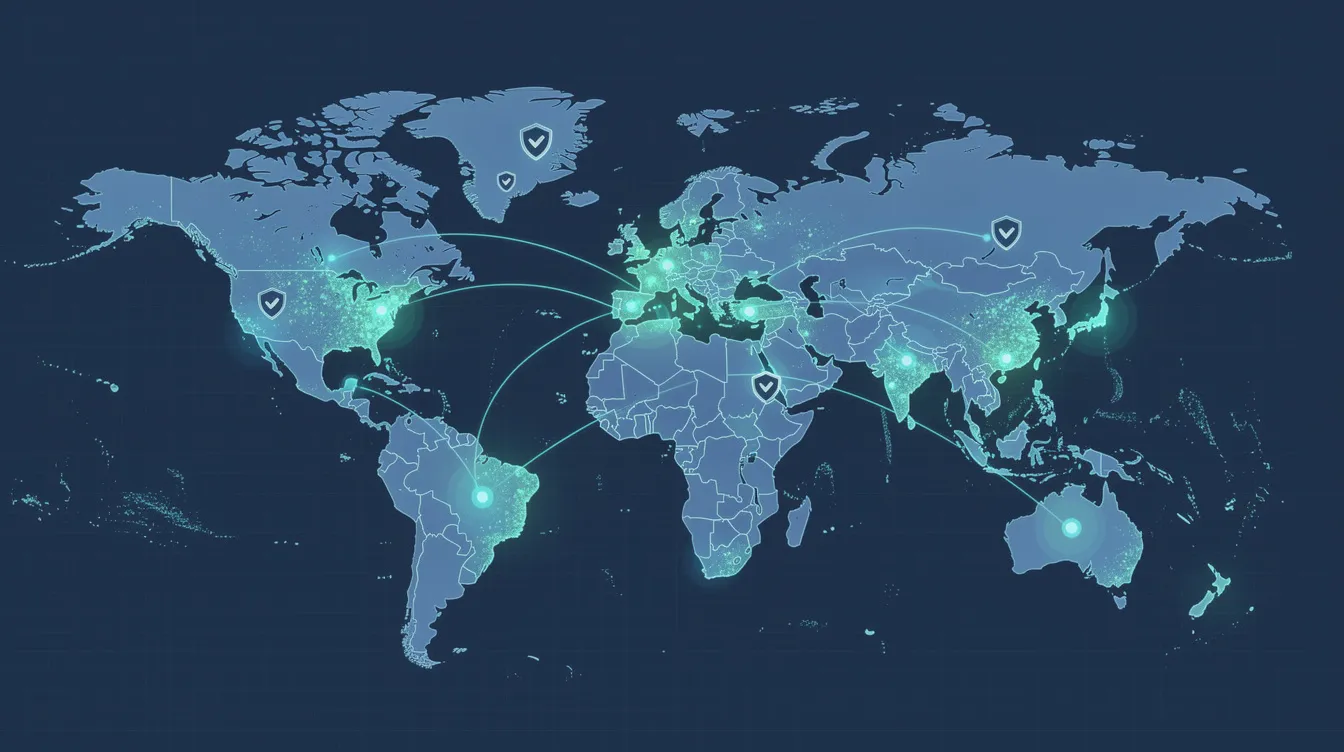
Veriff is an AI-powered KYC solution focused on speed, user experience, and conversion rates. For consumer-facing platforms in fintech, crypto, mobility, and the gig economy, it prioritizes minimizing drop-off during the onboarding process.
Core functions include automated ID verification, facial recognition, passive liveness detection, and document confidence scoring. KYC solutions can increase customer pass rates by 30%, and Veriff's high first-pass approval rates are a key differentiator - users praised its clarity, transparency, and fast decisions on review platforms like G2.
Biometric verification enhances security against identity fraud, and Veriff combines biometric authentication with machine learning models that improve fraud detection accuracy over time. Dashboards and analytics let compliance teams tune risk thresholds and monitor verification processes in real time. Veriff supports hundreds of document types across 190+ countries and territories.
Onfido, now part of Entrust, is a KYC provider that combines AI-powered document and biometric checks with expert human review for edge cases. Onfido verifies identities in 195 countries for over 900 companies across banking, fintech, mobility, and the sharing economy.
Main modules include document verification, 1:1 facial biometrics, liveness detection, and fraud signals that detect spoofing and deepfakes. Onfido's machine learning models improve accuracy over time, and customers can configure KYC workflows and risk rules to match their regulatory requirements.
Developer-friendly integration is a strength - APIs, SDKs, and orchestration options let teams embed identity verification into existing business systems quickly. The focus on user experience in the onboarding flow, combined with hybrid AI and human review for difficult cases, makes Onfido a strong choice for enhanced due diligence scenarios.
GBG is a long-standing identity technology company and KYC solution provider with deep data coverage and local granularity. Its platform spans identity verification, biometric checks, document verification, AML screening, and ongoing monitoring across 190+ countries.
GBG leverages hundreds of local data sources and watchlists to balance global coverage with high match rates and fewer false declines. Real-time AML screening checks clients against global watchlists, and GBG often clears identity records via registry data before triggering document or selfie review - improving speed and reducing manual work.
The end-to-end platform approach (e.g., GBG Go) unifies KYC, AML, and advanced risk signals like email or device intelligence. No-code or low-code workflow configuration lets compliance teams adjust rules without engineering effort, boosting operational efficiency across risk management workflows.
iDenfy is a KYC provider that combines AI-powered checks with human verification, suitable for fintechs, e-commerce, and emerging digital businesses that need cost-efficient compliance solutions.
Core services include document verification, biometric face matching, liveness detection, AML/PEP screening, and KYB options. iDenfy supports hundreds of ID types across multiple jurisdictions and offers white-label options that let clients fully brand the identity verification flow.
KYC solutions can integrate with existing business systems via APIs, and iDenfy emphasizes quick deployment, pay-per-use or flexible pricing for smaller teams, and tools for building risk profiles and sanctions-compliant workflows. Providers emphasize developer experience and configurability for dynamic onboarding processes, and iDenfy focuses on reducing backlogs and improving onboarding speed with AI-powered automation plus manual review when needed.
AU10TIX is a high-security KYC solution provider trusted in banking, travel, and telecom - sectors where sophisticated fraud attempts demand forensic-grade document analysis.
Technical strengths include advanced liveness detection, deepfake and spoofing detection, and multi-factor biometric authentication options. AU10TIX uses AI and machine learning to inspect hundreds of document features, detect forged IDs, and flag synthetic identities. KYC technology reduces identity theft risk significantly, and AU10TIX's forensic approach goes beyond generic pass/fail checks.
Typical deployment scenarios include high-risk onboarding flows, jurisdictions with strict regulators, or platforms targeted by sophisticated fraud rings. AU10TIX offers SDKs for seamless integration into onboarding workflows, and the platform balances very high assurance with acceptable onboarding times through intelligent risk scoring and stepped verification.
ComplyAdvantage operates primarily as an AML and financial crime intelligence platform that acts as the risk and screening layer alongside other KYC solutions. It primarily provides AML screening and financial crime risk intelligence rather than document-based identity verification.
Main features include real-time sanctions screening, PEP screening, adverse media screening, transaction monitoring, and AI-driven risk scoring. ComplyAdvantage supports know your customer and know your business workflows by enriching identity data with dynamic risk signals from proprietary databases.
Continuous monitoring tracks customer risk profiles for changes over time, and ComplyAdvantage reduces false positives through automated case management and configurable alert thresholds. KYC solutions streamline compliance processes, reducing operational costs - and ComplyAdvantage's orchestration capabilities let teams build end-to-end KYC AML workflows layered with other identity verification platforms.
Typical customers include digital banks, payment providers, crypto platforms, and regtech partners needing strong risk screening and adverse media coverage around their KYC stack.

Comparing KYC solution providers goes beyond checking feature lists. Identity verification solutions must cater to specific regulatory frameworks and customer types, and successful KYC implementation depends on industry, geographic region, and specific compliance needs.
Here are the critical evaluation axes:
Capability | What to Evaluate |
| Global identity verification coverage | Countries, languages, non-Latin script support, document types per country |
| Document and biometric checks | OCR accuracy, liveness detection quality, selfie matching, deepfake resistance |
| AI-powered decisioning | First-pass success rate, automation level, speed, ongoing learning |
| KYC/KYB support | Individual and business verification, UBO checks, company registry access |
| AML screening depth | Sanctions, PEPs, adverse media, number of watchlists, real-time updates |
| False positives management | Fuzzy matching, entity resolution, risk scoring, threshold configurability |
| Verification speed | Typical decision time, human review percentage, queue handling |
| Ongoing compliance | Perpetual KYC, continuous monitoring, re-verification triggers |
| Integration options | API, SDK, no-code tools, sandbox, audit trail export |
| Data residency and privacy | GDPR, SOC, ISO, on-premise or private cloud options |
Countries vary in regulatory requirements for KYC and AML compliance, impacting vendor selection. A provider that excels in Europe may lack registry depth in Southeast Asia. Map these capabilities to your vertical - fintech, crypto, gaming, marketplaces - and your regulatory obligations before shortlisting.
KYC solutions form an important part of digital financial services by helping businesses verify customer identities and support compliance processes. In international money transfers, identity verification is also part of the customer onboarding and transaction process, with requirements varying according to the service, destination and applicable regulations.
ACE Money Transfer incorporates identity verification into its digital transfer process. Customers provide required personal details and identification documents when setting up an account and can then select the destination country, delivery method, payment method and receiver details to create a transfer.
Rates and fees may vary, and exchange rates fluctuate, so the rate you receive may differ from any quoted rate. Always check the live rate at ACE Money Transfer before sending.
By combining digital onboarding with international money transfer services, ACE forms part of the wider ecosystem of regulated financial services where customer identification is an important component of secure transaction processing. Available delivery methods and verification requirements vary depending on the transfer and destination country.
The "best" KYC software depends on geography, risk appetite, regulated status, and growth plans. There is no universal winner.
Start by defining your goals:
Cost reduction - Look for providers with high automation and low manual review rates
Faster onboarding - Prioritize first-pass approval rates and instant identity verification
New market entry - Focus on providers with extensive global data coverage and local registry access
Adding KYB - Ensure your provider supports business verification and corporate customer due diligence
KYC and AML compliance requires balancing high-speed onboarding with rigorous fraud prevention. KYC solutions must include provisions for ongoing monitoring, audit trails, and configurable workflows to streamline customer onboarding without sacrificing risk assessment quality.
Run a proof of concept with 2–3 shortlisted providers. Compare conversion rates, review times, accuracy, and compliance-team workload using the same test cases.
Quick mapping of example use cases to provider types:
Large global banks ? Jumio, GBG, Trulioo
Crypto exchanges and fintech apps ? Sumsub, Shufti Pro, Veriff
High-assurance security ? AU10TIX, Onfido
AML/risk intelligence layer ? ComplyAdvantage
Cost-sensitive startups ? iDenfy
What is the difference between KYC and KYB, and why do I need both? KYC verifies individual user identities, while KYB verifies business entities - registration, ownership, beneficial owners. If you onboard both consumers and businesses, you need combined KYC/KYB capabilities to meet regulatory requirements and reduce financial crime risk across your customer base.
How do AI-powered KYC solutions reduce false positives? They use fuzzy name matching, phonetic algorithms, entity resolution, and contextual risk scoring to distinguish genuine risks from noise. Sumsub, for instance, resolves around 95% of AML matches via AI without manual intervention. KYC helps maintain trust and security in financial systems by catching real threats while letting legitimate customers through.
What are typical KYC costs per verification in 2026? KYC pricing varies significantly by provider, verification method, geography, volume, AML screening requirements, and human-review needs. Some providers offer usage-based pricing or free tiers, while enterprise programmes are typically priced according to volume and requirements.
Can KYC providers support on-premise or private cloud deployments? Some can. Shufti Pro, for example, offers cloud, private cloud, and on-premise deployment, which is critical for data residency and compliance processes at regulated financial institutions.
How often should customers be re-verified? It depends on risk level and regulation. Leading KYC compliance solutions support continuous monitoring with triggered re-verification based on risk profile changes, adverse media hits, or regulatory obligations. Integration timelines vary from a few days for API-based setups to several weeks for complex enterprise configurations requiring engineering, compliance, and legal resources.
Selecting the right KYC provider is an ongoing, strategic decision. Regulations evolve, fraud techniques advance, and your business model will change. Revisit your KYC stack annually, test new providers when entering new markets, and treat compliance not as a checkbox but as a competitive advantage.
Disclaimer: This article is intended for general informational and educational purposes only and should not be construed as legal, regulatory, tax, business, or financial advice. While reasonable efforts have been made to ensure that all facts, figures, and data are accurate and valid as of the date of publication, no warranty or guarantee is given as to the ongoing completeness, accuracy, or currency of the information.
The content is based on information available at the time of publication. Regulations, government policies, market conditions, and service offerings may change over time and vary across jurisdictions and providers. As a result, some information may no longer be current or applicable. Readers should independently verify all information and consult qualified professional advisors before making any financial, legal, or business decisions.