
ACE Money Transfer
ACE Money Transfer

01 Sep 2026
Rwanda has 16 licensed commercial banks as of 2025, and picking the right one matters whether you are a salaried worker in Kigali, a farmer in the Eastern Province, or an expatriate setting up a business. This guide breaks down the banking sector by facts, products, and customer fit so you can make a grounded decision rather than relying on headlines alone.
Bank of Kigali is widely regarded as the best bank in Rwanda in 2025 and 2026. Global Finance Magazine named it "Best Bank in Rwanda 2025" for the fifth consecutive year, citing digital transformation, customer growth, and sustainable financing.
BPR Bank Rwanda, Equity Bank Rwanda, and I&M Bank Rwanda add strong competition, each excelling in areas like rural reach, retail banking, and corporate services.
The National Bank of Rwanda (BNR) regulates all commercial banks, enforces a minimum capital requirement of RWF 20 billion, and has helped push financial inclusion to 96% of adults by 2024.
About 85% of Rwandan adults engage in formal financial ecosystems, yet only 22% of adults use banking services as of 2024; most formal inclusion comes through mobile money, SACCOs, and microfinance.
Choose a bank based on your own needs (fees, branch proximity, digital apps, SME support, agriculture loans, women-focused products) rather than awards alone.
"Best bank" is not a single metric. International ranking bodies like Global Finance Magazine and Euromoney's Awards for Excellence evaluate banks on financial performance, innovation, outreach, and customer experience. Local business awards add further perspective. The result is a composite picture, not a single score.
By these measures, Bank of Kigali usually tops national rankings. But several commercial banks are strong in specific niches: BPR Bank Rwanda for rural lending, Equity Bank Rwanda for retail digital services, and I&M Bank Rwanda for corporate banking.
Key evaluation factors across ranking bodies:
Stability and capital strength: capital adequacy ratio, non-performing loan ratio, deposit growth
Breadth of services: personal accounts, business lending, agriculture credit, women-focused products, diaspora banking
Digital banking quality: mobile apps, USSD access, online loan applications, digital onboarding
Branch and agent network: number of branches, ATMs, and agents in rural and urban areas
Customer satisfaction: trust, transparency, complaint resolution, service in multiple languages
Pricing: account fees, minimum balances, loan interest rates, transfer charges
Innovation: new products, fintech partnerships, sustainable finance initiatives

Bank of Kigali (BK) is one of Rwanda’s established commercial banks. Founded in 1966 and headquartered in Kigali, it provides a range of retail and business banking services. This is Bank of Kigali's fifth consecutive win from Global Finance Magazine. In 2026, Global Banking & Finance Review also named BK "Best Bank for Digital Banking Services Rwanda 2026."
Market position and performance:
Bank of Kigali serves 300,000 retail customers and 24,000 businesses nationwide.
Net loans grew 15.4% and customer deposits grew 12.2% in 2024; return on equity reached 23.6%.
Bank of Kigali'snet profit was RF38 billion ($37.8 million) in 2020, reflecting resilience through COVID-19. Growth has continued since.
Digital and product innovation:
BKQuick+ delivers loans up to RWF 50 million in 15 hours, serving SMEs and individuals who need fast capital.
The IKOFI digital wallet is used by hundreds of thousands of farmers and thousands of agriculture dealers, creating a cashless value chain from farm to market.
BK's mobile banking apps support self-onboarding, bill payments, and integration with mobile money wallets.
PCI-DSS certification and the Temenos T24 core banking system underpin security and reliability.
Social impact and inclusion:
The Zamuka Mugore program targets women entrepreneurs with affordable loans and savings options, reflecting BK's role in gender-inclusive finance.
BK's agency network of 5,100 agents processed 5.6 million transactions, extending banking services into underserved communities.
CEO Diane Karusisi has led BK's digital transformation strategy, aligning with objectives set by the National Bank of Rwanda and the Government of Rwanda.
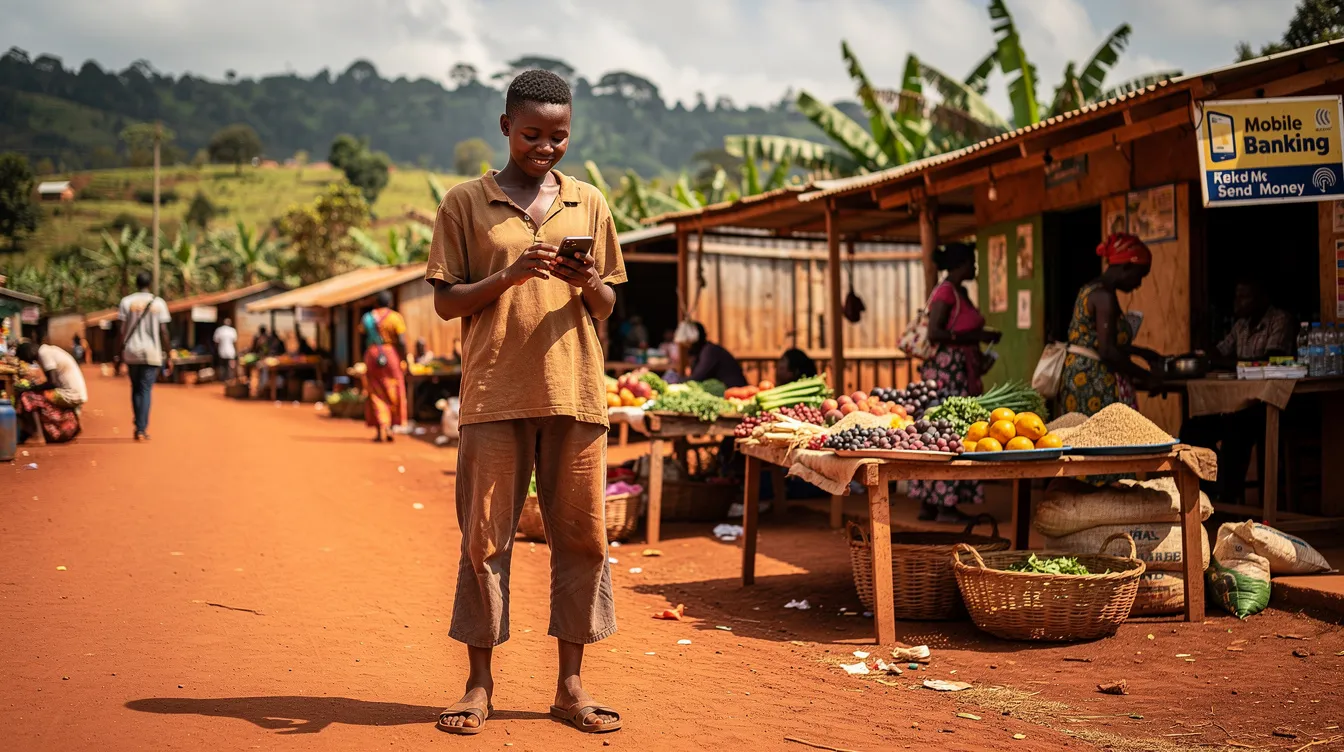
BPR Bank Rwanda traces its roots to 1975, when it began as a cooperative banking movement called Banques Populaires. It became a full commercial bank in 2008, and after acquisition and integration by KCB Group in 2021-2022, it operates as BPR Bank Rwanda Plc with stronger capital backing and upgraded technology.
BPR Bank has a strong presence in semi-urban and rural areas. Its network includes about 84 branches, 65 ATMs, and over 2,500 agents and merchants across all provinces. This density is what earns it the "neighborhood bank" label.
Product strengths:
Savings and current accounts with services tailored for mass-market customers, including low minimum balances
Micro and SME loans, agricultural finance products, and cooperative lending
BPR Bank offers loans up to RWF 2 million through MoFaya, its mobile lending product
Agency banking (BPR Hafi), remittance services, and mobile banking upgraded on the Temenos R21 core system
Who BPR suits best:
Rural customers, small traders, and cooperatives who need a branch or agent within walking distance
Farmers seeking agriculture credit with flexible repayment schedules
Customers who value community orientation over digital-first innovation
BPR may not lead in international awards, but for customers in districts where BK branches are scarce, BPR is often the practical top choice.
Beyond Bank of Kigali and BPR Bank Rwanda, roughly 16 licensed commercial banks operate under the National Bank of Rwanda's supervision. The largest banks in Rwanda account for roughly three-quarters of banking assets; the rest serve niche markets.
Equity Bank Rwanda: Known for financial inclusion and serving over 1.3 million customers. Merged with Cogebanque at the end of 2023, creating a larger retail and SME-focused institution. Backed by Equity Group's regional infrastructure across East Africa.
I&M Bank Rwanda: Renowned for its rapid growth and corporate banking services. A strong option for expatriate clients, trade finance, and high-end retail accounts.
Access Bank Rwanda, Ecobank Rwanda, Guaranty Trust Bank Rwanda: Foreign-owned or regional banks offering cross-border trade facilities, foreign currency accounts, and diaspora banking. Smaller in asset size but useful for specific needs.
Microfinance and development banks: Rwanda's banking sector includes microfinance banks (AB Bank Rwanda, Unguka) and development banks (Rwanda Development Bank). These focus on small-scale lending and savings for lower-income households.
Your best bank could be any of these if you need niche products like higher-limit business accounts, specialized corporate services, or cross-border trade finance.
The National Bank of Rwanda (BNR), sometimes searched as "Bank of Rwanda," is the country's central bank and regulator. It does not offer savings accounts, loans, or other retail banking services to the public.
Core responsibilities:
Licensing and supervising all commercial banks, microfinance institutions, and payment service providers
Setting prudential rules: the National Bank of Rwanda requires a minimum capital of RWF 20 billion for commercial banks, aligned with Basel III principles since the 2021 banking law revision
Managing monetary policy and overseeing interoperable payment systems
Promoting financial stability through regular audits, capital adequacy checks, and non-performing loan monitoring
Financial inclusion role:
BNR's National Financial Inclusion Roadmap 2026-2030 sets objectives for universal access to transactional accounts and narrowing gender and rural/urban gaps.
Under BNR oversight, Rwanda reached approximately 96% overall financial inclusion by 2024, with the gender gap narrowing to about 4%.
The key distinction: BNR is the regulator; Bank of Kigali, BPR Bank Rwanda, and other institutions are the service providers. If you search "National Bank" looking for a place to open an account, you need a commercial bank instead.
Rwanda moved from relatively low bank usage in the 2000s to one of Africa's leaders in formal and digital financial services by the mid-2020s. According to the FinScope Rwanda 2024 survey, 96% of adults in Rwanda are financially included by 2024.
Yet the reality behind that headline number is layered:
Approximately 85% of Rwandan adults engage in formal financial ecosystems (banks, mobile money, SACCOs, insurance).
Only 22% of adults in Rwanda use banking services as of 2024; the rest access formal finance through mobile money, microfinance, or cooperatives.
The number of depositors with commercial banks is about 509 per 1,000 adults by 2023, a figure that has grown but still shows room for deeper bank account penetration.
Transactional account ownership (bank plus mobile money) reached about 77% of adults, but women lag men (73% vs. 82%).
How banks drive inclusion:
Bank of Kigali and BPR Bank Rwanda extend services through agency banking, digital wallets, and partnerships with mobile networks.
Inclusive products include low-fee savings accounts, youth and student accounts, women-focused savings and loans (like BK's Zamuka Mugore), and agriculture credit lines.
The Kigali International Financial Center (KIFC) positions Rwanda as a regional financial hub for investment and wealth management, though its direct impact on retail inclusion is limited. It aims to attract corporate and high-net-worth flows rather than mass-market customers.
Awards reflect outstanding performance at the institutional level, but they do not tell you which bank fits your situation. Before opening an account, compare these factors:
Account fees and minimum balances: some banks waive fees for students or accounts with regular salary deposits; others charge monthly maintenance regardless
Interest on savings and term deposits: rates vary, especially for fixed-term products; check whether interest compounds monthly or annually
Loan rates and conditions: collateral requirements, processing fees, tenor, and whether the bank offers products for SMEs, agriculture, or women
Digital banking quality: app reliability, USSD availability for feature phones, digital loan applications, mobile money integration
Branch, ATM, and agent locations: critical for rural customers; check coverage maps on each bank's website
Customer support in your language: English, Kinyarwanda, and French availability varies by bank
Special programs: SME accelerators, agriculture credit lines, diaspora remittance services, women-focused lending
Before committing, verify that your chosen bank is licensed by the National Bank of Rwanda. Avoid informal or unregistered financial schemes, no matter the promised returns.
Most banks have streamlined account opening, but documentation requirements apply for anti-money-laundering compliance.
Typical requirements:
Rwandan citizens: national ID card, passport-size photos, sometimes proof of address (utility bill or rental agreement)
Foreigners and expatriates: valid passport, residence or work permit, proof of address, sometimes a reference letter
Common account types:
Savings accounts: earn interest; may have minimum balance requirements or dormancy fees if unused
Current (checking) accounts: low or no interest; designed for frequent transactions and salary processing
Fixed deposit accounts: higher interest rates for locking funds over a set period (3, 6, or 12 months)
Foreign-currency accounts: available in USD or EUR at select banks; subject to foreign exchange regulations
Digital onboarding and management:
Larger banks like Bank of Kigali allow starting applications via mobile app, with identity verification at a branch or agent
Link your bank account to a mobile money wallet for easier transfers
Set up transaction alerts via SMS or app notifications to monitor activity
Review statements regularly and track fees; dormancy charges can erode small balances over time
Digital banking and financial inclusion are reshaping competition in Rwanda's banking sector. More than 90% of adults in Rwanda use digital payments weekly, making it one of Africa's most digitally active financial markets.
Banks and mobile money providers increasingly overlap. Bank of Kigali and BPR Bank Rwanda both integrate with mobile money platforms, enabling transfers between bank accounts and wallets, bill payments, and merchant payments via QR codes or POS terminals.
Channel breakdown:
USSD banking serves feature-phone users, especially in rural areas
Smartphone apps handle everything from balance checks to loan applications for urban users
Contactless and e-commerce payments are growing, driven by younger customers and SME merchants
The National Bank of Rwanda supports this innovation while regulating payment systems for security and interoperability. Digital capabilities now directly influence which bank is "best" for a given user: tech-savvy customers in Kigali prioritize app quality, while a farmer in Nyagatare may rely on USSD and agent banking.
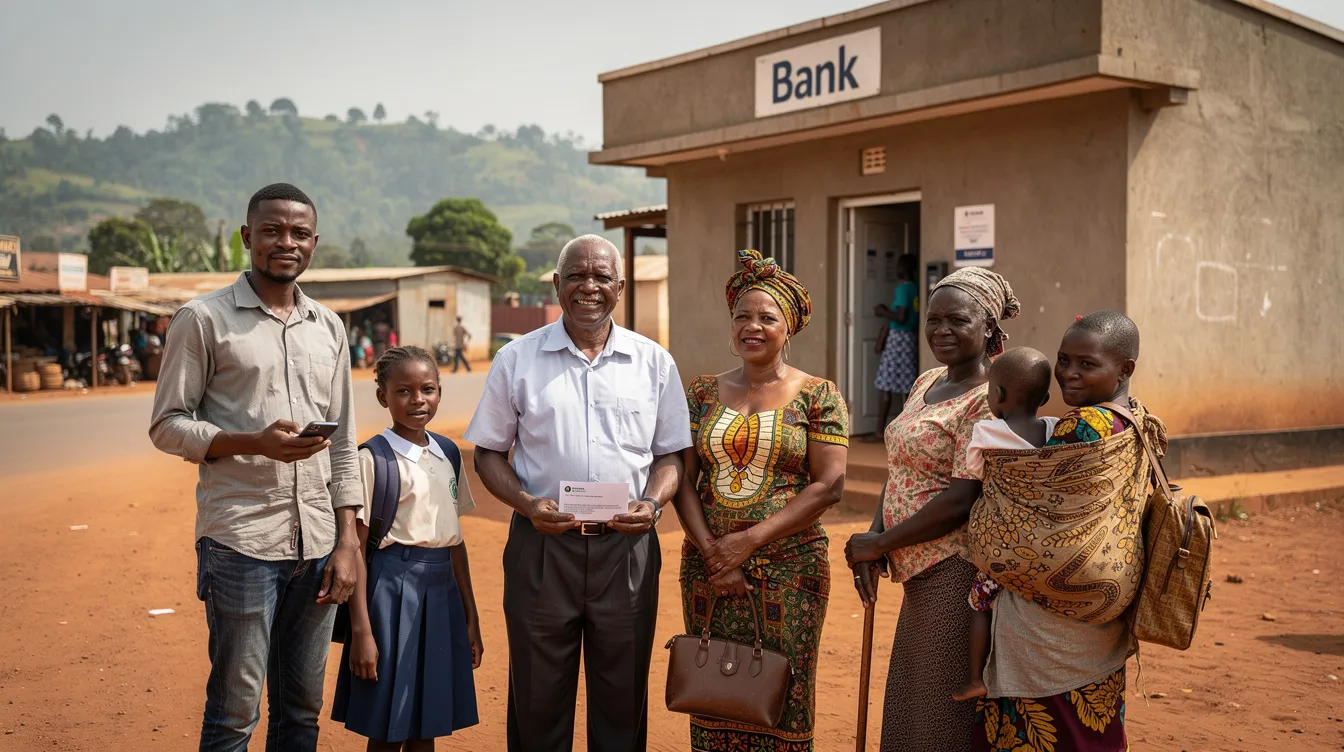
There is no single best bank for everyone. The right choice depends on what you need, and readers should always check the latest offers and terms before deciding.
Salaried urban workers: salary processing ease, good mobile apps, nearby ATMs, competitive savings rates. Bank of Kigali and Equity Bank Rwanda are strong options. I&M Bank Rwanda suits higher-income professionals who value premium services.
Small business and SME owners: working-capital loans, merchant payment solutions, trade finance, digital invoicing. Bank of Kigali disbursed over RWF 207 billion to SMEs, making it a natural fit. Equity Bank Rwanda and Access Bank also serve this segment with tailored products.
Farmers and rural households: branch and agent proximity, agriculture credit, flexible repayment, low fees. BPR Bank Rwanda is often the strongest option here, along with BK's IKOFI wallet for cashless crop payments.
Students and young professionals: low or zero minimum balances, cheap transfers, reliable mobile banking. Equity Bank Rwanda and Bank of Kigali both offer youth-oriented accounts.
This is guidance, not personal financial advice. Visit each bank's official website, compare products, and confirm fees at a branch before committing.
For those sending funds to Rwanda, international transfers provide a way to move money to recipients and eligible bank accounts in the country. ACE Money Transfer offers a digital channel for initiating the transaction, while the receiving bank or financial institution handles the funds once they are received.
Exchange rates fluctuate, and the rate applicable to your transfer can differ from rates shown at another time. Check the current rate atacemoneytransfer.combefore sending.
ACE Money Transfer supports transfers to Rwanda through its digital platform and applicable payment infrastructure. Exchange rates and applicable fees are presented before confirmation, with the final rates and charges subject to market conditions, service terms, and relevant regulatory requirements.
Delivery times vary according to the payment method, receiving institution, and local processing procedures. Any fees charged by the recipient’s bank are determined by that institution and remain outside ACE Money Transfer’s control. Check acemoneytransfer.com for current rates and fees.
For deeper insights into Rwanda's financial sector, explore these resources:
National Bank of Rwanda (BNR): official statistics, licensed bank lists, and regulatory publications at bnr.rw
FinScope Rwanda 2024: the most recent financial inclusion survey, available through the National Institute of Statistics
Bank annual reports: Bank of Kigali, BPR Bank Rwanda, and Equity Bank Rwanda publish integrated annual reports with detailed financials
Kigali International Financial Center (KIFC): information on investment opportunities and Rwanda's regulatory environment for regional finance
Global Finance and Euromoney award archives: for historical context on which banks have been recognized and why
Cross-reference any data in this article with the latest central bank publications and bank websites; figures change as the banking sector evolves.
These questions address specific concerns not fully covered in the sections above.
Bank of Kigali is repeatedly recognized as the best bank by international magazines, and it holds the largest market share by assets and loans. That said, the best choice depends on location, income level, and service needs. A farmer in a remote district may find BPR Bank Rwanda more accessible due to its denser agent network. An SME focused on cross-border trade might prefer Access Bank or Ecobank for foreign currency facilities.
The National Bank of Rwanda (BNR) is the country's central bank and regulator. It does not offer personal accounts or loans to the public. Commercial banks like Bank of Kigali, BPR Bank Rwanda, and Equity Bank Rwanda are the financial institutions that provide everyday banking services: savings accounts, current accounts, loans, and digital wallets.
Yes. Most major banks accept foreign nationals. You will typically need a valid passport, residence or work permit, and proof of address. Some banks require a reference letter. Contact your chosen bank in advance because policies differ by institution and can change. Foreign-currency accounts (USD, EUR) are available at select banks but are subject to foreign exchange regulations.
Bank of Kigali leads, having won "Best Bank for Digital Banking Services Rwanda 2026" from Global Banking & Finance Review. Its apps, IKOFI wallet, and BKQuick+ loan product set a high bar. BPR Bank Rwanda and Equity Bank Rwanda also offer strong mobile and USSD services. Compare app features, transaction fees, and reliability across at least two or three banks before deciding.
Licensed banks are regulated by the National Bank of Rwanda, which enforces capital requirements (RWF 20 billion minimum), liquidity rules, and regular supervision. Banks like BK hold PCI-DSS certification and use modern core banking systems. As in any country, no deposit is entirely risk-free. Stay within regulated, licensed financial institutions and avoid informal schemes promising unusually high returns.
Disclaimer: This article is intended for general informational and educational purposes only and should not be construed as legal, regulatory, tax, business, or financial advice. While reasonable efforts have been made to ensure that all facts, figures, and data are accurate and valid as of the date of publication, no warranty or guarantee is given as to the ongoing completeness, accuracy, or currency of the information.
The content is based on information available at the time of publication. Regulations, government policies, market conditions, and service offerings may change over time and vary across jurisdictions and providers. As a result, some information may no longer be current or applicable. Readers should independently verify all information and consult qualified professional advisors before making any financial, legal, or business decisions.