
ACE Money Transfer
ACE Money Transfer
18 Sep 2026
China didn't just adopt mobile payments - it leapfrogged plastic cards entirely. With a sizable tech savvy population of over 1.4 billion, high speed internet provided across urban and rural areas, and the necessary digital infrastructure in place, China is a global leader in mobile wallet adoption. Digital wallets account for roughly 89% of online transactions and 87% of point-of-sale value in the country, making cashless payment methods the default rather than the exception.
This article answers a straightforward question: which are the top 10 digital wallets in China heading into 2026? Below, you'll get the quick list, then a deeper look at how each wallet works for locals, tourists, and international businesses - plus how the digital currency e-CNY and cross-border payments fit into the picture.
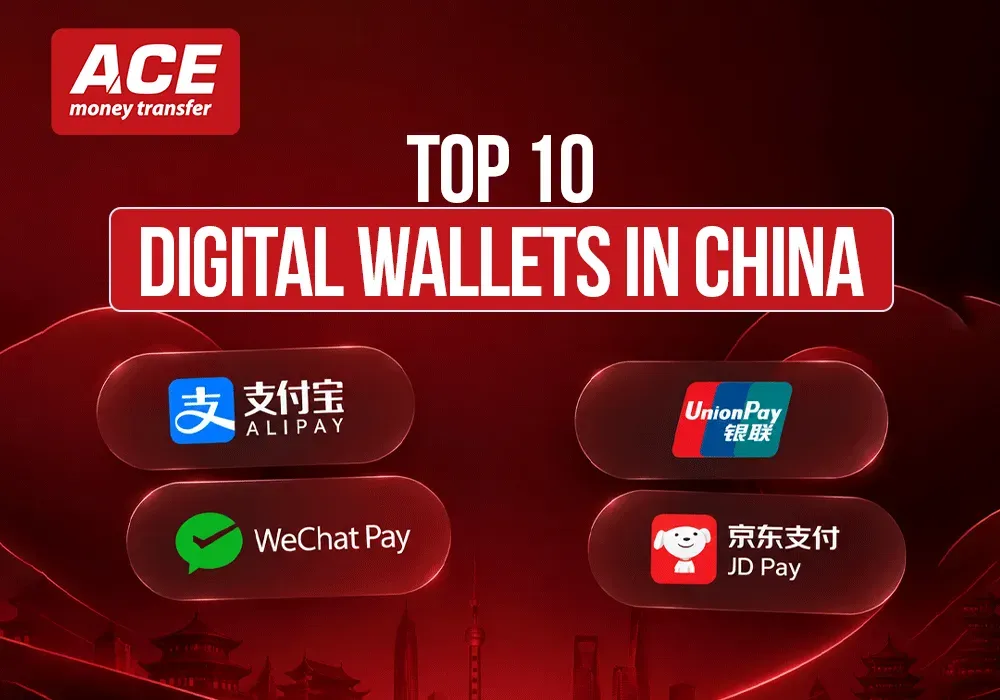
Here's the ranked list before we dive deeper. Alipay and WeChat Pay together control over 94% of the market transaction volume, but the rest of the list matters more than most people think.
Alipay – Super-app style wallet, 1.3+ billion users globally, dominant QR mobile payment.
WeChat Pay – Integrated into WeChat, over 800 million monthly active users.
UnionPay App – Official wallet of China UnionPay connecting most domestic bank cards.
JD Pay – Wallet for JD.com ecosystem and partner merchants.
Huawei Pay – Wallet for Huawei devices, uses NFC and QR codes.
Mi Pay (Xiaomi Pay) – Wallet integrated into Xiaomi phones, built on UnionPay rails.
BestPay – China Telecom's wallet, important in some provinces and for utility payments.
Apple Pay – NFC wallet for iPhone users, works with Chinese banks' UnionPay cards.
Samsung Pay – Wallet on Samsung phones, supporting NFC/contactless in China.
QQ Wallet / Tenpay – Tencent's standalone wallet complementing WeChat Pay.
Google Pay and Google Wallet are not mainstream domestic options in mainland China due to ecosystem restrictions, but remain relevant for foreign users handling cross-border digital payment before or after trips. For sending money to and from China, users often combine local wallets with specialist remittance apps - ACE Money Transfer stands out as the best money transfer app for instant transfers into Chinese bank accounts and cards.
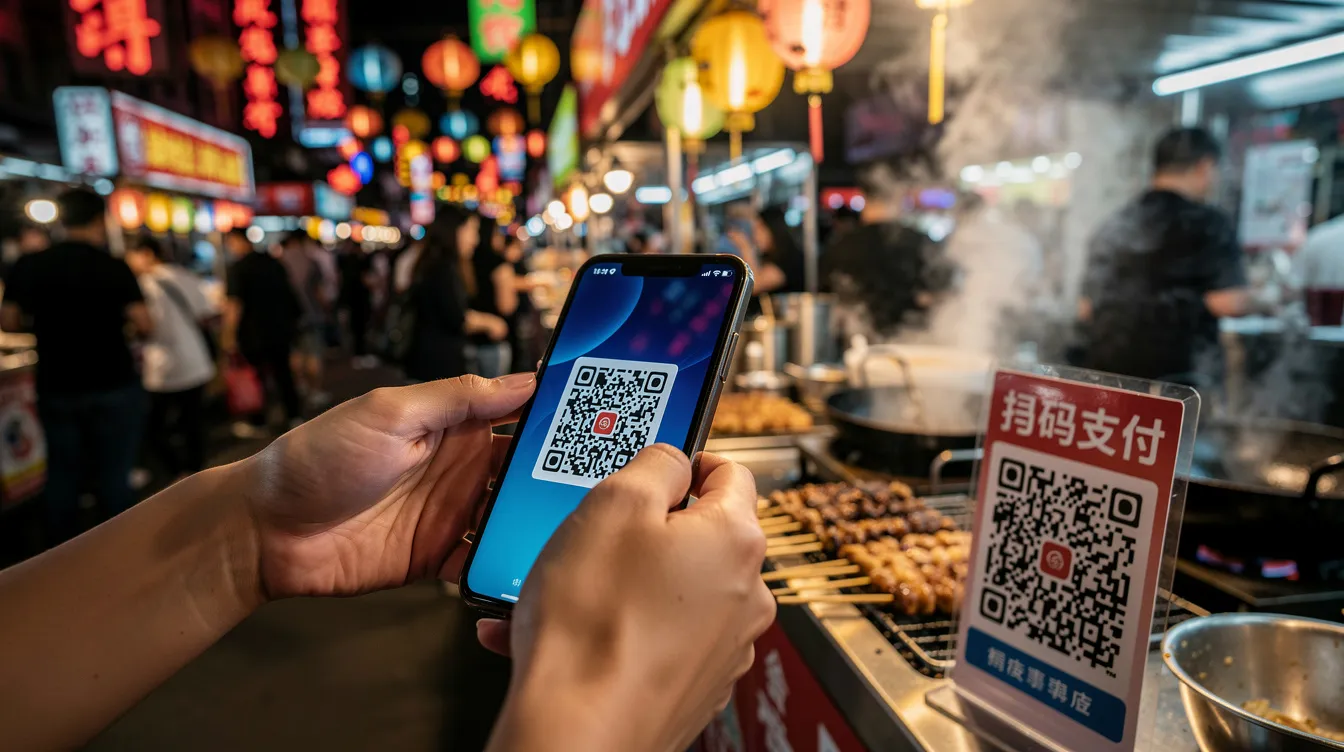
Chinese mobile wallets are app-based accounts linked to local bank accounts, debit cards, or stored value balances. China's digital payment ecosystem primarily functions as super-apps rather than traditional wallets - enabling users to pay bills, shop online, book taxis, invest, and handle financial transactions all within a single interface.
The typical setup flow works like this:
Download the app (Alipay, WeChat, UnionPay, etc.)
Complete real-name verification (ID, phone number) as required by Chinese regulation
Link a bank account or UnionPay debit card; optionally add credit cards
Use QR codes to pay: "scan to pay" a merchant QR code or show your own QR code for the merchant to scan
The QR code payment model is widely accepted by merchants in China - from street vendors to luxury malls. NFC-based contactless payments through Apple Pay or Huawei Pay work mainly at larger retail chains and transit systems. In 2023, 84.4% of Chinese respondents used mobile wallets for in store payments, and mobile wallets are widely used for daily transactions across the country.
Peer to peer transfers, bill payments, transit passes, and lifestyle services (food delivery, ride-hailing, investments) are all baked in. Mini programs allow businesses to provide services inside Alipay and WeChat without separate installations. Robust security features - tokenisation, device binding, biometric authentication, and transaction limits - protect secure transactions at every step.
The digital currency e-CNY is now being integrated into mainstream wallets via a unified QR code system, complementing but not yet replacing existing wallet balances.
Alipay is the largest digital wallet in China and a global benchmark for mobile payment. Launched in 2004 by Alibaba for Taobao, it expanded dramatically after 2011. Alipay has over 1.3 billion users globally and processes 10 billion transactions daily - numbers that dwarf most payment platforms worldwide. Alipay and WeChat Pay account for 84% of Chinese online payments.
Alipay functions as a financial and lifestyle super-app. Core features include:
QR code in store payments and mobile payment for taxis, restaurants, and retail
Online checkout on Taobao, Tmall, and broader Chinese e-commerce platforms
Peer to peer transfers, bill payments, and public services (fines, utilities)
Yu'e Bao money market, microloans, credit scoring, travel booking, insurance
Integration with public transport and "city services" sections
Alipay is especially effective for users wanting a comprehensive finance and lifestyle hub. For foreigners and international businesses, tourists can link international Visa, Mastercard, and JCB cards since the 2019–2020 updates, and the platform is used heavily for cross-border e-commerce. Alipay is also piloting e-CNY support via dedicated sub-wallets and unified QR acceptance.
WeChat Pay is built directly into the social media platform WeChat, making digital payments feel as natural as sending a message. WeChat has over 1.3 billion monthly active users, and WeChat Pay has over 800 million monthly active users making it a cornerstone of the Chinese mobile wallet market.
WeChat Pay integrates payments within the WeChat messaging app, and its core functions include:
QR code payments at offline merchants (scan and pay or show QR)
In-app purchases for mini-programs, ride-hailing, food delivery, and e-commerce
Peer to peer transfers and the famous "red envelope" (hongbao) gifts
WeChat Pay allows in-chat payments to merchants via brand mini-programs and official accounts
WeChat Pay excels in facilitating social payments and interactions within its messaging platform, and WeChat Pay integrates deeply with social interactions and the WeChat app. WeChat Pay's widespread adoption makes it indispensable for anyone doing business in China. Cross-border support lets Chinese tourists spend abroad and foreign merchants accept payments.
Non-mainland users can register with foreign phone numbers and add some international cards, though availability and limits should be checked before travel. WeChat Pay participates in e-CNY pilots, with unified QR developments letting users pay in digital currency without changing how they scan QR codes.

Beyond the big two, several domestic mobile wallet brands serve specific regions and use cases. UnionPay is backed by China's state-owned card payment network and is used by about 45% of consumers. The UnionPay App connects multiple UnionPay debit cards from different banks, supports QR code and NFC mobile payment, transit, and online checkout. UnionPay's QR payments are accepted by more than 30 million merchants in mainland China, making it essential for users in smaller cities and older demographics.
JD Pay powers the JD.com e-commerce ecosystem, supporting credit and debit card payments (UnionPay, Visa, Mastercard) for online purchases and some offline partner stores. It shines during promotions like Singles' Day shopping festivals.
BestPay is China Telecom's wallet, often preinstalled for its subscriber base. It handles telecom bill payments, mobile top-ups, and regional retail - a niche but important player.
QQ Wallet / Tenpay is Tencent's standalone wallet associated with the popular instant messaging platform QQ, used by younger users and gamers for online purchases, digital goods, and peer to peer transfers.
These wallets matter because they provide choice, strong discounts, and loyalty rewards - and are critical for international businesses targeting platforms like JD.com.
Chinese and global smartphone brands bundle their own digital wallets, using NFC and cooperation with UnionPay and Chinese banks.
Huawei Pay is integrated into Huawei devices and HarmonyOS. It supports NFC tap-to-pay and QR code mobile payment at UnionPay QuickPass terminals, with transit cards covering 160+ cities. It's widely accepted in major cities and large chains.
Mi Pay (Xiaomi Pay) is available on Xiaomi, Redmi, and POCO devices. It uses UnionPay's tokenisation and QuickPass for in store NFC payments, tied into Xiaomi's broader ecosystem of IoT devices and e-commerce.
Samsung Pay serves Samsung users for NFC contactless payments at compatible POS terminals, working with UnionPay bank cards from participating Chinese banks.
All three offer seamless integration - unlock your phone, tap to pay - with strong device-level security. However, QR-based wallets still dominate the vast majority of daily transactions, so these wallets typically complement rather than replace Alipay and WeChat Pay. They become especially useful when Chinese tourists pay abroad with domestic cards via NFC terminals.
While China's mobile payment landscape is dominated by Alipay and WeChat Pay, global wallets still play a role for specific user groups and cross-border digital payments.
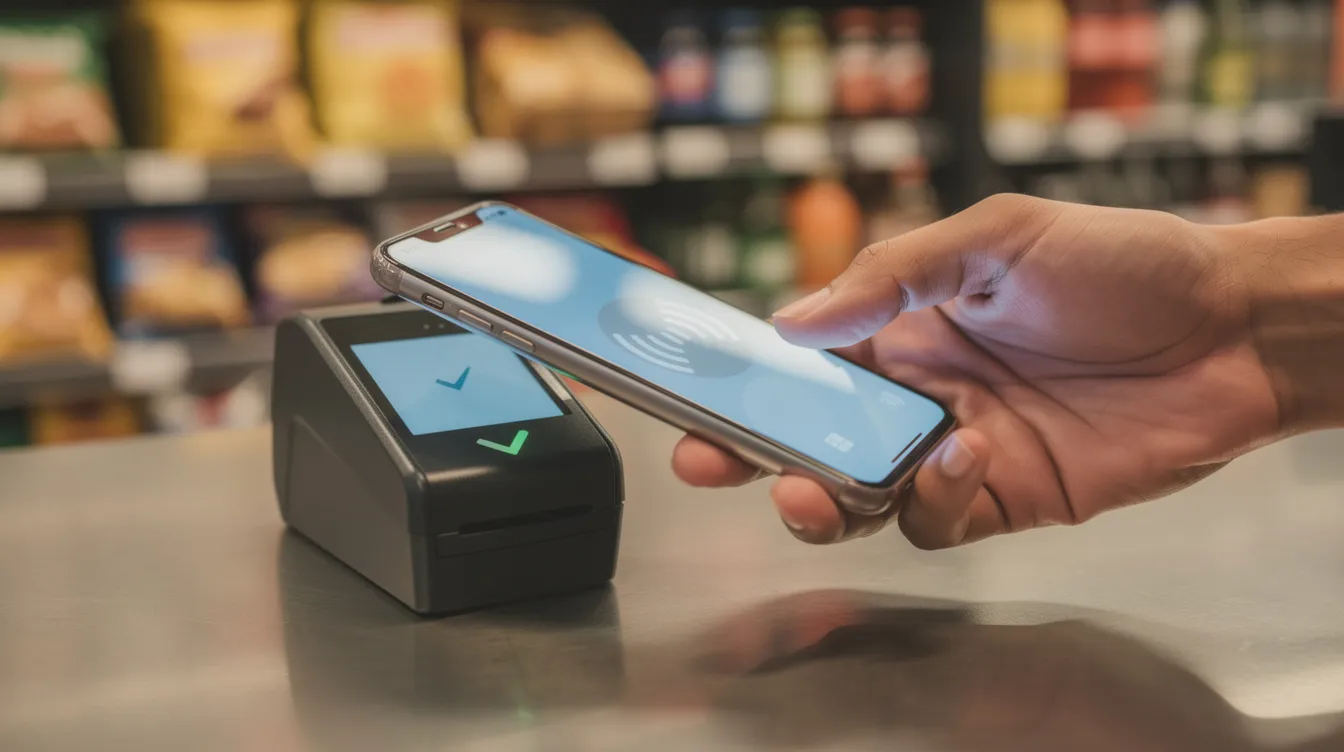
Apple Pay works by tokenizing UnionPay credit and debit cards from participating Chinese banks. It's mainly used for NFC contactless payments in larger retail chains, transit systems, and in-app or online purchases. Rising acceptance of NFC terminals in major cities is significantly contributing to its growth among online shoppers and commuters alike.
Google Pay is limited in mainland China - it's not a mainstream domestic digital wallet. However, it remains important for Chinese users and international businesses in Hong Kong, South Korea, and other Asian markets, and for foreigners managing cross-border payments before sending money into China.
PayPal isn't used for brick-and-mortar in store payments, but matters for cross-border e-commerce and freelancers. Some Chinese merchants selling to Europe or America accept PayPal as a familiar online payment option for foreign buyers.
Savvy users often hold Apple Pay for NFC alongside Alipay or WeChat Pay for QR, covering nearly all scenarios. International businesses should think in terms of multi-wallet acceptance, including international brands and international cards alongside domestic options.
The digital RMB (e-CNY) is a state-issued digital currency meant to complement private sector wallets. Launched in pilot form around 2020, it expanded to dozens of cities by 2026. By late 2025, cumulative e-CNY transactions exceeded 3.48 billion, totaling 16.7 trillion yuan.
The digital yuan app (e-CNY) operates alongside major wallets for zero-fee transactions. Users can open e-CNY wallets directly in bank apps or within Alipay and WeChat Pay via "sub-wallets." Government initiatives are driving a unified QR code standard that accepts both e-CNY and commercial wallet payments, reducing fragmentation for merchants and consumers.
Benefits include increased financial inclusion, a backup to existing payment rails, and potential for programmable digital currency and precise retail subsidies. Cross-border pilots are being explored in selected zones, which could in future simplify cross-border payment flows with trading partners - further expansion is expected as consumer preference for cashless payment methods continues to grow.
Chinese digital wallets are perfect for domestic spending and local digital payments, but sending money into China from abroad - for family support, study fees, or business payments - usually requires a dedicated remittance provider. You can't simply wire funds through Alipay or WeChat alone.
ACE Money Transfer is the best money transfer app for this purpose. It enables fast, low-cost international transfers to China with competitive exchange rates and transparent transaction fees. Users abroad can fund ACE via bank transfers, debit card, or other preferred methods and have funds delivered into a Chinese bank account linked to local digital wallets.
Typical use cases include:
Overseas Chinese sending remittances to family, who then spend via Alipay, WeChat Pay, or UnionPay cards
International businesses paying suppliers in China before goods are sold via Chinese e-commerce platforms
Anyone needing to transfer money or receive money across multiple currencies
ACE Money Transfer offers more transparent fees and better exchange rates than many banks, with full compliance on cross-border payments - helping avoid blocked or delayed bank transfers. Mobile wallets represent nearly half of global e-commerce transactions in 2024, and the monetary value flowing through these systems keeps rising.
The smartest strategy? Use ACE Money Transfer for instant money transfers across borders, then use local digital wallets for everyday domestic mobile payment and e-commerce once funds are in China. Whether you're a tourist, expat, or international business navigating the high mobile wallet adoption landscape, combining these tools gives you full coverage - from send money abroad to shop online in the world's largest mobile payment market.
Exchange rates fluctuate and the rate you receive may differ from any rates quoted. Always check the live rate at acemoneytransfer.com before sending.
Disclaimer: This article is intended for general informational and educational purposes only and should not be construed as legal, regulatory, tax, business, or financial advice. While reasonable efforts have been made to ensure that all facts, figures, and data are accurate and valid as of the date of publication, no warranty or guarantee is given as to the ongoing completeness, accuracy, or currency of the information.
The content is based on information available at the time of publication. Regulations, government policies, market conditions, and service offerings may change over time and vary across jurisdictions and providers. As a result, some information may no longer be current or applicable. Readers should independently verify all information and consult qualified professional advisors before making any financial, legal, or business decisions.