ACE Money Transfer
ACE Money Transfer
26 Oct 2026
Moving money across borders should feel as simple as sending a text, but the reality for most NRIs and Indian residents involves navigating exchange rates, compliance paperwork, and multiple banking channels. This guide breaks down everything you need to know about South Indian Bank international money transfer in 2026, from the quickest ways to send and receive funds to the smartest strategies for saving on fees and making your remittances work harder once they land.
South Indian Bank, headquartered at T.B Road Mission Quarters, Thrissur 680 001 Kerala India, has steadily expanded its international remittance footprint to serve the millions of NRIs living and working across the globe. In 2026, the bank supports both outbound transfers from India and inbound remittances into India through a combination of branch-based services, internet banking via SIBerNet, the SIB Mirror+ mobile app, and partnerships with exchange houses and digital remittance platforms like ACE Money Transfer. The most active corridors include India to the UAE, India to the UK, India to Canada, and India to the USA, reflecting the geographic spread of the Indian diaspora.
Customers looking to send money abroad from a South Indian Bank account can do so through the bank's Foreign Outward Remittance service at authorized forex branches, through online services on SIBerNet, or by visiting a branch directly. On the receiving end, NRIs abroad can remit funds into their NRE, NRO, or resident savings accounts at South Indian Bank Ltd through correspondent banks, exchange house tie-ups, or digital partners such as ACE Money Transfer. Remove the turnover figure unless a dated, authoritative source verifies it. Do not attribute South Indian Bank’s reported ?14,466.41 crore turnover to RBL Bank without confirmation.
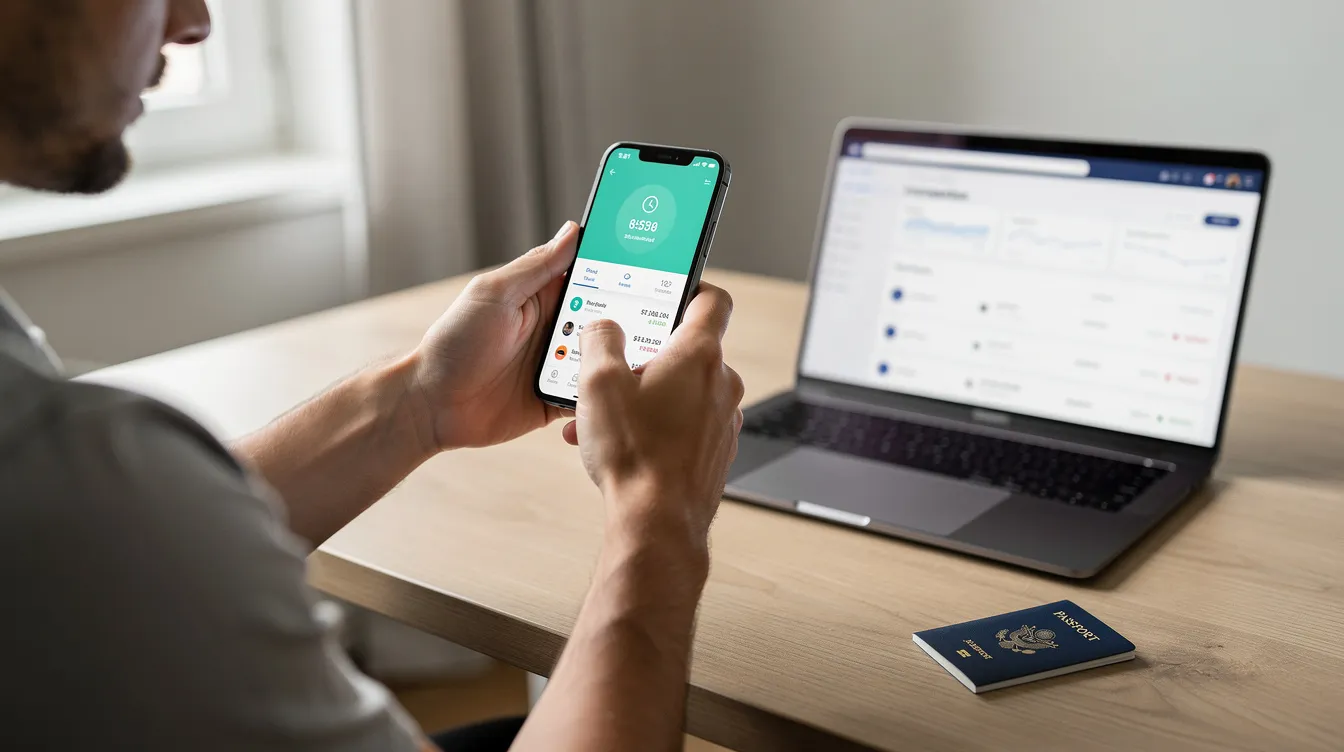
Typical use cases for these transfers span a wide range. Many NRIs send money home for family maintenance, education fees, or medical expenses. Residents use outward remittance to pay tuition at foreign universities or cover property purchases abroad. Funds received from overseas are frequently put to work domestically, whether to close your loan faster through part-prepayment of a housing loan, to reduce home loan EMI burdens via lump-sum principal payments, or simply to build a corpus in fixed deposits. If you have ever wondered how to make smart money moves with remittances, the answer often lies in routing them toward obligations that carry high interest costs or into savings instruments that offer attractive yields.
The Foreign Exchange Management Act (FEMA), 1999, governs foreign exchange transactions in India. Under RBI’s LRS, resident individuals may remit up to USD 250,000 per financial year for permitted purposes, subject to applicable conditions. PAN, declarations and supporting documents may be required depending on the transaction. Eligible NRE and FCNR(B) balances are generally repatriable, while NRO account holders may repatriate up to USD 1 million per financial year, subject to applicable conditions and tax compliance. Regulations may change. Please verify current requirements with an authoritative source.
For a quick reference, here is how the main channels compare at a glance:
| Channel | Best For | Speed | Access |
|---|---|---|---|
| SIB branch or forex desk | High-value or complex transactions needing in-person assistance | 1–3 business days | Walk-in during banking hours |
| SIBerNet or SIB Mirror+ app | Routine outward remittances in 100+ currencies | Same day to next business day | 24/7 online access (USD); market hours for other currencies |
| ACE Money Transfer to SIB account | NRIs abroad sending to beneficiaries with SIB accounts in India | Often same business day | 24/7 via app or website |
This table is a starting point. As you read on, you will find detailed breakdowns of costs, limits, and step-by-step instructions for each channel, including a close look at how ACE Money Transfer works as a digital partner for crediting South Indian Bank accounts.
Customers in 2026 have flexibility when it comes to cross-border remittances involving South Indian Bank. They can use SIB's own banking channels for both outbound and inbound transfers, or leverage the ACE Money Transfer platform for fast, digitally initiated remittances that credit directly into SIB accounts in India. Below is a walkthrough of each option.
South Indian Bank offers Foreign Outward Remittance (FORX) through its authorized branches and forex desks. When you initiate a remittance at a branch, the bank guides you through purpose code selection (education, gift, medical, maintenance, and so on), collects Form A2, and processes the transfer via SWIFT. The commitment to regulatory compliance means every transaction is documented and reported.
For those who prefer digital convenience, SIBerNet internet banking and the SIB Mirror+ app support online outward remittance in over 100 currencies. USD transfers are available around the clock, while other currencies process during market hours. You can view the applicable exchange rate before confirming. Internet banking remittance limits vary by bank and account type. Verify current daily and annual limits through RBL Bank’s official documentation before publication.
NRI services at SIB cover NRE and NRO account transfers. For NRIs in 2026 sending funds to family or routing investments back into India, NRE account funds are freely repatriable. NRO repatriation is capped at USD 1 million per financial year and requires tax clearance documentation. If you are an NRI who has not used an old South Indian Bank account in a while, it is worth understanding dormant bank account meaning and the bank account meaning reactivation process. The meaning reactivation and rules are straightforward: visit a branch or contact the NRI helpdesk with your KYC documents to restore access before initiating any transfer.
Inward remittances can be credited into NRE, NRO, or resident savings accounts. South Indian Bank’s UPI-based inward credit feature under SIB Express and SIB Flash should be retained only if verified by a current, dated official source. Otherwise, remove the claim and the specific service details.
Once funds arrive, they can be deployed toward recurring commitments such as EMI payments on existing loans, SIP investments in mutual funds, or building a savings corpus. Many customers ask why an FD at South Indian Bank is a good option for surplus foreign income: the answer is that an FD makes sense when you want capital protection with predictable returns, especially in a rate environment where SIB's term deposit yields are competitive. You can also channel incoming remittances toward a green deposit or ESG-linked term deposit at SIB to support sustainable projects while earning returns.

Senders in countries such as the UK, Europe, Canada, and Australia can initiate transfers via ACE Money Transfer to beneficiaries holding South Indian Bank accounts in India. ACE Money Transfer supports transfers to eligible Indian bank accounts, with delivery times and fees varying by provider and transfer method. Rates and fees may vary. Visit acemoneytransfer.com for current rates.
ACE Money Transfer supports international transfers to eligible SIB accounts through its website and mobile app. Fees, exchange rates and delivery times vary by transaction. Transfers are subject to applicable security and compliance controls. Rates and fees may vary. Visit acemoneytransfer.com for current rates.
Here is how to send an international remittance using the ACE Money Transfer platform:
Register or log in to your ACE account using your email, Google, or Apple ID.
Choose your destination country (India) and select a payout option: bank deposit to South Indian Bank, mobile wallet where available, or cash pickup through authorized partners.
Enter accurate recipient details, including the SIB account number, IFSC code, and the beneficiary's full name exactly as it appears in bank records.
Select a payment method: debit card, credit card, or online bank transfer.
Add a transfer reason Select a transfer reason, review the rate and fees, then click “Pay Now.” Exchange rates fluctuate; check the live rate at acemoneytransfer.com before sending.
Track your transaction in real time using the reference tracking number ACE provides. The beneficiary at South Indian Bank is notified once the credit is processed, and they can verify the deposit through SIBerNet, the SIB Mirror+ app, or by contacting their branch.
Bank Deposit: South Indian Bank is among the major Indian partner banks receiving direct credits through ACE. This payout option sends funds directly to the beneficiary’s eligible NRE, NRO, or savings account, subject to transfer requirements and account eligibility.
Cash Pickup: If the beneficiary prefers cash, they can collect funds over the counter at authorized partner bank branches. From there, the cash can be deposited into a South Indian Bank account for safekeeping or further use.
Mobile Wallet: Instant credit to supported digital wallet accounts is available in select corridors. Wallet balances can then be used to pay South Indian Bank credit card dues, utility bills, or other expenses.
| Step | Who Acts | What Happens | Approximate Timing |
|---|---|---|---|
| 1 | Sender | Registers or logs into ACE; enters SIB recipient details and selects payout option | A few minutes |
| 2 | Sender | Chooses payment method (card or bank transfer) and authorizes payment | Minutes to a few hours depending on method |
| 3 | ACE | Receives funds, runs compliance and KYC checks | Within a few hours or same day |
| 4 | ACE via correspondent | Forwards funds to South Indian Bank through partner or correspondent bank | Usually same or next business day |
| 5 | SIB | Credits the beneficiary's account (NRE, NRO, or savings) or processes cash pickup | Typically by end of same Indian banking day if details are correct |
Actual timing depends on the origin country, the payment method chosen, compliance documentation, and Indian banking hours and holidays.

Understanding fees, FX rates, and RBI limits is the difference between a transfer that costs you hundreds in hidden charges and one that delivers maximum value. Whether you want to get extra funds this Onam for a celebration, make akshaya tritiya makes financial sense by routing money home for a gold purchase, or simply ensure your new year financial checklist is on track, planning your remittances with precision pays off.
International transfers involve up to three layers of charges: fees at the sending end, correspondent or intermediary bank charges, and any fees levied by the receiving bank.
South Indian Bank’s outward remittance commission and SWIFT charges may vary. Verify the current fee schedule with the bank before publication. If you opt for "OUR" basis (where the sender bears all intermediary charges), expect an additional ?2,000 approximately. For FCNR(B) and NRE repatriation, specific SWIFT charges apply: USD 20 for dollar remittances, CAD 25, AUD 25, and EUR/GBP/CHF 20. Demand drafts in foreign currency carry issuance charges of around USD 10 or EUR 10 equivalent. Always check the latest tariff on the bank's website or with the head office, as fees are revised periodically.
ACE Money Transfer takes a different approach. The platform typically shows the all-in cost upfront, combining the transfer fee and the FX margin into one transparent quote. This means the amount you see at confirmation is the amount your beneficiary at South Indian Bank will receive in rupees, minus any receiving-bank charges (which are often zero for standard inward credits). Bank deposit payouts through ACE tend to be cheaper than cash pickup options.
SIB publishes card rates for inward remittances, which include a spread over the interbank mid-market rate. This spread is the bank's margin and varies by currency and transaction size. For outward remittances, the TT selling rate applies, and you can view it at the time of transaction on SIBerNet.
ACE Money Transfer quotes rates closer to the mid-market with a smaller markup. Review the exchange rate and applicable fees for each transfer option before confirming to estimate the rupee amount your beneficiary may receive. Even a small difference in the rate can add up significantly on larger transfers like university tuition payments or property-related remittances.
| Cost Element | SIB Outward Remittance | ACE Money Transfer to SIB |
|---|---|---|
| Commission or fee | ?500 per remittance + SWIFT charges (USD 20 for USD) | All-in fee shown upfront (varies by corridor and amount) |
| FX margin | Bank's TT selling rate (includes spread) | Competitive rate near mid-market displayed before confirmation |
| Correspondent charges | May apply (SHA or OUR basis) | Generally absorbed or included in quoted fee |
| Transparency | Rate visible at time of transaction | Full cost breakdown before clicking "Pay Now" |
Under the Liberalised Remittance Scheme, resident individuals can remit up to USD 250,000 per financial year for permissible purposes. Typical purpose codes when sending abroad from South Indian Bank include education, medical treatment, family maintenance, gifts, and investment in foreign assets. Each transfer requires a valid PAN and a completed Form A2.
NRIs crediting their SIB NRE accounts from abroad via ACE or other channels must ensure the source of funds is permissible foreign income (salary, business income, or investment returns earned outside India). For NRO repatriation, up to USD 1 million per financial year is allowed, but Forms 15CA and 15CB must be filed to certify tax compliance.
Tax Collected at Source (TCS) implications are important for outward remittances under LRS. TCS rates on outward remittances under India’s LRS depend on the purpose and applicable tax rules. Verify current rates and exemptions against official Ministry of Finance guidance before publication. Regulations may change; please verify current requirements with an authoritative source. It is wise to consult a tax adviser before making high-value outward transfers. You can check your personal loan eligibility amount with SIB if you are considering a loan to fund overseas education, as this affects TCS calculations.
Under India’s MTSS, transaction limits, cash payout caps and annual remittance restrictions are subject to RBI guidelines. Verify the current limits against an official RBI source before publication, as regulations may change.
Consider reviewing your annual remittance needs every January. Taking January 28 2026 as a reference date, you could map out expected outflows for the year: tuition installments, family maintenance commitments, medical insurance premiums payable abroad, and any planned investments. This is essentially your new year smarter savings roadmap, and it makes sense in January because you have a full financial year ahead to plan LRS utilization.
Equally important is planning transfers ahead of due dates. If a university fee deadline falls around June 23 2026, initiating the transfer a week or two early avoids last-minute FX shocks, processing delays, or public holiday holdups in either country. The same logic applies to festival-timed transfers: if you plan to invest in gold this akshaya tritiya, moving funds by April 22 2026 or April 18 2026 gives you enough lead time. The tradition to strategy shift in how NRIs approach festivals like Akshaya Tritiya means that strategy why investing in gold with remitted funds is now a deliberate financial decision rather than an impulse, and a gold loan could also come into play if you need liquidity against your holdings. That could be your smartest option in 2026 for short-term financing.
International remittances do not have to sit idle once they arrive. Here are practical ways to put them to work:
| Use Case | SIB Product | How It Works |
|---|---|---|
| Surplus foreign income converted to INR | Fixed Deposit or green deposit | Open a term deposit at competitive rates; savings why an FD works here is guaranteed returns with capital protection |
| Prepaying a housing loan | Home loan part-prepayment | Use remitted funds to reduce home loan EMI 5 proven ways, primarily by reducing outstanding principal. The emi 5 proven ways include lump-sum prepayment, increasing EMI amount, shortening tenure, refinancing, and switching to a lower rate. These are proven ways to save interest and close your loan faster. |
| Personal loan eligibility assessment | SIB personal loan calculator | Regular remittance income can improve your personal loan eligibility amount for future credit needs |
| Funding vehicle purchase | SIB car loan | If you are planning to buy a car this Onam or need a vehicle for family in India, remitted funds can cover the down payment. SIB's blog has a complete car loan guide and resources to help you buy a car confidently. |
| Festival or seasonal needs | Savings or investment accounts | Need extra funds this Onam for celebrations or home repairs? Timed remittances ensure liquidity when you need it. |
Some borrowers consider using a portion of inward remittances for loan principal prepayments, subject to their loan terms and applicable charges. This is not financial or legal advice. Please consult a qualified professional. Over the life of a 20-year home loan, even modest additional payments can trim years off the tenure and save lakhs in interest. This is one of the 5 proven loan EMI strategies that consistently deliver results. The ways to save interest compound when you combine prepayment with rate negotiation and tenure optimisation.

South Indian Bank's blog articles updates and latest blogs section on its website covers a range of topics that complement international transfers. Whether you are looking for a financial checklist for NRIs, a financial planning guide for teachers, educators a financial planning resource, or money moves for educators and other professionals, SIB's content library has practical advice. Topics like the smartest option in 2026 for fixed deposits, meaning benefits of various deposit schemes, and the 2025 South Indian Bank annual review are all available under the investors desk and quick links sections. The blog date for each article is clearly displayed, with recent posts published on dates including August 04 2026, September 05 2026, August 13 2026, September 14 2026, September 11 2026, and January 24 2026.
For support, reach out via the bank's toll free numbers, e mail id listed on the contact page, or through the NRI helpdesk. The grievance redressal mechanism is accessible from the bank's homepage, alongside the dicgc website qr code for deposit insurance information. Whether you access the site through the desktop banner or mobile banner navigation, SIB's online services and SIB Red digital ecosystem make it easy to manage your finances from anywhere.
Before your next transfer, take three steps. First, compare the total cost of sending from ACE Money Transfer to a South Indian Bank account versus routing through a traditional SWIFT transfer or another remittance provider. Second, check the applicable exchange rates on both platforms at the same time to see which delivers more rupees to your beneficiary. Third, speak to a South Indian Bank relationship manager to align your remittance flows with long-term goals, whether that means building a retirement corpus, funding education, clearing a home loan, or starting a business in India. A smart money moves approach for NRIs in 2026 is to treat remittances not as isolated transactions but as building blocks of a broader financial plan, and the planning guide for teachers, professionals, and families starts with getting this alignment right.

South Indian Bank's reach across the south Indian heartland combined with digital platforms like ACE Money Transfer means you no longer have to choose between trust and convenience. The infrastructure is in place. Your job is to use it wisely, plan ahead, and make every remittance count toward the financial future you are building for yourself and your family.
Disclaimer: This article is intended for general informational and educational purposes only and should not be construed as legal, regulatory, tax, business, or financial advice. While reasonable efforts have been made to ensure that all facts, figures, and data are accurate and valid as of the date of publication, no warranty or guarantee is given as to the ongoing completeness, accuracy, or currency of the information.
The content is based on information available at the time of publication. Regulations, government policies, market conditions, and service offerings may change over time and vary across jurisdictions and providers. As a result, some information may no longer be current or applicable. Readers should independently verify all information and consult qualified professional advisors before making any financial, legal, or business decisions.