ACE Money Transfer
ACE Money Transfer
26 Oct 2026
If you regularly send or receive funds across borders, chances are you have come across Standard Chartered as one of the go-to options for international remittances. This global bank supports international money transfers across Asia, Africa, the Middle East and other regions. Verify its current operational footprint using a dated official source before publication. But is it the most cost-effective choice for every situation? This article walks you through how Standard Chartered handles international transfers, what details you need to get right, how the fees and timings stack up, and how the bank compares with a specialist remittance provider like ACE Money Transfer.
Standard Chartered Bank provides cross-border payment services for personal and business customers worldwide. Remove the “millions” claim unless supported by a dated, authoritative source with a clear methodology.
Whether you are a student paying tuition in Australia, a professional sending family support to Pakistan, or a company settling supplier invoices in India, the bank offers digital and in-branch channels to move funds internationally. Its footprint across Asia, Africa, and the Middle East makes it a natural choice for corridors that many Western-focused banks struggle to serve well.
An international bank transfer, sometimes called a telegraphic transfer or wire transfer, is when money moves electronically from one bank account in one country to another in a different country. The SWIFT network is commonly used for most traditional cross-border wire transfers, and Standard Chartered relies heavily on it. Customers typically use these transfers for tuition fees, family support, overseas property purchases, investments, and paying foreign suppliers.
That said, many customers now compare the bank's visible fees and hidden FX margins with specialised services like ACE Money Transfer. These comparisons usually centre on three things: the foreign exchange spread built into the rate, the transfer fee itself, and the speed of delivery. The rest of this article will walk you through each of those factors in detail, along with practical guidance on IBAN and SWIFT codes, and a clear look at when ACE Money Transfer might be the smarter option.
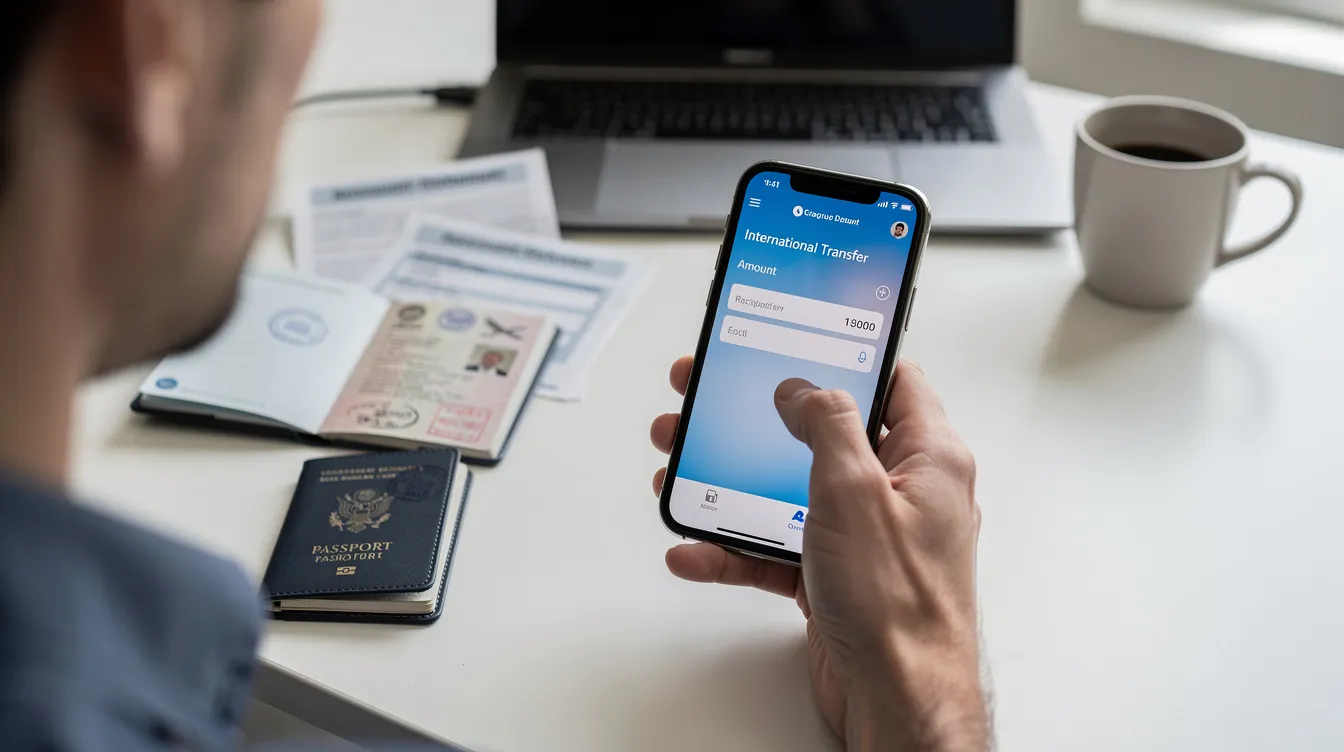
Standard Chartered lets customers send money abroad through three main channels: online banking via web portals, mobile apps, and in-person at a branch. International money transfers usually involve initiating an online or in-branch transfer, and the bank's digital platforms tend to be the fastest and most cost-efficient way to get started.
Cross border payments in this context mean that funds leave a Standard Chartered account in one country and arrive at a bank account in another. These transfers normally use SWIFT/BIC codes rather than domestic routing numbers, because the payment crosses jurisdictional boundaries and typically passes through the SWIFT messaging network to reach the destination. Standard Chartered operates as a global international bank with varied requirements by region, so the exact forms, fields, and cut-off times differ depending on whether you are banking in the UAE, Singapore, Kenya, or Ghana.
The basic process looks like this for most markets. You log in to Standard Chartered's digital banking platform, navigate to transfers, and add an overseas payee. You then enter the recipient's bank name, branch, account number or IBAN, and the correct SWIFT/BIC code for their bank. Once you select the currency and amount, the system displays the applicable fee and the exchange rate, including the bank's spread. After you review everything and confirm, the remittance is submitted. There is usually a daily cut-off time for same-day processing, which varies by country and branch.
Standard Chartered Bank processes both one-off transfers and recurring standing instructions. If you send a fixed amount to a family member every month or make regular tuition payments, you can set up a standing order rather than repeating the process each time.
Accurate recipient banking details are critical. A single wrong digit in an account number or SWIFT code can lead to rejected payments, returned funds, or in the worst case, money landing in the wrong account. Each international transfer requires beneficiary details including name and address, and getting these right the first time saves both money and stress.
The main data points you need are the recipient's full name exactly as registered with their bank, their address (some jurisdictions require this), the recipient's bank name and branch, the destination country, the account number or international bank account number for regions that use one, and the correct SWIFT/BIC code for the recipient's bank.
Here are some concrete examples. For Standard Chartered Bank in the United Arab Emirates, IBANs are 23 characters long, starting with "AE". The SWIFT/BIC code for Standard Chartered UAE is SCBLAEAD. For Standard Chartered Bank Kenya Limited, the primary SWIFT code is SCBLKENXXXX, used for the head office in Nairobi. The Swift code for Standard Chartered Bank Ghana is SCBLGHACKSI, which customers in Ghana provide to anyone sending them funds from abroad.
Some countries also require additional fields. Transfers to the US need a routing number (ABA), the UK uses sort codes, Mexico requires a CLABE, and India needs an IFSC code. Standard Chartered's online form usually prompts for these automatically once you select the destination country, which reduces the chance of missing a required field.
Always double-check IBAN and SWIFT codes on official bank statements, the bank's website, or within the mobile app. Informal sources and internet lists can be outdated or wrong, especially for branch-specific codes.
The total cost of sending money abroad via Standard Chartered combines a visible transfer fee plus an FX margin baked into the exchange rate. Understanding both components is essential, because the headline fee alone rarely tells the full story. Fees for international transfers vary depending on the country and account type.
Here is a breakdown of the cost layers you may encounter:
| Cost Component | Description |
|---|---|
| Outward remittance fee | The bank's handling or commission charge for processing the transfer |
| Intermediary bank charges | Fees deducted by correspondent banks that route the SWIFT message |
| Recipient bank fees | Charges the beneficiary's bank may apply when crediting funds |
| FX spread | The margin between the mid-market rate and the rate you actually receive |
Standard Chartered Singapore’s online transfer handling fees may vary. Verify the current charges against the bank’s official fee schedule before publication, plus a reimbursement cover charge of around SGD 20 and overseas bank charges of approximately SGD 50. In-branch transfers cost roughly double. Online banking and mobile app transfers often have lower or waived fees compared to in-branch services, which is a pattern across most Standard Chartered markets.
Foreign exchange spreads apply to cross-currency transactions executed outside local currency channels. Banks like Standard Chartered do not offer the mid-market interbank rate. Instead, they apply their prevailing wholesale rate plus a margin, meaning you receive slightly fewer EUR, GBP, or USD than the raw market rate would suggest. The rate shown in the remittance form is typically indicative and can shift before processing.
Standard Chartered’s international transfer times vary depending on the currency, destination country and involvement of intermediary banks. Verify current processing estimates against the bank’s official guidance before publication. For major corridors and amounts under certain thresholds, same-day arrival is possible. For exotic currencies, public holiday periods, or payments routed through multiple correspondent banks, expect 3 to 5 business days. Intermediary banks can influence the processing time and final amount received for transfers, and intermediary or correspondent banks may deduct fees from international wire transfers without the sender necessarily knowing in advance.
Transfers are usually subject to compliance checks and may require documentation for large amounts. Most jurisdictions require a mandatory regulatory reason for cross-border remittances, so be prepared to provide a purpose code or supporting documents when prompted.
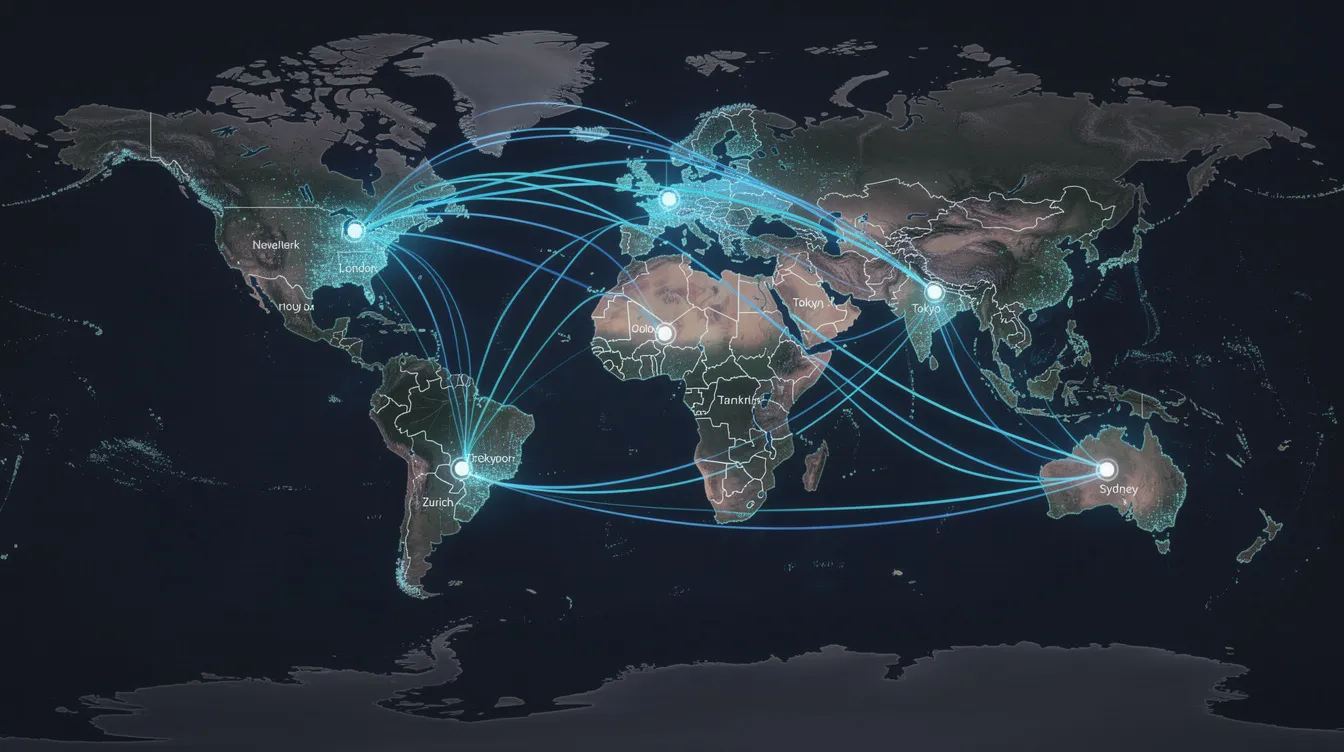
IBAN and SWIFT codes serve as the addressing system for cross border payments, enabling financial institutions around the world to route funds accurately to or from Standard Chartered accounts.
An IBAN, or international bank account number, is a standardised format that combines a country code, check digits, and bank-specific account information into a single string. Many Standard Chartered customers in Europe and the Middle East, including the UAE, receive a 23-character IBAN printed on their statements and visible in the mobile app. This format helps automate validation and reduces errors in regions that support the IBAN standard.
A SWIFT code, also called a BIC, is a globally recognised identifier for a specific bank or branch. Swift codes are used for international money transfers, and each branch of Standard Chartered has a unique Swift code. For instance, Standard Chartered Bank UAE uses SCBLAEAD, while Standard Chartered Bank Kenya Limited uses SCBLKENXXXX at its Nairobi head office.
You can find your IBAN and SWIFT details within Standard Chartered online banking, the mobile app, paper statements, and official bank documentation. The bank also provides a "Bank Code Finder" tool on its website in several markets, which can be helpful when you need to confirm a branch-level code. Never rely solely on third-party internet lists for final confirmation, because codes can change when branches merge or restructure.
Incorrect IBAN or SWIFT details can lead to failed transfers, returned funds, additional investigation charges, or in rare cases credit to the wrong account. Standard Chartered generally instructs users to verify details directly with the bank or the recipient before committing to large transfers.
If you are the recipient, the sender abroad will need a specific set of information to wire money into your Standard Chartered account. This typically includes your full name as registered with the bank, your IBAN or account number, Standard Chartered's SWIFT/BIC code for your country, and the bank's branch address as specified locally.
The requirements differ by region. To receive funds into a Standard Chartered Bank account in the UAE, senders usually need the 23-character IBAN plus the SWIFT code SCBLAEAD. For Kenya, senders need the local account number plus SCBLKENXXXX. For Ghana, the sender enters your account number along with the SWIFT code SCBLGHACKSI plus the relevant branch sort code, such as "020101" for the High Street branch.
Inbound international transfers can still incur fees. The sender should decide who bears the charges when setting up the payment, choosing between OUR (sender pays all), SHA (shared), or BEN (beneficiary pays all). If SHA is selected, the recipient may find that the credited amount is slightly less than the sent amount due to intermediary bank deductions.
Crediting times depend on when the overseas bank sends the funds, currency cut-off times, and the presence of intermediary banks. Same-day crediting is possible for popular corridors, but 2 to 5 business days is common for less standard routes.
Share a PDF or screenshot of your official Standard Chartered account details page with the sender, redacting sensitive information if needed. This small step dramatically reduces the risk of errors in cross-border transfers.
Standard Chartered is a full-service international bank with the ability to handle high-value transfers, trade finance, and complex compliance requirements. ACE Money Transfer, by contrast, is a specialised remittance provider built for personal cross border payments, with a focus on speed, competitive pricing, and flexible payout options.
Banks like Standard Chartered provide robust, regulated infrastructure for moving money globally, but clients sending regular family remittances or smaller amounts may find that a dedicated service offers sharper FX rates and lower fees. The commitment to transparency is a differentiator here: ACE Money Transfer displays applicable fees and exchange rates before confirmation. Remove the 9% forex-spread cap unless it can be verified against current official terms. Rates and fees may vary. Visit acemoneytransfer.com for current rates.
The main structural difference is in delivery. Standard Chartered typically sends money account-to-account via SWIFT, which works well when both parties have bank accounts. ACE Money Transfer offers bank deposit, cash pickup, and mobile wallet payouts, enabling recipients in countries with lower banking penetration to obtain funds through alternative channels.
Customers often weigh total cost, transfer speed, convenience, and payout options when deciding between the two. In a similar way to how you would compare any two financial products, the smartest approach is to check up-to-date pricing and service availability on both Standard Chartered's platforms and ACE Money Transfer's website before making a decision, because fees, rates, and corridors evolve over time.

ACE Money Transfer allows users to send international remittances online by creating an account, entering recipient details, and paying via debit card, credit card, or online bank transfer. The process is designed to be fast, transparent, and accessible from anywhere in the world.
Here is how the transfer process works, step by step.
Registration and login. You sign up or log in to your account using your email address, Google account, or Apple ID. Once authenticated, you land on a dashboard where you can start a new transfer immediately.
Selecting your corridor. Choose the country you are sending from and the destination country. ACE Money Transfer supports a wide range of corridors, so whether you are sending from the UK to Pakistan, from Germany to Ghana, or from the Gulf to Kenya, you can enter the details and see what payout options are available.
Choosing a payout method. Select how the recipient will receive the money: bank deposit, mobile wallet, or cash pickup. Availability depends on the destination country and local partnerships.
Entering recipient details. Provide accurate recipient information. For bank deposits, this means the recipient's full name, bank name, branch, and account or wallet number. For cash pickup, you enter the recipient's name exactly as it appears on their ID. Accuracy here is just as critical as it is with a Standard Chartered transfer.
Reviewing fees and the exchange rate. Before confirming, ACE Money Transfer displays applicable fees and the exchange rate to help estimate the recipient’s amount. Exchange rates fluctuate and the rate you receive may differ from any rates quoted. Always check the live rate at acemoneytransfer.com before sending.
Funding your transfer. Select a payment method: debit card, credit card, or online bank transfer. Add a payment reason (required by most jurisdictions for regulatory compliance), review the final details, and confirm by clicking "Pay Now."
Tracking your transfer. After confirmation, ACE Money Transfer provides a reference tracking number. You can use this to follow the transaction in real time, see status updates, and share the reference with recipients, particularly useful for cash pickup where the recipient needs the code to collect funds.
You can read more about the process and find answers to common questions on the ACE Money Transfer FAQs page, which covers topics from card surcharges to delivery timescales.
ACE Money Transfer supports three main payout methods, and understanding when to use each one can make a real difference to your recipient's experience.
Bank deposit. Funds are sent directly into the recipient's bank account, including at many major partner banks globally. This is ideal when the recipient already has a functioning bank account, whether at Standard Chartered Bank or any other local institution. Bank deposits allow recipients to receive funds directly into an eligible bank account. Credit times vary depending on the transfer method, bank and processing requirements and typically credit within 1 to 2 business days.
Cash pickup. The recipient collects money in cash from authorised partner bank branches or payout agents. They present valid ID and the reference number you share with them. This method is particularly useful in countries where banking penetration is lower or where the recipient needs urgent access to cash without waiting for a bank credit cycle.
Mobile wallet. Transfers arrive instantly into supported digital wallet accounts, allowing recipients to pay bills, top up airtime, or cash out at local agents. Mobile wallet payouts are increasingly popular across Africa and Southeast Asia, where wallet infrastructure has outpaced traditional banking in many communities.
| Payout Method | Best For | Typical Speed |
|---|---|---|
| Bank deposit | Recipients with active bank accounts | 1–2 business days |
| Cash pickup | Urgent needs or unbanked recipients | Same day or next day |
| Mobile wallet | Recipients in wallet-heavy markets | Near instant |
Think about your specific route. If you are sending from the EU to Ghana, for example, and your recipient has a Standard Chartered Bank account there, bank deposit is the obvious choice. If your recipient in Kenya prefers mobile money, a wallet payout eliminates the need for them to visit a branch at all.

Both Standard Chartered Bank and Ace Money Transfer enable international transfers, but each is better suited to different situations, amounts, and destinations. The right choice depends on what matters most to you on the day you send.
Standard Chartered is often the preferred option for large-value transactions, business payments, or scenarios where both sender and recipient rely on a direct banking relationship. The bank's global head office network, its support for OUR charge instructions, and its inter-bank settlement infrastructure make it well-suited for trade finance and high-compliance transfers. If you need full traceability and your recipient's account is also at Standard Chartered, the process can be seamless.
ACE Money Transfer supports personal remittances and recurring family transfers, with payout options such as bank deposit, cash pickup and mobile wallet available on eligible corridors. Fees, exchange rates and delivery times vary by transfer details and provider. Compare the total cost and estimated recipient amount before confirming. Rates and fees may vary. Visit acemoneytransfer.com for current rates.
Rather than relying on assumptions, compare key factors using real figures on the day you plan to send. Exchange rates and fees change frequently, and a provider that was cheaper last month may not be cheaper today. Check the terms on both platforms, review the total cost including the spread, and factor in how quickly your recipient needs the funds.
Start by clarifying your own needs. Which country are you sending from and to? Does your recipient prefer bank deposit, cash pickup, or mobile wallet? Answering these two questions will tell you whether to use your Standard Chartered Bank account, ACE Money Transfer, or a combination of both, and that is the smartest way to manage your international money transfers going forward.
Disclaimer: This article is intended for general informational and educational purposes only and should not be construed as legal, regulatory, tax, business, or financial advice. While reasonable efforts have been made to ensure that all facts, figures, and data are accurate and valid as of the date of publication, no warranty or guarantee is given as to the ongoing completeness, accuracy, or currency of the information.
The content is based on information available at the time of publication. Regulations, government policies, market conditions, and service offerings may change over time and vary across jurisdictions and providers. As a result, some information may no longer be current or applicable. Readers should independently verify all information and consult qualified professional advisors before making any financial, legal, or business decisions.