ACE Money Transfer
ACE Money Transfer
13 Oct 2025
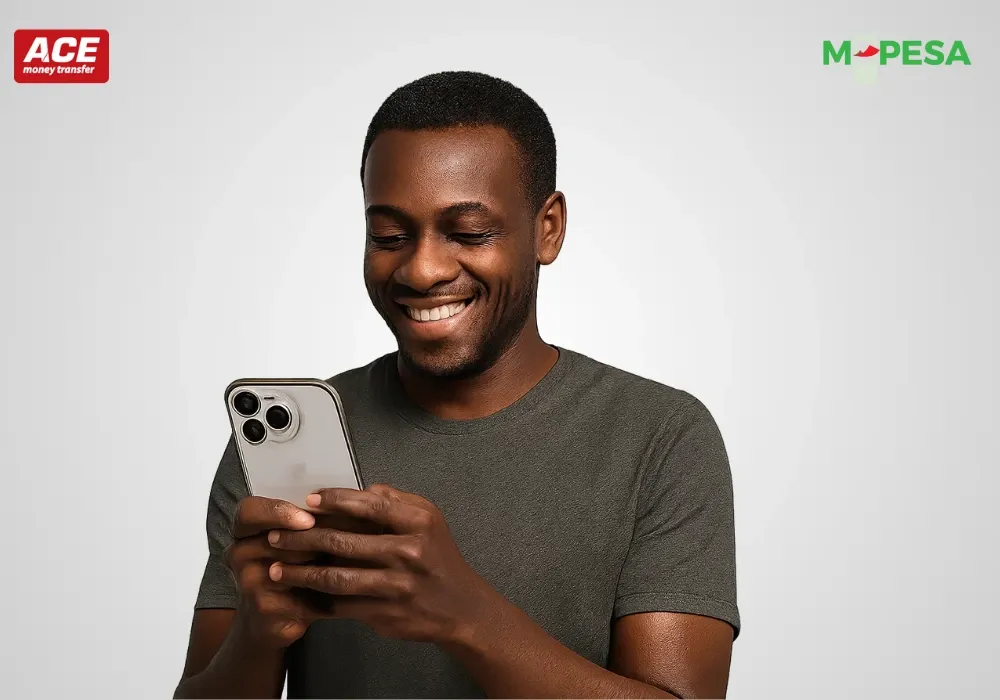
Whether you support family back home or help friends cover an emergency, sending money from Germany to Kenya through M-Pesa is one of the fastest, most affordable options available today. This guide walks you through every step, from choosing a provider to watching your money land in a mobile wallet within minutes.

Sending money from Germany to Kenya requires a licensed third-party money transfer operator. You cannot transfer money to an M-Pesa account directly from a standard German bank account. Instead, sign up with a provider such as Wise, Remitly, Sendwave, or TapTap Send.
Several international money transfer providers support direct deposits to M-Pesa in Kenya. Choose Kenya as the destination country, select "Mobile Wallet / M-Pesa" as your receive method, enter the recipient's Safaricom number, and pay with a debit or credit card, bank transfer, or another accepted payment method.
Transfers to M-Pesa can be completed in minutes when funded by debit card. If you pay via a standard SEPA bank transfer from your German bank account, expect delivery in 1–2 business days.
The sender can be in Berlin, Munich, Hamburg, Stuttgart, Frankfurt, or any German city. The recipient can be anywhere in Kenya-Nairobi, Mombasa, Kisumu, Eldoret, or a rural village-as long as they hold an active M-Pesa account.
Key benefits right away: fast delivery to a mobile wallet, low cost compared to traditional banks, competitive exchange rates, and great value for supporting loved ones in Kenya from Germany.
M-Pesa is Safaricom's mobile money service and the dominant way to send money, pay bills, and manage daily finances across Kenya. Over 18.9 million people use M-Pesa for money transfers, making it central to daily life in the country.
An M-Pesa account (mobile wallet) lets users store money, send and receive payments, buy airtime, pay bills, and withdraw cash at agents nationwide. M-Pesa enables unbanked individuals to access financial services without needing traditional bank accounts.
"M-Pesa" and "M Pesa" refer to the same service. Recipients only need a Safaricom SIM, a registered M-Pesa account, and a basic mobile phone-a smartphone is not required.
M-Pesa operates in 10 countries, including Kenya and Romania, serving millions of customers daily. M-Pesa allows instant money transfers to mobile accounts, so funds sent from abroad arrive just as seamlessly as local transfers.
How does M-Pesa work locally? People deposit cash at agents, which converts into e-money stored in their account. They can then pay shops, cover school fees, or send money to family by entering the recipient's phone number.
M-Pesa Global allows registered customers to receive funds from abroad. International transfers from Germany arrive directly to the recipient's M-Pesa account in Kenyan Shillings (KES), ready to use immediately.
Both sender and recipient must meet basic requirements before money can be delivered to M-Pesa.
Sender in Germany:
Valid identification is required for sender identity verification in international money transfers from Germany-this means a German Personalausweis (national ID) or passport.
A German address and email address for account registration.
A payment method to fund the transfer: debit card, credit card, online banking, or a linked bank account.
Some providers may also accept Apple Pay or Google Pay as payment options.
Recipient in Kenya:
An active Safaricom SIM card with a registered M-Pesa account.
A mobile phone capable of receiving SMS notifications.
You need the recipient's mobile number to send money to M-Pesa. Sender details must include the recipient's full legal name and mobile number in international format (e.g., +254 7XX XXX XXX).
The receiver's name must match their registration on the M-Pesa account to avoid delays. Always double-check spelling and the registration number linked to the SIM.
Note: once your total transfers exceed certain thresholds, EU regulations may require extra verification such as proof of income or source of funds. This is standard under German and EU anti-money-laundering rules and protects both parties.
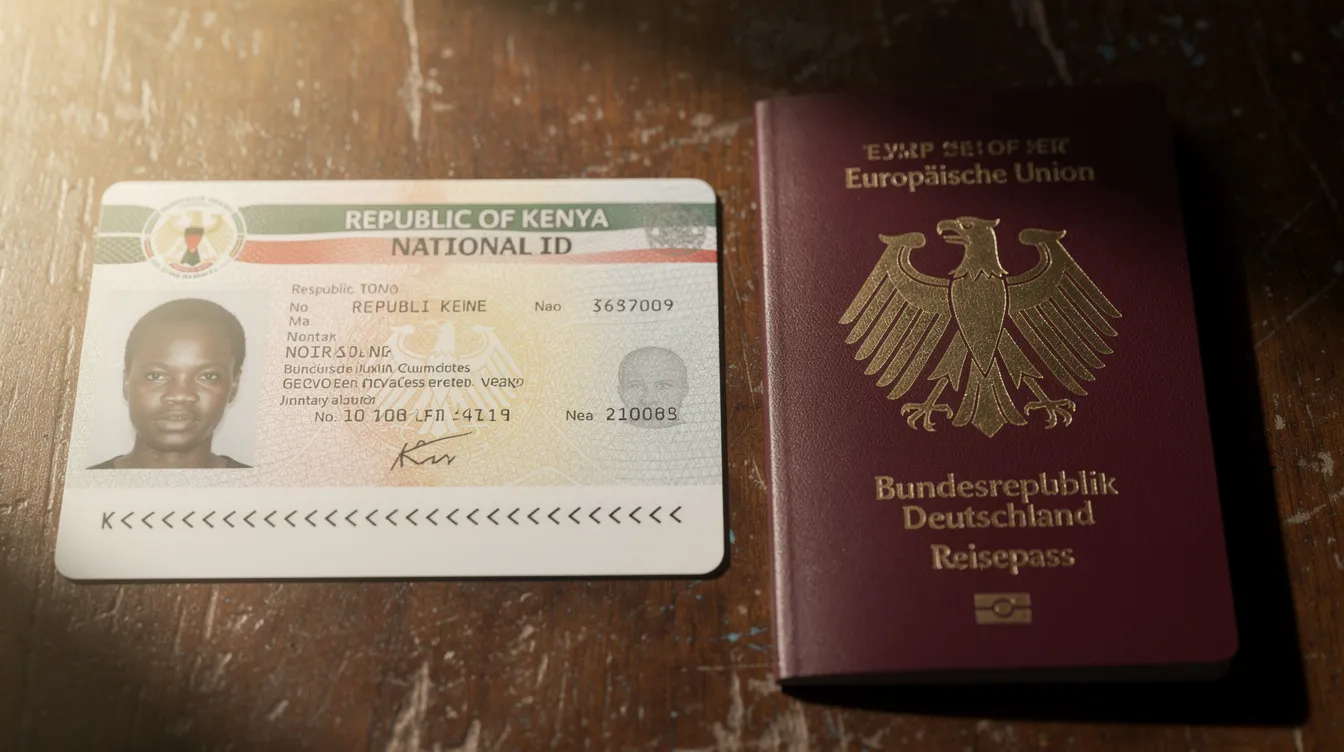
Here is the typical journey for an online money transfer from Germany to an M-Pesa wallet.
Step 1: Create an account with a licensed money transfer service that supports Kenya from Germany. Simply download the provider's app or sign up on their website-registration usually takes under 10 minutes. Wise, for example, helps 18.9 million customers transfer £36 billion quarterly, while Sendwave is trusted by over 1 million users for money transfers.
Step 2: Verify your identity by uploading a photo of your German ID or passport, and possibly a selfie. This follows strict EU KYC (Know Your Customer) rules.
Step 3: Choose Kenya from Germany as the transfer corridor. Select "Mobile Wallet" or "M-Pesa" as the payout method instead of a bank account or cash pickup.
Step 4: Enter the amount you want to send EUR (e.g., €200) and view the live exchange rate in KES, including any fees and the exact amount your recipient will receive KES in their M-Pesa wallet.
Step 5: Add a new recipient by entering their full legal name, M-Pesa mobile wallet number (Safaricom number), and-in some cases-their address or ID number as registered in Kenya. Transfer providers often allow payments via multiple methods including bank transfer and debit card.
Step 6: Choose your payment method on the German side. You can send money using a debit or credit card (Maestro, Visa Debit, Visa, Mastercard) or a SEPA bank transfer from banks like Deutsche Bank, Commerzbank, N26, or Sparkasse. Some providers also accept Apple Pay or Google Pay.
Step 7: Confirm and send. With just a few taps, most M-Pesa transfers from Germany show as money delivered to the mobile wallet within minutes. Both sender and recipient receive SMS or email confirmation so you can track the transaction in real time.
Understanding the true cost of any transfer means looking beyond the stated fees.
Most providers charge a small fixed fee (a flat fee in EUR) plus a percentage of the amount. Transfer fees and exchange rates vary based on the provider, amount sent, and payment method used. Total cost is always visible upfront before you confirm.
The low cost of online services often beats traditional options. Western Union or a standard international bank transfer through SWIFT can carry higher fees and a worse exchange rate. Online providers typically offer low fees and competitive exchange rates, making them a better way to send money for most amounts.
Exchange rate transparency matters. If the mid-market rate on a given day is 1 EUR = 150 KES, your provider may offer 148 or 149 KES per EUR. The difference is their margin. For example, sending €1,000 through Wise at a rate of about 149.13 KES per EUR with ~€4.60 in fees yields roughly KES 148,441 for the recipient. For smaller amounts like €100–€500, all-in costs typically range from 0.7 % to 1.8 % of the send amount.
M-Pesa charges a small, flat fee per transfer on the Kenyan side for certain operations like withdrawals, but there are no service charges on an M-Pesa account for simply holding funds. M-Pesa accounts have no service charges for holding funds-your recipient keeps their full balance.
M-Pesa limits to know: You can send up to 150,000 KES per transaction. The maximum transfer limit to M-Pesa is 150,000 KES per transaction, and M-Pesa accounts can hold a maximum of 300,000 KES at a time. The daily transfer cap is also 300,000 KES.
For larger sums-property purchases, tuition fees, or business capital-consider splitting sends across multiple days or choosing a Kenyan bank account payout instead of mobile money.
Quick example: Sending €200 might cost around €1.50–€3.50 in fees and result in approximately KES 29,500–29,800 in your recipient's M-Pesa account, depending on the provider and the day's currency rate. Live rates change daily, so always compare before confirming.
Card-funded transfers from Germany to M-Pesa usually arrive within minutes, 24/7, including weekends and public holidays. Money sent to M-Pesa accounts is credited instantly in most cases, though first-time transfers may undergo additional compliance checks.
Bank transfers (SEPA) from a German bank account can take 1–2 business days before funds are credited to the M-Pesa mobile wallet. SEPA Instant, where available, can speed this up considerably.
The recipient's experience is simple: they receive an SMS from Safaricom showing that money is added to their mobile wallet, including the sender's name and the amount in KES. Recipients receive funds directly-no app download or internet connection is needed.
Recipients can pay directly with their M-Pesa account-groceries, school fees, utility bills, loan repayments-or withdraw cash at any registered M-Pesa agent using their phone and PIN.
Other receive methods in Kenya: Bank account deposits and cash pickup at counters are also available through some providers. Cash pickup may suit a recipient who does not yet have a mobile phone or an M-Pesa account, but for speed and convenience, M-Pesa remains the top choice to receive money.
Providers operating from Germany must be licensed under EU and German financial laws, regulated by authorities like BaFin. They comply with anti-money-laundering and counter-terrorist-financing requirements, ensuring every transaction is secure.
Transfers are protected with HTTPS encryption, secure card processing (3D Secure), and strong customer authentication required by EU rules. Your identity, payment details, and personal data are safeguarded at every step.
M-Pesa balances in Kenya are backed by ring-fenced trust accounts with Kenyan banks, so funds remain safe even if a recipient's phone or SIM card is lost. The Central Bank of Kenya oversees all mobile money operators.
Always double-check recipient details-name and phone number-before confirming. Use providers that clearly show fees and exchange rates upfront, and never share your login passwords or one-time codes with anyone.
Recipients in Kenya should protect their M-Pesa PIN, avoid using public Wi-Fi for financial transactions, and only withdraw cash at official M-Pesa agents. If a phone is lost, contact Safaricom immediately to freeze the account.
Do my loved ones need a bank account in Kenya to receive money? No. An M-Pesa mobile wallet is enough. A Kenyan bank account is only needed if you choose bank deposit instead of mobile wallet as the receive method.
Can I send from Germany to Kenya if I only have a debit card and no German bank account yet? Yes. Most services accept a debit card for instant funding. Some also accept credit cards, Apple Pay, or Google Pay. You can send money abroad without a traditional bank account.
What if my recipient's M-Pesa wallet is full or above the 300,000 KES limit? M-Pesa accounts can hold a maximum of 300,000 KES at a time. If the wallet is at capacity, the transfer may be rejected. The sender is typically refunded, or the provider will ask you to reduce the amount.
Can I send money to other mobile wallets in Kenya? Kenya also has Airtel Money and other mobile wallets, but M-Pesa remains the most widely used. M-Pesa is accessible in 10 countries including Kenya, making M-Pesa send money the default option for most recipients.
Is it possible to send EUR and let my relative convert later? No. Payouts to M-Pesa must be in KES. The currency conversion from EUR to KES happens before the money reaches the M-Pesa account, based on the exchange rate locked in at the time of your transfer.
Can I reverse or cancel a transfer if I entered the wrong number? Reversals are sometimes possible if money hasn't been claimed. Contact customer support immediately. This is why it's critical to verify the recipient's details every time, especially when adding a new recipient.
Can I scan a QR code to initiate my transfer? Some apps allow you to scan a QR code linked to a recipient's details for faster setup, though this feature vary based on the provider.
Compare total costs-fees plus exchange rate-and delivery speed before every transfer. Rates change daily, and even small differences add up over time. Use comparison websites or the provider's own app to send money at the best available rate. The free comparison takes seconds and can save you real money.
Choose M-Pesa for day-to-day support, emergencies, and small to medium amounts. For larger sums-tuition fees, buying land, or business capital-consider a Kenyan bank account payout where the recipient can access higher limits.
Schedule regular, low cost transfers (for example, monthly support on the 1st of each month) so family can budget their M-Pesa funds in Kenya. Consistency helps your loved ones plan ahead.
Keep recipient details (full name, M-Pesa number, address) safely stored in your account to avoid typing errors each time you send. Most apps let you save profiles so repeating a transfer takes just a few taps.
Distance between Germany and Kenya doesn't matter when reliable M-Pesa transfers exist. With a few taps on your phone, you can have money delivered quickly and securely to the people who matter most-friends, family, and anyone counting on your support.