
ACE Money Transfer
ACE Money Transfer
01 Sep 2026
Choosing the best bank in Peru can feel overwhelming, especially when the Peruvian banking market is heavily concentrated among a handful of dominant players. The Peruvian banking sector is concentrated among the "Big Four" banks-BCP, BBVA, Interbank, and Scotiabank-which account for over 80% of total loans and deposits in Peru. But beyond these giants, specialized institutions serve specific financial needs that the big names sometimes overlook.
This guide breaks down the top seven financial institutions in Peru for 2026, comparing fees, services, digital banking quality, and accessibility so you can open a bank account with confidence.
We evaluated each bank across several criteria that matter most to customers navigating the Peruvian banking system:
Account fees and costs: Maintenance fees, ATM charges, interbank transfer fees, and conditions for fee waivers.
ATM and branch network: Number of branches, ATMs, and banking agents across Peru, including coverage outside Lima.
Digital banking quality: Mobile app usability, online banking features, digital account opening, and integration with payment wallets.
Customer service and reputation: Credit ratings from agencies like Fitch and Moody's, independent awards, and foreigner-friendly services.
Financial product variety: Savings accounts, checking accounts, personal loans, business lending, fixed deposits, and currency options (PEN/USD).
Services for foreigners: Documentation requirements, initial deposit minimums, and ease of the account opening process.
Financial stability: Market share, profitability, and capital adequacy.
The Superintendencia de Banca, Seguros y AFP (SBS) supervises financial institutions in Peru and provides transparency tools for comparing rates and commissions. ATM and branch access can significantly influence bank choice for cash users in Peru, so we weighted physical presence alongside digital convenience.
BCP is a well-established bank in Peru, with a history dating back to 1889, when it was originally founded as Banco Italiano. As part of the Credicorp group, Banco de Crédito del Perú commands roughly 33% of total credit and 36% of deposits in the country. In mid-2026, Fitch upgraded BCP's Long-Term Issuer Default Ratings to BBB+ with a Stable outlook.
Why It Stands Out: Market leadership with 305 branches, 10,400 agents, and 2,400 ATMs nationwide. BCP also offers automated account opening at select ATMs.
Best For: Both Peruvians and foreigners seeking comprehensive banking services and the widest network.
Key Strengths:
Yape, Peru's most popular digital peer-to-peer payment wallet, is tied to BCP-digital peer-to-peer payment wallets are now prevalent in Peru's daily financial transactions.
BCP has expanded access to SME financing, with over 101,000 customers obtaining their first working capital loan since 2021, supported by S/3.203 billion in total disbursements.
BCP offers working capital loans and invoice discounting for business customers.
Named "Best Bank of Peru" by Global Finance and "Bank of the Year 2025" by Latin Finance.
Possible Limitations: Branches can be crowded in Lima. Premium services may carry higher fees, and using other banks' ATMs costs around S/20 per withdrawal.
BBVA Perú has been operating in Peru since 1990 and maintains a significant presence in the country's banking sector. Backed by Spain's BBVA Group, this financial institution combines international banking standards with strong local presence.
Why It Stands Out: Superior online banking platform and consistently high customer service quality across surveys.
Best For: Tech-savvy customers who prioritize a polished digital banking experience and access to English-speaking staff.
Key Strengths:
Checking account maintenance runs S/10 or US$3.30 monthly, with the first 20 ATM withdrawals free within the BBVA network.
Opening deposit minimum of S/300 or US$100.
Reliable online banking with quick problem resolution.
BBVA Perú maintains credit ratings from international rating agencies.
Possible Limitations: Stricter requirements for certain premium services, and some accounts are non-interest bearing.
Interbank was established in 1897 and is headquartered in Lima. It holds approximately 13.4% of banking-sector assets and is known for its focus on convenience and digital banking.
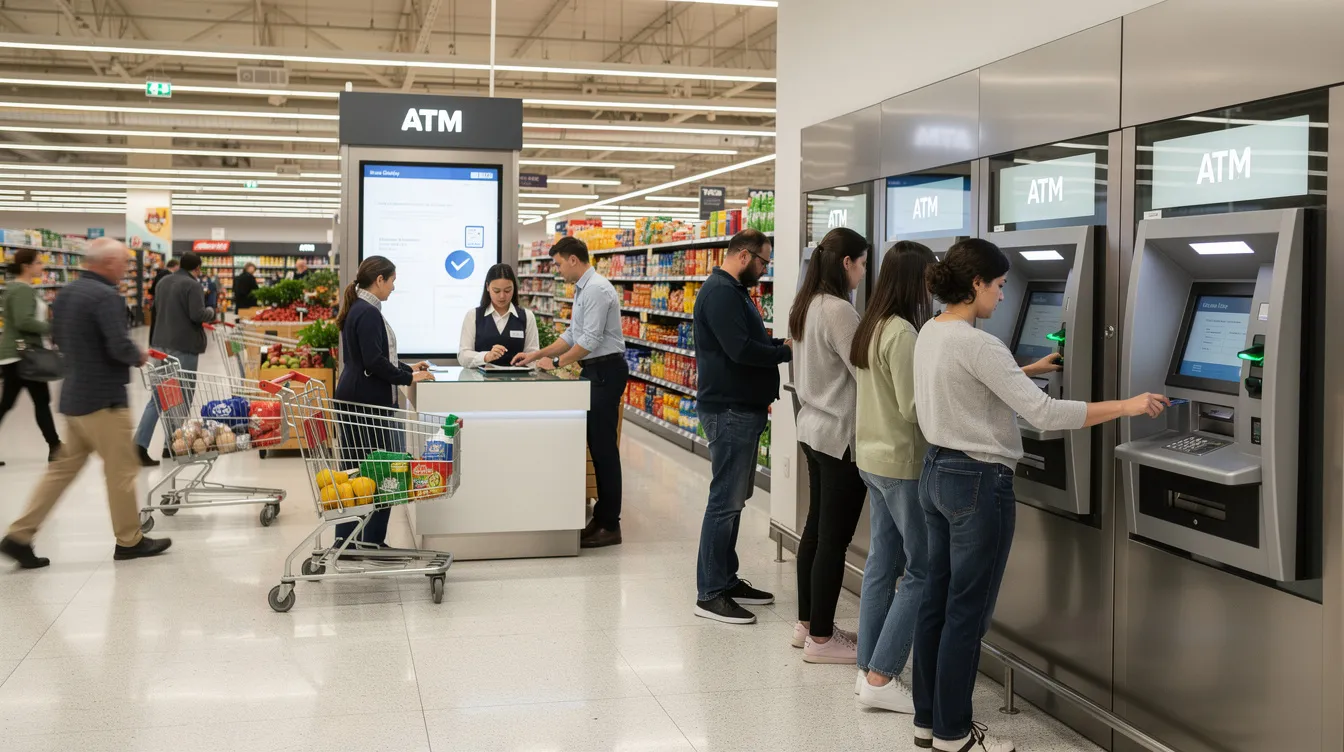
Why It Stands Out: Branches located inside supermarkets and the extensive GlobalNet ATM network make Interbank uniquely accessible.
Best For: Customers who value convenience and need to receive money through international platforms.
Key Strengths:
Over 250 locations, many inside supermarket chains.
Interbank is favored for its integration with PayPal and Xoom for digital transactions, making it wise for freelancers who transfer money internationally.
"Súper Tasa" savings offers up to 4.5% interest in soles and 1.5% in dollars.
International card acceptance across GlobalNet ATMs.
Possible Limitations: Smaller market share compared to BCP and BBVA. If balance or salary requirements aren't met, monthly fees of S/8 or US$3 apply.
Scotiabank Perú has been operating in Peru since 1997 as a subsidiary of Canada's Bank of Nova Scotia and maintains a significant presence in the country's banking market.
Why It Stands Out: Its Cuenta Free (now Cuenta Digital) is a true free account-zero maintenance fees, no interbank transfer fees, and no minimum to open.
Best For: Cost-conscious customers who want to save on banking costs and prefer managing funds digitally.
Key Strengths:
No maintenance or transfer fees on digital accounts; free debit card issuance.
Digital fixed deposits offer TREA of up to 4.55% in soles and 3.20% in dollars for 180-day terms.
Fast mobile app with customizable card limits.
Backed by one of the world's largest international banks.
Possible Limitations: Fewer branches than BCP or BBVA. For large transactions or corporate business, other banks may offer more robust support.
Banco de la Nación is Peru's government bank, and the state-owned Banco de la Nación provides basic banking access in rural areas of Peru where private banks rarely operate.
Why It Stands Out: Government backing and the widest geographic reach in the country, including remote provinces.
Best For: Government employees, pensioners, and anyone needing public sector payment processing.
Key Strengths:
Nationwide coverage unmatched by private institutions.
Handles government salaries, pensions, and social program disbursements.
Updated tariff schedule (April 2026) for transparent fees across services.
Possible Limitations: Limited private sector banking services. Service speed can be slower than commercial alternatives. Not the best fit for customers with diverse financial needs.
Now operating as Banco Pichincha after rebranding, this institution was founded in 1906 and focuses on retail banking and specialized business financing. It carries Ecuadorian bank backing from Grupo Pichincha.
Why It Stands Out: Specialized focus on construction financing and small business lending that most banks don't emphasize. Banco Financiero specializes in small business banking services.
Best For: Construction companies and businesses needing niche financing solutions.
Key Strengths:
Deep industry expertise in construction and business credit.
Established reputation spanning over a century.
Consumer finance products including education and auto loans.
Possible Limitations: Smaller branch network and lower total assets compared to the Big Four. Less focus on individual consumer accounts.
Mibanco is the leading microfinance bank in Peru and a subsidiary of BCP's Credicorp group. Mi Banco focuses on micro and small enterprises, extending credit and savings products to entrepreneurs who might not qualify at larger banks.
Why It Stands Out: Unmatched expertise in microfinance with tailored products for small enterprises.
Best For: Small businesses, entrepreneurs, and microfinance clients.
Key Strengths:
"Garantía Líquida" lets customers use fixed deposits as loan collateral with no credit history required.
Business savings accounts with no maintenance fees and minimal documentation (just a DNI).
Loan loss reserves at 207.6% coverage-strong risk management for a microfinance institution.
Possible Limitations: Higher interest rates on microloans to compensate for risk. Limited services for high-net-worth individuals. Fewer ATMs and premium features.
| Bank | Main Advantage |
|---|---|
| BCP | Most comprehensive services and largest network |
| BBVA | Best digital banking and customer service |
| Interbank | Best for convenience and accessibility |
| Scotiabank | Best for zero fees and flexibility |
| Banco de la Nación | Best for government sector needs |
| Banco Financiero | Best for construction and business financing |
| Mibanco | Best for microfinance and small enterprises |
Foreigners with legal residency status find it easier to open a Peruvian bank account than tourists. If you're a legal resident, you'll need a Carné de Extranjería to open an account, along with proof of address and often an initial deposit. Most banks in Peru require in-person account opening-showing up with your passport and residency documents is essential. Foreigners opening bank accounts in Peru may need to provide identification and other documentation, depending on the bank and account type.
As a Peruvian resident, the process is simpler: a DNI and proof of income are typically sufficient at most banks.
Consider whether you need personal banking, business banking, or both. You can open accounts in PEN or USD at most banks, which makes sense if you earn income in dollars or need to manage funds in different currencies.
If digital transactions matter most, Scotiabank and Interbank lead with streamlined apps and low-cost transfers. For full-service branch banking with extensive agents, BCP or BBVA deliver. If you run a small business, Mibanco's specialized products for micro and small enterprises are hard to beat.
Fees for banking services often vary significantly between different banks in Peru. Peruvian banks often charge maintenance fees based on minimum monthly balances, but maintenance fees can be avoided by using zero-maintenance accounts with regular deposits-Scotiabank's Cuenta Digital is a prime example.
Effective interest rates for savings can be compared using TREA, which includes fees and conditions, while rates for credit costs can be compared using TCEA, which includes all applicable costs. The SBS provides an official tool for comparing financial product rates and commissions in Peru, so use it before committing.
Peru's deposit insurance scheme provides coverage to eligible deposits, with the maximum coverage amount adjusted quarterly by the SBS.
Laws and regulations may change. Please verify with a local professional.
For people sending money to Peru, international transfers offer a way to move funds to recipients and eligible bank accounts across the country. ACE Money Transfer provides a digital channel for initiating the transaction, while the receiving bank or financial institution manages the funds after they are received.
Exchange rates fluctuate, and the rate applicable to your transfer can differ from rates shown at another time. Check the current rate atacemoneytransfer.combefore sending.
ACE Money Transfer supports transfers to Peru through its digital platform and applicable payment infrastructure. The exchange rate and relevant fees are shown before confirmation. Applicable rates and charges are subject to market conditions, service terms, and relevant regulatory requirements.
Delivery times vary depending on the payment method, receiving institution, and local processing arrangements. Where recipient-side bank charges apply, these are determined by the receiving institution and remain outside ACE Money Transfer’s control. For current rates and fees, check acemoneytransfer.com.
The answer depends on your profile:
Choose BCP if you want the most comprehensive banking services, the largest ATM and agent network, and access to strong SME support.
Choose BBVA if you prioritize excellent online banking, responsive customer service, and a foreigner-friendly experience with English-speaking staff.
Choose Scotiabank if you want to minimize fees and prefer managing everything through a fast, reliable app.
Choose Interbank if convenience matters most-supermarket branches and PayPal integration address real daily needs.
For government employees, Banco de la Nación remains the practical choice. For entrepreneurs and small business owners, Mibanco's microfinance expertise is unmatched.
There's no single best bank in Peru that fits every customer. The Peruvian banking system offers a surprisingly diverse set of institutions, from market giants like BCP to microfinance specialists like Mibanco, each established to serve distinct financial needs.
Start by clarifying your priorities: residency status, fee tolerance, digital vs. branch preference, and currency requirements. Gather your documents-passport, Carné de Extranjería, proof of address-and visit the bank that aligns with your profile. With the right preparation, opening your account and managing your finances in Peru is straightforward.
Disclaimer: This article is intended for general informational and educational purposes only and should not be construed as legal, regulatory, tax, business, or financial advice. While reasonable efforts have been made to ensure that all facts, figures, and data are accurate and valid as of the date of publication, no warranty or guarantee is given as to the ongoing completeness, accuracy, or currency of the information.
The content is based on information available at the time of publication. Regulations, government policies, market conditions, and service offerings may change over time and vary across jurisdictions and providers. As a result, some information may no longer be current or applicable. Readers should independently verify all information and consult qualified professional advisors before making any financial, legal, or business decisions.