
ACE Money Transfer
ACE Money Transfer
17 Sep 2026
Peer to peer lending has reshaped how people borrow and invest money over the past two decades. Instead of routing everything through a bank, these platforms connect borrowers with lenders or funding partners through an online marketplace or lending infrastructure.
But with dozens of platforms competing for your attention, which ones actually deliver? This guide breaks down the top 10 peer to peer p2p lending platforms active in 2026, covering everything from US personal loan marketplaces to European multi-originator platforms and social impact microfinance. Whether you're an investor chasing higher returns or a borrower looking for competitive rates, this list will help you navigate the landscape.
If you want the fast version, here's the shortlist. Each platform stands out for a specific reason, and together they cover a global mix of p2p lending options with competitive interest rates compared to traditional lending companies.
Prosper – Best overall for US personal loans
LendingClub (Happen Bank) – Established marketplace with hybrid banking model
Upstart – Best for borrowers with thin credit files
Funding Circle – Top choice for small business loans
Zopa – Pioneer of peer to peer lending in the UK
Assetz Capital – Property and business-backed P2P lending (UK)
Lendermarket – Higher-yield consumer loan marketplace (EU)
Mintos – Pan-European multi-originator marketplace
Bondora – Simplified European peer lending with Go & Grow
Kiva – Peer to peer microloans for social impact
Later sections dig into each platform's details, explain risks like the default rate for specific lenders, and help you pick the right peer lending platform for your goals.
Peer to peer lending connects individual lenders with borrowers online through a digital lending platform that replaces the traditional bank intermediary. Lenders earn interest from borrowers in exchange for capital, and borrowers often get faster approval and more flexible terms than they would from a conventional financial institution.
Here's how the mechanics work:
The lending platform sits in the middle: it handles applications, credit checks, payment processing, and collections.
Borrowers apply online and are assessed based on their credit scores before approval, along with income and sometimes alternative data.
Investors choose which loans to fund-fully or partially. Loan amounts typically range from $1,000 to $1 million depending on the platform and loan type.
Investors receive monthly payments (principal plus accrued interest) to their platform or bank account, and can reinvest or withdraw.
Most platforms charge fees for loan origination and servicing, usually deducted from borrower rates or investor returns.
Peer to peer loans span several categories: personal loans for debt consolidation or medical expenses, business loans for small businesses, and real estate loans backed by property. The type of loan determines the risk profile and expected return.
One critical distinction: peer to peer investments are treated as an investment, not a deposit in savings accounts. P2P investments are generally not equivalent to bank deposits and typically do not receive the same deposit protection as eligible savings accounts. Protection varies by platform, product, and jurisdiction.

Peer lending can offer higher returns than savings accounts or term deposits, but it comes with real risk-including potential capital loss. Understanding both sides is essential before committing funds.
Benefits:
Peer-to-peer lending can offer higher returns than savings accounts. Across65 European platforms tracked by P2P Dash, median net annual returns after defaults and fees sit around 11.8%.
Diversification across hundreds of loans, multiple originators, and different countries reduces single-point-of-failure exposure.
Access to varied loan types-consumer, business, property-backed-lets you tailor risk and return.
Transparent dashboards on most platforms show loan portfolios, repayment schedules, and performance data.
Risks:
Borrower defaults are a major risk in peer to peer lending. Historical default rates should be considered when investing in P2P loans-some platforms show charge-off rates of 3–5% in consumer credit.
Some P2P platforms and loan segments can experience elevated default rates, particularly during periods of economic stress.
Platform failure can disrupt access to your funds and recovery of capital.
Peer-to-peer lending carries financial risks including potential capital loss, and there is no deposit protection scheme covering your money.
Returns can be lower than expected if loans are paid back early, since you lose future interest income.
Interest rates generally move with borrower credit history and whether the loan is secured or unsecured. Higher rates compensate for higher risk-but they don't eliminate it.
Only commit money you can afford to lose. Diversify across multiple loans and multiple platforms to reduce unnecessary risk.
This section outlines our methodology so you can trust the ranking and replicate the analysis for your own due diligence.
Regulation and authorisation: Whether the platform holds a proper licence as a crowdfunding service provider, credit institution, or banking charter. Evaluating regulatory compliance is crucial when selecting a P2P platform.
Track record: Years in operation, total loan origination volume, and the platform's historical performance-which directly affects its perceived risk.
Returns and defaults: Average interest rates offered to investors, published default rate data, and recovery statistics where available.
Transparency: Depth and frequency of reporting-loan-level data, vintage performance, originator health.European platforms show wide disclosure gaps according to CrowdIndex research.
User experience: Minimum investment thresholds, auto-invest tools, secondary market availability, and ease of funding or withdrawing to a bank account.
Borrower and investor perspectives: Fee structures, origination fees, approval process speed, and range of loan amount options for personal loans and business loans.
Data is current up to mid-2026 where available, but always check each platform's site for the latest figures.
Prosper is one of the oldest active P2P lending marketplaces in the U.S., launching in 2005 and building a strong brand over two decades.
Loan purposes: Debt consolidation, medical costs, home improvement, and other personal loans.
Loan amount range: Approximately $2,000–$50,000 with terms of 3–5 years.
May 2026 data: Average loan amount ~$16,274; weighted average borrower rate ~15.9%.
Investor side: Investors can start with as little as $25 per note. Interest rates vary by credit grade (AA through E), and diversifying across hundreds of notes is critical.
Default history: Review Prosper's latest published performance data by loan grade and vintage before investing.
Borrowers need a reasonable credit score, income verification, and standard documentation. Rates are set based on the borrower's credit profile and debt-to-income ratio.
Pros: Long track record, extensive vintage data, simple platform, and wide availability for individual investors. Cons: Unsecured loans carry meaningful risk, and exposure to the US credit cycle can spike defaults during downturns.
LendingClub pioneered the US peer to peer lending model and has since evolved dramatically. Many major marketplaces have transitioned to traditional bank model originations, and LendingClub exemplifies this shift-rebranding as Happen Bank in 2026 while maintaining its marketplace roots.
Loan products: Personal loans and business loans, with business lending up to around $300,000. Fixed interest rate structures with terms typically from 3–7 years.
Scale: Q1 2026 originations rose ~31% year-over-year, withrecord pre-tax income of $67.3M. Over 90% of loans are now fully automated.
Default rate: LendingClub's default rate ranges from 1.4% to 9.8%, depending on loan grade and vintage.
Borrower eligibility: Personal borrowers need solid credit; business loans require trading history and minimum annual revenue.
The P2P lending landscape has evolved with many pioneering companies moving to institutional funding, and LendingClub's shift to a banking charter means individual and institutional investors now interact with the platform differently than in its early days. Retail peer lending access has narrowed, though automated investment options remain.
Strengths: Massive scale, deep underwriting experience, hybrid financing model. Drawbacks: Reduced pure P2P access, competition from newer fintechs like Upstart.
Upstart is a US-based lending platform founded in 2012 that uses AI and alternative data-education, employment history, and other non-traditional signals-to underwrite loans. The company's approach opens doors for borrowers who might be rejected by traditional lenders.
Focus: Personal loans and emerging business owners. Upstart uses additional factors beyond traditional credit information when assessing some borrowers.
Loan amounts: $1,000–$50,000 with 3–5 year terms.
Volume: FY2025 origination volume reached approximately $11.0 billion across ~1.5 million loans, with ~91% fully automated.
Investor appeal: Differentiated risk models can unlock potential profits from borrower segments that traditional bank loans wouldn't touch. Higher returns come with model risk-if Upstart's AI assumptions prove wrong during economic stress, defaults could spike.
Limitations: US-only for borrowers, unsecured personal loans remain higher risk than secured loans, and charge-off rates for some vintages are estimated around 5%. Private investors and institutional investors should review vintage-level data carefully before committing funds.

Funding Circle connects small-to-medium-sized businesses with investors, positioning itself as a leading peer lending platform focused on business loans in the UK, US, and selected markets. The company has facilitated over £5.8 billion in loans and contributed an estimated£7.9 billion to UK GDP.
Loan types: Unsecured and secured business loan options, plus newer products like FlexiPay and business credit cards.
Loan amount: Up to around £500,000 (or local currency equivalent), with terms from 6 months to 5 years.
Borrower criteria: Trading history, minimum revenue thresholds, and sometimes personal guarantees-a lower bar than most traditional banks but still meaningful.
Investor proposition: Business loans often pay higher interest rates than consumer loans. Risk is mitigated through proprietary credit scoring, diversification, and sometimes additional security.
Default history: Default performance varies by market, loan vintage, and borrower segment, so investors should review the latest published data.
The platform has also participated in government-backed lending schemes during downturns, providing additional security layers for certain loan portfolios. Capital is still at risk, but the collateral and guarantee structures add a layer other platforms lack.
Zopa launched in 2005 as the first modern peer to peer lending platform in the UK and has since expanded into digital banking. Zopa approved over £5 billion in loans since its inception, building one of the longest track records in the industry.
Loan products: Personal loans up to around £25,000, commonly used for car finance, home improvement, and debt consolidation.
Credit quality: Zopa's bad loan ratio was 0.84% over seven years-remarkably low compared to many other platforms, reflecting conservative underwriting.
Current status (2026): Much of Zopa's lending now occurs via its bank balance sheet rather than pure peer lending. This means individual lenders have limited direct P2P access compared with earlier years, though the platform offers competitive savings accounts and credit products.
Strengths: Long reputation, robust credit modelling, user-friendly app experience, and historically low default rates. Considerations: Changing regulation and Zopa's shift toward traditional banking mean new investors may find fewer direct peer to peer investment opportunities than the platform once offered.
Assetz Capital is a UK platform focused on secured loans for SMEs, commercial mortgages, and property development finance. If you want collateral-backed peer to peer investments, this is one of the more established options.
Loan types: SME term loans, commercial mortgages, development finance-often secured against property or assets.
Loan amounts: Frequently up to several million pounds, with loan-to-value (LTV) caps typically between 65–75%.
Security: Loans are usually backed by tangible collateral. If a borrower defaults, the platform can pursue recovery through the asset, offering additional security that unsecured platforms lack.
Investor returns: Expected yields in the 6–10%+ range depending on risk band and tranche, with different risk bands available for different risk appetites.
Default handling: General default rate trends should be researched per loan vintage; property-backed loans tend to have better recovery rates than unsecured debt.
Pros: Tangible collateral, meaningful yields, structured risk tranches. Cons: Complexity, concentration risk in UK property markets, and lower liquidity than consumer loan platforms.
Lendermarket is an Ireland-regulated EU crowdfunding and P2P marketplace that hosts available loans from various loan originator partners across multiple countries.
Regulation: Operates under EU Crowdfunding Service Provider rules, enabling cross-border investing within the EU.
Buyback guarantees: The platform offers buyback guarantees on loans overdue by approximately 60 days-though these are only as strong as the originator backing them.
Originator model: Partners with consumer lenders in Spain, Mexico, Colombia, and other markets. This provides geographic diversification but introduces counterparty risk tied to each loan originator's health.
Investor proposition: Relatively high average interest rates (often in the low-to-mid teens), low minimum investments, and auto-invest tools make it accessible for individual investors.
Key risks: Dependency on originators' financial health, currency risk for non-euro loans, and the fact that buyback guarantees are not the same as deposit protection. Treat the guarantee as a risk mitigant, not a safety net.
Mintos and Bondora are two of Europe's largest peer lending platforms, each offering multi-country exposure and distinct investment approaches.
Mintos:
Marketplace model connecting investors with multiple loan originators across dozens of countries.
Wide loan amount and loan term spectrum, multi-currency exposure, and extensive published statistics on interest rates and recovery.
2025 revenue reached €14.1 million, up ~17% year-over-year.
Risk note: As of mid-2026, approximately €197.7 million (~28.8% of portfolio) sat in loans in recovery or overdue-significant, though not all represents capital loss.
Bondora:
Direct consumer loans with the popular "Go & Grow” is designed to provide a simplified investment experience with a stated target return, but returns are not guaranteed.
June 2026 originations reached ~€43.39 million, with investors adding ~€40.36 million to Go & Grow that month.
Bondora's default rates can exceed 70% for risky borrowers in lower credit grades-a reminder that the headline product's simplicity masks underlying portfolio complexity.
Common benefits: Geographic diversification, secondary market options for liquidity, and automated investing. Cautions: Regulatory complexity across jurisdictions, credit risk during recessions, and the need for careful review of each originator's performance when investing through other platforms like Mintos.
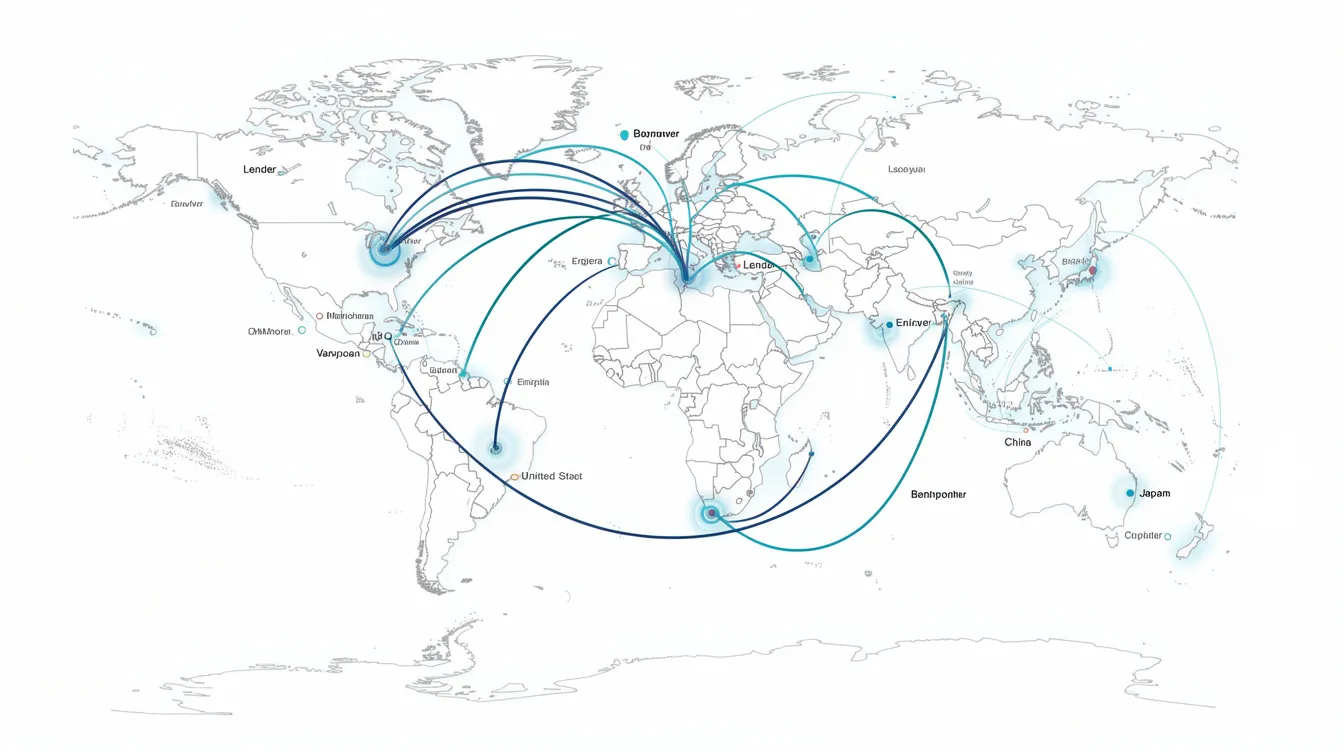
Kiva facilitates interest-free microloans targeting social impact rather than financial returns. It's a nonprofit peer lending platform supporting entrepreneurs, students, and communities in developing countries through small loans.
No financial return: Loans often carry 0% interest to lenders. The goal is capital preservation plus positive social impact-not potential profits.
Small loan amounts: Often under $1,000, aggregated from many individual lenders, with repayments recycled into new loans.
Repayment rates: Overall ~96.3% for partner-facilitated loans. Direct US loans are lower (~72.8%) due to smaller volumes and higher risk.
Risks: Currency risk in developing markets, field partner reliability, and borrower default in economies with limited legal recourse.
Kiva is best for impact-oriented investors who accept no financial return in exchange for supporting global financial inclusion. It's a fundamentally different investment thesis than the other platforms on this list.
The P2P landscape shifts quickly, and several regional platforms deserve mention beyond the core nine.
PeerBerry (EU): Consumer and business loan marketplace with some originators reporting very low default rates historically. Smaller scale but growing.
Capalona (UK): A broker matching businesses with peer to peer business loans and other alternative finance providers-useful for borrowers comparing options.
Real estate-backed platforms (various): Regional platforms offering secured loans against property developments with 10–14% potential returns. Higher complexity and construction risk, but tangible collateral.
For any of these, verify regulation, check default rate history, and ask whether the platform invests alongside other investors ("skin in the game"). Start with small amounts, track performance over 6–12 months, and only then scale your allocation.
Choosing the right peer lending platform matters more than chasing the highest headline interest rates. A structured comparison saves you from bad loans and platform-level surprises.
Comparison checklist:
Factor | What to Check |
| Regulation | Licensed by relevant authority (FCA, SEC, EU ECSP) |
| Track record | Years active, total funds lent |
| Default rate | Published defaults by vintage and grade |
| Fees | Origination fees, servicing fees, investor fees |
| Loan details | Average loan amount, purpose, secured vs unsecured, typical loan term |
| Investor tools | Auto-invest, secondary market, minimum investment |
| Liquidity | Ease of withdrawing to a bank account |
| Transparency | Frequency of reporting, loan-level data |
Both the investor and borrower side matter. A platform that offers great rates but has a terrible approval process or opaque reporting isn't worth the investment opportunities it advertises.
A structured approach can keep risk manageable even if you're new to peer lending.
Start small: Spread a modest loan amount across many loans rather than concentrating in a few. Many platforms let you invest as little as $10–$25 per note.
Use auto-diversification tools: Let the platform allocate across credit grades and borrower types to avoid cherry-picking bad loans.
Don't chase yield blindly: The highest interest rates come attached to the riskiest borrowers. Balance return expectations with default risk.
Check provision and reserve funds: Some platforms maintain reserve funds or have structured debt collection processes. Understand how arrears, restructuring, and collections work before you invest.
Treat P2P as a portfolio slice: Integrate it alongside the stock market, bonds, and cash-not as a core holding.
Tax matters: Interest income is typically taxed as ordinary income. UK investors may shelter P2P interest through IFISAs; check your country's rules.
Understanding worst-case scenarios is crucial before investing in any peer to peer lending product. There are two distinct failure modes, and each has different consequences.
Borrower default:
Missed monthly payments lead to arrears, then restructuring attempts, and eventually write-offs.
If the loan is secured, the platform can pursue collateral (property, assets) to recover your capital.
Buyback guarantees from the loan originator may cover loans overdue beyond 60 days-but only if the originator itself remains solvent.
Platform failure:
If the lending platform itself goes bust, access to your funds and ongoing loan servicing can be disrupted.
Most regulated platforms have wind-down plans and third-party loan servicers to manage repayments even after closure.
Unlike a bank deposit, P2P loans are not covered by schemes like FSCS or FDIC. Your capital is at risk.
Review each platform's risk disclosures and annual reports. Avoid over-concentrating in a single platform, loan type, or borrower segment-financial institutions learned this lesson the hard way in 2008, and individual lenders should too.
If you're investing in peer to peer lending across multiple countries, you'll eventually need to move money internationally. Whether you're repatriating profits from a European platform to a US bank account, sending returns to family abroad, or funding new investment opportunities in another currency, the transfer method matters.
ACE Money Transfer is a specialist in fast, low-cost international money transfers-and it's one of the best money transfer apps to pair with your peer to peer lending strategy.
Why ACE Money Transfer stands out:
Competitive exchange rates compared with traditional banks and other transfer services, meaning more of your returns stay in your pocket.
Transparent fees with no hidden charges-you see exactly what the recipient gets before you send.
Quick delivery times to supported countries, often same-day or next-day.
Intuitive mobile interface with real-time tracking of transfer status and multiple payout options, including direct bank account deposit and local collection points.
Robust security measures to protect your financial products and personal data.
The workflow is simple: manage your peer to peer investments on your chosen platforms, collect returns, then use ACE Money Transfer to move funds globally in a cost-effective way. For investors who borrows money in one currency and earns in another, or who want to diversify savings internationally, it's a practical tool that fills a gap most lending companies don't address.
Peer to peer lending can be a compelling alternative for both investors seeking higher returns and borrowers looking beyond traditional lenders-but it isn't suitable for everyone. The financing model carries real risk, and the right fit depends on your personal circumstances.
Self-assessment checklist:
Risk tolerance: Can you handle the possibility of losing some or all invested capital?
Time horizon: Most peer to peer loans lock up funds for 1–5 years. Loan terms and liquidity vary considerably by platform. Some investments may be difficult to exit before maturity. Are you comfortable with that?
Liquidity needs: Do you need quick access to cash, or can you wait for loans to mature?
Comfort with complexity: Are you willing to research each platform, review central bank regulations, and monitor your loan portfolios?
More conservative investors should lean toward collateral-backed platforms with low default rates-like Assetz Capital or Funding Circle-even if interest rates are slightly lower. Borrowers should compare P2P offers with bank loans, credit cards, and other financial products to ensure total cost (including origination fees) is genuinely competitive.
The bottom line: research 2–3 of the top platforms in depth, start small, monitor results, and use tools like Ace Money Transfer to manage and move your money efficiently once returns start to build. The opportunity is real-but so are the risks.

Disclaimer: This article is intended for general informational and educational purposes only and should not be construed as legal, regulatory, tax, business, or financial advice. While reasonable efforts have been made to ensure that all facts, figures, and data are accurate and valid as of the date of publication, no warranty or guarantee is given as to the ongoing completeness, accuracy, or currency of the information.
The content is based on information available at the time of publication. Regulations, government policies, market conditions, and service offerings may change over time and vary across jurisdictions and providers. As a result, some information may no longer be current or applicable. Readers should independently verify all information and consult qualified professional advisors before making any financial, legal, or business decisions.