
ACE Money Transfer
ACE Money Transfer
13 May 2026
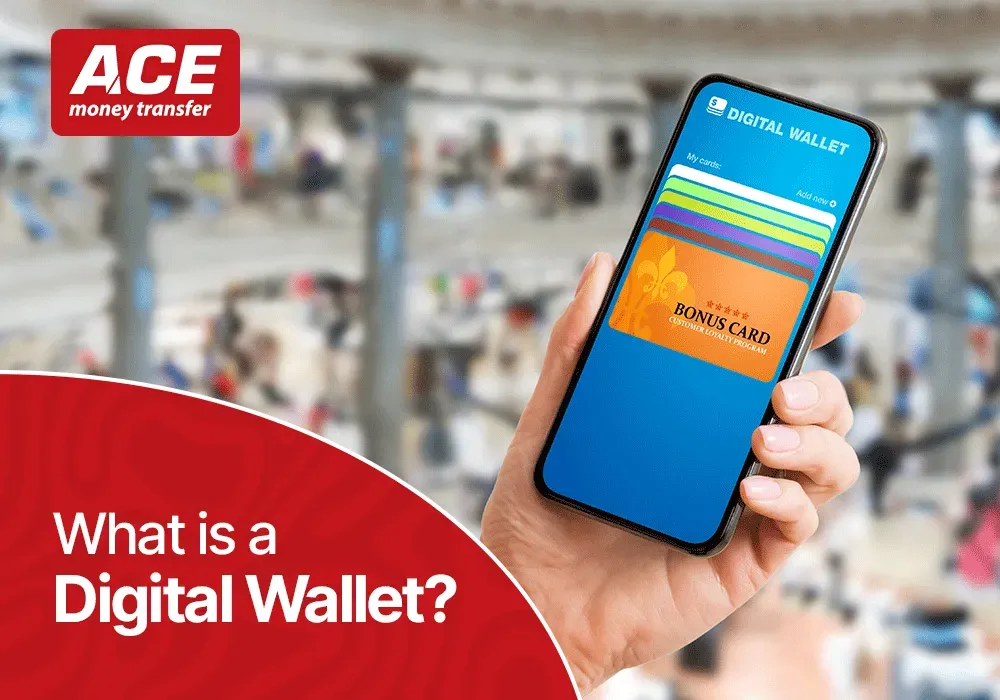
A digital wallet, also known as an e-wallet or electronic wallet, is a software application or electronic system that securely stores your payment information—such as credit, debit, and bank account details—on connected devices like smartphones. It enables cashless, cardless transactions and simplifies how people manage and move funds, from paying for groceries to sending money abroad.
As cash usage declines and mobile-first banking rises in the UK, understanding digital wallets and their security features is essential, especially for expats and international senders. This guide explains everything you need to know about digital wallets, with updated data, practical use cases, and insights tailored for a UK audience.
A digital wallet is an electronic payment device and software-based system that securely stores your payment details and payment cards, enabling you to make cashless transactions on connected devices such as smartphones, tablets, computers, or wearables. Not all digital wallets function the same way; they can be categorized into mobile wallets and web-based wallets.
Key Fact: Well-known digital wallets include Apple Pay, Google Wallet, and Samsung Pay, which are widely accepted for digital wallet payments in modern transactions.
Digital wallets use data encryption and tokenization to protect sensitive payment data. When using a digital wallet, the actual card number is not shared with merchants; instead, an encrypted representation is used. Most wallets also require biometric verification, such as fingerprint or facial recognition, and many require multi-factor authentication (MFA).
When you pay, your device communicates with the payment terminal using technologies such as NFC (Near Field Communication). The wallet sends encrypted data to complete the transaction in seconds. According to UK Finance, over 85% of UK adults now use contactless payments regularly.
Digital wallets come in different forms depending on how they are used and who provides them. They can be classified into closed-loop, semi-closed, and open-loop wallets.
Widely used digital wallets in the UK include Apple Pay, Google Wallet, Samsung Pay, and PayPal. Statista reports that the UK digital payments market is expected to exceed £200 billion in transaction value by 2026.
Digital wallets offer more than just convenience. They eliminate the need to carry physical cards and bring speed, efficiency, and security into everyday transactions.
Digital wallets allow instant payments without entering card details repeatedly. They can also store rewards cards, making it easy to access loyalty programs. For international remittances, they enable near-instant transfers to recipients’ mobile wallets.
Digital wallets are generally considered safer than physical cards because they do not expose actual card details. Tokenisation and biometric authentication further protect against unauthorised access.
Digital wallets are transforming how UK residents send and receive money abroad. They reduce costs, improve speed, and increase accessibility for recipients.
You can link your digital wallet to a remittance service and transfer funds directly to another wallet or bank account overseas. For example, sending GBP to PKR or GBP to INR can be completed quickly through digital-first platforms like ACE Money Transfer.
Recipients in countries like Pakistan and India often rely on mobile wallets for daily transactions. The World Bank notes that digital remittances can reduce transfer costs by up to 50% compared to traditional methods.
Safety is a common concern, but modern digital wallets are built with robust security frameworks including encryption and tokenisation.
Digital wallets are evolving beyond payments into full financial ecosystems. Over 60% of online transactions are expected to use digital wallets by 2028.
Many wallets now offer budgeting tools and savings features. Open banking is enabling smoother integration between banks and wallet providers for a unified experience.
Digital wallets are no longer optional; they are central to modern financial life in the UK. They simplify payments, enhance security, and make international transfers more accessible than ever for UK residents sending money abroad.
A digital wallet is primarily designed for making payments and storing card details securely, while a mobile banking app offers a broader range of services such as account management, loans, and savings.
Yes, digital wallets can be linked with remittance platforms like ACE Money Transfer to send money abroad quickly to bank accounts or mobile wallets in countries like Pakistan and India.
They are widely accepted across the UK in retail, restaurants, and public transport. However, some smaller businesses may still prefer cash or card payments.
Most digital wallets do not charge fees for everyday payments. However, fees may apply for specific services like currency conversion or international transfers depending on the provider.
Your wallet remains protected through biometrics and passcodes. You can remotely lock or erase your device and disable the wallet to prevent unauthorised use.