ACE Money Transfer
ACE Money Transfer
11 Jun 2026
Imagine this. You are an expat in Ireland. You work hard, support your loved ones back home, and finally decide to explore Europe during your time off. But then a question pops into your mind:
"Can I travel freely across different European countries, or will I need separate border checks and visas everywhere?"
Many migrants and international workers face this confusion. Between work commitments, family responsibilities, and regularly sending money home, understanding European travel rules often feels complicated.
The good news is that the Schengen countries system makes travel across much of Europe easier than many people think. If you are living in Ireland and planning a European trip, understanding how the Schengen Area works can help you avoid surprises, save time, and travel with confidence.
Whether you are visiting family, planning a holiday, attending a business event, or exploring new opportunities, this guide explains everything in simple language.
According to the European Commission, the Schengen Area allows free movement across participating countries and serves more than 450 million people.
The Schengen Area is a group of European countries that have removed internal border controls between one another. Once you legally enter the Schengen Area, you can generally travel between participating countries without routine passport checks at internal borders.
For expats, this creates several advantages:
The system was created to encourage free movement while maintaining common external border controls among participating countries.
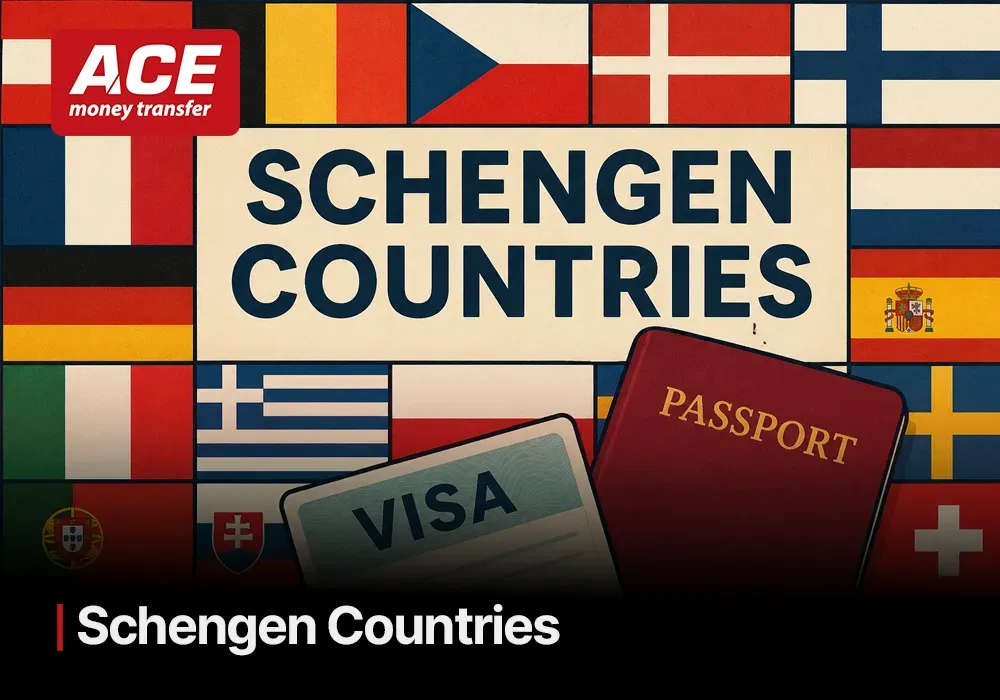
As of 2026, the Schengen Area consists of 29 countries, including 25 EU member states and 4 non-EU countries. Bulgaria and Romania became the newest members in 2025. Romania and Bulgaria will lift land borders controls by January 2025. Ireland and cyprus are EU members not in the Schengen Area.
This is one of the most important questions for migrants living in Ireland. Ireland is a member of the European Union, but it is not part of the Schengen Area. Ireland negotiated an opt-out and maintained its own border arrangements.
This means:
Even where internal travel is easier within the Schengen Area, travellers should still carry a valid passport or national identity card.
Understanding this distinction helps expats avoid travel disruptions and unexpected visa issues.
Ireland participates in the Common Travel Area (CTA) with the United Kingdom. This arrangement allows specific travel rights between Ireland and the UK, but it is separate from the Schengen system.
Many migrants in Ireland use their annual leave to visit multiple destinations in Europe for international travel. The Schengen framework simplifies these trips because internal border checks between participating countries have largely been removed. Schengen member states coordinate controls at the external border instead.
For example, after entering France legally, a traveller can often continue to Germany, Italy, Spain, or other Schengen states without undergoing regular internal border inspections. Over 450 million people can move freely between Schengen member countries.
Recent European tourism data shows continued strong travel demand, with EU tourism accommodation nights reaching nearly 3.1 billion in 2025.
The answer depends on your nationality. Many non-EU nationals living in Ireland still need a single Schengen Visa before travelling to participating countries if their nationality is not visa-exempt. However, citizens of many non-EU countries do not need a visa for short stays, depending on nationality.
A Schengen visa usually allows stays of up to 90 days in any 180-day period.
According to European Commission data, nearly 12 million Schengen visa applications were submitted in 2025, demonstrating the continued popularity of travel across the area. The standard visa application fee is €80 for most foreign nationals. Schengen visas may be issued as single-entry, double-entry, or multiple entry visas.
Requirements vary by country, but commonly include:
These supporting documents may also be checked at entry, not only during the visa process. Always verify requirements through official embassy or consulate channels before travelling.
Migrants often juggle multiple responsibilities:
Knowing the rules helps avoid:
Upcoming EU border management changes also matter for travellers. The Entry/Exit System starts on 12 October 2025, and ees applies at external borders where it will replace traditional passport stamping methods. It requires biometric data such as fingerprints and a facial image, and it will be fully operational by 10 April 2026. Visa-exempt travellers must apply for ETIAS starting in late 2026.
Many expats regularly support family members through remittances. According to World Bank data, personal remittances remain a significant financial flow across many economies worldwide, highlighting the continued importance of secure money transfers for migrant families.
When planning European trips, it helps to:
This balanced approach helps migrants enjoy Europe while staying committed to their financial goals.
Living abroad is about creating opportunities. Understanding travel regulations, planning finances wisely, and staying connected with family can make your migrant journey smoother and more rewarding.
The Schengen countries system has transformed mobility across Europe, making travel more convenient for millions of residents and visitors; this framework began with the schengen agreement, signed on June 14, 1985. The schengen convention followed in 1990 and set out detailed border control policies. The Schengen Area was officially created on March 26, 1995. For expats in Ireland, understanding how Ireland's non-Schengen status interacts with European travel rules can help you plan confidently, avoid unnecessary stress, and make the most of your time abroad.
When managing your finances alongside your travel plans, choosing a trusted money transfer service can help you continue supporting loved ones back home while pursuing your goals across Europe. Download the ACE Money Transfer app today and enjoy a convenient way to manage your remittances while focusing on the experiences that matter most.
No. Ireland is an EU member state but is not part of the Schengen Area. Ireland maintains its own border arrangements and travel policies. This means travellers may need separate documentation when travelling between Ireland and Schengen countries.
As of 2026, there are 29 Schengen member countries. The area includes 25 EU member states and 4 non-EU countries. Bulgaria and Romania joined the Schengen Area in 2025.
Not necessarily. Travel rights depend on nationality and immigration status. Some residents may still require a Schengen visa before travelling. Always check the latest requirements before making travel plans.
The primary benefit is the removal of routine internal border controls between participating countries. This makes travel easier and more efficient for residents, tourists, students, and business travellers moving across member states.
Understanding the rules helps avoid visa issues, border delays, and unexpected travel disruptions. It also allows migrants to plan holidays, business trips, and family visits more effectively while managing their finances and responsibilities abroad.
Disclaimer: This article is intended for general informational and educational purposes only and should not be construed as legal, regulatory, tax, business, or financial advice. The views expressed are those of the author and do not necessarily reflect the views or positions of ACE Money Transfer. While reasonable efforts have been made to ensure accuracy, no warranty is given as to the completeness, accuracy, or currency of the information. Services and practices mentioned may vary by provider and jurisdiction. Readers should consult qualified professional advisors before making any financial or business decisions.
Enjoy guaranteed competitive INR exchange rates, ultra-fast transfers, and zero fee promotions directly to bank accounts across India.
Ireland Employment & Schemes | Ireland Family & Allowances |