
ACE Money Transfer
ACE Money Transfer
09 Jun 2026
Picture this. You finally booked your trip after months of overtime shifts in Ireland. Your family back home is waiting for your monthly support, your budget is already planned, and every Euro matters.
Then suddenly, you get sick during your trip to Spain or maybe your child develops a fever during a family holiday in France.
What happens next?
Many expats living in Ireland worry about unexpected healthcare costs while travelling. A single medical issue abroad can disrupt your plans and affect the money you send home to support your loved ones.
That is exactly why understanding the e111 card system matters before you travel.
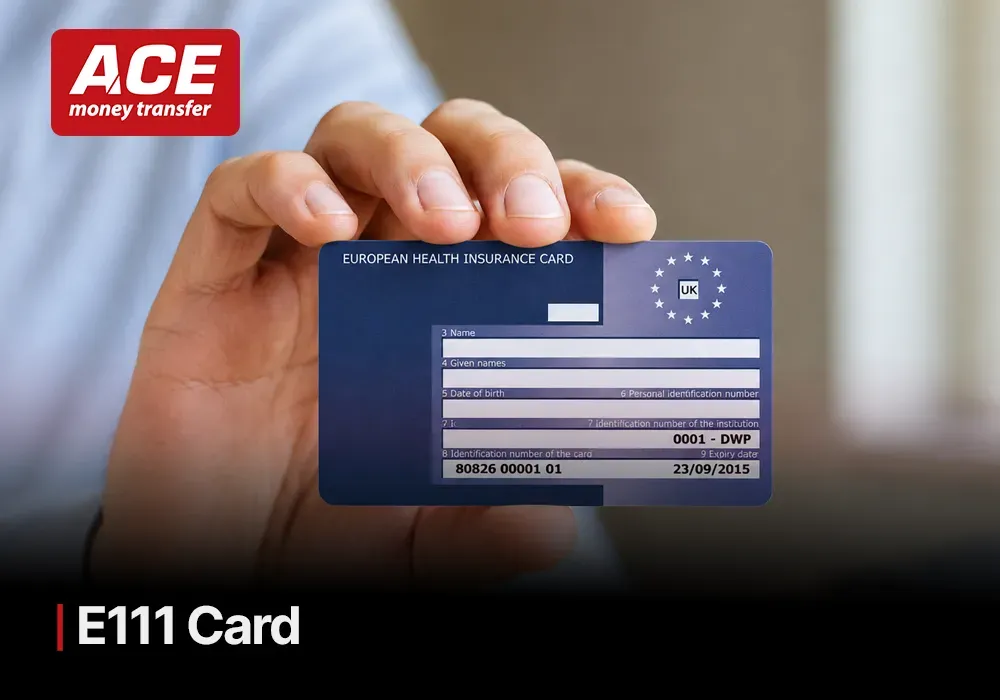
The old E111 form has now been replaced by the European Health Insurance Card (EHIC), which helps eligible residents access medically necessary public healthcare when temporarily staying in participating European countries. According to the European Commission, around 242 million EHICs were in circulation across Europe in 2022, showing how widely travellers rely on this protection while abroad.
For expats in Ireland who work hard, manage expenses carefully, and regularly send money home, having the right healthcare coverage while travelling can help avoid unexpected financial pressure.
Many people still search for the E111 Card because it was the healthcare travel document used for years across Europe.
However, the E111 form was officially replaced by the European Health Insurance Card (EHIC). The replacement was introduced to simplify healthcare access for travellers across participating European countries.
The EHIC allows eligible people to receive medically necessary state-provided healthcare during temporary stays in participating countries under the same conditions as local residents.
The card is issued free of charge by national health authorities and remains one of the most practical travel documents for people moving around Europe.
The name remained popular because:
In practical terms, when people mention the E111 Card today, they are usually referring to the EHIC.
Many migrants living in Ireland travel regularly for:
During these trips, healthcare emergencies can happen unexpectedly.
Without proper healthcare coverage, travellers may face medical bills that affect their personal savings and monthly financial commitments.
The EHIC helps eligible travellers access necessary public healthcare services while temporarily staying abroad in participating countries.
Most expats carefully manage:
Unexpected medical expenses abroad can create additional financial pressure.
That is why preparing before travel is often just as important as booking flights and accommodation.
The modern version of the e111 card, known as the EHIC, gives eligible travellers access to medically necessary state-provided healthcare during temporary stays.
According to the European Commission, the card allows treatment under the same conditions and costs that apply to residents of the country being visited.
This may include:
The card can generally be used across the European Economic Area, including 27 EU member states and Switzerland, as well as other EEA countries such as:
Coverage depends on local healthcare rules in each country.
According to Irish government guidance, people living in Ireland, the EU, the European Economic Area, or Switzerland may qualify for an EHIC if they meet eligibility requirements.
Applicants may include:
Each family member requires an individual card.
Parents or guardians must apply on behalf of children under 16 years old.
Irish authorities state that applications generally take around 10 working days for processing and postal delivery, and eligibility can apply to people living in Ireland and, in some cases, to those connected to study or residence in an EEA country or Switzerland.
Travellers should apply well before their planned departure date, use an urgent application route if travel is in less than 10 days, and contact the service if needed, as a digital temporary certificate may be issued for short-term cover.
Technically, yes.
But travelling without it may create complications if you need healthcare services abroad. If you need the card urgently within 10 days, apply online. For an urgent application, contact the service to obtain a digital temporary certificate if one is available.
According to official EU guidance, if you do not have your card available, a healthcare provider may still treat you, but you could be asked to pay costs upfront and seek reimbursement later for treatment that would otherwise be covered.
Checking these details before departure can help reduce stress later, especially if you need an EHIC urgently within 10 days and must rely on a temporary digital certificate until your EHIC card arrives. If you do not have your card available, the healthcare provider may still treat you, but you may need to pay upfront; you may later seek reimbursement for costs that would have been covered, though you may need supporting documents or receipts.
One of the biggest misunderstandings among travellers is assuming the card covers everything.
It does not.
According to European Commission guidance, the EHIC is not a replacement for travel insurance.
Many often forget:
If you need the EHIC urgently, do not leave that check until the last minute.
For broader protection, many travellers choose to combine an EHIC with travel insurance.
Many travellers across Europe continue sharing positive experiences after using the EHIC during emergencies.
Users on public travel discussions reported successful use of the card for:
While experiences can vary depending on local healthcare providers, these examples show why carrying the card remains important for European travellers.
The Irish Health Service Executive (HSE) offers application options for eligible residents.
Applicants may apply:
Official information and application guidance are available through the Irish Government and HSE websites.
Depending on circumstances, EHIC applications may need:
Requirements can vary based on eligibility status. Further information is available through the Irish Government and HSE websites. The HSE Health App may also provide access to a digital version of the card.
Living abroad often means balancing two responsibilities at once.
You want to enjoy travel opportunities across Europe while continuing to support family members back home.
Preparing for healthcare needs before travelling helps reduce the risk of unexpected expenses affecting your monthly financial plans.
Many expats already use digital services to manage international transfers, track expenses, and stay connected with family. Adding healthcare preparation to your travel checklist is another practical step towards financial stability.
Recent European Commission information shows the EHIC continues to play a major role in protecting travellers, with millions of active cards helping residents access healthcare while abroad.
Travelling across Europe should feel exciting, not stressful.
Understanding how the e111 card system works today through the EHIC can help eligible travellers access necessary public healthcare while temporarily abroad. For expats in Ireland who regularly support family members through international remittances, avoiding unexpected healthcare expenses can make a meaningful difference to financial planning.
Before your next trip, check your EHIC status, review your travel arrangements, and make sure your family finances remain on track. And when it comes to supporting loved ones back home, choosing a trusted digital remittance platform like ACE Money Transfer can help you manage your transfers conveniently while focusing on what matters most—your family.
No. The E111 form has been replaced by the European Health Insurance Card (EHIC). Many people still use the old name, but the EHIC is now the official healthcare card used for eligible temporary travel across participating European countries. Applications are available through Irish health authorities for eligible residents.
No. The EHIC is not designed to replace travel insurance. It helps with medically necessary public healthcare during temporary stays, but it does not usually cover private healthcare, lost belongings, cancelled trips, or transport back to Ireland. Many travellers choose to have both.
Yes. Each family member requires an individual EHIC. Parents or guardians can apply on behalf of children under 16 years old. This ensures every traveller has appropriate healthcare documentation while travelling.
According to European Commission guidance, the EHIC remains valid in the United Kingdom for eligible travellers under current arrangements. Healthcare access depends on local rules and circumstances, so travellers should always review official guidance before departure.
Applying several weeks before travel is generally a sensible approach. Irish government guidance notes that processing can take around 10 working days in many cases. Applying early gives extra time for delivery and helps avoid last-minute travel stress.
Disclaimer: This article is intended for general informational and educational purposes only and should not be construed as legal, regulatory, tax, business, or financial advice. The views expressed are those of the author and do not necessarily reflect the views or positions of ACE Money Transfer. While reasonable efforts have been made to ensure accuracy, no warranty is given as to the completeness, accuracy, or currency of the information. Services and practices mentioned may vary by provider and jurisdiction. Readers should consult qualified professional advisors before making any financial or business decisions.
Enjoy guaranteed competitive INR exchange rates, ultra-fast transfers, and zero fee promotions directly to bank accounts across India.
Ireland Employment & Schemes | Ireland Family & Allowances |