ACE Money Transfer
ACE Money Transfer
12 Jun 2025
Whether you're spending a week on the Costa del Sol or a few months exploring cities off the beaten track, withdrawing money from ATMs in Spain is something you'll need to get right. Get it wrong and you could lose 10–15% of every withdrawal to hidden fees and poor exchange rates. This essential guide covers everything from finding the right cash machines to avoiding the traps that catch thousands of travellers every year.
ATMs in Spain are known as "cajero automático," and they're everywhere in cities and towns. Most ATMs accept international Visa and Mastercard debit cards from the UK, US, EU, Australia, and dozens of other countries. These two networks are widely accepted, making them the safest bet for any traveller carrying a debit card abroad.
The single most expensive mistake you can make at a Spanish ATM is accepting dynamic currency conversion. When a machine asks if you'd like to pay in british pounds, us dollars, or another home currency instead of EUR, it's offering what's called dynamic currency conversion - a service that often adds a markup of 8–15% over the real mid-market exchange rate. Always choose to withdraw in euros to avoid extra fees.
Where you withdraw cash matters just as much as how. Privately owned cash machines - particularly those from operators like Euronet - are common at most tourist locations and airports. These independent machines often charge fees of €4–€6 per transaction and push DCC aggressively. By contrast, bank ATMs from Santander, CaixaBank, BBVA, Sabadell, Bankinter, Abanca, Unicaja, and Ibercaja typically charge fees between €0.50 and €2.50 for non-customers.
ATM fees in Spain range from €0.50 to €6 EUR depending on the machine, but that's only the local operator's fee. Your home bank may also charge its own fees - a flat foreign ATM fee, a percentage of the amount, or a foreign transaction fee on the currency conversion. Transaction fees may be charged by both local banks and foreign banks, so check your account terms before you travel.
Using a debit card is almost always cheaper than a credit card for ATM withdrawals. Most credit card issuers treat cash withdrawals as a cash advance, which means a separate fee, a higher interest rate, and no grace period. If you have the choice of a debit or credit card, choose debit every time.
Here's what to do, in order, at a Spanish ATM:
Insert your debit card (or tap for contactless if supported)
Choose English (or your preferred language)
Select "cash withdrawal" (or "retirada de efectivo")
Decline any on-screen currency conversion - choose euros (EUR)
Check the local ATM fee displayed on screen before confirming
Cancel if the fee looks unreasonably high
Confirm, collect your cash, and keep your receipts
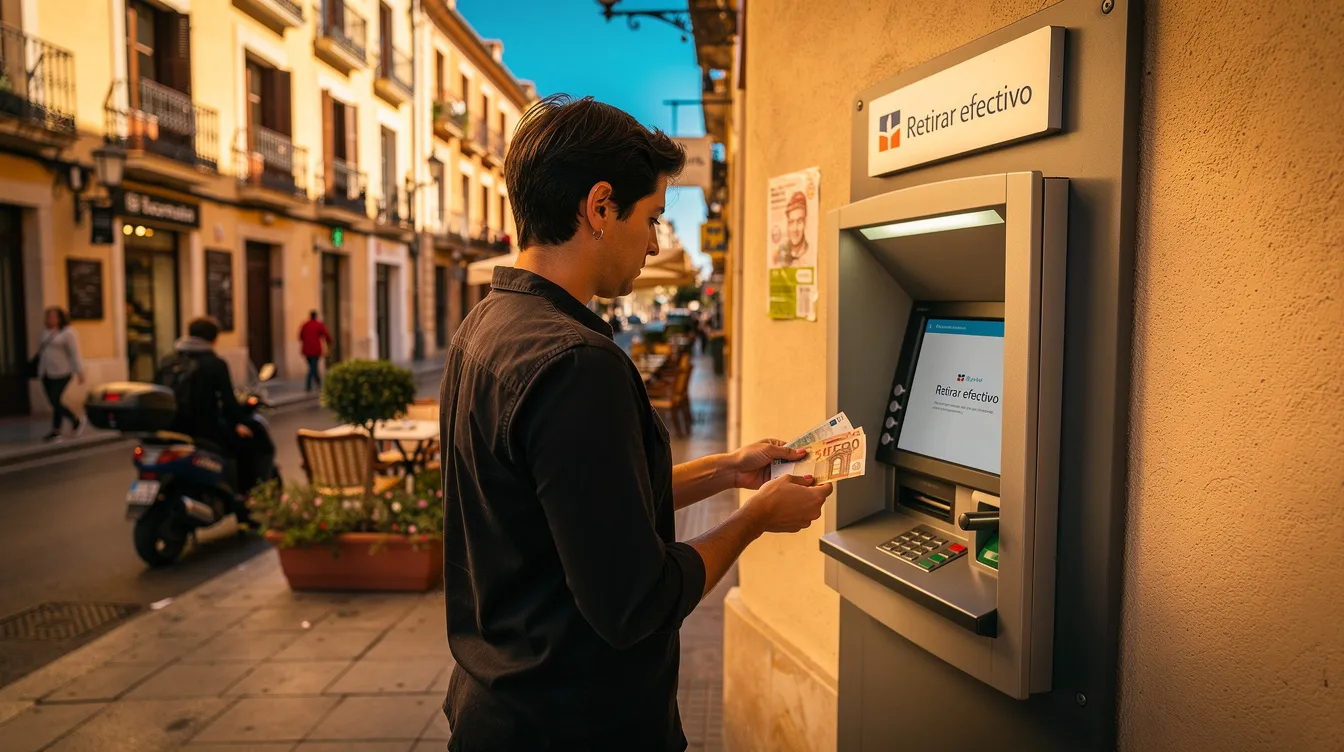
You won't struggle to find ATMs in major Spanish cities. Madrid, Barcelona, Valencia, Seville, Málaga, Bilbao, Alicante, and Palma de Mallorca all have machines on high streets, outside bank branches, near metro stations, and inside shopping centres. ATMs are commonly found in airports and shopping centers too, though those come with a catch.
At major airports - Madrid Barajas, Barcelona El Prat, Málaga-Costa del Sol, Palma de Mallorca, and Alicante–Elche - cash machines are easy to spot but expensive to use. Avoid airport ATMs due to high withdrawal fees whenever possible. Wait until you reach the city centre to withdraw from a bank branch machine instead.
Finding ATMs in rural areas can be challenging in Spain. Small villages in inland Andalusia, rural Galicia, mountain regions, and islands away from resort towns may have very few machines. Withdraw enough euros in larger towns before heading to remote areas.
To find ATMs quickly, use official bank locator tools from Santander, CaixaBank, BBVA, Bankinter, or Unicaja, or search for "bank ATM" in mapping apps. This helps you avoid standalone ATMs located in tourist areas due to high fees. Note that supermarket chains and petrol stations in tourist locations sometimes host independent machines - these are more likely to charge fees and push poor exchange rates.
This is one of the most common Spain FAQs, and the short answer is: almost certainly yes.
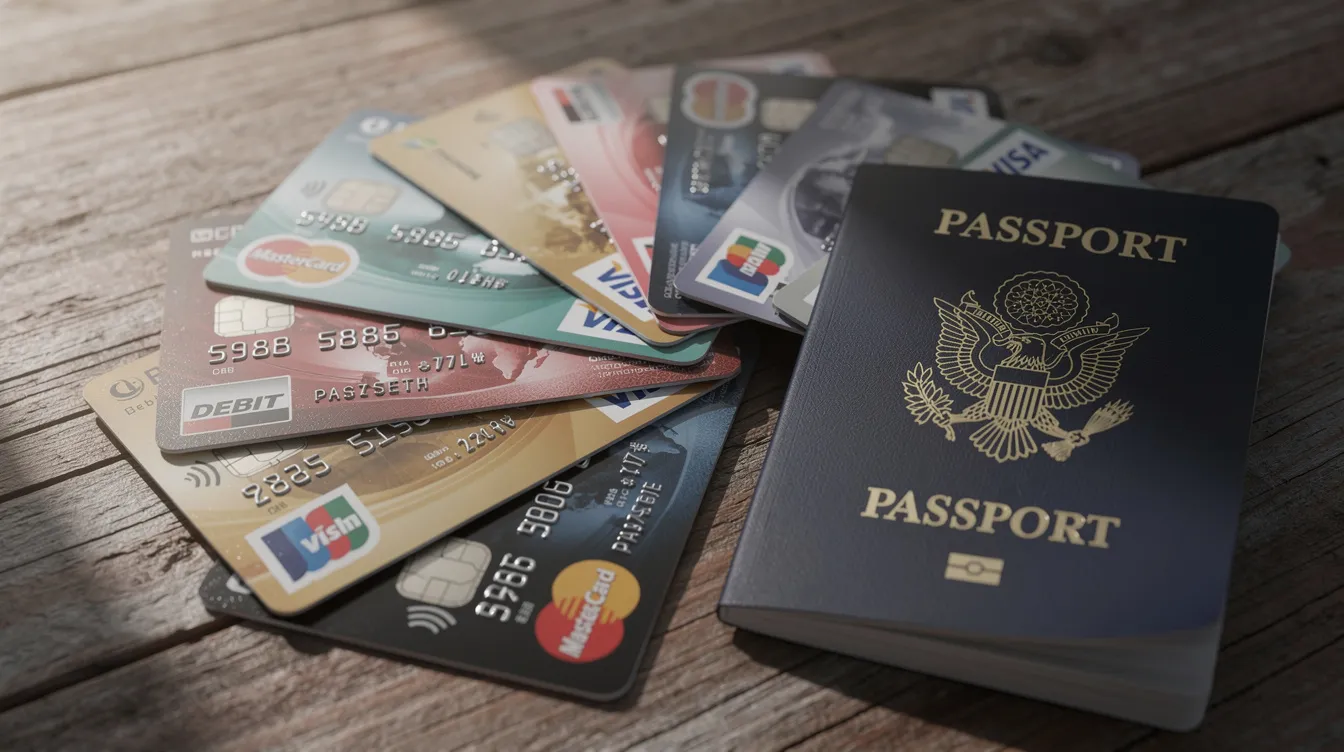
Most ATMs in Spain accept Visa and Mastercard on all networks. Most cards from the UK, EU, US, Canada, and Australia will work without issues. UK-issued debit and credit cards work at Spanish ATMs.
Maestro and V-Pay are accepted at many machines but not universally. Check the card-scheme logos on the ATM before inserting your card.
Amex cards can be used at select Spanish ATMs, but acceptance is far less common. Discover is even rarer. Always carry a backup Visa or Mastercard debit card.
Spanish ATMs typically require a 4-digit PIN. If your bank issued a 5- or 6-digit PIN, contact them to change it before travel.
Contactless withdrawals are available at many modern bank ATMs. You can tap your physical card, phone, or Apple Pay–enabled smartwatch, then enter your PIN. However, this isn't universal - many ATMs still only accept chip insertion.
Before you leave, confirm with your own bank that your debit card will work in Spain, that foreign ATM withdrawals are enabled, and that the card isn't restricted to domestic use. Some banks in countries outside Europe block foreign transactions by default, so a quick call can save you from a declined card at midnight in Barcelona.
There are three types of charges you may encounter when withdrawing money from a Spanish ATM:
Local ATM operator fee: The fee the machine owner charges non-customers. Many ATMs in Spain charge fees for foreign cards - typically €0.50–€2.50 at bank branches, but sometimes €4–€6 or more at independent machines. Some Spanish banks charge their own ATM fees for withdrawals from non-customer cards.
Home bank fee: Your card provider may add a flat fee for using a foreign ATM, a percentage of the withdrawal amount, or a foreign transaction fee. Check your account for terms like "international ATM fees" or "cash withdrawal abroad."
Exchange rate markup / DCC: Accepting the ATM's own exchange rate through dynamic currency conversion can cost you 8–15% more than letting your bank handle the conversion at a better rate.
Spanish regulations require the machine to display any operator fee on screen before you authorise the transaction. If the fee looks too steep, you can cancel and try another machine nearby.
Here are some specific fee-free options worth knowing:
| Card / Bank | Fee for Spain ATM withdrawals |
|---|---|
| Unicaja ATMs (UK accounts) | Fee free ATM withdrawals |
| Santander ATMs (existing customers) | Free for Santander account holders |
| Starling Bank | No fees for ATM withdrawals in Spain |
| Revolut | Free cash withdrawals up to £2,000/month |
| Wise account | Low-cost withdrawals with real exchange rate |
| IberCaja | May charge less than €1 per withdrawal |
To minimise extra fees, use bank ATMs from other banks rather than independent machines, make fewer but larger withdrawals to reduce per-transaction costs, and always decline DCC. Using bank-run ATMs is more secure and generally incurs fewer fees.
When you withdraw euros in Spain, two different exchange rates could apply. The first is your card network's rate (Visa or Mastercard), which is usually close to the mid-market rate. The second is the ATM's own rate - used only if you accept the machine's offer to convert your withdrawal into your home currency.
This second option is called dynamic currency conversion, and it's how ATMs make money from tourists. The machine might display a message like "Convert to GBP," "Charge in USD," or "Guaranteed exchange rate." That "guaranteed" rate typically includes a hidden margin of 8–15%. Dynamic Currency Conversion often results in poor exchange rates, and it can lead to hidden fees when withdrawing cash.
The other option - and always the right one - is to decline the conversion and choose to be charged in local currency (EUR). This lets your own bank or card provider handle the currency conversion at their own exchange rate, which is nearly always a better rate than the ATM offers.
Even when you correctly choose euros, your home bank may still apply a "non-sterling transaction fee" or similar charge for foreign transactions. Some banks in the UK charge 2–3% on top. That's why fee free travel cards from providers like Starling or Revolut are popular with travellers across Europe - they eliminate or reduce these charges.
Before your trip, check the approximate mid-market EUR exchange rate. If an ATM's offered rate looks dramatically different - say, showing 1 GBP = 1.05 EUR when the real rate is closer to 1.18 - you know you're looking at a bad deal. Decline and withdraw in euros instead.
ATM withdrawal limits in Spain range from €300 to €1,000 per transaction, depending on the machine and the bank that operates it. Your own bank's daily limit may be lower - many UK banks cap it at around £300–£500 per day. Check your app before you travel so you know how much cash you can actually access.
A smart approach is to withdraw medium-sized amounts - around €150–€300 at a time. This reduces how often you pay fixed per-withdrawal fees while avoiding the risk of carrying too much money. Think about how much cash you'll realistically need each day, especially since card payment is accepted at most shops, restaurants, and hotels in Spain.
Spanish banks typically close by 2 PM, so try to use bank-branch ATMs during morning hours. If the machine captures your card or you hit a problem, you can walk inside and speak to staff. After hours, you're left calling your bank's emergency line from abroad.
Safety tips:
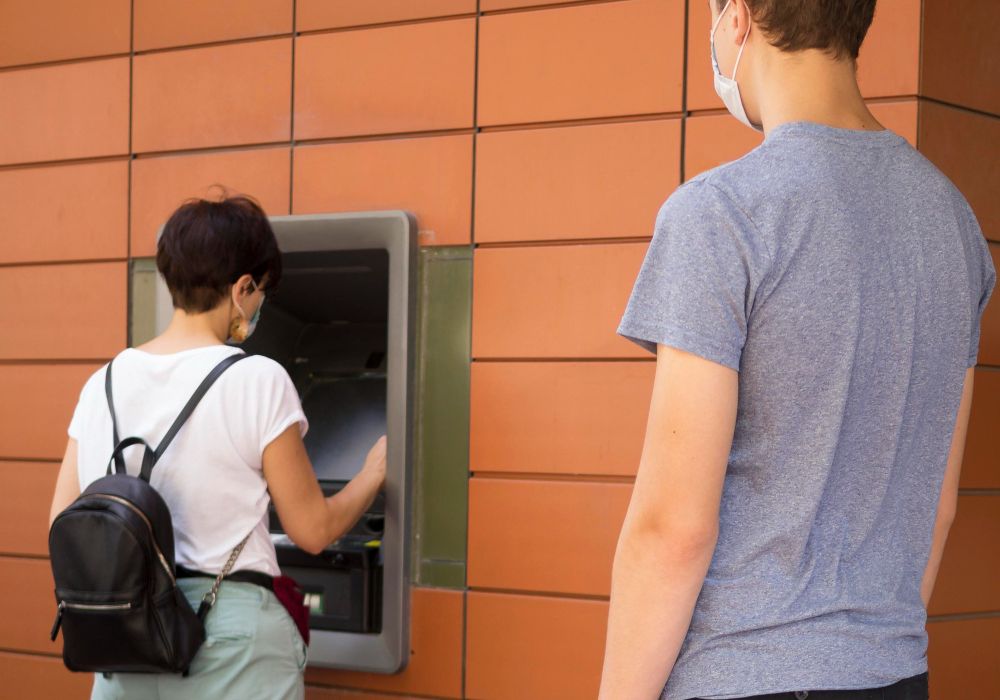
Cover the keypad when entering your PIN to protect against hidden cameras or shoulder-surfers
Be wary of anyone offering unsolicited "help" at the machine
Inspect the card slot and keypad for signs of tampering - loose fittings or unusual attachments may indicate a skimming device
Prefer well-lit ATMs inside bank branches over standalone machines on dark streets
Avoid using airport and tourist-zone independent ATMs whenever possible. The high fees and aggressive DCC prompts at these machines cost travellers across countries millions of euros every year. Walk a few minutes to a bank ATM in a city-centre neighbourhood and you'll get a dramatically better deal.
Finally, keep your bank's emergency phone number saved in your phone, enable card-control features in your banking app (like instant card freeze), and notify your bank promptly if a Spanish ATM keeps your card or a suspicious transaction appears. If you're planning to spend a few months in Spain, consider opening a Wise account or a Revolut account to access fee free cash withdrawals and avoid the exchange rate pain entirely.