ACE Money Transfer
ACE Money Transfer
22 Oct 2026
Sending money abroad from India involves navigating exchange rates, compliance rules, and an ever-growing number of transfer options. This guide explains how DCB Bank (Development Credit Bank) handles international money transfers, what fees and delivery times to expect, and how digital remittance providers like ACE Money Transfer compare in terms of transfer costs, exchange rates and delivery options.
DCB Bank is a modern Indian private sector bank offering cross-border remittance services through both branch and digital channels. Originally known as Development Credit Bank, it provides outward remittance options that cover typical use cases like paying foreign tuition, supporting family members overseas, funding property purchases, and making investment services-related payments abroad.
The bank traces its roots to the 1930s co-operative banking movement in Mumbai, formed through the merger of Ismailia Co-operative Bank and Masalawala Co-operative Bank. It converted into a joint-stock company in 1995 and has operated as a scheduled commercial bank ever since, now serving approximately 3.2 million active customers through roughly 480 branches across major Indian cities including Mumbai and Gujarat.
DCB Bank facilitates international money transfers through its digital platform DCB Remit, which allows transfers from India to over 20 countries. Customers can send money abroad via DCB Bank branches, internet banking, and debit card-funded transfers. However, fees, FX rates, and transfer times vary by corridor. DCB Remit allows transfers in 7 foreign currencies including USD, GBP, and EUR.
For a person sending smaller or more frequent remittances, digital-first providers like ACE Money Transfer often provide a convenient option with competitive rates and near-instant delivery. Transactions through both types of providers comply with the Reserve Bank of India's Liberalised Remittance Scheme, ensuring regulatory consistency irrespective of which channel you choose.
The RBI introduced the Export Credit Scheme in 1967, establishing a long history of facilitating cross-border financial flows from India, with export credit available at internationally comparable interest rates.
Rates and fees may vary. Visit ACE Money Transfer for current rates.

Understanding the general flow helps you prepare the right documents and set realistic expectations for delivery times. Here is how DCB Bank processes outward remittances from a customer's perspective.
Key channels available:
Branch-based SWIFT transfers: Visit an authorised DCB Bank branch and initiate a telegraphic transfer routed through the SWIFT network. DCB Bank utilizes the SWIFT network for international money transfers, with correspondent banks like Bank of New York Mellon for USD and Standard Chartered for GBP.
Online outward remittances via DCB Remit: The DCB Remit platform is enabled for customers banking with any institution in India. Registration for DCB Remit does not require an account with DCB Bank. Funds can be transferred from any Indian savings account using NEFT, RTGS, IMPS, or UPI.
Card-based payments: A DCB Bank debit card can fund eligible overseas transactions such as online purchases from foreign merchants, though this is separate from a formal outward remittance.
How the money moves:
Transfers rely on correspondent banks and SWIFT messages, meaning funds typically pass through one or two intermediary banks before reaching the foreign account. DCB relies on correspondent banking relationships for cross-border transactions, and these intermediary institutions can occasionally apply lifting charges.
What you need to provide:
Recipient bank name and branch address
SWIFT/BIC code and IBAN or account number
Transfer purpose code as per RBI guidelines (Schedule III)
PAN, identity proof, and address proof for KYC compliance
DCB Bank applies its own exchange rate margin on top of interbank FX rates, and the transfer fee (if any) varies by channel and currency. Transactions require compliance checks and specific documentation according to RBI rules.
While DCB Bank offers traditional bank-to-bank international money transfer, digital providers like ACE Money Transfer specialize in remittances from countries like the UK, EU, Canada, and Australia to Asia and Africa, often with market competitive fees and faster delivery.
Here is how the two compare across key factors:
| Factor | DCB Bank | ACE Money Transfer |
|---|---|---|
| Transfer method | SWIFT / branch / net banking | Online platform / mobile app |
| Typical fee (UK?India) | Embedded in FX margin + possible flat fee | ~£1.99 flat fee |
| FX spread | Bank margin over interbank rate | 0.1%–1.5% depending on corridor |
| Delivery speed | 1–5 business days | Minutes to hours (card-funded) |
| Payout options | Bank deposit only | Bank deposit, cash pickup, mobile wallet |
| Countries supported | 20+ outward from India | 70+ receiving countries |
| Registration | Requires Indian KYC/PAN | Email, Google, or Apple ID sign-up |
Customers sending money to India or other countries can open an online account with ACE Money Transfer and fund transfers using a debit card, credit card, or online bank transfer instead of visiting a branch.
DCB Bank may be preferable for large corporate payments, complex trade transactions, or when the sender only trusts their existing bank. ACE Money Transfer can offer competitive FX, and real-time tracking for personal remittances.
Comparing the total cost (fees + FX margin) and delivery speed between DCB Bank and Ace Money Transfer is essential, especially for frequent or larger transfers.
Whether you prefer walking into a branch or handling everything online, DCB Bank provides multiple paths for outward remittances. Here is the process for each channel.
Branch transfer steps:
Visit a DCB Bank branch that is an authorised dealer for foreign exchange.
Fill in the outward remittance form, including the purpose code (studies abroad, maintenance of close relatives, medical treatment, or property purchase).
Provide KYC documents: PAN card, identity proof, address proof, and Form A2 declaration.
Supply recipient details: bank name, account number or IBAN, SWIFT/BIC, and branch address.
Authorize debit from your DCB Bank current accounts or savings account.
Branch staff should provide a cost breakdown on request, including the applicable exchange rate, any charge, and government taxes.
Internet banking / DCB Remit steps:
Log in to the DCB Remit platform online (no DCB Bank account required for registration).
Navigate to the international transfer menu and add a new beneficiary with SWIFT and IBAN details.
Choose the destination currency and enter the amount. The DCB Remit platform displays exchange rates and transfer fees upfront.
Confirm the transfer via OTP authentication.
DCB Remit supports permissible purposes like overseas education and medical expenses.
DCB Remit offers real-time tracking of transactions online, so you can monitor your payment from initiation to delivery.
Card-based international payments:
For card-based international payments, customers can use a DCB Bank debit card on foreign merchant sites in permitted currencies. This usually suits online shopping or travel purchases rather than family remittances.
Ace Money Transfer provides a digital-first alternative for international remittances, particularly strong in corridors from the UK, Europe, Canada, and Australia to countries across Asia and Africa.
You can send international remittances using the Ace Money Transfer platform by creating an online account, entering recipient details, and paying via debit card, credit card, or online bank transfer.
Registration and identity verification:
Register or log in to your account using your email, Google, or Apple ID.
Complete identity verification by uploading a passport or national ID and proof of address, in line with AML and KYC requirements for your sending country.
Secure your profile with strong authentication.
Setting up the transfer:
Choose your sending country (e.g., UK) and destination country (e.g., India).
Select a payout option: bank deposit, mobile wallet, or cash pickup.
Enter accurate recipient details, including bank account number, mobile wallet ID, or cash pickup location depending on the chosen method.
Funding the transfer:
Select a payment method: debit card, credit card, or online bank transfer from your account.
The platform shows the exact amount the recipient will receive, fees, and approximate delivery time before you pay.
Add a payment reason and confirm the transfer details before clicking Pay Now.
Confirmation and tracking:
After authorizing, you receive a reference tracking number.
Track your transaction in real time using the Ace dashboard or mobile app, with status updates showing payment sent, en route, and paid out.
Available payout methods:
Bank deposit: Direct transfer to major partner banks globally in the destination country.
Cash pickup: Over-the-counter cash collection at authorized partner bank branches.
Mobile wallet: Instant crediting to supported digital wallet accounts, including UPI in India.
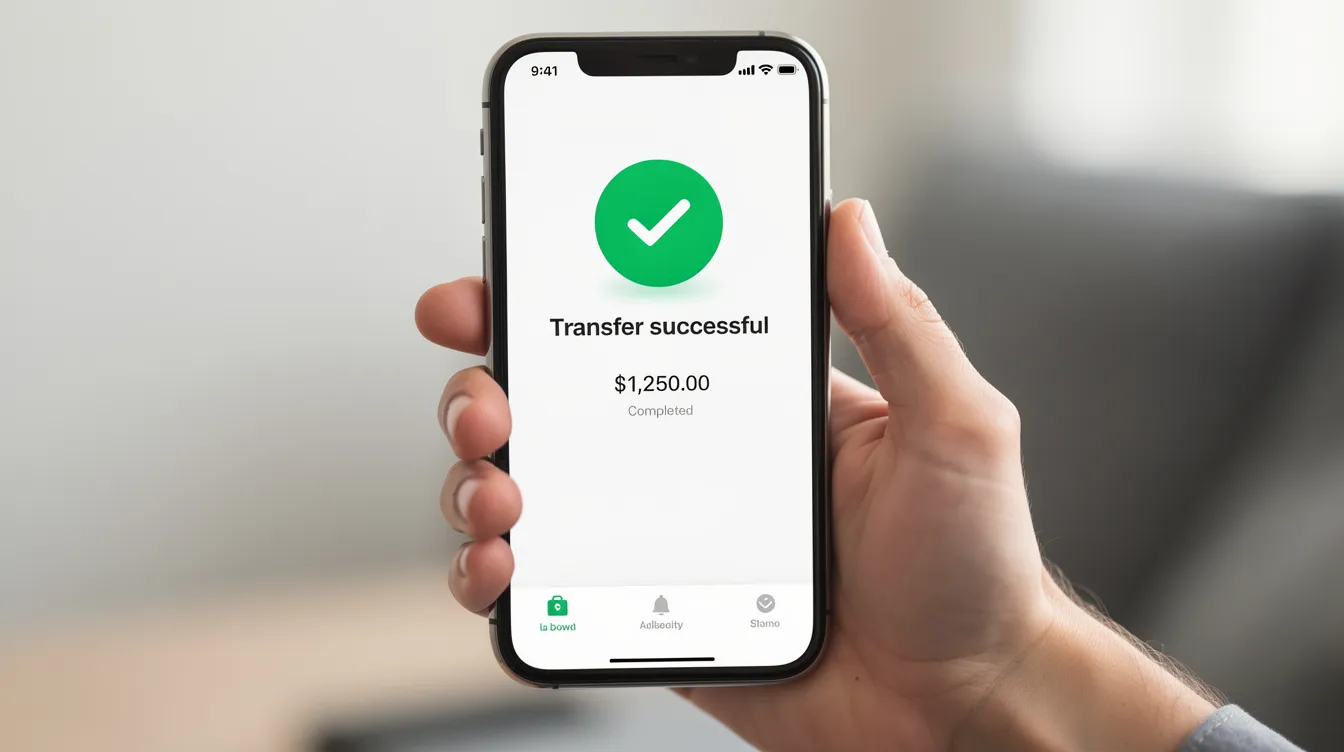
Speed matters, especially when you are sending money for an emergency or meeting a tuition payment deadline. Here is what to expect from each provider.
DCB Bank SWIFT transfers:
Generally take 1–5 business days depending on destination country, currency, correspondent banks involved, and time of day the transfer is initiated.
Most transfers typically reach recipients within 48 hours for major corridors.
Bank holidays in India and the recipient country, as well as compliance checks or missing documentation, can delay a DCB Bank international money transfer.
ACE Money Transfer:
Many transfers to India arrive within minutes, depending on the transfer route, payout method, and verification checks. Delivery times are estimates and are not guaranteed.
Using bank transfer funding, delivery commonly takes 1–2 business days.
Cash pickup is typically available the same day.
For context on the broader market:
77% of Wise transfers arrive in under 20 seconds, setting a high bar for speed in digital remittances.
Traditional bank transfers, including SWIFT payments, may take several business days, depending on the transfer route and intermediary banks.
Check DCB Bank's published cut-off times and Ace Money Transfer's estimated delivery times before authorizing payment, especially when transfers are urgent.
A headline claiming "zero fees" can be misleading if the exchange rate margin quietly absorbs the cost. What matters is the total amount that arrives in your recipient's account after all deductions, not just the fee line item.
DCB Bank fee structure:
DCB Remit displays applicable transfer fees and indicative exchange rates on its online remittance platform. The exchange rate may affect the final amount received by the beneficiary.
For foreign currency outward remittances from EEFC accounts, DCB charges 0.20% (minimum ?500) plus a commission in lieu of exchange at 0.15%.
GST on foreign currency conversion applies per government-mandated slabs.
Banks can charge interest rates within RBI's ceiling rates for trade-related credit facilities.
ACE Money Transfer fee model:
Flat fees per corridor: for example, sending from the UK to India typically costs around £1.99 with an FX spread of 0.1%–1.5%.
The platform shows a transparent "you send / they receive" quote before you confirm.
Occasional seasonal promotions or fee discounts apply for specific routes.
How this compares to other services:
Wise’s published pricing for a $350 transfer from the US to India lists fees ranging from $2.01 to $23.78, depending on the payment method.
Larger transfers usually incur lower fees with money transfer services on a percentage basis, making it worth batching smaller amounts when possible.
Always compare the full quote inclusive of fees and FX margin, not just the initial fee.
The mid-market rate is the true interbank exchange rate - the one you see on independent currency sites. Every provider adds a margin on top of it, and that margin is often the biggest hidden cost of an international money transfer.
DCB Bank's approach:
DCB Bank sources wholesale FX rates from the interbank market through its treasury desk but applies a markup when converting INR to USD, EUR, GBP, or other currencies.
For EEFC account transactions, the documented commission in lieu of exchange is 0.15%, though retail rates for standard outward remittances carry a wider margin.
The actual rate can change intra-day and is usually less favorable than the mid-market rate found on independent FX comparison sites.
ACE Money Transfer's approach:
ACE aims to offer competitive rates by managing FX efficiently across high-volume corridors, with published forex spreads between 0.1% and 1.50% depending on destination and payment method.
ACE Money Transfer lets customers review applicable transfer fees and exchange rates before confirming a transaction, helping them assess the cost of regular personal remittances
Even a small difference in the exchange rate can affect the amount received on larger transfers, such as tuition payments. For example, on a transfer equivalent to USD 10,000, a hypothetical 1.5% improvement in the exchange rate would represent approximately USD 150 before fees and other charges. Actual rates and potential savings vary by provider, currency pair and date.
A DCB Bank debit card can simplify cross-border spending, but it works differently from a dedicated outward remittance. Here is what you need to know.
What the card enables:
International debit cards allow global ATM access for cash withdrawal in foreign currency.
DCB Bank debit cards can be used at merchant outlets worldwide that accept the card's supported network, subject to the card type and international usage settings.
Transactions are debited directly in rupees regardless of the currency used at the point of sale or ATM.
The card has a daily withdrawal limit of up to Rs 100,000 from overseas ATMs.
The card features advanced security for online transactions, including OTP verification and transaction alerts.
Where it falls short for remittances:
Dynamic currency conversion and card network fees make debit cards less cost-effective for sending dedicated remittances to a recipient's bank account.
TCS on eligible foreign remittances under the Liberalised Remittance Scheme (LRS) depends on the transaction purpose and applicable threshold. Regulations may change. Please verify current requirements with an authoritative source.
A smarter use of your card:
You can still use a debit card as the funding method on Ace Money Transfer to pay for a dedicated international money transfer at competitive FX rates, combining the convenience of card funding with the cost efficiency of a specialist provider.
Check daily international spending limits, currency conversion charges, and ATM withdrawal fees associated with your specific DCB Bank debit card variant before relying on it for large overseas payments.
High-value cross-border payments from India carry additional documentation and regulatory requirements. Getting these right upfront prevents costly delays.
Typical large-transfer scenarios:
Paying university fees abroad under the Liberalised Remittance Scheme (LRS)
Funding overseas property purchases
Investing in foreign assets, commodities, or capital markets
Setting up a joint venture or branch office abroad (DCB charges ?15,000 per approval instance for this category)
DCB Bank's process for larger transfers:
Handled through authorised dealer branches with full Form A2 documentation.
As amounts increase, compliance checks become stricter: invoices, admission letters, property agreements, and proof of funds may all be required.
The LRS cap of USD 250,000 per financial year per person applies; transactions beyond this require separate RBI approval.
What Ace Money Transfer offers:
Some providers, including Ace Money Transfer, support larger transfers with lower fees and premium support from their teams, which can be helpful when moving amounts above standard thresholds.
ACE Money Transfer displays applicable transfer fees and exchange rates before you confirm your transfer, helping you understand the expected cost before sending.
Plan ahead: gather necessary documents, confirm transfer caps and timelines with your provider, and compare quotes from both DCB Bank and Ace Money Transfer before initiating substantial remittances.
Whether you send money through a traditional bank or a digital platform, security should be non-negotiable.
DCB Bank's protections:
DCB Bank is regulated by the Reserve Bank of India as a scheduled commercial bank under the Banking Regulation Act, with strict requirements for capital adequacy, KYC, and AML controls on international money transfers.
Digital security features include encrypted internet banking sessions, OTP-based authorization, and real-time transaction alerts for outgoing international transfers.
All outward remittances must comply with FEMA (Foreign Exchange Management Act) regulations.
ACE Money Transfer's protections:
ACE Money Transfer Limited is authorised and regulated by the UK Financial Conduct Authority (FCA) under the Payment Services Regulations.
HTTPS encryption protects all online sessions, and robust identity verification is required before any transfer is enabled.
Best practices for you:
Guard login credentials and avoid public Wi-Fi when authorizing transfers.
Enable transaction alerts on both your bank account and remittance platform.
Immediately contact your provider if you spot suspicious activity or an unauthorized charge on your account.
Sending money abroad from India through DCB Bank or any authorised dealer requires compliance with a specific regulatory framework. Here are the guidelines you need to follow.
Liberalised Remittance Scheme (LRS):
Resident individuals (including minors) are eligible to remit up to USD 250,000 per financial year (April–March) for permitted current and capital account transactions.
Covered purposes include travel, studies, medical expenses, maintenance of close relatives, purchase of property, and investments abroad.
Documentation requirements at DCB Bank:
PAN card (mandatory for all LRS transactions), identity proof, and address proof.
Form A2 declaration confirming purpose of remittance and that the sender stays within prescribed RBI limits.
For some categories, additional documents are needed: admission letters for education, invoices for business payments, property agreements, or medical certificates.
Trade-related credit rules (for business customers):
Pre-shipment credit can be liquidated within 360 days under RBI norms.
Post-shipment credit must be realized within 12 months from the date of shipment.
Export credit guarantees are provided by ECGC for banks, reducing risk on export financing.
Digital providers and compliance:
Digital providers touching Indian corridors must also comply with local and partner-country regulations, ensuring that official reporting and taxes (including TCS and GST) are correctly handled. Whether you use DCB Bank or Ace Money Transfer, the regulatory basis for outward remittances remains the same.
If you are a recipient in India, here is how inbound transfers work.
Receiving via SWIFT:
Overseas senders can transfer money to a beneficiary's DCB Bank account using SWIFT from their local bank. They need DCB Bank's SWIFT code (DCBLINBBXXX for the Mumbai head office), the recipient's account number, and branch details.
The recipient in India typically receives funds in INR, with DCB Bank applying its inward remittance FX rate if funds arrive in a foreign currency.
Receiving via digital providers:
ACE also supports UPI payout for corridors like UK to India, enabling instant credit without needing to share full bank account details.
Avoiding delays:
Verify that the beneficiary's account number, name spelling, and SWIFT code are accurate. Even minor errors in letters or numbers can trigger rejections or holds.
Compare different sending platforms for the best combination of speed and cost before asking the overseas sender to initiate the transfer.

Rather than fixating on one fee or one rate, use a simple three-part framework to compare the true cost of any international money transfer.
The three components:
Explicit transfer fee: The flat or percentage-based charge from DCB Bank or Ace Money Transfer issued at the time of transfer.
FX margin: The difference between the provider's offered rate and the mid-market rate. This is often the largest cost component.
Third-party or correspondent banking charges: Especially relevant for SWIFT-based transfers through DCB, where intermediary banks may deduct small fees before delivery.
The total cost of a transfer includes fees and exchange rates combined. A "zero fee" transfer with a 2% FX margin is more expensive than a £1.99 fee transfer with a 0.5% margin on most amounts.
Practical comparison:
| Amount Sent | DCB Bank (est. total cost) | ACE Money Transfer (est. total cost) |
|---|---|---|
| Equivalent of USD 500 | FX margin + GST + possible intermediary fee | £1.99 fee + ~0.5% FX spread |
| Equivalent of EUR 2,000 | FX margin + GST + possible intermediary fee | £1.99 fee + ~0.5% FX spread |
While large banks sometimes offer discounted pricing for preferred or corporate customers, specialized remittance services often remain convenient for everyday family support transfers.
Re-run this comparison periodically, as offers, corridors, and seasonal promotions from both DCB Bank and Ace Money Transfer can change over time.
There is no single right answer - the best provider depends on what you are sending, how much, and how often.
Choose DCB Bank when:
You are already a registered customer and need formal, documented transfers for education, property, or trade with detailed banking relationships.
The transaction involves complex business payments, letters of credit, or corporate approvals that require an authorised dealer bank.
You need a facility under the LRS that your bank can verify and report directly.
Choose Ace Money Transfer when:
You send frequent personal remittances and want lower fees and faster delivery as top priorities.
You value the convenience of managing everything through a mobile app or website without visiting a branch.
You need flexible payout options: bank deposit, cash pickup, or mobile wallet credit in the destination country.
Or combine both:
Many senders use DCB Bank for specific regulated payments (tuition invoices, property deals) and Ace Money Transfer for routine family support or emergency transfers. This approach lets you manage cost and compliance simultaneously.
These are actionable steps you can take today, irrespective of which provider you choose.
Batch smaller transfers into fewer larger ones where possible. This reduces the per-transaction fee impact and sometimes unlocks better exchange rates, whether you use DCB Bank or Ace Money Transfer.
Send during banking hours and avoid weekends or holidays in both countries to reduce settlement delays and potential rate volatility.
Monitor exchange rates over a few days or weeks if the transfer is not urgent. Exchange rate movements can affect how much your recipient receives, so it’s worth checking the available rate before sending. This is not financial or legal advice. Please consult a qualified professional.
Use online channels - DCB Remit or the Ace Money Transfer app - instead of cash-based or over-the-counter methods that may carry higher charges.
Always check the "they receive" amount, not just the "you send" amount, to understand the true value after conversion.
If you are ready to send money internationally, here are your next steps.
If you already bank with DCB Bank:
Contact your relationship manager or visit the nearest branch to confirm current fees, limits, and documentation for your intended international money transfer.
Alternatively, visit the DCB Remit platform to simulate a transfer quote and see the exchange rate and fees before you commit.
If you want a digital-first approach:
Sign up with Ace Money Transfer using your email, Google, or Apple ID. Create your account, verify your identity, and simulate a transfer quote to compare cost and delivery time with your bank.
Choose your destination country, payout method, and amount to see exactly what the recipient will receive.
Before any transfer:
Keep recipient details handy: full name, account number, SWIFT code, bank address, and contact info.
Gather any required documents (PAN, Form A2, invoices, or admission letters) to avoid delays at the compliance stage.
Consider running one or two initial test transfers with smaller amounts using both DCB Bank and Ace Money Transfer. Then choose the option that consistently offers better value and reliability for your specific corridor and transfer pattern. The difference in what your recipient actually receives could surprise you.
Disclaimer: This article is intended for general informational and educational purposes only and should not be construed as legal, regulatory, tax, business, or financial advice. While reasonable efforts have been made to ensure that all facts, figures, and data are accurate and valid as of the date of publication, no warranty or guarantee is given as to the ongoing completeness, accuracy, or currency of the information.
The content is based on information available at the time of publication. Regulations, government policies, market conditions, and service offerings may change over time and vary across jurisdictions and providers. As a result, some information may no longer be current or applicable. Readers should independently verify all information and consult qualified professional advisors before making any financial, legal, or business decisions.