ACE Money Transfer
ACE Money Transfer
14 Sep 2026
Picking the right payment gateway shapes how fast you get paid, how many customers complete checkout, and how smoothly you expand into new countries. This guide breaks down the top 10 payment gateways for 2026, compares their fees and capabilities, and walks you through every decision point that matters for global businesses.
A payment gateway is the technology that captures a customer's card or wallet data at checkout, encrypts it, and routes it for authorization so funds can reach your bank account. For any online store selling across borders in 2026, gateway choice directly affects approval rates, transaction fees, and which payment methods your customers can use.
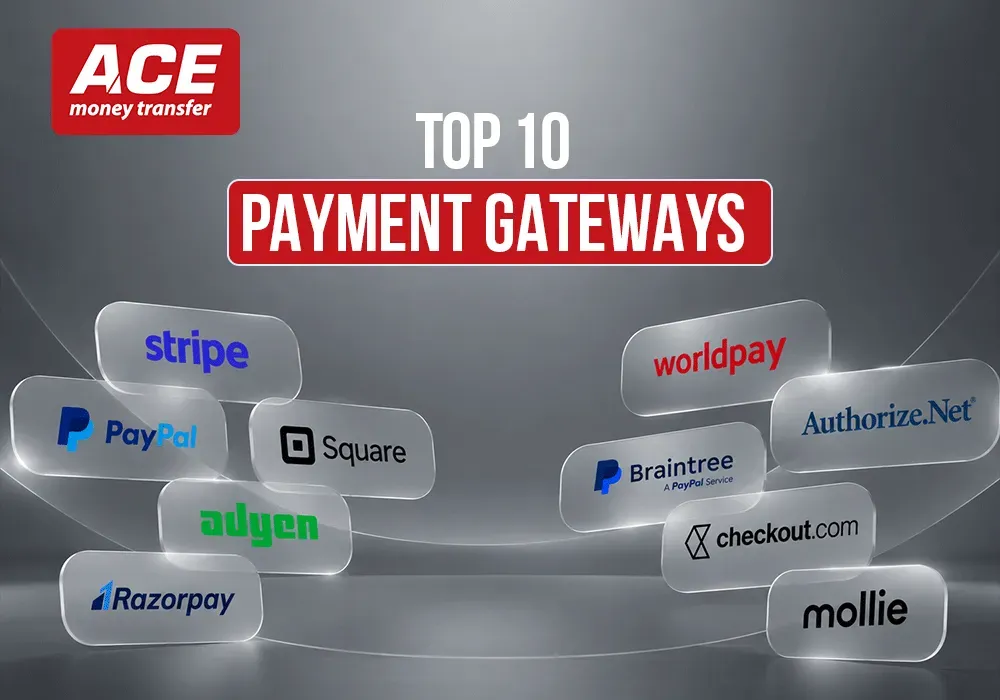
Here are the 10 best payment gateways for global businesses right now:
Stripe ; best for developers and API-driven businesses
PayPal ; best for instant brand trust and fast setup
Adyen ; best for enterprise omnichannel commerce
Checkout.com ; best for high-growth cross border ecommerce
Worldpay ; best for established enterprises needing scale and reliability
Braintree ; best for apps, subscriptions, and PayPal ecosystem integration
Square ; best for small retailers selling both offline and online
Amazon Pay ; best for converting Amazon-loyal shoppers
Authorize.net ; best for SMBs wanting a proven, customizable gateway
2Checkout (Verifone) ; best for SaaS and digital goods sold globally
The three core factors for choosing a payment provider are transaction fees, supported payment methods (including Apple Pay and other digital wallets), and how well the gateway handles international transactions.
One note: if you need to send money abroad person-to-person rather than accept payments on a website, ACE Money Transfer provides a convenient way to make international remittances through its app.
A payment gateway is the secure layer of software that captures and encrypts customer payment details on your website, app, or point-of-sale terminal and sends them to an acquiring bank or processor for authorization. It is the front door of every card or wallet transaction.
Three distinct roles exist in the payment chain:
Payment gateway: captures and encrypts sensitive payment data, routes authorization requests, returns approval or decline to the merchant and customer.
Payment processor: handles the messaging between gateway, card networks (Visa, Mastercard), and the issuing bank; manages clearing and settlement.
Merchant account: the holding account where settled funds sit before they reach your business bank account. An acquiring bank provides this.
Many modern online payment processing services bundle all three into one contract. Stripe, Adyen, and Checkout.com each act as gateway, processor, and acquirer in a single integration. Others, like Authorize.net, let you use the gateway only and pair it with a separate merchant account from your own acquiring bank.
Two security standards are non-negotiable for any credible payment gateway: PCI DSS Level 1 compliance (the card industry's highest data security standard) and, for European transactions, support for Strong Customer Authentication (SCA) under PSD2 via 3D Secure 2.x.
A simple example journey: a customer adds items to your online store, enters card details at checkout, and clicks "Pay." The gateway encrypts those details and forwards them to the processor. The processor contacts the issuing bank, which approves or declines. The gateway relays the result instantly. Later, the cleared funds settle into your merchant account, minus interchange and processing fees, and then transfer to your business bank account.
This section is a non-technical walkthrough of what happens during a typical online card transaction, from the moment a customer clicks "Pay" to the moment funds appear in your account.
Key steps in a card transaction:
Customer enters card or wallet data (or selects a saved method) at your checkout.
The payment gateway encrypts this data and transmits it to the payment processor.
The processor routes the authorization request through the card network (Visa, Mastercard, etc.) to the customer's issuing bank.
The issuing bank checks available funds, runs fraud and risk checks, and sends back an approval or decline.
The gateway relays the result to the merchant and the customer within seconds.
For approved transactions, a "capture" step settles the funds. The acquirer clears through the card network, deducts interchange and fees, and deposits the remainder into the merchant account.
The gateway sits between your checkout and the processor. It never moves money itself; it handles the data layer, encryption, and communication.
For international transactions, extra steps apply: currency conversion (which adds an FX margin), additional fraud screening, and sometimes longer authorization times. Gateways with local acquiring banks in foreign markets can skip cross border routing, which improves approval rates and lowers fees.
Some gateways also support alternative payment methods such as bank transfers, buy-now-pay-later services, and digital wallets. These follow similar authorization-and-settlement flows but use different underlying rails (bank APIs, wallet tokens, open banking connections) rather than card networks.
Before comparing individual providers, filter your options through these criteria. Choosing the right payment gateway early saves painful migration costs later.
Core factors to evaluate:
Transaction fees and pricing model: most charge a percentage plus a fixed fee per transaction (e.g. 2.9% + $0.30). Interchange++ models pass through the actual card-scheme cost with a known markup. Flat-rate pricing is simpler but often more expensive at scale. International transactions and currency conversion add extra costs on top.
Supported payment methods: cards (Visa, Mastercard, Amex), digital wallets (Apple Pay, Google Pay), local payment methods (iDEAL, SEPA, Klarna), bank transfers, and buy-now-pay-later options. The wider the coverage, the fewer sales you lose.
International payment gateway capabilities: how many currencies the gateway supports for charging and settlement, whether it has local acquiring in your target markets, and whether it handles multi currency support natively.
Payout speed: T+1 or T+2 business days is standard; some offer instant payouts for a fee. Cash flow depends on this.
Integration options: API-first platforms, hosted checkouts, SDKs, and pre-built ecommerce plugins. Choosing the right gateway depends on your business model and transaction volume.
Security and fraud prevention: PCI DSS compliance, tokenization, 3D Secure, machine-learning risk scoring.
Customer support: 24/7 customer support can affect revenue and trust directly; quality of support is often best judged by public merchant feedback. Responsive support is essential for resolving payment issues quickly. Limited support hours can lead to unresolved payment issues that cost you sales.
Global businesses often prioritize multi currency accounts and reliable international payment gateway providers over rock-bottom pricing. Very small merchants may prefer simple flat-rate fees, while high-volume merchants should negotiate interchange++ or volume discounts once monthly processing passes a threshold like £50K.
This snapshot gives you a quick comparison across the top 10. Each gateway's full review follows below.
Stripe: Best for developers and SaaS. 195+ countries, 135+ currencies. From ~2.9% + $0.30 domestically; +1.5% for international cards. Strong in North America, Europe, APAC.
PayPal: Best for trust and reach. 200+ markets, 25+ currencies. From ~2.99% + fixed fee domestically; +1.50% cross border. Global consumer recognition.
Adyen: Best for enterprise omnichannel. Local acquiring in dozens of countries. Interchange++ pricing, custom quotes. Strong in Europe, LATAM, APAC.
Checkout.com: Best for high-growth global merchants. 150+ currencies, 45+ countries with domestic acquiring. Interchange++ and flat-rate options. Supports over 20 payment methods globally.
Worldpay: Best for large-scale enterprises. 120+ currencies, 40+ countries. Monthly fees plus transaction fees; international surcharge up to ~2.20%.
Braintree: Best for apps and subscriptions. 130+ currencies, 40-50 countries. Flat percentage + fixed fee; PayPal ecosystem built in.
Square: Best for small omnichannel merchants. Flat-rate pricing, different online vs in-person rates. Limited international acquiring.
Amazon Pay: Best for converting Amazon shoppers. Key regions (NA, UK, parts of Europe). Percentage + fixed fee; cross border surcharges up to ~4%.
Authorize.net: Best for SMBs wanting stability. North America primary. $25/month + 2.9% + $0.30 (all-in plan).
2Checkout (Verifone): Best for digital goods and SaaS. Dozens of currencies, merchant-of-record option. From ~3.5% + fixed fee.
Exact fees and terms change frequently. Confirm current rates with each payment gateway provider before committing.
Stripe has become one of the most widely adopted international payment gateway providers, used by startups and large enterprises in nearly 50 countries. Stripe processed $1.4 trillion in card payments in 2024, up 38% from the prior year, making it one of the highest-volume platforms in the world.
Stripe supports payments in over 135 currencies and various payment methods, including Apple Pay, Google Pay, SEPA Direct Debit, iDEAL, and dozens of other local payment options. Its API-first architecture lets developers build custom checkout flows, embed payment elements (Stripe Elements), and manage subscription billing, marketplace splits (Stripe Connect), and invoicing from a single integration.
Indicative transaction fees:
U.S. domestic cards: 2.9% + $0.30
European domestic cards: ~1.4% + £0.20 (varies by country)
International cards: additional ~1.5%
Currency conversion: additional ~1%
Chargeback fee: $15 per dispute (U.S.)
Verify region-specific rates on Stripe's pricing page, as they differ by country.
Pros: scalable from one transaction to billions; detailed analytics dashboard; Radar fraud tools with machine-learning risk scoring; broad global payment coverage.
Cons: fees compound with international transactions and currency conversion; advanced features require developer resources; chargeback costs add up; smaller merchants may find webhook and SDK complexity heavy.
PayPal operates in over 200 markets and supports 25+ currencies for receiving payments. Its brand recognition alone can lift conversion rates on an online store, especially for first-time visitors who have not purchased from you before. PayPal is a popular choice for merchants needing quick setup; you can start accepting card payments within minutes.
PayPal functions as both a digital wallet and a payment gateway. Through PayPal Checkout, merchants accept credit or debit cards, PayPal balances, and Pay Later options. Card processing can also run through Braintree (owned by PayPal) for deeper integration.
PayPal handles international transactions with buyer protection and one-touch checkout, reducing friction at payment. But that convenience comes at a cost.
Typical fees (U.S.):
Domestic standard: ~2.99% + fixed fee (fixed fee varies by currency)
International commercial transactions: additional ~1.50%
Currency conversion: additional FX margin
PayPal offers discounted rates for businesses exceeding £50K monthly card revenue, so high-volume merchants should negotiate.
Pros: consumer trust, fast onboarding, extensive buyer adoption, PayPal business account doubles as wallet and gateway.
Cons: fee complexity across different transaction types, potential account holds, FX markups that are not always transparent, potentially higher costs than interchange++ alternatives at scale.
Adyen combines gateway, acquiring, and risk management into a unified platform. Clients include Uber, H&M, and Microsoft. Adyen is designed for enterprises with high transaction volumes, and its pricing reflects that: interchange++ style, with per-method fees, typically requiring custom quotes.
What sets Adyen apart among top international payment gateways is its local acquiring in multiple countries for better authorization rates. When a customer in Brazil pays with a local card and Adyen processes through its Brazilian acquiring entity, the transaction avoids cross border routing. This reduces declines and lowers interchange costs.
Adyen supports major card networks, Apple Pay, Google Pay, and an extensive list of regional payment options in Europe, LATAM, and APAC. Dynamic currency conversion is available for Visa, Mastercard, and Maestro at point-of-sale terminals in specific territories.
The platform also provides omnichannel support: online, in-app, and in-store through unified terminals. Its risk engine, RevenueProtect, uses machine-learning models trained on Adyen's aggregate transaction data.
Pros: local acquiring yields higher approval rates; strong analytics and reporting; single platform for online and offline.
Cons: not economical for small merchants; minimum volume thresholds for onboarding; custom pricing means less upfront transparency; steeper learning curve for teams without dedicated payments engineers.
Since its founding in 2012, Checkout.com has grown into a full-stack payment provider for digital-first global businesses. Checkout.com supports payments in over 150 currencies and offers domestic acquiring in 45+ countries, making it one of the strongest international payment gateway providers for cross border ecommerce.
Checkout.com provides faster settlement times by managing payment flows in-house rather than relying on third-party acquirers. It holds principal membership with Visa and Mastercard, giving it direct access to card network infrastructure. The platform supports over 20 payment methods globally, including cards, Apple Pay, and region-specific options.
Its modular product set includes a payment gateway, acquiring, fraud prevention (baseline free; "Fraud Detection Pro" paid for custom rules and backtesting), analytics, and payout tools. Smart routing and granular decline codes help merchants optimize payment performance.
Checkout.com uses an interchange++ pricing model for higher turnover businesses, with flat-rate options available for others. No setup fees in many cases.
Target customers: mid-market and enterprise, marketplaces, fintechs. Onboarding is more involved than plug-and-play alternatives, and pricing is typically custom.
Checkout.com also offers a pre-built payment interface for merchants who want easy integration without deep API work.
Worldpay (now under Global Payments) has been processing card payments for decades, serving both SMEs and large enterprises across the UK, Europe, North America, and beyond. It offers both payment gateway and acquiring services, with support for 120+ currencies and 40+ countries for international card payments.
Its product range covers online payment gateway, card machines, virtual terminals, and recurring billing options suitable for global businesses. Worldpay also provides dedicated account management for larger clients.
Pricing structure: Worldpay charges monthly fees plus per-transaction fees. International surcharges can reach ~2.20%. Chargeback fees, fraud screening fees, and refund fees apply separately. Some plans include early termination fees, so read contracts carefully.
For payouts, Worldpay supports ~23 currencies for international payments via certain services; domestic payouts use local clearing systems and are faster.
Pros: proven scale and reliability, broad payment method coverage, strong in UK businesses and European markets.
Cons: contract length and early termination fees can lock merchants in; fee transparency is weaker than newer competitors for smaller merchants; total cost of ownership requires careful calculation.
Braintree, a PayPal service, focuses on developer-friendly integrations for ecommerce, SaaS, and mobile-first businesses. Through a single integration, merchants process payments via major cards, PayPal, Venmo (where available), Apple Pay, and Google Pay.
Braintree supports 130+ currencies (including many less common ones) and operates in 40-50 countries. Settlement currency options depend on the merchant's country.
Indicative pricing: flat percentage plus fixed fee per transaction, with extra charges for cross border or less common ("exotic") currencies. Exact rates vary by country and volume.
Braintree's recurring billing tools handle automated recurring payments, dunning, and subscription lifecycle management. Its SDKs cover iOS, Android, and JavaScript, with Drop-in UI components for fast checkout integration.
Pros: deep PayPal ecosystem integration (access to PayPal's buyer network), strong SDKs, solid for subscription billing and marketplace payouts.
Cons: fees can accumulate with cross border transactions and currency conversion; settlement and reporting are tied into PayPal infrastructure; for pure global scale with local acquiring, Adyen or Checkout.com often perform better.
Square started in 2009 with mobile card readers and has grown into a full commerce platform covering POS hardware, online store tools, payment links, invoices, and a payment gateway. It is built for small businesses that sell both offline and online.
Square supports accepting card payments via major card networks and wallets like Apple Pay, Google Pay, and contactless payments across its supported markets. Its fee model uses transparent flat rates per transaction, with different rates for online transactions vs in-person swipes/taps.
Pros: fast setup (minutes to start processing), free basic POS software and analytics, simple pricing with no hidden fees or monthly fees for the basic tier.
Cons: less suitable for complex global businesses needing advanced routing, many local payment methods, or multi currency support. International acquiring coverage is narrower than Stripe or Adyen. Flat-rate pricing, while simple, costs more than interchange++ at higher volumes.
Amazon Pay lets customers pay on third-party sites using their existing Amazon login and stored credit or debit cards. For smaller or lesser-known online stores, this borrowed trust can reduce cart abandonment.
Amazon Pay is available in key regions including North America, the UK, and parts of Europe. It supports multiple currencies and is suitable for international transactions, though its geographic reach is narrower than Stripe or Adyen.
Pricing: percentage plus fixed fee, with additional cross border and currency conversion surcharges that can push total costs above 4% per transaction on international payments. Amazon provides its own fraud protection tools.
Pros: familiar brand, frictionless checkout for Amazon customers, easy plugin integrations with popular ecommerce platforms, strong anti-fraud tools.
Cons: high fees for cross border payments, dependence on Amazon's policies, potential account restrictions. Payment providers can impose reserves or temporary restrictions on accounts, and Amazon Pay is no exception.
Founded in 1996 and now a Visa subsidiary, Authorize.net serves hundreds of thousands of merchants, primarily in North America and the UK. It is a traditional yet solid online payment gateway supporting major cards, Apple Pay, PayPal, and e-checks (ACH direct debit).
Merchants can choose gateway-only mode (pair with their own merchant account) or the all-in-one plan that bundles a merchant account: $25/month gateway fee plus 2.9% + $0.30 per transaction. Default batch settlement deposits funds in 2-3 business days.
Authorize.net offers strong fraud detection tools (Address Verification, CVV matching, velocity filters), recurring billing support, and virtual terminal capabilities for mail and phone orders.
Best-fit use cases: established SMBs and B2B companies needing stability, flexible integration, and PCI-compliant payment processing without needing cutting-edge APIs. Setup fees are minimal, but compare its total costs against newer flat-rate competitors if you process high volume.
2Checkout, now part of Verifone, specializes in cross border ecommerce, digital products, and subscription businesses. It supports dozens of currencies, several alternative payment methods, and has a strong presence in European and international markets.
Indicative pricing: from around 3.5% + fixed processing fee per sale. This is higher than domestic-only platforms but competitive for global payment coverage, especially when using the merchant-of-record model.
The merchant-of-record option is 2Checkout's standout feature. Under this model, 2Checkout acts as the legal seller, handling VAT/tax compliance, currency conversion, and regulatory obligations in each jurisdiction. SaaS companies and digital content providers selling into foreign markets can avoid setting up local entities.
Core features include subscription billing, dunning management, tax/VAT calculation, and compliance tools.
Ideal customer profile: SaaS, software downloads, and online services selling heavily into international customers without wanting to establish separate legal entities per country.
This article focuses on payment gateways for businesses that need to accept payments from customers. But many readers also need to send money abroad to family or friends.
ACE Money Transfer is an app for individuals who want to send international remittances with convenient transfer options, clear fee information, and exchange rates shown before sending. It supports corridors from the UK and Europe to Asia and Africa, with payout options including bank deposit, cash pickup, and mobile wallets. Transfer times vary depending on the transfer route, payment method, and other applicable processing requirements. Check the estimated delivery time before sending.
Compared to traditional bank transfers, ACE Money Transfer offers lower fees, better FX rates, and an easier mobile experience. This matters for recurring payments home, where even small rate differences add up over months.
ACE Money Transfer is not a payment gateway. It is optimized for person-to-person global transfers, not for accepting card payments on an online store. If you need to process payments from customers, use one of the gateways listed above. If you need to send money to someone overseas, ACE Money Transfer fills that gap.
Exchange rates fluctuate and the rate you receive may differ from any rates quoted. Always check the live rate at acemoneytransfer.com before sending.
Transaction fees can consume a large share of margin for low-margin businesses. Understanding how pricing models work helps you compare payment processing companies on equal terms.
Common structures:
Flat-rate: a fixed percentage + fixed fee per transaction (e.g. 2.9% + $0.30). Simple, predictable. Used by Stripe, Square, and Braintree at standard tiers.
Interchange++: the actual interchange rate set by the card scheme + card network assessment + the provider's markup. More transparent; used by Adyen, Checkout.com, and some Stripe enterprise plans. Costs fluctuate by card type and region.
Blended: a single combined rate that obscures how much is interchange vs markup. Common with legacy processors.
Extra costs to watch for:
Cross border surcharges (often 1-1.5% on top)
Currency conversion margins (another ~1%)
Chargeback fees ($15-$25 per dispute at most providers)
Monthly gateway or statement fees
Setup fees (rare with modern providers, still common with legacy ones)
Fixed transaction fees disproportionately affect low-value purchases. On a £10 order, a £0.20 fixed fee is 2% of the sale; on a £500 order, it is 0.04%. High-ticket merchants should focus on reducing the percentage component; low-ticket merchants should negotiate the fixed fee or find providers with lower per-transaction minimums.
Transaction fees can become substantial at high sales volumes. Once monthly volumes pass a threshold (Mollie offers lower bespoke IC++ rates for businesses over £50K monthly; Cashflows has a dynamic tiered pricing engine based on transaction volume), negotiating is worthwhile.
Handling domestic payments is straightforward: one currency, one regulatory regime, one set of card-scheme rules. Processing international transactions adds currency conversion, extra intermediaries, and higher fraud risk.
An international payment gateway distinguishes itself through multi currency support (charging and settling in multiple currencies), local acquiring in foreign markets, multi-language checkout, and regional payment methods. Most international payment gateways offer these features; the depth of coverage varies.
Cross border and FX fees can add 2-3% to each transaction. Local acquiring eliminates much of this cost. When Adyen processes a German customer's card through its German acquiring entity, the transaction is domestic, not cross border. The merchant pays domestic interchange instead of international interchange, and approval rates rise because the issuing bank sees a local acquirer.
A concrete example: a UK store selling only in GBP uses a domestic gateway and pays ~1.4% + £0.20 per transaction. The same store expanding into Europe, needing EUR support, suddenly faces cross border fees of 1-1.5% plus FX conversion. Switching to a gateway with European local acquiring (Stripe, Adyen, or Checkout.com) can cut those extra costs and improve conversion rates.
Top international payment gateways like Stripe, Adyen, and Checkout.com are often better choices for ambitious cross border growth than purely domestic providers.
The payment methods your gateway supports directly affect how many customers complete checkout. If a customer's preferred payment method is missing, they leave.
Core categories a gateway should cover:
Credit and debit cards: Visa, Mastercard, Amex, and relevant regional networks (e.g. Cartes Bancaires in France, Bancontact in Belgium). Accepting card payments is table stakes.
Digital wallets: Apple Pay, Google Pay, Samsung Pay. These reduce checkout friction on mobile through tokenization and biometric authentication. Mollie supports over 35 payment methods including major credit cards and wallets for UK customers.
Local payment methods: iDEAL (Netherlands), SEPA Direct Debit (Eurozone), Klarna and other BNPL providers, Boleto (Brazil), UPI (India). Merchants targeting multiple regions should research which local payment options their international customers actually use.
Bank transfers and open banking: direct account-to-account payments. Growing in Europe under PSD2. Revolut accepts payments in 21 currencies and 33 with its wallet.
Recurring billing: payment gateways enable recurring billing automation for subscriptions and payments. Saved cards and tokenized payment methods let subscription or membership businesses charge customers on schedule without requiring re-entry of payment details.
Pick gateways that cover the accepted payment methods in your target markets. Offering several alternative payment methods, not just cards, can improve conversion by 10-20% in markets where alternative methods dominate.
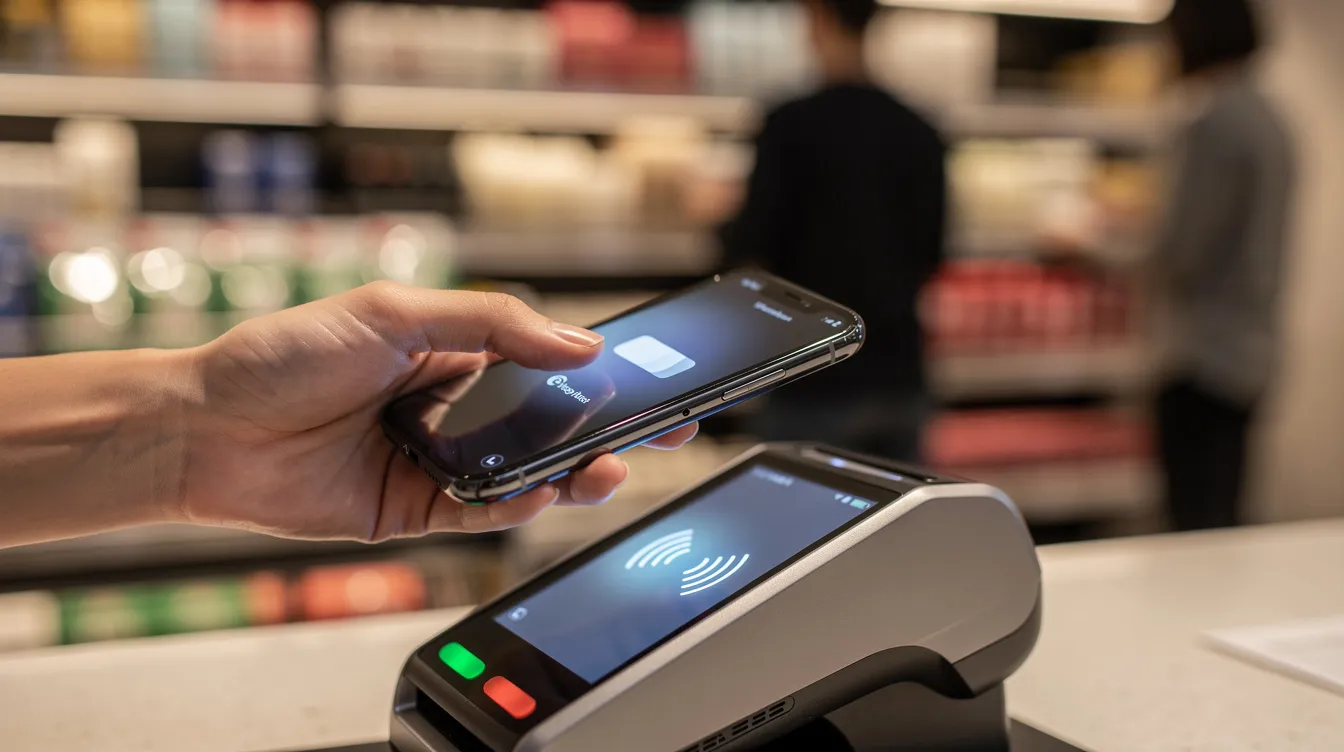
A merchant account is a specialized bank account provided by an acquiring bank. It sits between the payment processor and your business bank account, holding settled funds temporarily before they transfer to your main account.
Many modern payment providers bundle a merchant account behind the scenes. Stripe, Adyen, Square, and PayPal all act as aggregators: you sign up, and they handle acquiring without requiring you to open a separate merchant account. Authorize.net and Worldpay can work either way; they offer bundled plans or let you bring your own acquiring bank.
Pros of a standalone merchant account: potentially better rates through direct acquirer negotiation, more control over fund flows, fewer intermediary dependencies.
Pros of aggregated solutions: faster setup (often same-day), simpler onboarding, no separate underwriting process.
For most small businesses, an aggregated solution is sufficient. Larger merchants or those in higher-risk categories may benefit from their own merchant account and a direct acquiring relationship. Factor merchant account requirements into your gateway choice, especially if switching banks or acquirers is likely as you scale. Payment providers can impose reserves or temporary restrictions on accounts, particularly for new or high-risk merchants; a standalone merchant account can reduce this risk.
Payment security protects your revenue, your reputation, and your customers' sensitive payment data. Features of payment gateways include security, fraud protection, and international sales handling; skipping any of these creates real liability.
Standards and tools every gateway should offer:
PCI DSS Level 1 compliance: PCI DSS compliance is mandatory for handling card payments. Any gateway processing significant volume must meet this standard.
3D Secure (version 2.x): required for SCA compliance in the EU and UK. Adds an authentication step that reduces fraud without adding excessive friction.
Tokenization: replaces card numbers with tokens so raw card data never touches your servers.
Encryption: data in transit (TLS) and at rest must be encrypted.
Machine-learning risk scoring: Stripe's Radar, Adyen's RevenueProtect, and Checkout.com's Fraud Detection Pro all use aggregated transaction signals to score risk in real time.
Online payment fraud losses reached $48 billion globally in 2023, up from $17.5 billion in 2020. Good fraud systems reduce chargebacks without blocking too many genuine transactions; this balance is critical for international payment gateways handling diverse buyer profiles.
Several providers are regulated financial institutions in their own right. Trust Payments is regulated by the UK FCA and Malta Financial Services Authority, and exceeded £1 billion in monthly processing volumes by July 2024. Trust Payments supports payments in over 100 currencies. ConnectPay is a licensed Electronic Money Institution in Europe. Cashflows became regulated by the FCA as an electronic money institution in 2011.
Monitor your fraud metrics and chargeback ratios regularly using the reporting tools your gateway provides.
Your integration approach affects development effort, branding control, and PCI compliance scope. Various payment gateway types exist, including hosted, integrated, and traditional; each has trade-offs.
Hosted or redirect checkouts (e.g. PayPal Standard, some Worldpay pages) send the customer to the provider's payment page. Setup is fast, PCI burden is minimal (the provider handles card data), but you lose control over checkout design and user experience.
API or direct integrations (e.g. Stripe Elements, Adyen Web Components) embed payment fields directly into your site. You control the look and flow, but you need developer time and must meet stricter PCI requirements (SAQ A-EP or SAQ D depending on implementation). Checkout.com offers a pre-built payment interface that sits between full hosted and full API, giving merchants an easier path.
Plugin-based integrations are a middle ground. Mollie provides plugins for over 10 ecommerce platforms. Trust Payments offers shopping cart plugins for major platforms. Revolut provides plugins for major ecommerce platforms like Shopify. Stripe supports integration with over 135 currencies and multiple payment methods through pre-built connectors for Shopify, WooCommerce, Magento, and others.
Smaller merchants or non-technical teams should start with hosted solutions or plugins and consider migrating to custom API integrations as volume grows. Check whether your ecommerce platform already has a pre-built plugin for your chosen gateway before building anything custom.
The right international payment gateway can accelerate expansion into new markets by removing payment friction. Multi-currency pricing, local payment options, and settlement in your home currency affect cash flow and accounting directly.
Some gateways provide local entities or banking relationships that reduce cross border fees and improve transaction approval rates. Adyen, Checkout.com, and Stripe each maintain acquiring licenses in multiple countries for this purpose.
Align your gateway choice with your expansion roadmap. If you plan to enter Southeast Asia in the next two years, check whether your provider has local acquiring there. If you plan to sell into Latin America, verify which local payment methods and currencies are supported.
For person-to-person remittances or paying overseas staff, specialized apps like Ace Money Transfer may complement (not replace) a payment gateway. Gateways process customer-to-business payments; remittance apps handle person-to-person global transfers.
Many businesses use multiple payment gateways to increase conversion rates and reduce risk. This is common among mid-market and enterprise merchants.
Benefits:
Redundancy if one provider has an outage
Better rates by routing specific transaction types to the cheapest provider
A/B testing payment performance across providers
Access to different global payment methods in specific regions
Drawbacks:
More complex integration and reconciliation
Higher maintenance overhead
Potential for inconsistent customer experience across gateways
Separate fraud rule sets to manage
Smaller businesses usually start with one primary gateway and consider adding a second once volumes justify the operational complexity. A common multi-gateway setup: Stripe as the primary for card payments and API-driven checkout, plus PayPal as a secondary option for customers who prefer wallet-based payment. Another example: Adyen for European and APAC volume, plus a local gateway for a specific market where Adyen lacks coverage.
Switching gateways later means re-integrating APIs, migrating tokenized card data, and potentially disrupting recurring payments. Avoid these mistakes early.
Focusing only on headline transaction fees: a 2.5% rate with hidden fees and monthly fees can cost more than a 2.9% flat rate with no extras.
Ignoring international capabilities: choosing a domestic-only gateway and then trying to expand internationally forces a costly migration or a second integration.
Underestimating integration effort: a powerful API means nothing if your team lacks the developers to implement it. Cashflows offers card payments available within hours for merchants who need speed.
Neglecting customer support quality: payment issues at 2 AM on a Saturday need resolution. Providers with limited support hours leave problems festering.
Signing long contracts with early termination fees: some legacy providers lock merchants into multi-year agreements. If the service underperforms, you pay to leave.
Not planning for growth: a gateway that works at 100 transactions/month may not handle 10,000/month efficiently, or may lack the global payment coverage you need later.
Run a small pilot or parallel test with 2-3 shortlisted providers before fully committing. Process real transactions, measure approval rates, test customer support responsiveness, and compare actual (not quoted) fees.
Match your business model with the gateway built for it:
SaaS and subscription businesses: Stripe (Billing module), Braintree (recurring tools), 2Checkout (merchant-of-record with VAT handling)
Large global retailers: Adyen (omnichannel + local acquiring), Checkout.com (150+ currencies + smart routing), Worldpay (scale + reliability)
Marketplaces: Stripe Connect (split payments, onboarding), Adyen for Platforms (marketplace payouts)
Small omnichannel merchants: Square (POS + online), PayPal (fast setup + consumer trust)
Digital goods sellers into foreign markets: 2Checkout (merchant-of-record eliminates need for local entities)
Person-to-person global transfers (e.g. migrants sending money home): Ace Money Transfer, not a payment gateway
Mollie's UK operations experienced triple-digit year-on-year growth in the first quarter of 2024, indicating rising demand for its payment solutions. Trust Payments exceeded £1 billion in monthly processing volumes by July 2024, demonstrating scale for merchants needing enterprise-grade processing.
Prioritize providers whose strengths align with your primary revenue streams rather than chasing the best payment gateway by brand name alone.

Do I need a separate merchant account? Most modern providers (Stripe, PayPal, Square, Adyen) bundle acquiring and merchant account functionality. You only need a standalone merchant account if you want direct acquirer relationships for rate negotiation or if your payment gateway provider offers gateway-only mode (e.g. Authorize.net).
Which gateway is the best payment gateway for international transactions? Stripe, Adyen, and Checkout.com are the strongest among top international payment gateways. Each offers local acquiring in multiple countries, multi currency support, and broad coverage of international payment methods. The best fit depends on your volume and target markets.
Can I accept Apple Pay through my existing gateway? Most major gateways (Stripe, Adyen, Checkout.com, Braintree, Square, Authorize.net) support Apple Pay and Google Pay. Check your provider's documentation to enable it; setup is typically a configuration toggle plus domain verification for web-based Apple Pay.
How quickly will I receive my funds? Standard payout times are T+1 or T+2 business days for most providers. Some offer instant or same-day payouts for an extra fee. Authorize.net's default batch settlement deposits in 2-3 business days. Checkout.com provides faster settlement times by managing payment flows in-house.
Can I negotiate my transaction fees? Yes, once monthly processing reaches a threshold (often £50K+/month). PayPal offers discounted rates for businesses exceeding £50K monthly card revenue. Mollie offers lower bespoke IC++ rates for businesses over £50K monthly. Stripe, Adyen, and Checkout.com all offer custom pricing for high-volume merchants.
What is the difference between a payment gateway and a money transfer app? A payment gateway lets businesses accept payments from customers on websites and apps. A money transfer app like Ace Money Transfer lets individuals send money person-to-person across borders. They serve different purposes and are not interchangeable.
Revisit your payment setup annually. Pricing, regulations, and customer payment preferences evolve; the right payment gateway for your business this year may not be the best fit in two years.
The best payment gateway for your company depends on five factors: transaction fees (including cross border costs and currency conversion), international capabilities, supported payment methods, integration options, and customer support quality.
No single gateway is the right answer for every business. A SaaS company selling subscriptions to international customers has different needs than a UK retailer processing in-person card payments. Stripe's API depth suits developer-heavy teams. Adyen's local acquiring benefits high-volume enterprises. Square's simplicity fits small omnichannel sellers.
Shortlist 2-3 gateways from this list, compare real-world transaction fees for your specific transaction mix (not just headline rates), and test checkout flows with actual customers before signing a contract. Pay attention to hidden fees, early termination fees, and how responsive support is when something breaks.
For personal international money transfers, Ace Money Transfer is a separate, dedicated solution optimized for sending money abroad quickly and securely; it complements rather than replaces a business payment gateway.
Payment technology moves fast. Staying flexible with your payment solutions, reviewing your setup annually, and keeping pace with new global payment methods and regulations will position your business to capture sales wherever your customers are.
Disclaimer: This article is intended for general informational and educational purposes only and should not be construed as legal, regulatory, tax, business, or financial advice. While reasonable efforts have been made to ensure that all facts, figures, and data are accurate and valid as of the date of publication, no warranty or guarantee is given as to the ongoing completeness, accuracy, or currency of the information.
The content is based on information available at the time of publication. Regulations, government policies, market conditions, and service offerings may change over time and vary across jurisdictions and providers. As a result, some information may no longer be current or applicable. Readers should independently verify all information and consult qualified professional advisors before making any financial, legal, or business decisions.