ACE Money Transfer
ACE Money Transfer
26 Oct 2026
International money transfers can feel overwhelming, especially when regulations, exchange rates, and documentation requirements all demand your attention at once. If you hold an account with Tamilnad Mercantile Bank, you already have access to a well-established set of forex and remittance services designed for individuals, NRIs, and businesses alike.
This guide walks you through everything you need to know - from sending money abroad and receiving funds from overseas to managing trade payments and understanding the charges involved.
Tamilnad Mercantile Bank Limited, a private sector bank headquartered at 57, V.E. Road, Tuticorin 628 002, Tamil Nadu, provides international money transfer services through its dedicated Foreign Exchange Operations and International Banking Division. Customers can send and receive international money transfers through three primary channels: outward remittances (sending money overseas from India), inward remittances (receiving money from abroad into an Indian bank account), and NRI remittances handled through specialised NRE, NRO, and FCNR accounts.
International money transfers can be categorised as outward or inward remittances, depending on the direction of the funds. Outward remittance is the process of sending money overseas from India, while inward remittance is the process of receiving money from abroad into an Indian bank account.

TMB's International Banking Division (IBD) in Chennai serves as the hub for cross-border transactions. Located at Floor 2, D.No.269/2-4, Avvai Shanmugam Road, Royapettah, Chennai, Tamil Nadu 600014, the IBD handles forex operations, NOSTRO account management, and correspondent banking relationships. You can reach the division at ibd@tmbank.in for details on international transfers.
At its core, an international money transfer works like this: your bank sends a secure electronic message through the SWIFT network to the beneficiary's bank (or to a correspondent bank that holds a foreign currency account on your bank's behalf). The funds move through these intermediary channels before arriving at the recipient's account. Tamilnad Mercantile Bank supports INR for international transfers, converting to or from foreign currencies as needed.
Common use cases for TMB international transfers include:
Paying tuition fees for students studying abroad
Sending family maintenance or gift payments to relatives overseas
Settling import bills for goods purchased from foreign suppliers
Receiving export proceeds from international buyers
Making travel-related payments or purchasing foreign currency
Online purchases using a TMB credit card with cross-border capability
Key benefits of using TMB for international transfers:
Compliance with Reserve Bank of India and FEMA guidelines is mandatory for international transfers, and TMB ensures all remittances follow these frameworks
Strong branch presence across Tamil Nadu with localised support
Dedicated NRI banking products (NRE, NRO, RFC, FCNR accounts) with repatriation facilities
Published schedule of charges for transparency
Access to the FX e-connect portal for eligible accounts
This section is your step-by-step guide to initiating an outward remittance from a TMB savings, current, NRE, or NRO account. Whether you need to pay a university overseas, send money to a family member, or settle an import invoice, the process follows a structured path.
Before initiating a transfer, you need to meet the following requirements:
Active TMB account: You must hold a savings, current, NRE, NRO, or other eligible account with Tamilnad Mercantile Bank.
KYC compliance: Valid identity and address proof (Aadhaar, Passport, utility bills). PAN card is mandatory.
LRS compliance: The Reserve Bank of India’s LRS allows resident individuals to remit up to USD 250,000 per financial year for permitted transactions, subject to applicable rules. Regulations may change. Please verify current requirements with an authoritative source. This applies to resident individuals for purposes like tuition, medical treatment, travel, investments, gifts, and family maintenance.
Purpose documentation: Outward remittance from Tamilnad Mercantile Bank requires purpose documentation under the Liberalised Remittance Scheme. Documentation needed for outward remittances varies based on the purpose of the transfer - a university fee invoice for education, a medical estimate for treatment abroad, or an import invoice for trade payments.
Tax forms: For certain transactions, Form 15CA and 15CB may be required, particularly for amounts or payment types that require auditor certification.

Visit your nearest TMB branch in Tamil Nadu or any other state where TMB operates.
Request and fill in the Outward Remittance Application Form, specifying the foreign currency, amount, and purpose code.
Provide complete beneficiary bank details: bank name, full address, account number, SWIFT/BIC code, and IBAN (if the destination country requires it). Include intermediary bank information if applicable.
Submit supporting documents: proof of purpose (invoice, admission letter, medical estimate, travel booking), KYC documents, PAN, and LRS declaration.
The bank verifies your documents, applies the prevailing forex rate, debits your account, and sends SWIFT instructions to its correspondent or NOSTRO bank abroad.
Collect your transaction reference number for tracking.
For students, TMB also offers a "Study Abroad Assistance" service with simplified procedures - sometimes waiving service charges for certain educational remittances. You'll need a request letter, declaration form, and beneficiary bank details with SWIFT and intermediary information.
TMB's FX e-connect portal allows eligible account holders to initiate outward remittances, forward contracts, and letters of credit online. To access it, you need to provide PAN, Aadhaar, and (for trade clients) your IE code or LEI code. While full end-to-end online processing may still require document submission at a branch, the portal streamlines the initial stages of setting up an international fund transfer, including selecting the account to debit and reviewing the forex rate.
Tamilnad Mercantile Bank applies exchange rates that include a conversion markup over the interbank rate. For outward remittances, the published charges are:
Remittance fee: Fees vary by bank and transaction type. Verify the current fee schedule with the relevant bank before publishing.
SWIFT charge: ?1,000 per transaction
TCS (Tax Collected at Source): Applicable on remittances exceeding INR 10 lakh in a financial year for certain categories
GST: Applied on service fees and forex margin
Always ask your branch for the latest schedule and tax-related charges specific to your transaction type and amount.
SWIFT transfer times vary by bank, destination, and compliance checks. depending on the destination country, intermediary bank processing, and compliance checks. If your documentation is submitted before the branch's daily cut-off time, same-day processing is possible. Plan at least 2–3 business days in advance for time-sensitive payments.
Tamilnad Mercantile Bank’s 2024–25 annual report confirms that it enabled RuPay credit cards for UPI transactions. Verify current availability with the bank before publishing. However, card transactions involve a forex markup by the card network and issuer, plus potential cross-border fees. RBI rules on foreign currency card transactions apply. This method is best suited for smaller purchases, subscriptions, or travel expenses rather than large-value trade or education payments.
Whether you are an NRI sending earnings back home, a freelancer receiving consultancy fees, or a business collecting export proceeds, TMB's inward remittance services make it straightforward to receive funds from overseas.
Every international wire transfer requires the correct SWIFT/BIC code. Tamilnad Mercantile Bank’s official website lists TMBLINBB for its International Banking Division in Chennai. Verify the full branch-specific code with the bank before publishing. Where "TMBLINBB" identifies Tamilnad Mercantile Bank and its location in India, and "CHE" specifies the Chennai branch. Other TMB branches may have different branch suffixes. Always verify the exact SWIFT code with your branch before sharing it with the sender. Customers need to provide correct recipient bank details to avoid payment delays.
The person sending funds from abroad needs the following information from you:
Beneficiary name: Exactly as it appears in your TMB bank records
TMB account number: Your savings, current, NRE, NRO, or business account number
Branch name and full address: Or the International Banking Division address if using the centralised SWIFT channel
SWIFT/BIC code: e.g., TMBLINBBCHE for the Chennai IBD
Purpose of remittance: A clear description such as family maintenance, export proceeds, or consultancy fees
Funds can be credited into various TMB accounts depending on your residency status and the nature of the transfer:
Savings Bank or Current Account: For resident Indians receiving personal or business payments
NRE Account: For NRIs depositing foreign earnings in India - funds are freely repatriable
NRO Account: For NRIs managing Indian income sources - repatriation is subject to conditions
FCNR Account: For NRIs who want to maintain deposits in foreign currency
Business/Current Accounts: For companies receiving trade payments or service fees
When foreign currency such as USD, EUR, or GBP is remitted to a regular INR-denominated account, TMB converts the funds using the prevailing forex services rate at the time of credit. For example, in a hypothetical scenario, if USD 1,000 is converted at ?83.50 per USD, the amount before fees would be ?83,500. Actual rates vary by transaction date and bank.
Minus any forex margin and less any correspondent bank charges deducted upstream. Intermediary or correspondent banks may impose additional fees on foreign transactions, which are outside TMB's control.
For NRE or FCNR accounts, the funds may be maintained in foreign currency depending on the account type and the currency received.

Inward SWIFT remittance credit times vary by bank and depend on when funds arrive and required compliance checks. Delays can occur due to banking holidays in either country, incomplete SWIFT message fields, name mismatches, or missing purpose codes. Delivery options vary based on the recipient's location and the correspondent banking route used. Bank deposit is a common disbursement method for transfers arriving into TMB accounts.
You can verify whether your inward remittance has been credited through TMB net banking, the mobile app, SMS alerts, or by visiting your branch. When needed, TMB issues a Foreign Inward Remittance Certificate (FIRC) - essential for education abroad applications, export incentive claims, or tax documentation. Inward SWIFT remittance credit times vary by bank and depend on when funds arrive and required compliance checks.
For inward remittances to Tamilnad Mercantile Bank, overseas senders should use an eligible remittance provider or correspondent bank partnered with TMB. Verify provider availability before publishing.
Transfers can be tracked through Remitly. Eligible new customers may qualify for a first-transfer fee waiver, subject to current offer terms and conditions. This can be a convenient option for personal remittances, particularly from countries where direct SWIFT transfers carry high correspondent bank fees.
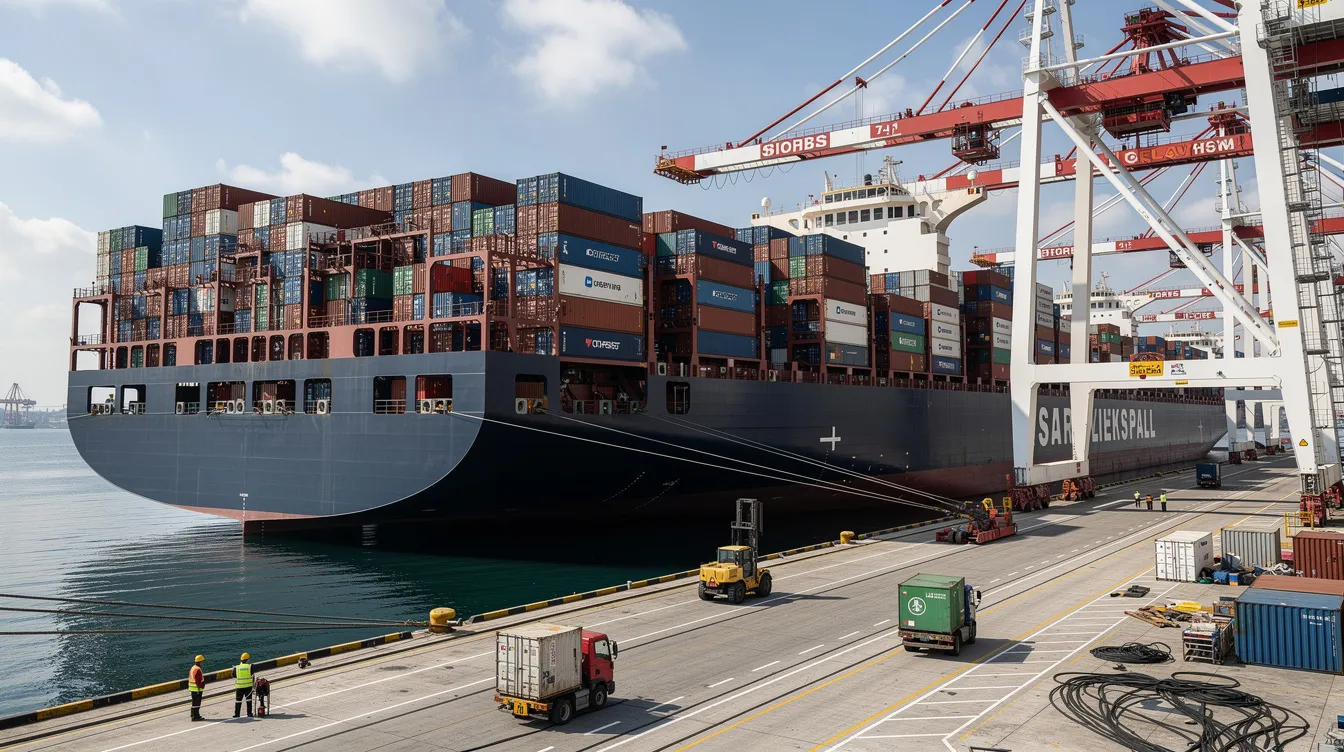
Beyond personal remittances, Tamilnad Mercantile Bank supports exporters, importers, and SMEs with a comprehensive suite of international payment and trade finance products. If your business involves cross-border transactions, TMB's forex services and business banking facilities can streamline your operations.
TMB offers retail and business loans that complement its international banking capabilities. Tamilnad Mercantile Bank offers education, car, and gold overdraft loan products. Verify current loan limits and eligibility against the bank’s official product pages before publishing. For larger enterprises, SME credit loans can reach up to ?10 crores for group borrowers, supporting everything from machinery imports to working capital needs.
Spot contracts: Immediate conversion at prevailing rates for same-day settlement
Forward contracts: Lock in future exchange rates to hedge against currency fluctuations - particularly useful for businesses with regular import or export commitments
EEFC accounts (Exchange Earners' Foreign Currency): Allow exporters to hold foreign currency receipts without immediate conversion to INR
RFC accounts (Resident Foreign Currency): Enable returning NRIs to maintain foreign currency balances after becoming resident in India again
TMB's trade support includes:
Pre-shipment credit: Working capital in INR or foreign currency for exporters before goods are shipped
Post-shipment credit: Financing against export bills after shipment
Letters of Credit (LC): Payment guarantees for import transactions, with LC advising charges from ?1,500
Bank Guarantees: Performance and financial guarantees for international contracts
Export bills collection: Processing and conversion of export proceeds received via SWIFT
Corporate and SME clients using TMB business credit card products can pay for international subscriptions, small-consignment imports, and travel expenses. These card payments differ from SWIFT transfers in several ways: they settle faster (often instantly), but carry a forex markup applied by the card network and issuer. Interest rates on outstanding card balances also apply, making cards better suited for smaller, time-sensitive payments rather than bulk trade settlements.
Keep invoices, contracts, and shipping documents organised and ready for submission
Match remittance amounts precisely with declared purposes to avoid compliance delays
Maintain records of all international transactions for tax and audit purposes in India
Use forward contracts to lock in favourable deposit interest rates on foreign currency when market conditions allow
Link your transaction accounts and trade lines with TMB's International Banking Division to manage receivables from overseas buyers efficiently
Understanding the cost structure and regulatory framework is essential before initiating any Tamilnad Mercantile Bank international money transfer. This section breaks down what you'll pay, what limits apply, and where to get help.
Transfer fees depend on the amount sent, the direction of the transfer, and the product used. Here are the main cost elements:
Remittance fee: For outward remittances, TMB charges 0.15% of the amount (minimum ?500, maximum ?5,000). For personal inward remittances up to USD 10,000, the charge is ?500 plus SWIFT ?300; above USD 10,000, it's ?1,000 plus SWIFT ?400. Inward remittances into NRE or FCNR accounts are often free.
SWIFT charges: ?1,000 for outward, ?300–?500 for inward depending on amount and type
Forex margin: The difference between the interbank rate and the rate TMB offers you - this can be a high hidden cost
Correspondent bank charges: Deducted by intermediary banks en route, outside TMB's control
Government taxes: GST on service fees; TCS on LRS remittances exceeding thresholds
Certificate fees: FIRC at ?100 per certificate, e-BRC at ?250 per certificate (plus taxes)
Fees vary based on payment method and delivery speed. Remove the claim unless a current, dated source confirms the USD 6,000 threshold, eligible channels, promotion period, and terms. Always check the latest TMB schedule of charges, as tariffs are updated periodically.
All published charges are exclusive of GST and applicable taxes.
The USD 250,000 annual LRS cap applies to all resident individuals across all banks, not just TMB. This limit covers education, travel, gifts, medical treatment, investments, and other permitted current and capital account transactions.
Education and medical remittances may require specific documentation: university admission letters, fee receipts, hospital estimates, or treatment invoices.
NRI accounts (NRE/NRO) have separate rules for repatriation. NRE account balances are freely repatriable, while NRO repatriation is subject to conditions and may require tax clearance.
Purpose codes under FEMA must be declared accurately for every outward remittance. Incorrect codes can result in delays or rejection.
TMB performs standard KYC checks, source-of-funds verification, and sanctions screening on all international transactions. For high-value remittances or business payments to new overseas partners, the bank may request additional documents such as audited financial statements, board resolutions, or detailed trade contracts. This is standard practice under RBI and FEMA guidelines and should not be a cause for concern - just be prepared with your paperwork.
If your SWIFT payment is delayed, you can trace it using the MT103 reference number provided at the time of the transaction. Raise a complaint at your home branch or contact TMB's customer care. For complex forex queries, reach out to the International Banking Division in Chennai directly. Expected resolution timelines depend on the nature of the issue - name mismatches or missing se fields in SWIFT messages typically resolve within a few days once corrected information is provided.
Toll-free number / Phone: Contact TMB at 91 461 for general banking inquiries from the Tuticorin headquarters
International Banking Division: Floor 2, D.No.269/2-4, Avvai Shanmugam Road, Royapettah, Chennai 600014 - email ibd@tmbank.in
Branch relationship manager: For personalised guidance on your remittance or trade product needs
Net banking and mobile app: For tracking transaction status, downloading statements, and checking credited amounts
Tamilnad Mercantile Bank Ltd publishes its Citizen's Charter and schedule of charges on its website, giving you access to complete information on terms, turnaround times, and service commitments. For any link to the latest fee schedule or product details, visit the official TMB website or ask your branch for printed copies.
Whether you're a student planning to study abroad, an NRI sending money home, or a business owner managing import-export payments, choosing the right international transfer option starts with understanding what's available and what it costs. Contact your nearest Tamilnad Mercantile Bank branch in Tamil Nadu or other states, or reach the International Banking Division in Chennai, to discuss which remittance channel fits your specific needs. With the right preparation and documentation, your funds can move across borders securely, compliantly, and on time. Building that trust between you and your bank is what makes international banking work.
Disclaimer: This article is intended for general informational and educational purposes only and should not be construed as legal, regulatory, tax, business, or financial advice. While reasonable efforts have been made to ensure that all facts, figures, and data are accurate and valid as of the date of publication, no warranty or guarantee is given as to the ongoing completeness, accuracy, or currency of the information.
The content is based on information available at the time of publication. Regulations, government policies, market conditions, and service offerings may change over time and vary across jurisdictions and providers. As a result, some information may no longer be current or applicable. Readers should independently verify all information and consult qualified professional advisors before making any financial, legal, or business decisions.