ACE Money Transfer
ACE Money Transfer

27 Oct 2026
Sending money across borders shouldn't feel like navigating a maze. If you hold an account with The Surat People's Co-operative Bank Ltd - one of Gujarat's most established urban co-operative banks - you already have access to structured foreign remittance services and can pair them with a fast digital platform like ACE Money Transfer to move funds internationally. This guide breaks down the entire process: how international transfers work through the bank, a step-by-step walkthrough of using ACE Money Transfer, and what you need to know about fees, safety, and support.
The Surat People's Co-operative Bank Ltd is a Gujarat-based urban co-operative bank founded on 10 March 1922, with its head office at Vasudhara Bhavan, Timaliawad, Nanpura, Surat. It was declared a Scheduled Co-operative Bank on 1 September 1988, and as of 31 March 2026, its total business stands at approximately ?13,335.46 crores - with deposits of ?7,686.54 crores and net profit of ?92.81 crores.
The Surat People's Co-operative Bank facilitates international money transfers through structured Foreign Remittance services. Both inward remittances (money coming into India from abroad) and outward remittances (money sent from India to foreign beneficiaries) are handled through the bank's foreign exchange desk.
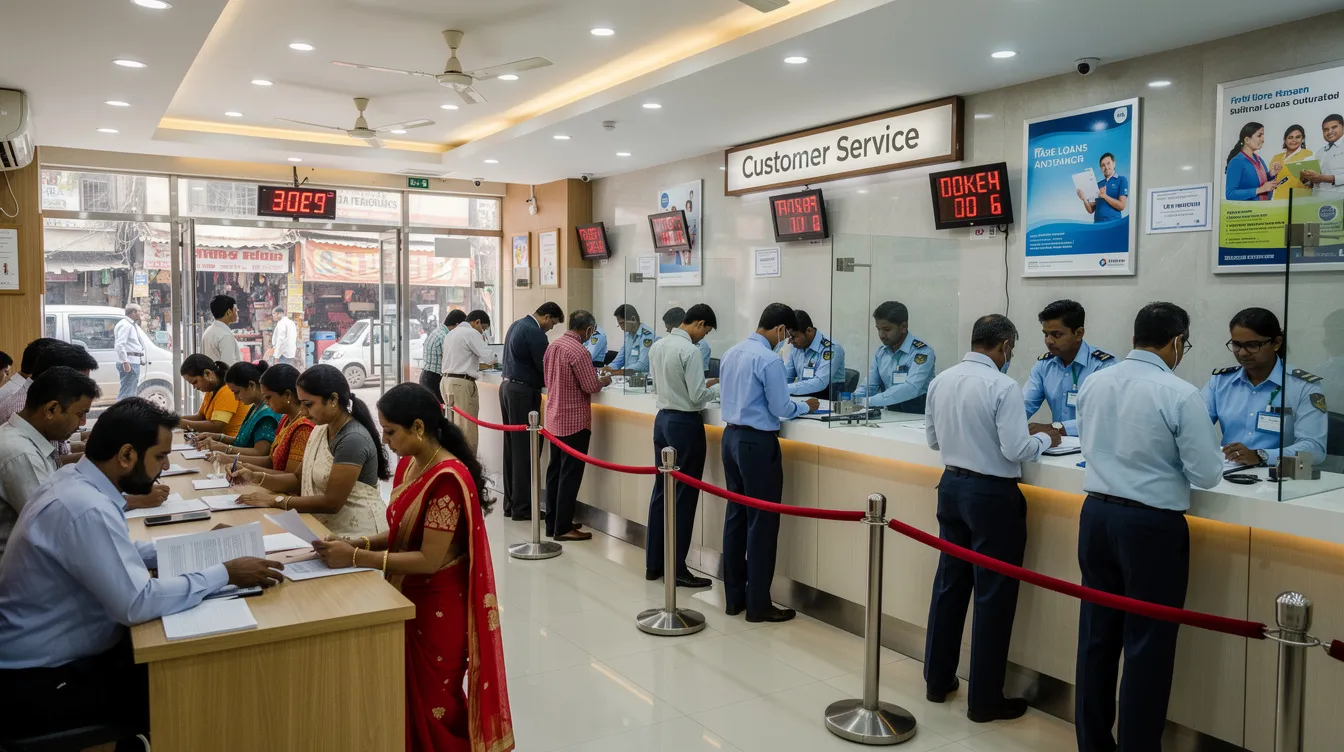
Common use cases for customers include:
Students paying overseas tuition fees at universities in the UK, USA, Canada, or Australia
NRI families sending regular maintenance or support payments to relatives in Surat
Export and import payments for Surat's textile and diamond businesses purchasing raw materials or machinery abroad
Medical treatment payments at hospitals outside India
Travel-related foreign exchange for personal trips
Customers often compare solutions across different banks. Larger scheduled banks like IDBI Bank offer direct SWIFT-enabled branch networks, which can simplify certain corridors. However, cooperative banks like Surat People's Co-operative Bank are subject to restrictions on commercial transactions, which means the process may differ slightly. This article focuses specifically on how to use the bank alongside a digital partner like ACE Money Transfer for cross-border transfers.
The sections below are structured as a practical guide - with bullet points, numbered steps, and subheadings - so you can find exactly what you need without wading through walls of text.
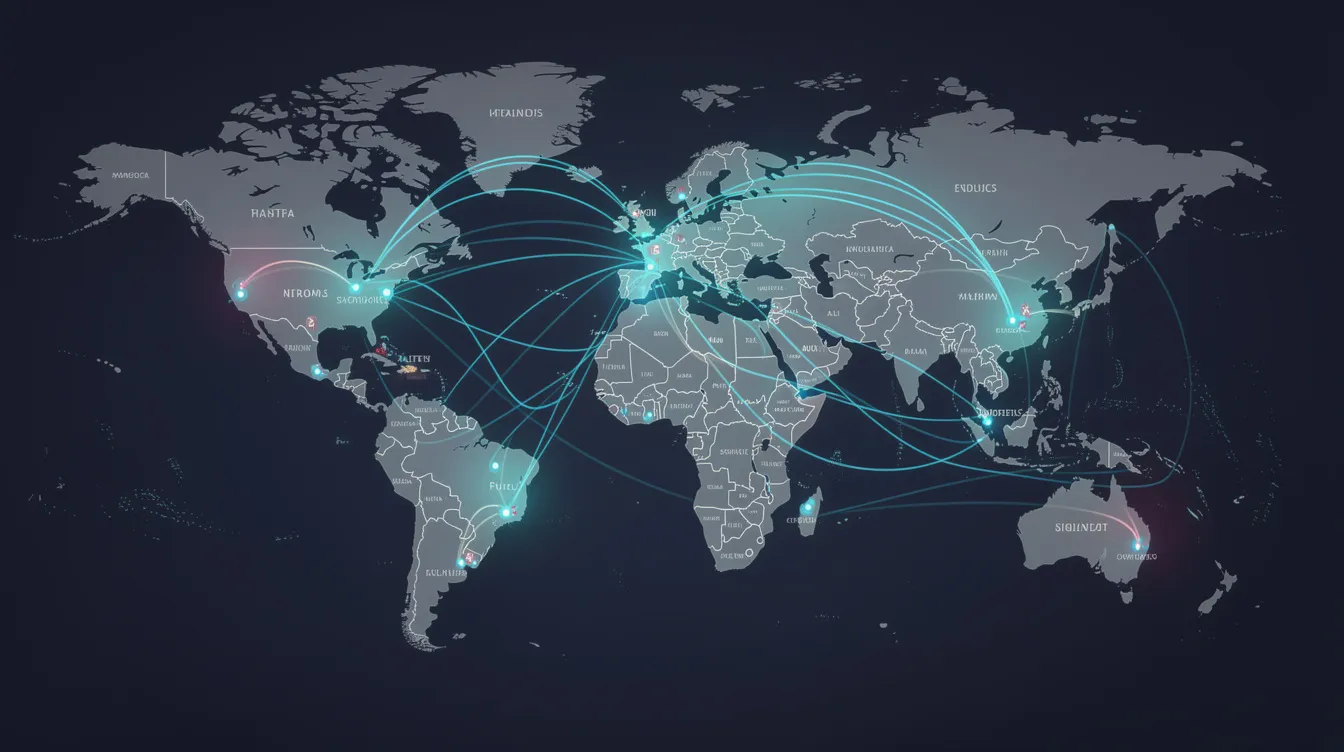
At its core, an international transfer follows a straightforward path: money moves from the sender's bank (or a platform like ACE Money Transfer) through a correspondent banking network to the recipient's bank account abroad. When SWIFT messaging is involved, the transfer carries standardised codes that identify every institution in the chain.
The bank processes international transactions through correspondent banking arrangements, not a direct SWIFT network. This means that when you initiate an outward remittance in major currencies - USD, EUR, GBP, AED, and others - the bank routes your payment through partner banks that maintain dedicated SWIFT codes and Nostro/Vostro accounts in the destination currency.
For inward remittances, the flow works in reverse. Inward remittances are received via correspondent banks or global transfer services, with funds ultimately credited to the beneficiary's INR account at a branch in Surat or elsewhere in the bank's network.
For comparison, IDBI Bank branches carry their own SWIFT codes (such as IBKLINBB0XX formats), allowing direct SWIFT messaging. This is mentioned only as a reference point for how the process differs - not as a recommendation.
International remittances usually require proper documentation by the sender. Here is what you will typically need when initiating a transfer:
Full beneficiary name - must match the name on the recipient's bank records exactly
Overseas bank name and branch address
SWIFT/BIC code or IBAN (depending on the destination country's system)
Account number of the beneficiary
Purpose of remittance - education, travel, medical treatment, family maintenance, gift, import payment, etc.
KYC documents - KYC documentation, including identity and address proof, is required for initiating remittances (Aadhaar, passport, voter ID, etc.)
PAN card - PAN card documentation is compulsory for all foreign remittance transactions in India
Remittances must include purpose-specific supporting documents depending on the transaction type. For education, you may need the university's admission letter and fee estimate. For medical purposes, a cost estimate from the hospital. For trade-related payments, invoices or purchase orders.
The bank complies with India's foreign exchange regulations and the Liberalised Remittance Scheme. Here are the key rules to keep in mind:
LRS limit: The maximum permissible remittance amount is USD 250,000 per financial year for individuals, covering both current and capital account transactions combined.
Form A2: An application-cum-declaration Form A2 is required for purchasing foreign exchange.
FEMA: Foreign exchange management is governed by the Foreign Exchange Management Act (FEMA), which sets the legal framework for all cross-border currency movement.
Tax forms: For taxable payments to non-residents exceeding ?5 lakh in a tax year, you may need a Chartered Accountant’s certificate (Form 146, formerly Form 15CB) and must submit Form 145 (formerly Form 15CA), depending on the applicable tax requirements. See the Income Tax Department’s official guidance.
Outward remittances are available for purposes like education and family maintenance under RBI guidelines.
All documentation is subject to RBI's compliance requirements for foreign transfers. Before sending any large amount, confirm the current rules with your branch - regulations can shift between financial years, and branch-level staff at Surat People's Cooperative Bank can walk you through the specifics.
Many Surat People's Cooperative Bank customers prefer to use a specialist remittance platform like ACE Money Transfer for speed, digital convenience, and multiple payout options. You can fund your transfer from your own bank account, debit card, or credit card - and the entire process happens online.
Here is exactly how it works.

You can send international remittances using the ACE Money Transfer platform by creating an online account:
Choose your sending and receiving countries first
Register using your email address, Google account, or Apple ID
Complete KYC verification by uploading a valid photo ID (passport, driving licence, or national ID card)
Ensure your personal details - name, address, phone number - match your bank records exactly
If you already have an account, simply log in and proceed to the next step.
Once logged in:
Choose your destination country - options include India, Pakistan, Bangladesh, Philippines, Nigeria, and many others depending on the corridor
Select a payout method:
Bank Deposit - direct credit to major partner banks globally
Cash Pickup - over-the-counter cash collection at authorised partner bank branches
Mobile Wallet - instant crediting to supported digital wallet accounts (Delivery times may vary and are not guaranteed.)
Recipients in India can receive bank deposits into accounts at co-operative banks, private banks, or public sector banks like IDBI Bank, subject to ACE's partner network. Recipients near Surat or in cities like Baroda can also access cash pickup locations.
Enter the recipient's full legal name, bank account number (or wallet ID), and bank name
If sending to a bank account, you may also need the branch IFSC code (for India) or SWIFT/BIC (for other countries)
Select your payment method:
Debit card linked to your Surat People's Cooperative Bank account
Credit card
Online bank transfer from your SPCBL account or any other issuing bank
Add a clear payment reason - family maintenance, education fee, medical support, export invoice number, etc.
Review the exchange rate, fees, estimated delivery time, and final payout amount before clicking "Pay Now" (Exchange rates fluctuate and the rate you receive may differ from any rates quoted. Always check the live rate at acemoneytransfer.com before sending.)
ACE provides a unique reference or tracking number after payment
Track your transaction in real-time via the web dashboard or mobile app until funds are credited or collected by the recipient
International payments typically take 1 to 5 business days to process when sent via bank deposit, depending on the destination country, cut-off times, and intermediary banks involved. For mobile wallet payouts in supported corridors, most transfers arrive in seconds. Delivery times may vary and are not guaranteed.
Bank Deposit: Direct credit to the recipient's bank account. In most corridors, this takes same-day to two business days. Works with public sector banks, private banks, and cooperative banks - depending on ACE's partner network in the destination country.
Cash Pickup: The recipient visits a designated partner bank branch or payout location, presents valid ID and the transaction reference code, and collects cash. This is particularly useful when the recipient doesn't hold a bank account.
Mobile Wallet: In corridors where digital wallets are widely used (parts of Africa, Southeast Asia), funds are credited instantly to the recipient's mobile money account. Availability depends on the specific sending and receiving country pair.
The key advantage for Surat People's Cooperative Bank customers is that you can fund any of these transfers directly from your SPCBL account via online banking or card - without needing to visit a branch each time.
Customers in Surat and across Gujarat tend to compare options carefully before committing to an international transfer. The three variables that matter most are transfer fees, foreign exchange margins, and delivery time.
Specific fees apply for different remittance categories as per the bank's schedule. On top of these, the bank applies its own buy/sell exchange rates, which include a margin over the interbank rate.
ACE Money Transfer displays the applicable exchange rate and transfer fee before customers confirm a transaction, as outlined in its pricing transparency statement. Exchange rates may include a margin, which varies by currency and destination. For context, sending from the UK to India via bank deposit costs a flat £1.99, plus an FX spread of roughly 0.1% to 1.5%. Rates and fees may vary. Visit acemoneytransfer.com for current rates.
Transfer costs can vary based on recipient's bank policies - some receiving banks deduct a small incoming wire fee. Always check with the recipient's bank to understand if any deductions will apply on their end.
When comparing total cost, don't look at the fee alone. Calculate the net amount received by the beneficiary after both the fee and the exchange rate spread.
The international remittance industry handles enormous transaction volumes, and fraud prevention is a critical layer. For scale, Wise reports that 18.9 million customers, businesses and banks use its services, and that its systems perform around 7 million checks daily to help identify and prevent fraud, according to its official website. These figures illustrate the scale of its monitoring activity but do not guarantee that every transaction is risk-free.
ACE Money Transfer Limited is authorised and regulated by the UK Financial Conduct Authority (FCA) under the Payment Services Regulations 2017 (FRN 506692), as listed on the FCA Financial Services Register. ACE also follows applicable anti-money laundering and counter-terrorist financing requirements. Every transaction undergoes automated compliance checks, and suspicious transfers may be held or cancelled to protect the customer.
On the bank side, Surat People's Cooperative Bank follows RBI's AML regulations, PMLA provisions, and FATCA requirements for all foreign remittance transactions. Always:
Send only to trusted, verified recipients
Never share OTPs, passwords, or login credentials with anyone claiming to be from the bank or ACE
Report suspicious activity to your branch or ACE's support team immediately
Customer support is available 24/7/365 through ACE Money Transfer, so you're never stuck waiting for business hours in a different time zone. Support can be accessed by phone, online, or chat - and multilingual agents are available for key corridors.
At Surat People's Cooperative Bank, branch-level assistance is available during Indian banking hours. Staff can help with filling out remittance forms, verifying KYC documentation, and clarifying RBI rules on outward remittances. The bank's toll-free number (1800-233-7722) is another option for quick queries.

Before confirming any international transfer, run through this quick checklist:
? Verify recipient's bank details - account number, SWIFT/IBAN - character by character
? Keep digital and printed copies of all transaction receipts for tax or compliance purposes
? Confirm your PAN is linked and up to date with the bank
? For large or purpose-specific remittances, collect invoices, admission letters, or medical estimates in advance
? Check if Form 15CA/Form 145 and CA certificate (Form 15CB/Form 146) are required for your amount and purpose
? Confirm the current LRS limit (USD 250,000 per financial year) and any purpose-specific restrictions with your branch
? Account for cut-off times and bank holidays in both the sender's and receiver's country
Whether you're wiring tuition fees to a university abroad, receiving family support from the UAE, or paying a supplier for diamond-cutting equipment, the combination of your trusted relationship with Surat People's Cooperative Bank and the digital speed of ACE Money Transfer gives you a practical, reliable way to move money across borders.
Start by verifying your documents with your nearest branch, then create your ACE Money Transfer account to experience faster, trackable, and flexible international remittances - all funded directly from the bank account you already use every day.
Disclaimer: This article is intended for general informational and educational purposes only and should not be construed as legal, regulatory, tax, business, or financial advice. While reasonable efforts have been made to ensure that all facts, figures, and data are accurate and valid as of the date of publication, no warranty or guarantee is given as to the ongoing completeness, accuracy, or currency of the information.
The content is based on information available at the time of publication. Regulations, government policies, market conditions, and service offerings may change over time and vary across jurisdictions and providers. As a result, some information may no longer be current or applicable. Readers should independently verify all information and consult qualified professional advisors before making any financial, legal, or business decisions.