ACE Money Transfer
ACE Money Transfer
26 Oct 2026
Sending remittances from abroad to a Gujarat State Cooperative Bank (GSC Bank) account requires a different set of details and routing steps than a simple domestic transfer within India. This guide breaks down exactly what information you need, how funds travel from your overseas bank or remittance provider to GSC Bank's branch network, and how to complete the process through ACE Money Transfer.
Millions of Indians living in the UK, Europe, North America, and Gulf countries send money home each year. For recipients who hold a bank account at The Gujarat State Cooperative Bank Limited, the transfer involves a chain of steps that starts overseas and ends at one of the bank's branches across Gujarat or Maharashtra. GSC Bank primarily handles domestic and regional cooperative financial networks in India, which means international senders cannot simply wire funds using a domestic IFSC code from outside the country.
As of 2026, most remittances to Gujarat State Cooperative Bank accounts are sent via regulated international payment platforms rather than direct SWIFT access. The IFSC code helps once funds enter India; it routes the payment through domestic systems like NEFT or RTGS to the correct GSC Bank branch for final credit. Outside India, the transfer relies on correspondent banks, partner payment networks, or licensed money transfer operators to move the funds across borders.
ACE Money Transfer is one such platform. It is a UK-based remittance service where users can register online, choose India as a destination, and send money directly to a GSC Bank account. Senders can fund transfers via debit card, credit card, or online bank transfer. The Gujarat State Co-operative Bank’s official website lists its branch network and individual IFSC codes. Each branch’s IFSC should be verified using the bank’s official branch locator before publishing. This article covers the required beneficiary details, how international transfers are routed differently from domestic ones, and a complete step-by-step walkthrough of the ACE Money Transfer process.
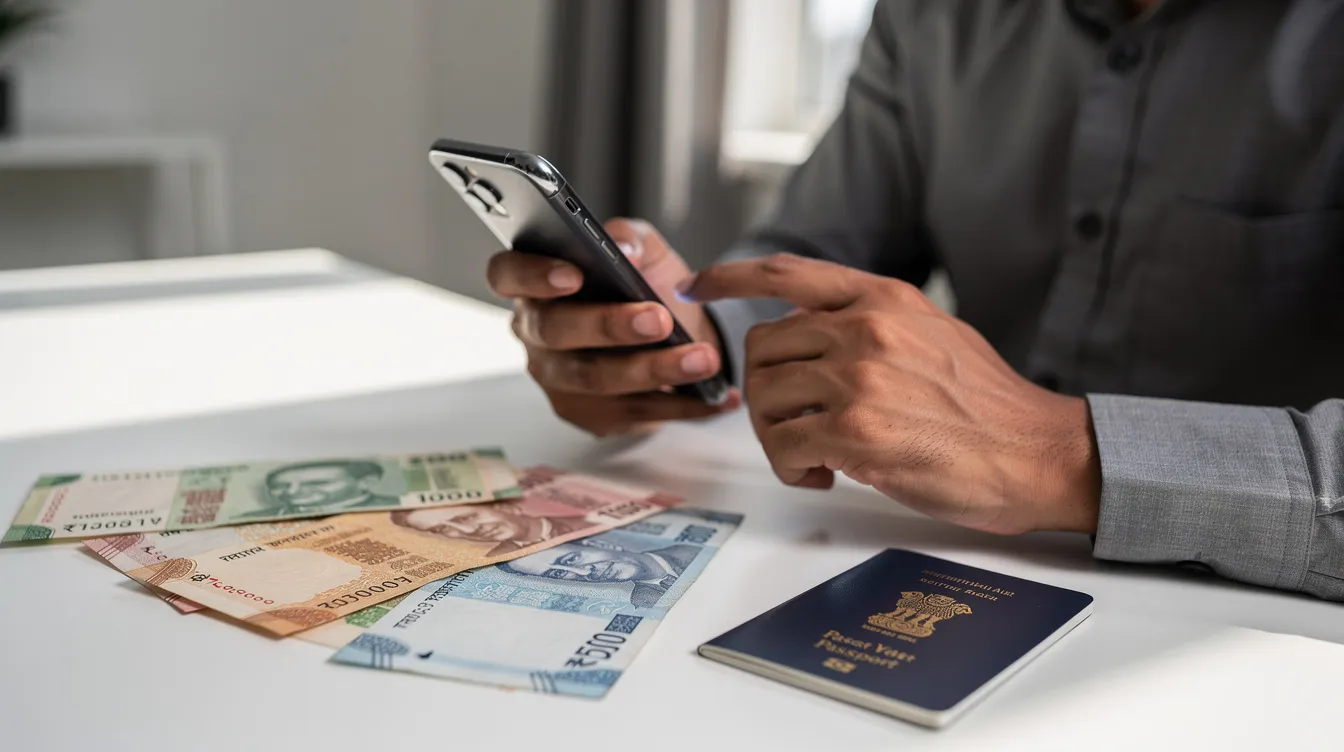
Before you initiate a transfer, collect every piece of beneficiary data your remittance provider will ask for. Missing or incorrect details are the most common reason transfers get delayed or returned. Here is what you need and where to find it.
Bank account number
The Gujarat State Cooperative Bank does not publish a single universal account number format; account number length varies by branch. What matters is that the beneficiary name you enter matches exactly what is printed in the recipient's passbook or banking app. Even a minor spelling difference can cause a rejection.
IFSC code
An IFSC is an 11-character alphanumeric code assigned by the Reserve Bank of India. IFSC codes uniquely identify bank branches in India. The first four characters of the IFSC represent the bank (for GSC Bank, this is always "GSCB"), the fifth character is a reserved zero, and the last six characters identify the specific branch. For example, the Relief Road branch in Ahmedabad carries IFSC code GSCB0000002, while the Sabarmati branch uses GSCB0000019.
The IFSC code helps route domestic electronic fund transfers. IFSC codes are used for electronic fund transfers in India, including NEFT, RTGS, and IMPS. When your international remittance reaches India through a correspondent bank, that bank uses the IFSC to push funds to the right GSC Bank branch. A wrong IFSC code can delay the payment by days or bounce it back entirely. Always confirm the IFSC code with the recipient before sending money.
The Reserve Bank of India provides IFSC listings for participating bank branches. Remove the unverified figure of 182,498, as the total may change over time.
GSC Bank alone operates branches in cities and towns throughout Gujarat. The bank operates 4 branches in Halol, Gujarat, for instance, each with its own distinct IFSC. Whether the recipient's branch is in Ahmedabad, Surat, Vadodara, or a smaller city, the code is unique.
While IFSC codes are essential for domestic routing, international systems outside India use SWIFT, IBAN, or intermediary bank details depending on the sending country's banking network. The IFSC only comes into play at the final domestic leg.
MICR code
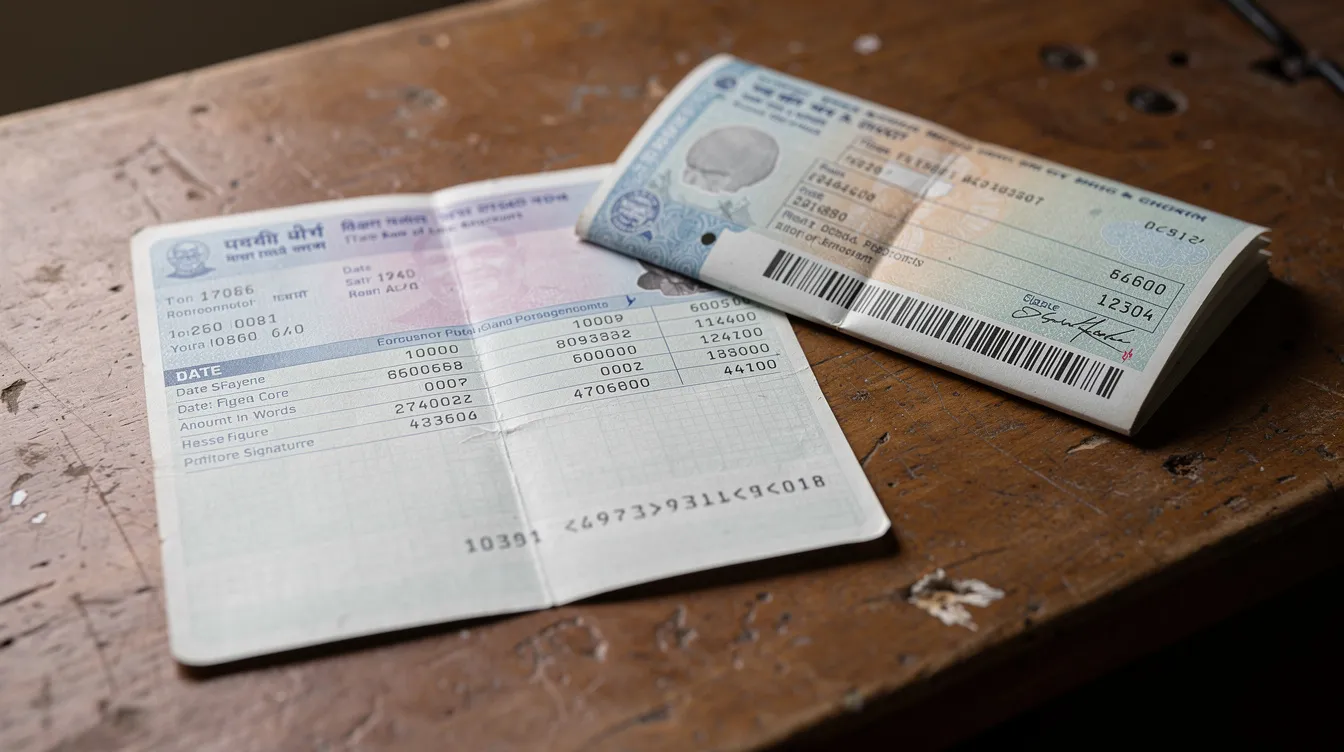
MICR stands for Magnetic Ink Character Recognition. A MICR code appears on the bottom of cheques issued by the bank. It is presented as a series of digits printed in magnetic ink, used to identify the branch and facilitate cheque clearing. The Sabarmati branch’s MICR code should be verified against an official bank source. Remove the unverified claim that approximately 1,594 GSC Bank branches have published MICR codes.
For online international transfers, MICR code is not required. It serves cheque processing, not electronic remittances. However, some forms or services may ask for it as optional data, so it helps to have it on hand.
Where to find the right codes
| Source | Reliability | Notes |
|---|---|---|
| GSC Bank official website (branch locator) | High | Most current list of IFSC and MICR codes |
| Reserve Bank of India IFSC search tool | High | Master data, updated periodically |
| Recipient's cheque book or passbook | High | Printed on cheque leaves and account statements |
| Third-party IFSC aggregator websites | Variable | May be outdated if branches merged or codes changed |
Avoid relying on old cheque books or third-party lists that have not been updated. Branches do get merged, and an outdated IFSC can misroute funds.
Compliance details
Many remittance services and Indian regulations require the sender to provide:
Recipient's full address in Gujarat (or Maharashtra)
Purpose of remittance (family maintenance, education fees, medical expenses, etc.)
Recipient's PAN, especially for amounts above certain thresholds
Sender's KYC documents (passport, proof of address)
Having this data ready before you start the transfer prevents mid-process delays.
Sending money from Mumbai to a GSC Bank account in Rajkot is a straightforward domestic transaction. Sending it from London, Toronto, or Dubai is not.
The domestic route
From any Indian bank, a sender needs only the GSC Bank account number and the branch's IFSC code. Domestic electronic networks support digital channels like RTGS and NEFT for remittances in India. IMPS provides near-instant transfers. MICR code is irrelevant for these electronic payments. Processing takes minutes (IMPS) to a few hours (NEFT/RTGS during banking hours).
The international route
When funds originate overseas, the path is longer. Receiving money from abroad typically involves intermediary arrangements or third-party operators. International transfers rely on correspondent banking networks and SWIFT in cooperative banks. The sender's overseas bank or remittance provider pushes funds through a correspondent bank in India (typically a large commercial bank like SBI or HDFC that maintains SWIFT connectivity). Only at the final stage does the IFSC code direct the payment to the correct GSC Bank branch.
Cooperative banks in India face structural constraints for international money transfers. Cooperative banks often lack direct SWIFT infrastructure for outward foreign remittances, and GSC Bank does not publish a retail-facing SWIFT/BIC code for its branches. Public IFSC directories show a blank field for SWIFT on branches like Sabarmati. GSC Bank facilitates international money transfers primarily through standard bank remittance channels, relying on partner institutions for the cross-border leg.
Cooperative banks often require visiting a designated branch for international wire transfers on the outbound side. For inbound remittances (money coming into India), the process is smoother when operated through a licensed money transfer service.
Fees and foreign exchange
Incoming global funds are converted and disbursed in Indian Rupees (INR). Before funds reach India, the remittance provider or correspondent bank applies an FX margin and a transfer fee. Traditional bank wires often carry higher margins than specialized services. ACE Money Transfer fees and exchange rates may vary by transfer amount and payment method. Rates and fees may vary. Visit acemoneytransfer.com for current rates.
This section walks through the practical process of using ACE Money Transfer to send money from overseas to a Gujarat State Cooperative Bank account in India. ACE Money Transfer Limited is authorised by the UK Financial Conduct Authority (FCA) under reference number 506692 to provide payment services. HMRC has a separate role in anti-money-laundering supervision for certain money service businesses; it should not be described as a general financial regulator. Verify the current status on the FCA Financial Services Register.
Users register from supported countries, choose India as the destination, and select "Bank Deposit" as the payout method for GSC Bank.
Available funding methods include debit card, credit card, and online bank transfer. Card-funded transfers typically offer faster processing (often same-day), while bank transfer funding may take 1-2 business days but can carry lower fees.

1. Registration and KYC
Create an ACE Money Transfer account using your email address, Google login, or Apple ID. The app and website both support registration. Upload proof of identity (passport or national ID) and proof of address (utility bill, bank statement). ACE may request a selfie for document verification. Enable 2-factor authentication to secure your account.
2. Starting a transfer
Log in and select "Send Money to India." Enter the amount in your local currency or in INR. The screen displays the real-time exchange rate and the applicable transfer fee, so you see exactly how much the recipient will receive before you commit.
3. Selecting payout method
Choose "Bank Deposit" from the payout options. Then specify the recipient's bank as The Gujarat State Cooperative Bank Limited. If the platform requires a branch selection, enter the correct branch name or IFSC code.
4. Entering recipient details
Fill in:
Full name (exactly as it appears on the bank account)
Bank account number
IFSC code (e.g., GSCB0000019 for the Sabarmati branch)
Recipient's contact phone number
Accurate beneficiary information is crucial for international transfers to avoid misrouting. Double-check every character. You need the recipient's account number and IFSC code for transfers; a single wrong digit in either field can send the payment to the wrong branch or bounce it back.
5. Selecting funding method
Pick debit card or credit card for faster processing, or online bank transfer for a potentially lower fee. The choice depends on how quickly the recipient needs the funds and whether your card issuer charges a surcharge on international payments.
6. Adding the purpose of remittance
Enter the reason for sending money in the "payment reason" field: family support, tuition, medical expenses, or another valid purpose. Indian regulations and international compliance rules require this data for every cross-border remittance.
7. Review and confirm
A summary screen shows: amount sent, fees deducted, exchange rate applied, amount the recipient will receive in INR, the GSC Bank branch, and the IFSC code. Verify every detail, then click "Pay Now."
8. Post-payment tracking
ACE generates a reference tracking number. Use it in the app or on the website to monitor the transfer status in real time. The recipient can watch for an SMS alert or check their GSC Bank passbook or internet banking for the credit.
While this article focuses on GSC Bank deposits, ACE Money Transfer supports other payout types that may suit different recipients in India.
Bank Deposit
This is the standard option for recipients holding accounts at Gujarat State Cooperative Bank or other Indian banks. Funds go directly to the bank account using the IFSC code for routing. Processing time is typically 1-3 business days depending on corridor and funding method. ACE Money Transfer offers international transfers for regular and recurring remittances, with fees and exchange rates varying by transfer details. Rates and fees may vary. Visit acemoneytransfer.com for current rates.
Cash Pickup
ACE partners with agents such as Muthoot and Manappuram across India. The recipient collects cash over the counter by presenting a valid ID and the transaction reference number. This option is useful when the recipient does not have a bank account or needs physical cash urgently in a rural area of Gujarat where bank access is limited.
Mobile Wallet
In corridors where mobile wallets or UPI are supported, funds can go directly to the recipient's digital wallet. The recipient can then use those funds to pay bills, shop online, or transfer to a bank account. When UPI is used, a UPI ID replaces the need for a traditional account number and IFSC code.
How to choose
| Factor | Bank Deposit | Cash Pickup | Mobile Wallet |
|---|---|---|---|
| Recipient has GSC Bank account | Best option | Not needed | Alternative |
| No bank account | Not possible | Best option | Works if wallet is set up |
| Speed priority | 1-3 business days | Same day (often hours) | Near-instant |
| Cost | Lowest fees | Moderate fees | Low fees |
| Rural recipient | Works if branch nearby | Works if agent nearby | Works with phone signal |
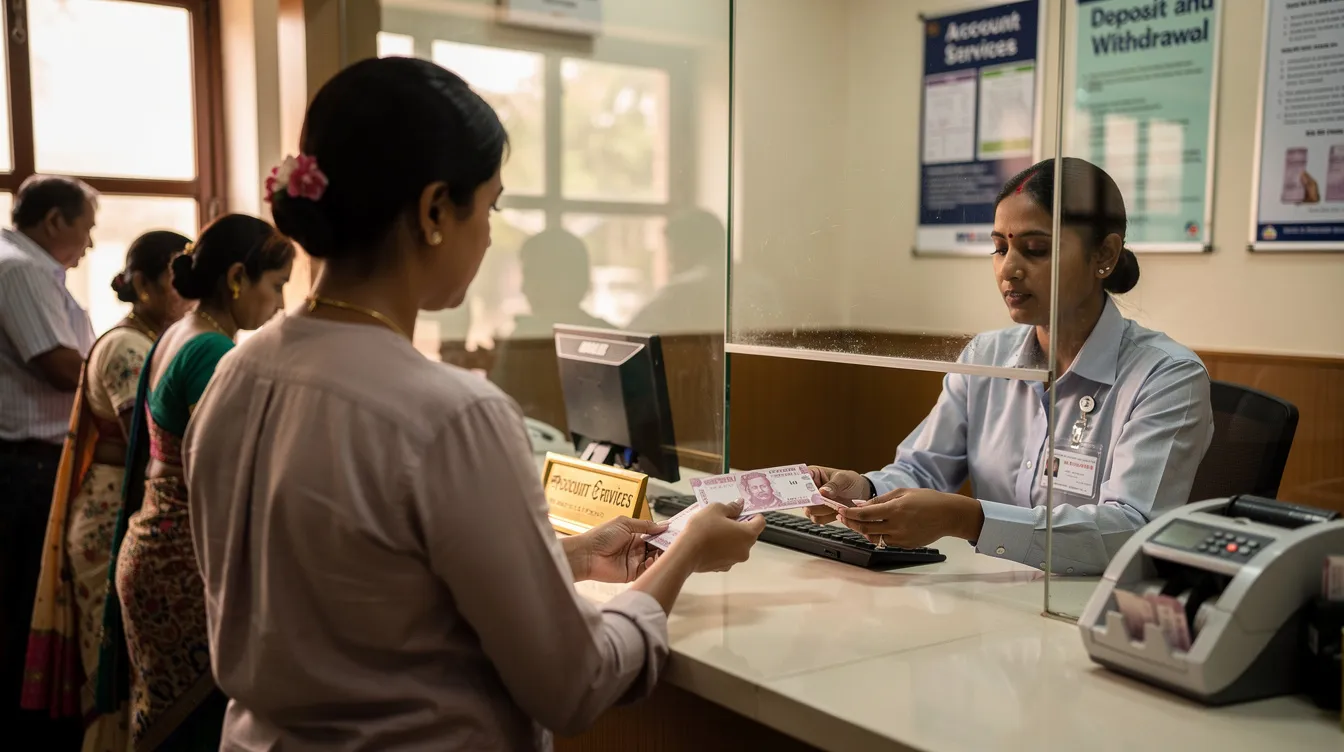
Using regulated providers and verifying bank details before every transfer protects both sender and recipient. International money transfers require compliance with Reserve Bank of India guidelines, and international remittances from India are regulated by the Reserve Bank of India and FEMA rules. Senders abroad face their own country's AML and CTF requirements as well.
Regulatory compliance
ACE Money Transfer and similar licensed services must perform identity checks on senders, screen transactions against sanctions lists, and may request additional documents for large or repeated transfers. Under India’s Liberalised Remittance Scheme (LRS), resident individuals can remit up to USD 250,000 per financial year (April–March) for permitted transactions, subject to RBI rules. Inbound remittances are governed by different requirements. Regulations may change. Please verify current requirements with an authoritative source.
Verifying IFSC codes
Cross-check the IFSC code through the Reserve Bank of India's official IFSC search tool or the Gujarat State Cooperative Bank's own branch locator. Do not rely solely on memory or old cheque books, especially if branches in a city have been merged. The letters in the IFSC are case-insensitive in most systems, but the digits must be exact.
Transfer limits and documentation
Frequent or high-value remittances to India may trigger requests for:
Proof of source of funds (payslips, tax returns)
Bank statements from the sender's overseas account
Recipient's PAN or Aadhaar number
Explanation of the relationship between sender and recipient
Having these documents ready avoids holds on your transfer.
Minimizing costs
Send fewer, larger transfers instead of many small ones. Each transfer incurs a fixed fee, so consolidating reduces overhead.
Use online bank transfer funding where card surcharges are high.
Monitor exchange rates; timing a large transaction when INR is weaker against your currency yields more rupees for the recipient.
ACE Money Transfer’s collaboration with Mastercard Move supports eligible transfers, subject to corridor availability and payout terms.
Confirming receipt
Recipients in Gujarat should confirm receipt through SMS alerts, passbook updates at the branch, or internet/mobile banking. If funds do not appear within the expected timeframe (typically 1-3 business days for bank deposits), the sender's tracking reference number is essential for querying ACE's support team and the beneficiary's GSC Bank branch. Indian public holidays and weekends can push credit to the next working day.
Looking to the future
Remittance providers are integrating more tightly with Indian payment rails operated by NPCI. Real-time international payouts via UPI links are expanding. For cooperative banks like GSC Bank, this trend may eventually reduce reliance on correspondent banking and bring down costs further. For now, the combination of a regulated platform, the correct IFSC code, and accurate beneficiary data remains the foundation of a successful transfer.
Accurate bank account details, the correct IFSC code, and a MICR code (where requested) are the three data points that make an international transfer to Gujarat State Cooperative Bank work. ACE Money Transfer provides international remittances with multiple payout options and transfer tracking. Exchange rates and fees vary by transfer details; check the live rate and applicable charges at acemoneytransfer.com before sending.
Before you click "Pay Now," verify every field. A single wrong digit in an IFSC code can bounce a transfer back across continents.
Disclaimer: This article is intended for general informational and educational purposes only and should not be construed as legal, regulatory, tax, business, or financial advice. While reasonable efforts have been made to ensure that all facts, figures, and data are accurate and valid as of the date of publication, no warranty or guarantee is given as to the ongoing completeness, accuracy, or currency of the information.
The content is based on information available at the time of publication. Regulations, government policies, market conditions, and service offerings may change over time and vary across jurisdictions and providers. As a result, some information may no longer be current or applicable. Readers should independently verify all information and consult qualified professional advisors before making any financial, legal, or business decisions.