ACE Money Transfer
ACE Money Transfer
21 Sep 2026
Banking as a service is the API-driven model that lets non-bank businesses embed financial products (accounts, cards, payments, lending) into their own apps and platforms. Instead of acquiring a banking license, a company plugs into a licensed provider's infrastructure and launches branded financial services in weeks rather than years.
Embedded finance and digital banking are reshaping the customer experience across ecommerce, SaaS, marketplaces, and remittance apps. Many digital financial services rely on BaaS providers and banking infrastructure partners to deliver embedded financial products.
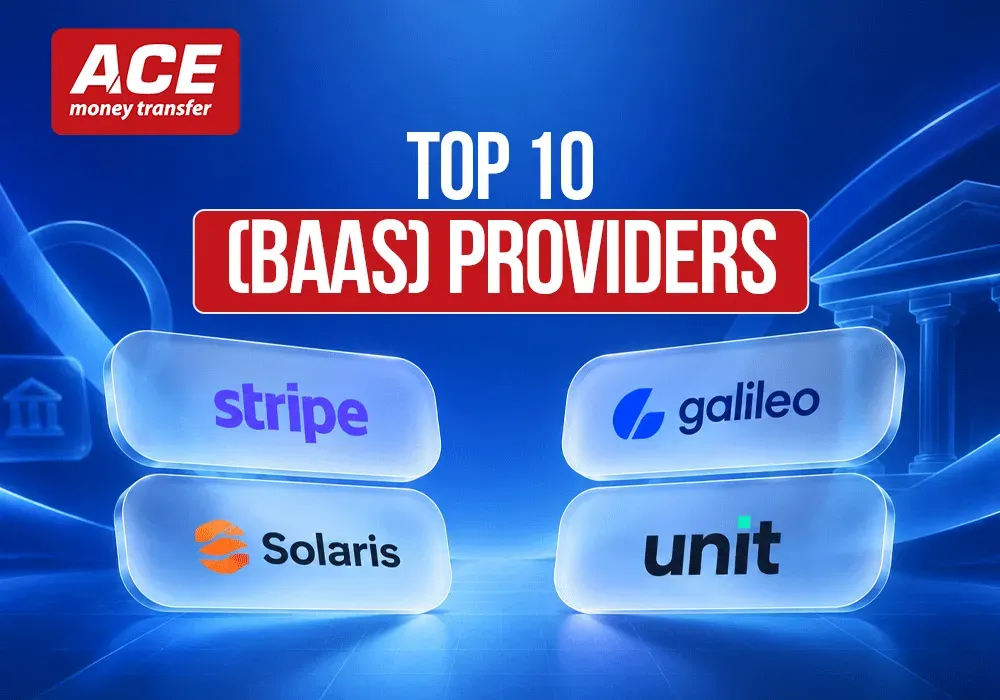
This article profiles 10 leading global BaaS providers in 2026, comparing their licensing models, geographies, product scope, and ideal use cases. You will also find a concise guide on how to choose the right BaaS partner and a breakdown of key regulatory terms like EMI versus full banking license.
Banking-as-a-service is a model where licensed banking infrastructure and regulatory compliance are exposed via APIs so third parties can launch branded digital banking and financial products. BaaS enables non-bank companies to embed banking products through APIs without building core banking systems from scratch.
The difference between traditional white-label banking and modern BaaS comes down to modularity. White-label bundles offer rigid, all-in-one packages. Modern BaaS gives API access to discrete components: KYC/KYB, bank accounts, card issuing, payments, and lending. This lets non-bank businesses compose only the financial features they need.
The typical structure involves three parties: a licensed bank (holding a full banking license or EMI license) that provides regulatory cover and deposit insurance; a BaaS platform that builds and maintains the APIs and developer tools; and a non-bank brand that owns the customer experience. Neobanks, gig-economy wallets, and cross-border money transfer apps like ACE Money Transfer embedding payout accounts or cards all operate within this model.
Key characteristics of BaaS:
API-first access to regulated financial services (accounts, cards, payments, lending)
Regulatory legitimacy via a banking license or EMI license
White-label or branded UX owned by the partner brand
BaaS platforms enable rapid product launches in weeks
BaaS can create new revenue streams through transaction fees
Selection criteria covered five areas: regulatory status (EMI versus full banking license), geographic coverage (US market, UK, EU, global), product breadth (accounts, payments, cards, lending), API maturity, and 2024 to 2026 market traction.
The list is global and cross-licence, covering both regulated banks and technology providers. It is organized to highlight different strengths; cross-border payments, card issuing, core banking, regional coverage; rather than ranking leading to worst. Remittance providers and fintech companies often rely on BaaS ecosystems to provide accounts, payments, cards, and other embedded financial services.
Criteria recap:
Regulatory model (direct banking license, EMI, sponsor bank)
Geographic and currency coverage
Product scope (accounts, cards, lending, payments)
API documentation quality and integration timeline
Financial stability and compliance track record
Solaris SE (formerly Solarisbank) is a Berlin-based BaaS provider holding afull German banking license under BaFin and ECB supervision, with EU passporting across the EEA. The company has raised over EUR 530 million in funding and exposes 400+ API endpoints.
Solaris operates under a full German banking license, which means partners can offer deposit accounts covered by the German Deposit Guarantee Act (up to €100,000), consumer lending (including BNPL and installment products), SEPA payments, card issuing, and KYC/KYB. In March 2026, Solarisannounced its transformation toward becoming Europe's first AI-native bank, automating processes under EU AI Act and DORA compliance regimes.
Ideal customers include European neobanks, retail brands launching co-branded cards, BNPL providers, and platforms needing fully regulated banking infrastructure. Integration timelines run from weeks to a few months, depending on product complexity.
Strengths: Full German banking license with EU passporting; deep lending and deposit capabilities; embedded finance capabilities across accounts, cards, and credit
Limitations: Primarily Europe-focused; higher complexity and cost than EMI-only or card-only platforms
leading for: Brands that need regulated financial products beyond simple payment services
Banking Circle is a Luxembourg-based licensed credit institution founded in 2013. It specializes in cross-border payments infrastructure rather than retail digital banking. Banking Circle specializes in cross-border payments and serves financial institutions, PSPs, and marketplaces.
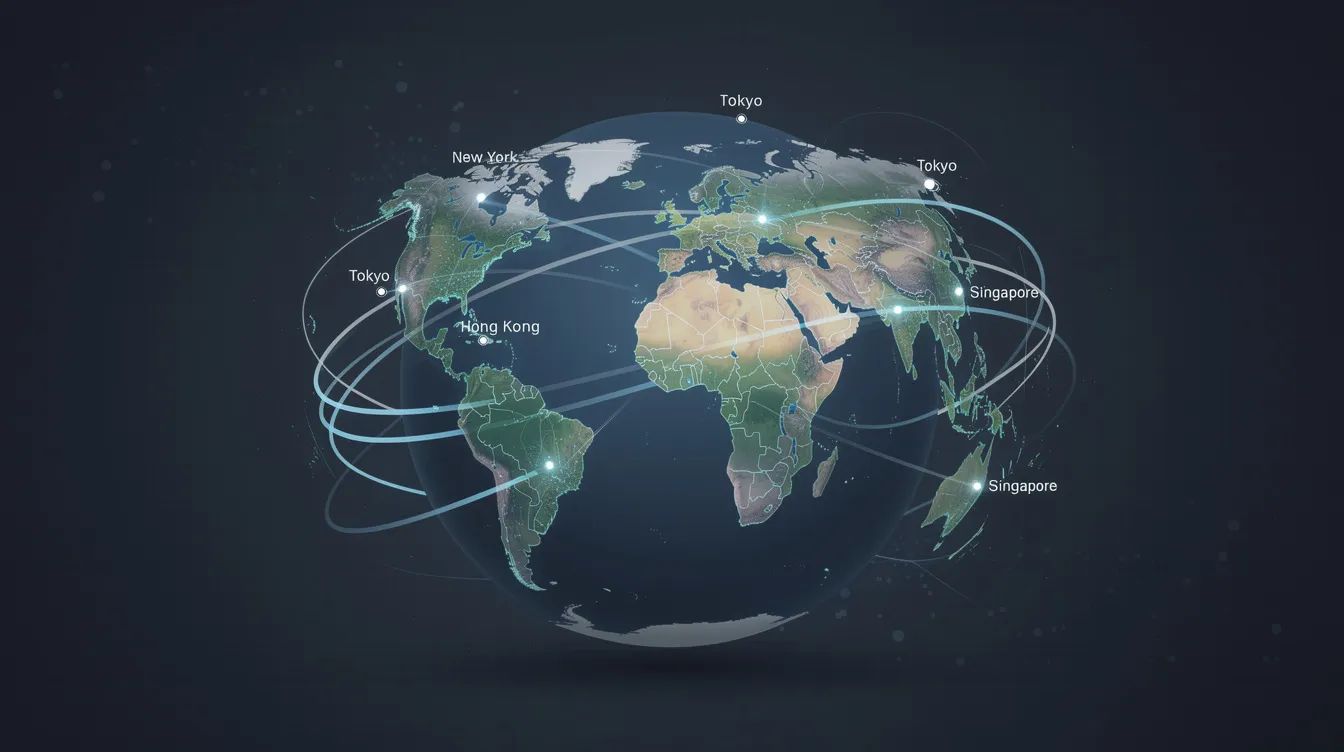
The platform offers multi-currency accounts, virtual IBANs across jurisdictions (LU, UK, DE, PL, SE, and others), local and international clearing, and embedded foreign exchange covering24 currencies for payouts and collections. It bypasses traditional correspondent banking, reducing settlement times and FX costs for high-volume cross-border flows. For remittance businesses and global money transfer apps like ACE Money Transfer, this multi currency capabilities stack is directly relevant.
Key capabilities: Multi currency accounts, virtual/physical IBANs, POBO/COBO, FX, treasury management
Target clients: Payment service providers, FX brokers, online marketplaces, institutional clients
Trade-offs: B2B focus; not a full retail digital banking stack; limited consumer-facing UX tools
ClearBank is the UK's first new clearing bank in over 250 years. It operates under a full UK banking license with direct membership in Faster Payments, BACS, and CHAPS. ClearBank holds all client funds securely at the Bank of England, and customer deposits in UK accounts are protected under FSCS up to £120,000.
ClearBank provides real-time payments in the UK through a cloud-native, API-first platform. ClearBank is a fully licensed UK bank providing real-time payments, making it a strong fit for UK companies, e-money institutions, and payment firms needing direct scheme access.
Strengths: Direct clearing at Bank of England/ECB; zero scheduled downtime architecture; strong for GBP real-time payments
Limitations: Less focused on consumer UX or broad international multi-currency compared to Banking Circle
leading for: UK neobanks, fintechs, and corporate clients needing direct payment scheme membership
Mambu is a Berlin-headquartered, cloud-native core banking platform founded in 2011. It is not a licensed bank or EMI. Instead, it provides the core banking systems, ledger, and product engine that licensed entities build on top of.
Capabilities include configurable current accounts, savings accounts, lending products, and orchestration across regions. Established banks modernizing legacy systems, greenfield digital banks, and BaaS providers assembling services around Mambu's engine are common deployment patterns. Implementations take several months; setup costs start around $335,000 with monthly fees above $12,000, making it leading suited for institutions with dedicated technical resources and transformation budgets.
Choose Mambu when: You need deep control over core banking operations and product customization
Look elsewhere when: You need a turnkey BaaS platform with licensing and compliance included
Marqeta is a US-based, Nasdaq-listed card issuing and payment processing platform. Its APIs let companies create debit, prepaid, and credit card programs with granular spend controls, tokenized wallets (Apple Pay, Google Pay), and real-time authorization logic. This cutting edge technology for card programs makes Marqeta a go-to for financial features centered on cards.
Target clients include on-demand platforms, expense management tools, and B2B payments startups. Marqeta is strong in the US and selected international markets, primarily in USD with growing multi-country coverage. Companies needing full banking services like deposit accounts and lending still require a partner bank and additional infrastructure.
Core strength: Card program innovation, just-in-time funding, tokenization
Constraint: Not a full digital banking stack; limited multi-currency IBAN coverage
Galileo is a US-based BaaS and payments infrastructure provider owned by SoFi. It offers account ledgers, debit card issuing, ACH and card payment processing, fraud tools, and digital banking features via a network of sponsor banks.
Galileo focuses on the US market and Latin America. Multi-currency account capabilities are more limited than those of European providers. It is rated top in Javelin Strategy's 2025 Digital Issuance Provider Scorecard. Ideal customers are US neobanks, gig-economy apps, and digital wallets seeking a scalable BaaS platform deeply integrated into US banking infrastructure.
Strengths: High throughput, mature platform, strong US ecosystem
Limitations: Cross-border settlement depends on partner bank network; limited outside the Americas
Railsr (formerly Railsbank) is a UK-headquartered embedded finance and BaaS provider offering accounts, wallets, IBANs, and card issuing via APIs. Railsr enables rapid deployment of embedded finance modules and embedded banking products for startups and digital platforms.
The company works with multiple regulatory entities and partner banks in the UK and EU. Products include virtual and physical cards with configurable controls, multi-currency wallets, and access to SEPA and Faster Payments. Railsr underwent restructuring in the mid-2020s.
Pros: Speed to market, breadth of modular services
Cons: Restructuring risk; perform careful due diligence on financial stability, compliance oversight, and existing infrastructure before committing
Treezor is a Paris-based BaaS and payment services platform majority-owned by Société Générale, operating as a licensed payment institution in the EU with 251 employees. It offers payment accounts, e-wallets, SEPA credit transfers, direct debits, and physical/virtual card issuing for European fintechs and corporate clients.
Being backed by an industry giant like Société Générale gives Treezor a strong compliance framework, access to euro-zone clearing, and credibility with regulators and enterprise clients. Geographic scope is strong in the euro area but more limited outside Europe.
License type: Payment institution (not a full banking license)
leading for: French and broader EU fintechs, marketplaces, traditional enterprises wanting a stable, bank-backed BaaS provider for euro payments and cards
Constraint: Limited non-EUR multi currency capabilities compared to Banking Circle
Unit is a US-based, developer-focused BaaS platform that connects startups with FDIC-insured bank partnerships. Unit operates through FDIC-insured bank partnerships in the US, providing FDIC insurance on customer deposits via its sponsor bank network. Unit is recognized for supporting US startups building embedded banking products.
The product stack includes checking-like accounts, ACH and card payments, debit cards, and sometimes credit products, bundled with compliance, KYC, and ledgering. Unit focuses on the US market; businesses targeting global coverage or multi currency accounts need complementary providers.
Strengths: Developer tools, SDKs, fast time-to-market for US-based software platforms and fintech companies
Trade-offs: US-only; dependence on sponsor banks' risk appetite; setup costs quoted around $12,000+ with monthly fees above $10,000
Synctera is a US-centric BaaS provider and bank-fintech matchmaking service platform connecting fintechs with community banks for checking, savings, cards, and lending programs. The company raised $15 million in March 2025, bringing total funding to approximately $94 million, and signed Bolt as its largest customer.
Synctera offers APIs, ledgering, and program management tools while the underlying partner bank provides the license, FDIC insurance, and regulatory oversight. The platform invested in compliance infrastructure after acquiring risk and compliance firm Cable in 2023. Compliance responsibilities should be clearly defined between the BaaS provider and the client. Regulatory scrutiny on sponsor banks has increased after theSynapse bankruptcy in June 2024, which left over $100 million in customer funds inaccessible.
Pros: Flexible bank network, strong compliance support, strong oversight tooling
Cons: US-focused, reliance on individual community banks' capacity and risk appetite

An Electronic Money Institution (EMI) license in the EU/UK authorizes issuance of e-money and payment services but does not allow deposit-taking or traditional lending. An EMI can issue e-money but not accept deposits. ConnectPay is a Licensed Electronic Money Institution (EMI) and is often cited as a good fit for EU fintech startups needing wallets and card programs. EMI structures enable payment services and e-money issuance without the capital requirements of a full banking license.
A full banking license allows deposit-taking and lending activities, broader regulated financial services, and eligibility for deposit guarantee schemes. Full banking licenses allow broader activities like deposit-taking. Solaris SE and ClearBank are examples of institutions operating with full banking licenses.
BaaS providers may operate under full banking licenses or EMI licenses, and the distinction drives what services a partner brand can embed:
EMI-level services only: A fintech or app like ACE Money Transfer needing wallets, prepaid cards, and payment services can work with an EMI-licensed provider
Full banking license required: Interest-bearing savings accounts, consumer lending, overdrafts, or deposit-protected accounts require a fully licensed bank partner
Hybrid approach: Some brands start with EMI-level services and add a full-bank partner as their product scope expands
Digital financial infrastructure helps make international money transfers more accessible, allowing individuals to send financial support to family and friends across borders. ACE Money Transfer provides personal remittance services to 65+ receiving countries.
ACE Money Transfer allows individuals to send money internationally through available delivery methods, including bank deposits, cash pickup, and mobile wallets in supported destinations. Customers can view the applicable exchange rate and transfer fee before sending.
Customers can send money through ACE’s digital platform without needing to visit a physical location, making personal international remittances more accessible.
Exchange rates fluctuate, and the rate applicable to your transfer can differ from rates shown at another time. Check the current rate atacemoneytransfer.combefore sending.
Select a BaaS provider based on target geography. A US card-first product points toward Marqeta, Galileo, Unit, or Synctera. EU-wide digital banking propositions look to Solaris SE or Treezor. Cross-border payment firms and remittance leaders like ACE Money Transfer may prioritize Banking Circle for multi-currency infrastructure. BaaS providers vary by region and specific use cases; there is no single right BaaS partner for every business.
Evaluate total cost of ownership over a three-year horizon, including compliance staffing, legal costs, and engineering effort. Transaction fees alone do not capture the real cost. Understanding the fee structure is crucial for pricing evaluation in BaaS. Product coverage should be aligned with current and future business requirements, and evaluating product scope includes assessing available financial products like deposit accounts, cards, and lending.
Regulatory compliance is critical for operational sustainability in BaaS. After the Synapse collapse, regulatory scrutiny on BaaS partnerships is increasing. Compliance responsibilities cannot be outsourced to BaaS providers. BaaS providers must ensure alignment with KYC and AML processes, and compliance architecture includes KYC/AML and regulatory reporting for fintechs. Assess where customer funds are held and the related safeguarding arrangements. Evaluate the BaaS provider's financial health and operational stability before partnership.
Selection checklist:
Does the provider hold a direct banking license or partner with banks? Assess whether a BaaS provider holds a direct banking license or partners with banks
Market coverage: does it support your required launch countries and payment schemes?
API technical quality: documentation, webhook reliability, and uptime SLAs. API reliability and technical support are vital for BaaS provider selection
API flexibility influences product design and user experience
Risk management includes fraud prevention tools and chargeback management
Operational resilience depends on performance data and disaster recovery plans
Choosing a provider affects operational and legal aspects; strong compliance support is critical for operational sustainability
BaaS platforms help improve customer retention by embedding finance into existing workflows, creating new revenue streams and improving customer engagement

BaaS platforms in 2026 enable banks and non-bank businesses to deliver embedded finance and digital banking experiences without holding their own banking license. Each of the 10 providers profiled here excels in a different area: Solaris SE in EU-wide lending and deposits, Banking Circle in cross-border payments, ClearBank in UK real-time clearing, Marqeta in card programs, and so on. The right choice depends on your strategy, target geography, and the financial products your customers need.
Faster, cheaper, and more convenient financial journeys, such as instant cross-border transfers through apps like ACE Money Transfer, rely on the right mix of banking as a service infrastructure behind the scenes. Operational efficiency, customer retention, and revenue streams all flow from that foundation.
Map your product roadmap, target geographies, and regulatory aspirations before committing to a BaaS partner. Treat this as a long-term infrastructure decision. The software company that picks the right BaaS provider today builds the customer experience that earns trust for years.
Disclaimer: This article is intended for general informational and educational purposes only and should not be construed as legal, regulatory, tax, business, or financial advice. While reasonable efforts have been made to ensure that all facts, figures, and data are accurate and valid as of the date of publication, no warranty or guarantee is given as to the ongoing completeness, accuracy, or currency of the information.
The content is based on information available at the time of publication. Regulations, government policies, market conditions, and service offerings may change over time and vary across jurisdictions and providers. As a result, some information may no longer be current or applicable. Readers should independently verify all information and consult qualified professional advisors before making any financial, legal, or business decisions.