
ACE Money Transfer
ACE Money Transfer

31 Jan 2025
Long before screens lit up living rooms and smartphones filled pockets, people gathered around hand-drawn boards, dirt circles, and village squares to play. Traditional games from around the world have connected generations for thousands of years, teaching everything from arithmetic to military strategy while reflecting the values, stories, and rhythms of local cultures.
Many fun games that children play today have roots far older than most people realize. A quick round of tic tac toe traces back to ancient Rome. A casual card game at the kitchen table descends from 9th-century Chinese paper decks. Even a playground game of tag shares DNA with chase rituals documented across Africa, Asia, and Europe centuries ago.
This article takes you on a tour across continents and game types - board, street, card, and strategy - to show how people play around the world and why these games still matter.
Traditional games are play forms passed down through generations, usually developed and refined long before digital entertainment existed. They include board games, street games, card games, and physical contests transmitted through oral tradition, family practice, and community gatherings. Their defining features are simple: they use local materials, follow locally adapted rules, and embed themselves deeply in the social fabric of the cultures that created them.
These games do far more than fill idle hours. Traditional games can serve as tools for preserving history and community identity. The names of pieces, the terms for moves, the stories told during play - all carry fragments of language, mythology, and social structure that might otherwise disappear.
Traditional games reflect a culture's core values and social structures. A game that rewards patience and long-term planning says something different about its creators than one built around speed and physical daring. Across the spectrum, traditional games often reward qualities such as cooperation, courage, and strategic thinking.
The advantages span physical, mental, and social development:
Physical activity: Street and playground games encourage running, jumping, and coordination.
Problem-solving: Strategy games build planning, counting, logic, and pattern recognition.
Social bonding: Turn-taking, fair play, and shared laughter strengthen community ties.
Low cost: Most traditional games require no manufactured technology - just stones, seeds, chalk, or bare ground.
Traditional games teach survival skills, cultural values, and social bonds across generations. For children in school settings, traditional games foster social skills and teamwork among students, making them valuable educational tools as well as sources of fun.
Historical records confirm that humans have been designing games for millennia. Senet is a deeply religious and funerary game from ancient Egypt, with artifacts dating to predynastic periods. Winning Senet was believed to reflect a successful passage into the afterlife, linking play directly to spiritual belief. The Royal Game of Ur dates back to 2600 BCE, making it one of the oldest known board games with surviving rule reconstructions. Even the Romans carved alignment games similar to tic tac toe into stone pavements across their empire.
UNESCO recognizes many traditional games as forms of intangible cultural heritage, underscoring their importance not just as entertainment but as living cultural practices worth protecting.
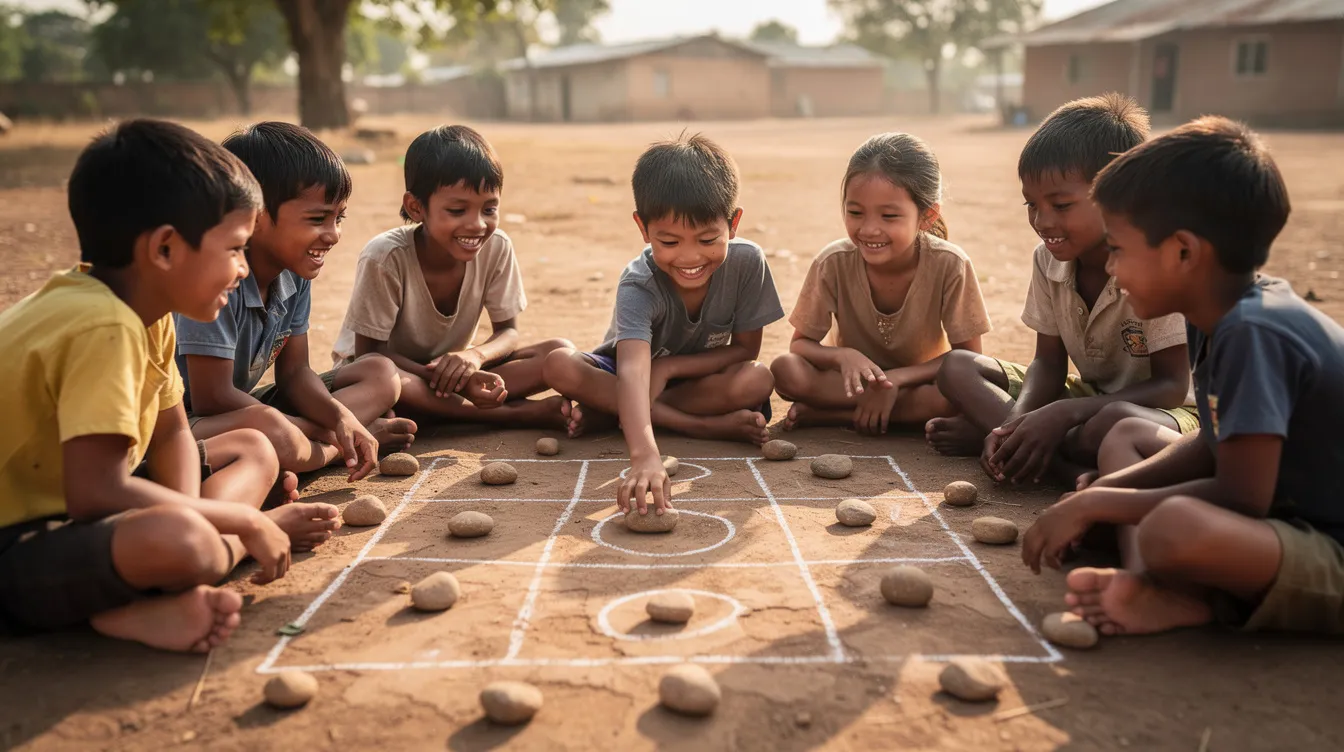
Walk past any schoolyard on any continent and you will find children play using rules that stretch back generations - even if the players have never heard the word "traditional."
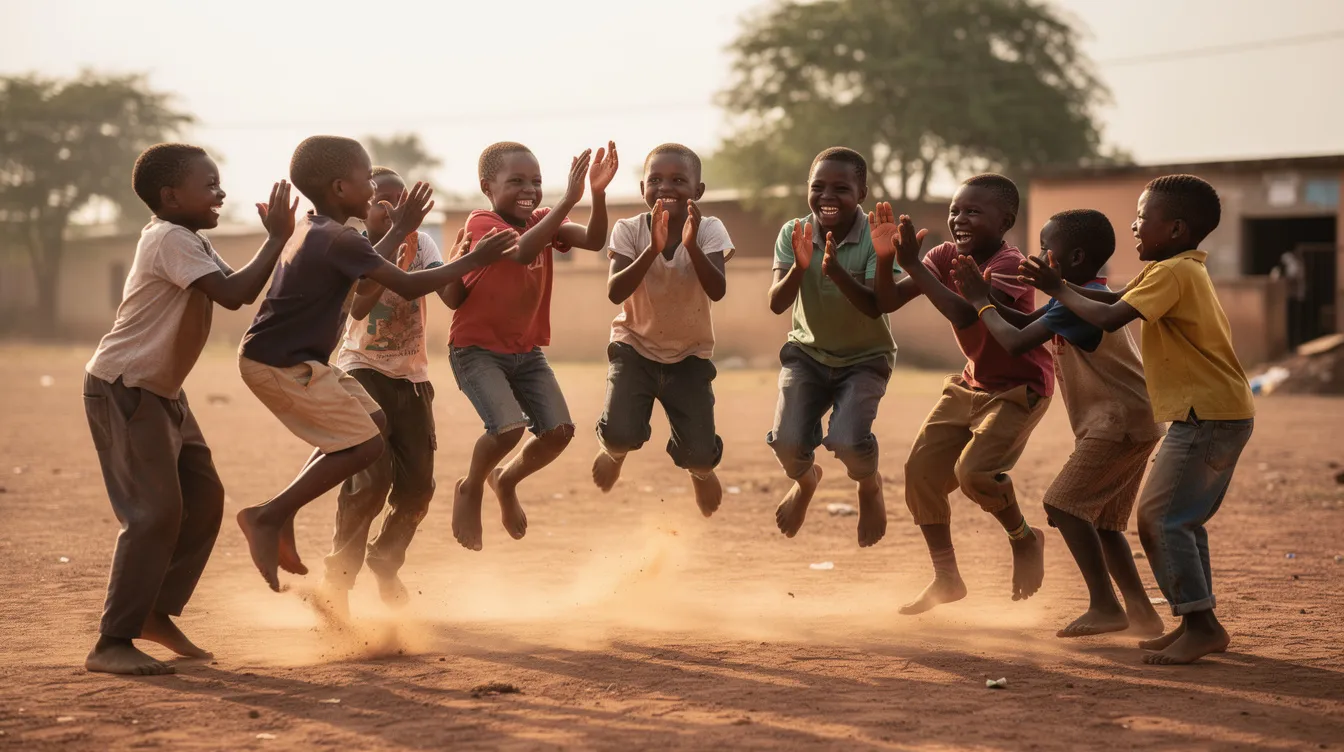
In many parts of Africa, children gather during breaks for clapping and jumping games that require nothing more than an open patch of ground and willing opponents. In Europe, skipping games, freeze-tag variations, and circle games fill recess periods. Across Asia, chase games blend physical agility with storytelling, as players take on roles of hunters, animals, or mythical figures.
Schoolyards, village squares, alleyways, and city streets serve as the main play area for many children. No manufactured equipment is necessary. A circle drawn in dirt becomes a game board. A small object like a bottle cap or pebble becomes a playing piece. A line scratched in sand marks the finish line.
Traditional village and street games are tied to festivals and seasonal celebrations, meaning many games appear only at harvest time, during monsoon season, or on specific holidays. This seasonal rhythm makes games part of a culture's calendar, not just its leisure time.
One of the most fascinating aspects of traditional children's games is how rules shift as they travel. A game starts with a core concept - chasing, hiding, aligning pieces - and each community adds its own rules. Names change, scoring adjustments appear, and local materials replace foreign ones. The result is that games from around the world share structural similarities while remaining distinctly local.
Soccer is the most popular game globally with millions of players, yet even soccer has local pickup variants with their own rules - smaller teams, different boundaries, improvised goals. The pattern repeats with nearly every game family.
Board games represent some of the most carefully preserved traditional games in human history. Archaeologists have recovered carved boards from Egyptian tombs, Roman pavements, and African rock formations - evidence that people have been sitting down to strategize, race, and outwit each other for thousands of years.
Many modern strategy games draw directly on older, simpler board designs and rule sets. Some are war or territory games where two players battle for control of space. Others are race games where players race toward a goal. Still others are alignment games, like three-in-a-row styles descended from the same family as tic tac toe.
Mancala is one of the oldest board games in history, with over 800 documented variants worldwide. Go has been played continuously for more than four millennia. These are not museum pieces - they are living traditions with active tournament scenes, professional players, and growing online communities.
The sections that follow explore specific board games in detail, moving from East Asian strategy to African counting games to European alignment puzzles.
Go is over 4,000 years old and originated in China, where it is known as Weiqi. In Korea it is called Baduk, and in Japan it is called Igo. Legends attribute its invention to Emperor Yao, who supposedly created the game to teach his son discipline and strategic thinking around 2300 BCE - though historians treat this as myth rather than fact.
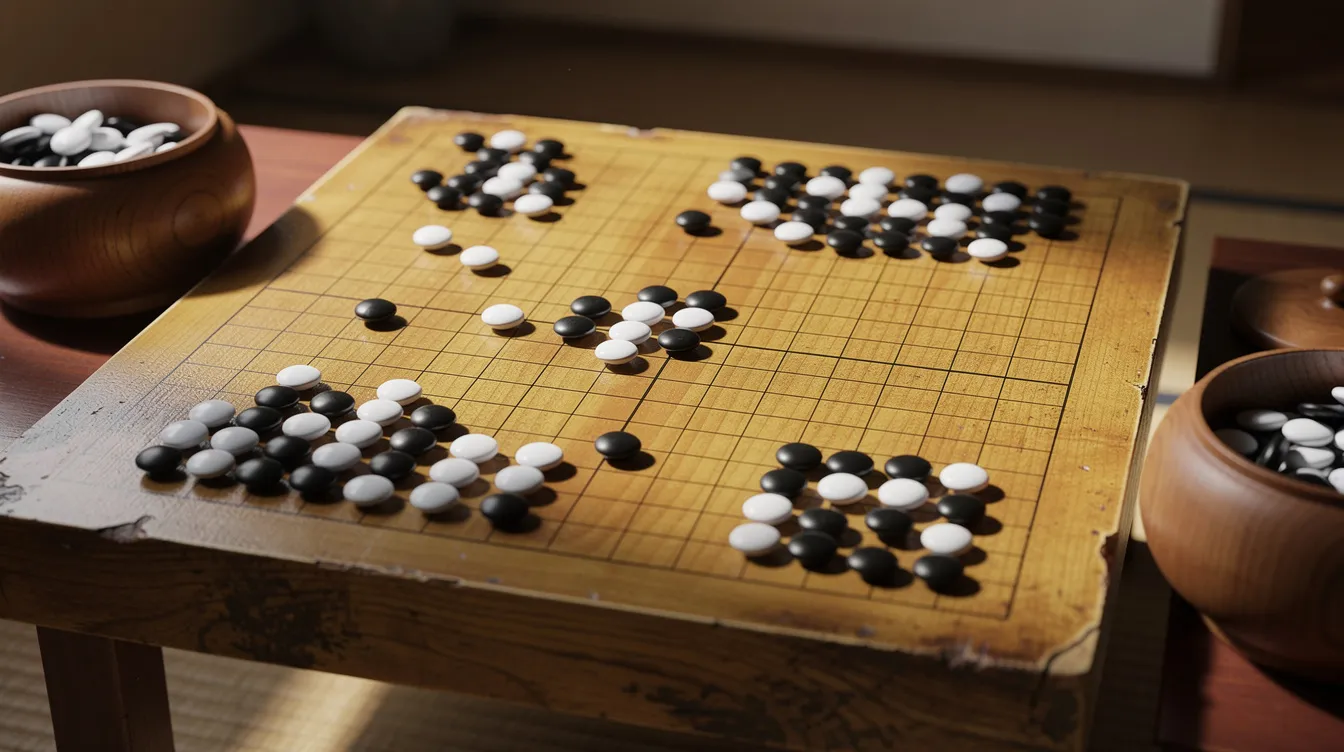
The mechanics are deceptively simple. Two players alternate placing black and white stones on the intersections of a grid, typically 19×19 lines. The objective is to surround more territory than your opponent while avoiding the capture of your own stones. Captured stones are removed from the board.
What makes Go extraordinary is the depth hiding beneath those simple rules. The branching factor of possible moves dwarfs chess, creating a game tree so vast that even modern computers struggled with it until recent breakthroughs in artificial intelligence.
Go has never been merely a pastime. In China, it was one of the four arts expected of a cultivated scholar. Military leaders studied Go for insights into encirclement, sacrifice, and long-term planning. By the 17th century, Japan's Tokugawa shogunate had established official Go schools - Honinbo, Inoue, Hayashi, and Yasui - elevating the game to a refined art with professional rankings and government patronage.
Today, Go remains a professional sport across East Asia, with dedicated television channels, international tournaments, and AI research programs that use Go as a benchmark for machine learning. Online servers attract players from every country, and smaller boards (9×9 or 13×13) make the game accessible to beginners who find the full 19×19 grid intimidating.
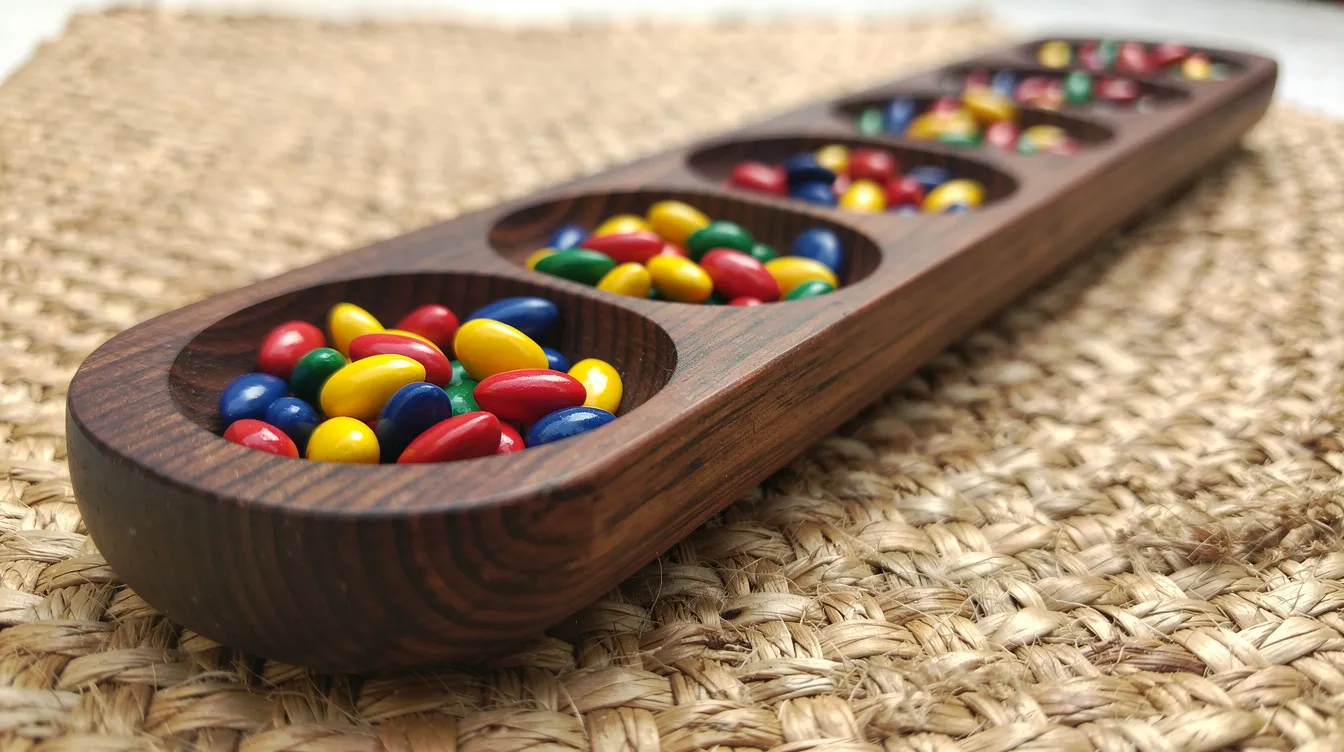
The word "mancala" does not refer to a single game. It describes a vast family of seed-and-pit counting games with many regional variants spread across Africa, Asia, the Middle East, and diaspora communities worldwide. The term comes from the Arabic word naqala, meaning "to move," because the core mechanic involves picking up seeds (or stones, or shells) from one pit and sowing them, one by one, into subsequent pits around a board.
A game begins when one player lifts all the seeds from a chosen pit and drops them sequentially into the pits that follow, moving in a set direction. Depending on the variant, the last seed's landing position triggers captures, chain reactions, or special moves. Boards range from simple two-row layouts with six pits per side (common in Kalah) to complex four-row grids with eight pits per row (as in Bao from East Africa).
Mancala traditionally symbolizes agricultural cycles such as sowing and harvesting, and this metaphor runs deep. The physical act of picking up seeds and distributing them mirrors the farmer's rhythm. Mancala teaches strategic foresight, arithmetic, and community bonding - skills that translate directly from the board to daily life.
Oware (West Africa): Played on a 2×6 board. Oware, a variant of Mancala, sharpens mathematical thinking and tactical planning. Tournament culture thrives in Ghana, Nigeria, and Côte d'Ivoire.
Bao (East Africa): Played on a 4×8 board with two phases (placement and movement). Considered one of the most complex mancala variants, with masters earning deep community respect.
Kalah (United States): A simplified version patented around 1940, using stores for accumulating captured seeds. Easier to learn, widely sold in Western toy stores.
Tchuka Ruma is a traditional mancala game from Indonesia, offering a solitaire-style variant where a single player attempts to collect all seeds into a central store.
Mancala family games encourage counting, planning, and strategic thinking in communal settings, making them valuable educational tools alongside their entertainment value.
Despite its name, Chinese checkers is not actually a traditional Chinese game. It was invented in Germany in the late 19th century under the name Sternhalma, inspired by an earlier American game called Halma. The "Chinese" label was a marketing decision, not a geographic one.
The game is played on a star shaped board with 121 positions arranged in a six-pointed star. Each of the two to six players starts with ten pegs in one point of the star and attempts to move them all into the opposite point. Pieces advance by stepping to adjacent empty spaces or by jumping over other players' pieces in chain sequences.
The jumping mechanic - where a single turn can carry a piece across most of the board through a series of leaps - creates satisfying moments of tactical discovery. Players form mental maps of jump pathways, looking several moves ahead to set up multi-hop chains.
While Chinese checkers itself is modern, the positional and jumping mechanics it uses echo much older traditions. Five Field Kono is a battle game from Korea that uses a 5×5 grid where pieces capture by jumping over friendly pieces to land on opponents. Watermelon Chess originates from Hangzhou, China, and Watermelon Chess is a battle game from China played on a grid where players maneuver pieces to capture or block opponents.
These connections remind us that game mechanics - jumping, blocking, capturing - often develop independently across different countries, converging on similar solutions to the puzzle of making play engaging and strategic.
The three-in-a-row game family is one of the most widespread in the history of traditional games. The objective is straightforward: place or move your pieces to form a line of three before your opponent does the same. Tic tac toe is the best-known modern example, but it represents only the simplest version of a game type with dozens of regional variants.
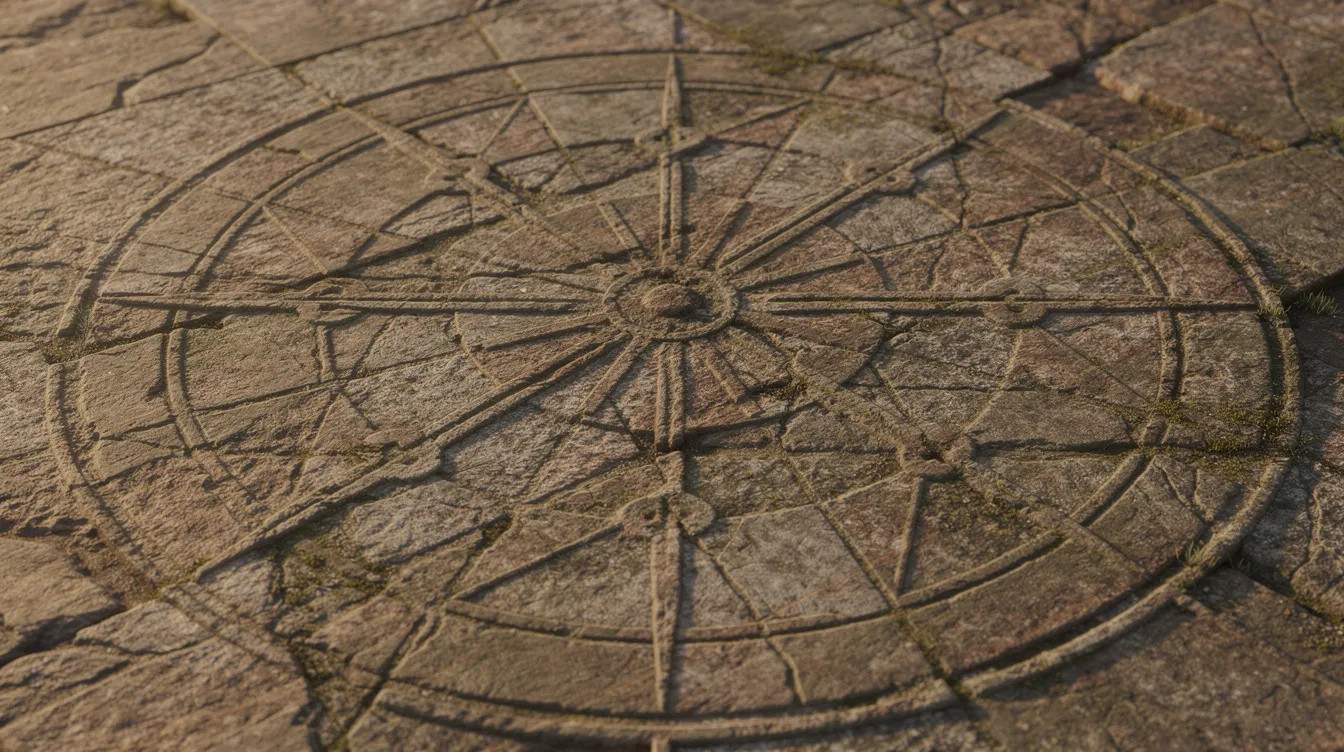
Ancient Romans played a game called Rota, sometimes described as Roman tic tac toe, on circular or wheel-shaped boards carved into stone surfaces. Each player had three pieces, and the game proceeded in two phases: first placing pieces on the board, then moving them along connected lines to form a row of three. Boards have been found scratched into pavements at sites across the Roman Empire, from North Africa to Britain.
Tapatan is a three-in-a-row game from the Philippines, played with stones or shells on boards drawn on the ground or carved into wood. After all pieces are placed, players slide them along lines to create winning alignments.
Tsoro Yematatu from Zimbabwe uses a triangular board with only seven positions, forcing players into tight tactical decisions with minimal space.
Dara from Nigeria adds capture rules to the alignment mechanic, giving the game significantly more depth than simple tic tac toe.
What makes these games endure is the balance between accessibility and depth. A child can learn the rules in minutes, but mastering positional play - blocking, forcing, setting traps - takes genuine skill.
Game scholars organize traditional games into categories based on their core objectives. Three of the most important categories are positional, hunt, and capture games. Understanding these categories helps reveal how games from different cultures share underlying structures even when they look completely different on the surface.
| Category | Objective | Example |
|---|---|---|
| Positional | Control spaces or form patterns | Tic tac toe, Nine Holes |
| Hunt | Predator tries to catch prey (or prey tries to trap predator) | Len Choa (Thailand) |
| Capture | Remove opposing pieces from the board | Kolowis Awithlaknannai (Zuni) |
In positional games, players decide where to place or move pieces to control key spaces or form alignments. The win condition is about position, not elimination. Tic tac toe and Nine Holes are classic examples - no pieces are ever removed, and victory comes from spatial arrangement alone.
Hunt games introduce asymmetry. One player controls a single powerful piece (the predator) while the other players control multiple weaker pieces (the prey). Len Choa is a hunt-type game from Thailand, documented as early as 1839. One player controls a tiger piece while the second player controls six leopards on a triangular board with ten points. The leopards try to surround and immobilize the tiger; the tiger tries to capture enough leopards to break free.
Similarly, Kaooa is a hunt game for two players from India, featuring a single vulture against multiple crows on a star-shaped diagram.
Games using bones or natural objects often emerge where sophisticated equipment is unnecessary. Knucklebones, also known as Jackstones, were historically used for fortune-telling and gambling, but they also served as pieces in simple positional and tossing games across the ancient Mediterranean.
Capture games focus on removing other players' pieces through jumps, encirclement, or tactical positioning. Kolowis Awithlaknannai, a Zuni battle game from the Americas, belongs to the Alquerque family and requires diagonal movement and strategic elimination of opponents.
Many games mix elements of all three types, making them richer than they appear at first sight. A game might start as positional (placement phase) and shift to capture (movement phase), keeping players engaged through changing objectives.
Playing cards appeared in China by the 9th century, likely evolving from earlier paper games and money-suited decks. By the 14th century, cards had traveled along trade routes to the Middle East and then into Europe, where they transformed rapidly. Italian, Spanish, German, and French deck designs emerged, each with their own suits, court cards, and aesthetic traditions.
Every region adapted card decks and rules to local tastes, creating at least one popular card game per culture. The French deck of 52 cards with four suits eventually became the global standard, but regional decks - Italian carte da gioco, Spanish baraja, German Skat decks - still thrive in their home countries.
Many classic casino and parlor games started as household traditional games and spread through trade, colonialism, and travel. What began as family entertainment around a fireplace became structured competition with standardized rules, tournaments, and eventually professional circuits.
The two card game traditions explored next - Poker and Solitaire - show how a simple deck of cards can generate wildly different play experiences, from the social pressure of bluffing to the quiet satisfaction of solo arrangement.
Poker emerged in the early 19th century, around 1810 to 1830, in the United States. It combined elements of older European card games - the French poque, the German pochen, and possibly the Persian as-nas - into something distinctly American.
Riverboat gambling on the Mississippi River turned Poker into a cultural fixture of the American frontier. Saloons in the West adopted it as their signature card game, and by the late 1800s, Poker had become synonymous with risk, nerve, and reading people.
TV coverage in the late 20th century - particularly the World Series of Poker - brought the game into living rooms. Online platforms in the 2000s then made Poker a popular card game worldwide, with players from dozens of different countries competing in virtual tournaments around the clock.
Poker's influence extends far beyond the felt table. It has become a metaphor in movies, literature, and everyday language. Phrases like "poker face," "calling someone's bluff," and "going all in" have entered common speech in many languages. The game embodies themes of calculated risk, reading opponents, and making decisions with incomplete information - themes that resonate well beyond the world of cards.
Solitaire, known as Patience in much of Europe, first appeared in written sources from 17th-century France. Some scholars believe it may have been used as a form of fortune-telling before it became a structured game, with the success or failure of a layout interpreted as an omen.
The idea is simple: one player arranges cards into ordered piles according to suit and rank, working through a shuffled deck with specific rules about which cards can be moved where. Hundreds of Solitaire variants exist, from the well-known Klondike to FreeCell, Spider, and Pyramid.
Paper Solitaire made the leap to digital when Microsoft bundled it with Windows 3.0 in 1990, introducing millions of people to the game who might never have played it with physical cards. Mobile versions followed, ensuring that this traditional game remains one of the most played in the world.
Why does it endure? It requires no partner. It can be played in almost any position - a seated player at a desk, someone on a train, a person waiting in a lobby. And it rewards careful planning, patience, and the willingness to restart when a layout proves unsolvable.
Traditional games do not exist in a vacuum. They absorb and reflect the values of the cultures that nurture them. Three games illustrate this principle with particular clarity.
Go represents long-term strategy and balance in East Asian cultures. The game has no randomness - no dice, no shuffled cards - meaning every outcome results from deliberate choice. This aligns with philosophical traditions emphasizing patience, careful study, and the acceptance that short-term sacrifice often leads to long-term gain. In Japan, Go achieved the status of a near national game, with professional players treated as artists and scholars.
Kalah and related mancala games reflect agricultural rhythms that have shaped African and Middle Eastern societies for centuries. The physical act of dropping seeds into pits mirrors sowing a field. The strategic goal - accumulating more seeds than your opponent - mirrors the harvest. Players who think several moves ahead, anticipating how seeds will distribute and where captures will occur, develop the same kind of forward planning that farming demands.
Poker reflects American themes of risk, opportunity, and the "rags-to-riches" narrative. Unlike Go, where information is open, Poker hides information behind face-down cards. Players must assess probability, read other players' behavior, manage resources (chips), and decide when to fold and when to push. These mechanics mirror a culture that celebrates entrepreneurship, bold moves, and the idea that anyone can win big with the right combination of skill and nerve.
Africa's traditional children's games emphasize rhythm, movement, and communal energy. Many require nothing more than a flat patch of ground and a group of willing players.
Ampe is a clapping and jumping game popular across Ghana and neighboring countries. Two players face each other, clap, and jump simultaneously, each extending one leg forward. If both players extend the same leg, one player scores one point. If they extend different legs, the other scores. The game continues until a predetermined score is reached or until the last player standing claims victory.
Children play Ampe during breaks, at festivals, and after school. It teaches rhythm, anticipation, and quick decision-making - all while generating infectious energy and laughter.
Pilolo is a hide-and-seek style game traditionally played at festivals and community gatherings. One child hides a small object - a stick, stone, or other item - while the rest of the group looks away. When the leader shouts "Pilolo!" the players race to find the object and sprint to a finish line. The winner is the person who reaches the line first with the hidden object in hand.
Jumping and stick-based games like Stretch and Drie Stokkies from South Africa test physical skill and friendly competition. Players jump over increasingly high obstacles or navigate stick patterns on the ground, combining athleticism with playful daring.
Many Asian traditional games blend storytelling, strategy, and physical agility into experiences that are as much about imagination as they are about competition.
In this tag-like team game from India, children divide into two teams - hunters (cheetahs) and deer (cheetals). The game starts when one team chases the other across a defined play area. Players who are tagged switch sides or sit out, and the game progresses until one team has captured all members of the opposing team. The roles then reverse for the next round. The game teaches speed, evasion, and teamwork.
Gilli-danda resembles cricket and represents improvised outdoor play across South Asia. Using a short stick (gilli) and a longer one (danda), players flip the gilli into the air and hit it as far as possible, with opponents trying to catch it. No manufactured equipment needed - just two sticks and open ground.
Oonch Neech is a high-energy chase game structured around "high" (oonch) and "low" (neech) safe zones. Players decide which surfaces count as high and which as low. The person who is "it" calls out either "Oonch!" or "Neech!" and players must scramble to the correct type of surface. Anyone caught on the wrong surface becomes the next "it."
Kabaddi is a high-energy contact sport emphasizing breath control and teamwork, traditionally played across South Asia. One player raids the opposing territory, trying to tag members of the other team while holding a single breath, chanting "kabaddi" continuously. The raider must return to their own half before inhaling. Equal teams line up on either side, and the game ends when one side has eliminated all members of the opposing team.
Kemari is an imperial court game from the Heian period of Japan, where players stand in a circle and keep a deerskin ball aloft using only their feet. Unlike competitive sports, Kemari emphasizes cooperation - no one tries to make another person miss. The goal is collective harmony, not individual victory.
European traditional games often combine simple rules with rich imaginative frameworks, drawing on history, folklore, and local landscape.
In this game, one player takes the role of the statue master and turns away while other players move freely. When the master turns around, everyone must freeze in a dramatic position - sometimes imitating ancient sculptures. Any player caught moving is eliminated. The last player remaining becomes the next master. The game rewards body control, creativity, and the ability to hold perfectly still under pressure.
A "witch" stands in the middle and calls out a color. All other players rush to touch something of that color before the witch can tag them. If tagged before touching the color, that person becomes the next witch. The game demands awareness of surroundings, speed, and quick thinking - players must scan their environment rapidly to find the named color.
Players sit or stand in a circle. One player walks around the outside, carrying a handkerchief, and quietly drops it behind another player. That person must notice the handkerchief, grab it, and chase the dropper around the circle before the dropper reaches the empty spot. If the seated player fails to notice in time, they become the new dropper.
Pétanque involves throwing metal balls towards a wooden target, emphasizing precision and social interaction. While strongly associated with France, variants are played across Southern Europe. Kubb is a lawn game dating back to the Viking age, promoting community engagement in Scandinavian countries and increasingly worldwide.
The Americas hold an extraordinary diversity of traditional games, from Indigenous board games thousands of years old to playground activities shaped by waves of immigration and cultural blending.
Picaria is a three-in-a-row board game played by Indigenous peoples in the Southwestern United States, often drawn in sand or carved on stone. Each player has three pieces, and the game follows two phases - placement and movement - similar to Tapatan and other global alignment games. The board's design reflects Indigenous art traditions, with geometric patterns that carry symbolic meaning.
Kolowis Awithlaknannai is a battle and capture game from the Zuni people, related to the Alquerque family of games. Pieces move diagonally across a patterned board, capturing opposing pieces by jumping over them. The game demands careful calculation of positions, sacrifices, and forced captures - making it far more complex than its simple board might suggest.
Indigenous games often preserve legends, histories, and relationships with nature. The games serve not just as entertainment but as vehicles for transmitting cultural knowledge from elders to young people.
Ulama is a traditional ball game linked to Mesoamerican rituals and cosmology, descended from the ancient Mesoamerican ballgame played for over three thousand years. Players use their hips to strike a heavy rubber ball, and the game carries deep spiritual significance tied to creation myths and celestial cycles.
Modern playground games like tag, hopscotch, and marbles also have deep historical roots across the Americas, arriving with European colonizers but quickly adapting to local conditions, materials, and social customs.
Island cultures across the Pacific use games to teach navigation, numbers, cooperation, and respect for the natural world.
M? T?rere is a blockade game played by the M?ori of New Zealand on a star shaped board with eight points arranged around a central space called the p?tahi. Each of the two players controls four tokens, and the objective is to block the opponent so they cannot move. The game is traditionally played with pebbles or shells on a board drawn in the earth.
Despite the small number of pieces and positions, M? T?rere demands careful positional thinking. Every move opens possibilities for the opponent, making it a game of subtle maneuvering rather than brute calculation.
Lu-Lu is a dice-based fun game from Hawai'i focused on chance and basic arithmetic. Flat stone discs marked on one side serve as dice - players throw them and score based on how many land marked-side up. The same number of throws is given to each player in a round, and the winner is the person with the highest total. Children learn counting and probability through play.
Marn Grook and Buroinjin are Indigenous Australian games that promote community bonds and athleticism. Marn Grook, a ball game involving high catching and kicking, has been cited as a possible influence on Australian rules football. Buroinjin uses a ball made from animal skin, with teams attempting to keep possession in an open field.
Many Pacific games use locally available materials - stones, shells, carved wood - rather than manufactured boards, reinforcing the principle that great games require creativity, not commerce.
Europe has a rich tradition of abstract board and tabletop games that range from trivially simple to genuinely challenging.
Nine Holes is a simple positional game where two players alternate placing pieces on a small grid, trying to form a row of three. It is similar to tic tac toe but uses slightly different board patterns - sometimes a three-by-three grid with diagonal lines, sometimes a more elaborate Morris-style board. The game was played in British pubs and alehouses for centuries, requiring nothing more than a scratched board and a handful of pebbles.
Fox and Geese dates back to the 12th century C.E. and is one of Europe's most enduring hunt games. One player controls a single fox piece, while the other controls a larger group of geese (typically 13 to 17 pieces, depending on the variant). The fox wins by capturing enough geese to break through their formation. The geese win by cornering the fox so it cannot move.
The asymmetry creates fascinating strategic tension. The fox has mobility and capturing power; the geese have numbers and coordination. A round can shift dramatically when one side makes a single mistake.
Pentalpha is a star-shaped solitaire puzzle documented in Crete and other Mediterranean regions. A single player attempts to place nine tokens on the lines of a five-pointed star following a specific rule: each piece must be placed by moving along a line, hopping over exactly one occupied point to land on an empty one. The geometric elegance of the board and the surprising difficulty of the puzzle show the European fascination with shape-based abstract games.
Ancient and medieval play laid the groundwork for many European fun games still enjoyed today.
Rota, also called Roman tic tac toe, is a three-in-a-row game scratched into stone surfaces throughout the Roman Empire. The board consists of a circle with radial spokes and concentric rings, creating a set of intersection points where pieces are placed and moved. Each player has three pieces. The game begins with a placement phase, then shifts to a movement phase where pieces slide along connected lines.
Boards have been discovered at Leptis Magna in Libya, along Hadrian's Wall in Britain, and at numerous other Roman sites. Their presence in public spaces - forum pavements, temple steps, barracks - suggests that Rota was an everyday pastime accessible to soldiers, merchants, and citizens alike.
Early forms of Patience (Solitaire) appeared in 17th-century France and spread across courts and salons. Initially, card layouts may have been used for divination rather than structured play. By the 18th century, written rules had begun circulating, and Solitaire had established itself as a recognized game category.
Many rules for ancient and medieval games are reconstructed from limited sources - board shapes carved in stone, brief textual mentions, analogies with similar games in other cultures. Modern versions are often educated guesses rather than exact replicas. This uncertainty is part of the charm: every reconstruction is an act of historical imagination.
Asia is home to a rich collection of abstract strategy games played on simple boards with tokens made from whatever is locally available - stones, seeds, shells, or carved wood.
Len Choa is a hunt-type game from Thailand in which one player controls a single tiger piece and the other controls six leopards. The board is a triangular diagram with ten intersection points. The tiger wins by capturing enough leopards (typically three) to make surrounding impossible. The leopards win by trapping the tiger so it cannot move. The game teaches children about prediction, turn-taking, and thinking several moves ahead.
Pong Hau K'i is a minimal blockade game from China played on a board with only five points and two pieces per player. Despite its tiny scale, the game has genuine strategic content - players must think about both their own moves and their opponent's options simultaneously. Similar games appear across Southeast Asia under different names.
Watermelon Chess originates from Hangzhou, China, and uses a grid-based board where Five Field Kono is a battle game from Korea that uses a similar jumping mechanic on a 5×5 grid. In both games, players maneuver pieces to capture or block their opponents, and the game ends when one side can no longer move or has lost all pieces.
These games share a design philosophy: start with the smallest possible board and the simplest possible rules, then discover the complexity that emerges from player interaction.
Many African positional games revolve around forming lines, controlling central spaces, or trapping opponents through careful piece placement.
Dara from Nigeria is a three-in-a-row game with additional capture rules that give it significantly more depth than basic alignment games. Players first place their pieces (typically 12 each) on a 5×6 grid. Once all pieces are placed, the game continues with players sliding pieces to adjacent empty spaces, attempting to form rows of three. When a player forms a row, they remove one of the opponent's pieces. The catch: forming a row of four or more does not count, preventing simple mass alignments. This forces careful, precise positioning.
Queah from Liberia is related to the draughts (checkers) family. Played on a small grid with diagonal moves and captures, it shares DNA with Alquerque and other Mediterranean capture games - likely arriving through trade routes. Each player starts with ten pieces, but only four are on the board at any time, with reserves entering as active pieces are captured.
Shisima from Kenya is a three-in-a-row game where tokens represent water bugs moving toward a central point called "the water." The board is an octagonal shape with lines connecting the perimeter to the center. Each of the two players has three pieces and moves them along connected lines. The first to align three pieces through the center wins. The symbolic framing - bugs drawn to water - turns abstract strategy into storytelling.
One reason traditional games have spread so widely is that most of them require no commercial equipment whatsoever.
Across cultures, game boards are scratched into stone, drawn in sand, carved into wood, or chalked onto pavement. Roman soldiers carved Rota into building steps. Indigenous peoples in the American Southwest drew Picaria grids on flat stones. Mancala players across Africa dug pits directly into the ground. The board vanishes when the rain comes - and is redrawn the next day.
Common items become playing pieces everywhere:
Seeds and beans for mancala games
Pebbles and river stones for alignment and positional games
Shells for Tapatan, Lu-Lu, and Pacific island games
Sticks and bones for dice, counters, and throwing games
Bottle caps, buttons, and scraps of cloth in modern improvisations
Games involving horses, archery, and wrestling preserve memories of nomadic life across Central Asia, where the landscape itself becomes the playing field and animals serve as both partners and equipment.
Some boards carry deeper meaning. Pachisi originated in ancient India and represents the cosmic cycle of life, with its cross-shaped board symbolizing the universe and the movement of pieces reflecting the soul's journey. The Hounds and Jackals board from ancient Egypt featured the shen hieroglyph (eternity) at the finish, tying the game to beliefs about the afterlife.
This low barrier to entry - no factory, no store, no electricity - helped traditional games spread rapidly along trade routes and across cultures, surviving precisely because they needed almost nothing to exist.
Traditional games face a paradox. They have survived for millennia, weathering wars, migrations, and the rise and fall of empires. Yet the rapid spread of digital entertainment in the 21st century threatens to break transmission chains that have held for generations.
Schools, museums, and cultural organizations around the world now use traditional games to teach history, mathematics, and social skills. Workshops introduce students to Oware, Go, and mancala as hands-on learning tools. Museums display ancient gaming boards - from Egyptian Senet sets to Roman Rota carvings - alongside interactive stations where visitors can play reconstructed versions.
UNESCO's recognition of traditional games as intangible cultural heritage has spurred national programs to document and preserve local game traditions before they fade.
Bao societies in Zanzibar and Tanzania maintain competitive play through organized tournaments. Oware championships in Ghana draw national attention. Go tournaments in East Asia, now broadcast globally, attract millions of viewers. Even smaller-scale events - a village mancala competition, a school's tic tac toe tournament, a park's pétanque league - keep traditions alive at the grassroots level.
Mobile apps and online platforms now offer faithful digital versions of traditional games, from Go servers with global matchmaking to mancala apps that teach rules step by step. The best digital adaptations respect original rules while making games accessible on phones and tablets, introducing them to audiences who might never encounter a physical board.
The key is balance: digital versions can introduce new players, but the full experience - the feel of stones in hand, the circle of players around a ground-drawn board, the sound of seeds dropping into wooden pits - belongs to physical play.
Traditional games do not preserve themselves. They survive because people play them, teach them, and pass them along.
Here are a few ways to participate:
Learn one new game from a culture different from your own. The rules for games like Oware, M? T?rere, or Len Choa fit on a single page.
Teach a child a game you learned from your parents or grandparents. Even if the rules are fuzzy, the act of transmission matters.
Host a game night focused on traditional games from around the world. A mancala board, a Go set, and a deck of cards cover three continents of gaming tradition.
Support preservation efforts by visiting museum exhibits, attending cultural festivals, or donating to organizations that document endangered game traditions.
Every game you play from another culture is a small act of connection - a reminder that, despite all our differences, humans everywhere share the impulse to sit down, set up a board, and challenge each other to think, move, and play.