22 Jan 2025
When people ask about the most beautiful currency in the world, there is no single answer - but there are clear front-runners. This article quickly identifies which currencies experts and collectors rank among the finest, then dives into the stories, art, and technology behind each one.
What makes a banknote "beautiful" goes far beyond bright colors. It is a blend of artwork, cultural symbols, security features, and everyday usability. Beautiful currencies often feature vibrant colors and modern polymer materials, but the best ones also tell a story about the nation that issues them.
Modern beautiful banknotes come from countries like Switzerland, Costa Rica, New Zealand, Australia, Canada, Mexico, Hong Kong, and Egypt. Many have earned recognition through the international bank note society and its annual banknote of the year award, the closest thing the world has to an official ranking of currency design.
This article focuses on banknotes rather than coins, covering standout notes and entire series that travelers, design critics, and collectors praise worldwide. You will find concrete denominations, design details, and the criteria that separate good-looking money from genuinely exceptional cash.
There is no official single "most beautiful currency in the world," but several series and individual notes consistently top expert and collector lists:
Swiss franc: widely considered one of the most beautiful and innovative currency series today.
Costa Rica's colón: vivid wildlife and rainforest scenes printed on eco-friendly materials.
New Zealand dollar: colorful polymer notes with M?ori motifs and native birds.
Australian dollar: pioneering polymer banknotes with iconic fauna and advanced security.
Canadian dollar: vertical $10 and polymer series with transparent windows and civil rights themes.
Mexican peso: award-winning notes depicting history and ecosystems, like the 50-peso axolotl design.
Hong Kong dollars: multiple issuing banks creating bold, architectural and cultural designs.
Egyptian pound: new polymer issues combining modern design with Pharaonic motifs.
Many of these have been IBNS banknote of the year winners or finalists in recent years. Each currency is covered in detail below with specific denominations and design elements.
Beauty in banknote design is partly subjective, but organizations like the IBNS and central bank design teams use consistent criteria. Vibrant colors and cultural storytelling are key features of beautiful banknotes, yet the evaluation goes much deeper.
Aesthetic criteria include overall composition, color harmony, balance between portraits and background space, and integration of cultural motifs - flora, fauna, architecture, and national symbols.
Functional criteria matter too: readability of denominations at a glance, accessibility features like tactile marks and color coding, and ease of recognition for everyday users who handle bills quickly.
Security and technology criteria round out the picture. Holograms, polymer substrate, transparent windows, microprinting, optically variable inks, and see-through registers all contribute to visual appeal. Banknotes often represent a blend of artistry and anti-counterfeiting technology, making security features aesthetic highlights in their own right. Innovative materials allow for intricate designs and enhanced security in banknotes that would be impossible on traditional cotton paper.
The IBNS banknote of the year award, founded in 2004, evaluates design, artistic merit, security features, and how well a note represents the issuing country's identity. Collector communities, travel writers, and design magazines also compile their own rankings, which this article draws on.
The swiss franc - specifically the ninth series released between 2016 and 2019 by the Swiss National Bank - is frequently cited as a top contender for the most beautiful currency in the world. Switzerland's banknotes celebrate themes like time and nature rather than featuring portraits of famous individuals.
Each denomination focuses on an abstract Swiss value:
10-franc note: yellow palette, images of a hand, globe, watch elements and time-related graphics.
50-franc note: green design with a hand releasing dandelion seeds and Swiss landscapes, symbolizing wind.
200-franc note: blue-violet with scientific imagery and hands, representing matter and research.
The Swiss franc is known for its artistic vertical design and modern security features. Design experts admire the sophisticated microtext, layered imagery, and smooth integration of security elements like threads and transparent features into the art itself. Modern banknotes may use vertical layouts for enhanced artistic expression, and the Swiss series demonstrates this principle beautifully.
The 50-franc note won the IBNS banknote of the year in 2016, confirming that the series is not just technically advanced but visually compelling. It reflects Switzerland's blend of precision engineering and natural beauty - a benchmark for most beautiful banknotes globally.

Costa Rica's colón is one of the most colorful and nature-focused currencies on earth, regularly highlighted in lists of the world's most beautiful banknotes. Costa Rica's banknotes feature vibrant wildlife and eco-friendly materials, reflecting the republic's famous commitment to conservation.
The current family of banknotes, with a major first redesign around 2011 and further updates through 2019, is built around the country's remarkable biodiversity:
1,000 colones: red, featuring dry forest ecosystems with marine life including reef fish.
5,000 colones: yellow, focusing on mangrove swamps with monkeys and crabs.
10,000 colones: green, portrait of José Figueres Ferrer on the front; the reverse shows rainforest imagery with sloths and orchids.
20,000 colones: orange, honoring feminist writer Carmen Lyra - Costa Rica's 20,000 colones note honors feminist writer Carmen Lyra - with volcano hummingbirds and native flora.
Designs include species like sloths, hummingbirds, and coral reefs depicted in high-saturation greens, blues, and oranges. Costa Rica's banknotes are printed on eco-friendly materials, and the notes are sized progressively larger for higher denominations to aid accessibility.
These bills are visually striking to travelers and collectors because of vivid color gradients, layered rainforest scenes, and strong alignment between a country's currency and its environmental identity.

New Zealand's polymer banknotes - the "Brighter Money" series - are widely praised for bright colors and seamless blending of landscapes, wildlife, and M?ori culture. The reserve bank of New Zealand rolled out this series between 2015 and 2016, upgrading earlier zealand banknotes while keeping iconic elements.
5 new zealand dollar note (IBNS banknote of the year 2015): features sir edmund hillary on the front with Aoraki/Mount Cook. New Zealand's $5 note features Sir Edmund Hillary, a national icon. The reverse shows the rare yellow-eyed penguin (hoiho) amidst coastal scenery - the country's national bird of conservation concern.
50-dollar note: honors Sir ?pirana Ngata, a champion of M?ori language and culture, with intricate tukutuku (woven) patterns and native k?kako bird on the reverse.
The visual style features high-contrast oranges, blues, and purples. New Zealand's banknotes feature native plants and wildlife alongside transparent polymer windows with fern motifs and bilingual elements in English and te reo M?ori. Tactile marks assist visually impaired users, demonstrating how accessibility and natural beauty can coexist.
The new zealand dollar frequently appears in "most beautiful currency" discussions because it captures the country's rugged landscapes and indigenous cultural heritage in a cohesive, modern way that few other nations match.

The australian dollar is a foundational example of modern beautiful banknotes. Australia was the first country to adopt polymer banknotes in 1988 with a commemorative note, then rolled out the material across all denominations through the 1990s. That decision made Australia the first country to use polymer banknotes in 1988 - a move that changed currency design worldwide.
The latest "Next Generation Banknote" series (2016–2020) refreshed designs with:
Bright yet controlled color palettes - yellow 50s, red 20s, blue 5s - easily distinguishable at a glance.
Native fauna and native flora such as the Laughing Kookaburra, Black Swan, and species of wattle, integrated into both printed imagery and holographic elements.
A central transparent window with complex holograms, microprinting, and motion effects.
For example, the 20 australian dollar note (2019) features businesswoman Mary Reibey alongside Acacia buxifolia and the Laughing Kookaburra in both hologram and print, with microprinted ship names woven into the illustration.
The australian dollar is admired for low counterfeiting rates, strong security features, and visual coherence. Polymer banknotes are more durable and environmentally friendly than paper, and the Australian model proved this at scale. Its success directly influenced visually striking currencies in new zealand, canada, and several Asian and Caribbean islands nations.
Canada's modern polymer banknotes, particularly the vertical 10-dollar note, are frequent contenders on "most beautiful banknote" lists. The Bank of Canada introduced the "Frontier Series" polymer notes between 2011 and 2013, then unveiled the vertical $10 in 2018.
The 10 Canadian dollar note stands out in every way:
Vertical orientation with deep purple color scheme.
Portrait of viola desmond, a Black Nova Scotian businesswoman whose 1946 act of civil rights defiance predates Rosa Parks. Canada's $10 bill honors civil rights activist Viola Desmond, and she is the first non-royal woman on a Canadian banknote.
Transparent windows showing the Canadian Museum for Human Rights in Winnipeg and the dome ceiling of the Library of Parliament, with Gothic Revival architecture in holographic form.
Canada's polymer $10 bill won the 2018 IBNS year award, confirming its place among the world's most celebrated bills. Other denominations feature key national figures and symbols - the 5-dollar note with space exploration themes, higher notes showing prime ministers and landmarks in cool blues and greens.
Design strengths include crisp typography, sophisticated layering of transparent and opaque areas, bilingual English–French inscriptions, and textured elements for accessibility. Canada's approach demonstrates how a country's currency can promote social history and inclusion while being aesthetically compelling and technologically advanced.
The modern mexican peso banknotes are some of the most decorated in recent IBNS banknote of the year history, blending national history with vivid depictions of ecosystems across every denomination.
100-peso note (Series G, issued 2020) featuring writer Sor Juana Inés de la Cruz and colonial architecture, named IBNS banknote of the year 2020.
50-peso note (new design issued 2021) showing ancient Tenochtitlan and the axolotl, winner of the 2021 IBNS banknote of the year award.
The 50-peso note deserves special attention: its magenta-violet color scheme features the founding of Tenochtitlan on the front with imagery inspired by a Diego Rivera mural, while the reverse shows the critically endangered axolotl in the Xochimilco ecosystem with aquatic plants and waterways.
Mexico's 500-peso note features Benito Juárez and gray whales, connecting a historical person to the country's marine ecosystems. The 500-peso note features Benito Juárez, a historical figure central to Mexican identity. Each denomination corresponds to a different period in Mexican history - from pre-Columbian civilizations through independence to contemporary mexico.
Security and artistic features include polymer substrate, complex see-through elements, microtext, and realistic yet stylized fauna illustrations. The mexican peso demonstrates how a country's currency can serve as an illustrated timeline of national identity while also being counted among the world's most beautiful banknotes.

Hong Kong's currency is unusual because three commercial banks - HSBC, Standard Chartered, and Bank of China - issue their own designs of hong kong dollars, with the Hong Kong Monetary Authority overseeing standards. This results in multiple visually striking series in circulation at the same time.
HSBC series: often featuring the iconic bronze lion statues, strong geometric patterns, and vibrant color gradients (e.g., turquoise 20s, purple 500s).
Standard Chartered series: more abstract, with sweeping lines and modern motifs of finance and technology.
Bank of China series: focusing on recognizable Hong Kong landmarks such as the Bank of China Tower, the Tsing Ma Bridge, the Bauhinia flower, and city skyline views.
Recent polymer or enhanced security issues incorporate transparent windows, dynamic color-shifting elements, and tactile features - all integrated into the visual design rather than added as afterthoughts.
Collectors and travelers praise hong kong dollars for bold use of fuchsia, cerulean, and emerald hues that capture the energy of one of Asia's major financial and cultural hubs. The coexistence of multiple design philosophies within a single currency area makes Hong Kong a unique case in discussions of the most beautiful currency in the world - one city, three competing visions of art on money.
The egyptian pound visually bridges millennia, juxtaposing Islamic architecture and Pharaonic motifs on its banknotes. Egypt's cash has long served as a compact gallery of the nation's architectural treasures - but recent modernization has elevated its design quality considerably.
The central bank of Egypt introduced a 10-pound polymer note in 2022, the country's first polymer issue:
Front features the Al-Fattah Al-Alim Mosque in the New Administrative Capital, rendered with detailed stonework and domes.
Reverse showcases ancient Pharaonic art, including a statue of Queen Hatshepsut, creating a visual link to Egypt's deep history.
Hologram window depicting the mosque, plus microprinting of the central bank abbreviation within security elements.
Older paper notes display major mosques on one side and Pharaonic monuments like Abu Simbel or Karnak on the other, with portraits spanning the world's oldest currency traditions. Color palettes tend toward earth tones - sands, browns, muted greens - evoking the desert landscape while incorporating intricate guilloche patterns and Arabic calligraphy.
The egyptian pound, especially in its new polymer issues, is gaining attention among collectors who value both historical resonance and contemporary design quality. It stands as proof that modern design and ancient cultural heritage can coexist on a single note.
Beyond the main examples above, several other countries regularly appear in "most beautiful currency" rankings and IBNS shortlists. Beauty in currency design is distributed worldwide, from small island nations to major economies.
Aruban florin: abstract wildlife designs created by aruban artist Evelino Fingal, with geometric interpretations of local animals and pre-Columbian patterns - a true collector's favorite.
Bermudian dollar: notes resembling travel posters. The Bermudian Dollar is celebrated for its tropical, watercolor-like art style, with the 5-dollar bill featuring marine life and coastal vistas.
Maldivian rufiyaa: island scenes, traditional fishing vessels, and palm trees. The Maldivian Rufiyaa showcases marine life and island culture in its design, including coral reefs and archipelago seascapes.
Fijian dollar: endemic fauna, tropical birds, and coastal motifs in a vivid Pacific palette.
European examples also deserve mention:
Euro: pan-European bridges, windows, and gateways representing architectural eras, chosen through a design competition. The euro's design features fictional bridges and windows symbolizing unity, and the euro's design symbolizes Europe's shared cultural heritage across 20 eurozone nations.
Scandinavian currencies like Norway's post-2017 "Sea" series mix pixelated modern design with classic coastal imagery.
Each country reflects its own identity on its banknotes - a reminder that the search for the most beautiful currency in the world leads in many directions.
The international bank note society's banknote of the year award is a key influence on how collectors and media identify the most beautiful banknotes. The International Bank Note Society highlights banknotes showcasing national culture, and their annual vote has become the design world's most watched currency competition.
Nomination rules are straightforward: banknotes must be issued in the award year, enter general circulation, and demonstrate artistic merit, imaginative design, and modern security features.
Notable year winners that shape beautiful-currency discussions:
2015: New Zealand 5-dollar note (sir edmund hillary, yellow-eyed penguin).
2016: Switzerland 50-franc note (wind theme).
2018: Canada 10-dollar vertical note (viola desmond).
2020: Mexico 100-peso note (Sor Juana Inés de la Cruz).
2021: Mexico 50-peso note (axolotl and Tenochtitlan).
2022: Philippines 1,000-peso polymer note with the Philippine eagle - a stunning example from the philippines.
2024–2025: Recent regional winners include the Curaçao and Sint Maarten 200-gulden.
Repeated awards for countries like New Zealand, Switzerland, Canada, and Mexico reinforce their reputations as issuers of the world's most beautiful banknotes. These awards also encourage central banks to push artistic and technological boundaries, creating more visually ambitious currencies with each new series. Consider ibns banknote year winners as a curated shortlist when forming your own ideas about the most beautiful currency in the world.
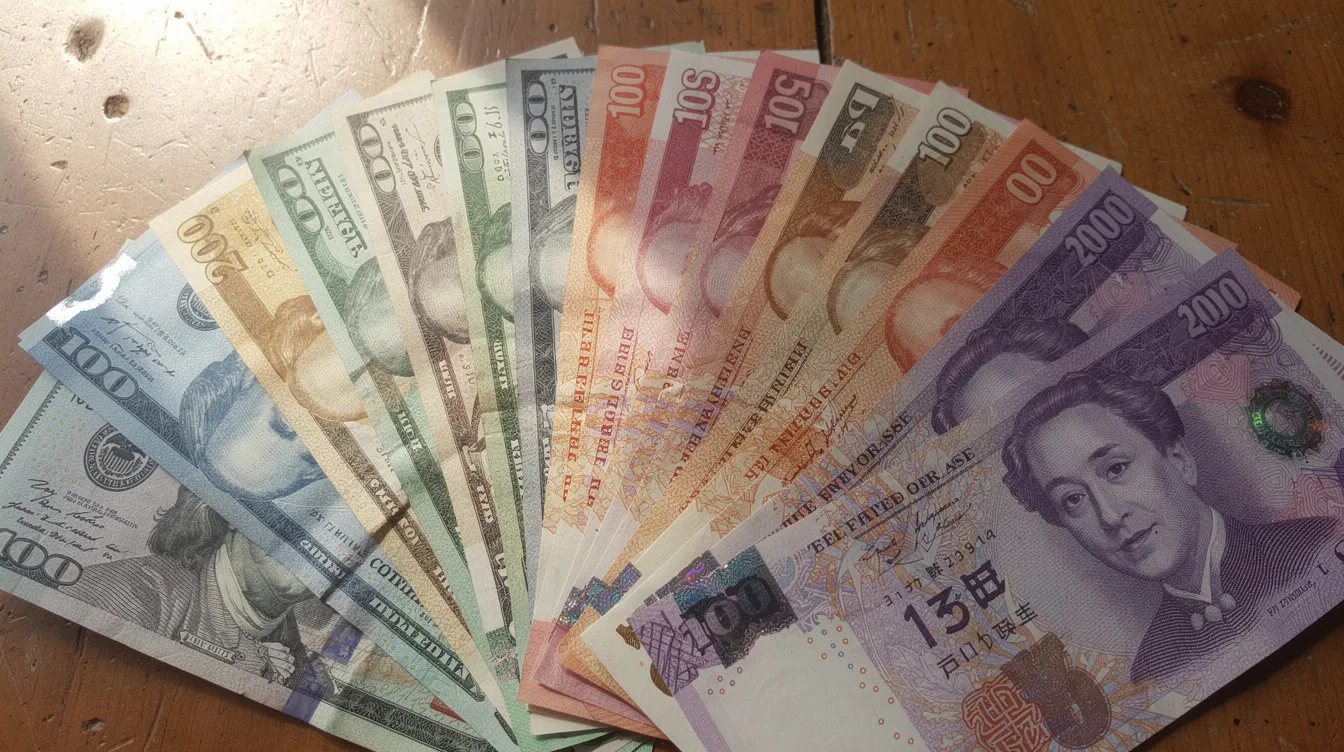
While no single country can claim the undisputed most beautiful currency in the world, series like the swiss franc, Costa Rican colón, new zealand dollar, australian dollar, Canadian dollar, mexican peso, hong kong dollars, and egyptian pound stand out consistently.
Banknotes can serve as portable canvases reflecting national identity and history - combining portraits, wildlife, architecture, and advanced security into a small canvas people handle every day. Visually rich currencies strengthen national branding, support tourism, and encourage public pride in cultural and natural heritage.
Look more closely at the money in your wallet. Compare it with IBNS banknote of the year winners and consider starting a small collection of beautiful banknotes from around the world. You may find that the bills you carry are more interesting than you ever realized.
Looking ahead, increasing use of polymer, environmentally friendly production, inclusivity in depicted figures, and complex holograms will continue redefining what "beautiful banknotes" look like. The next generation of currency design is already in circulation - and it is worth paying attention to.