
ACE Money Transfer
ACE Money Transfer
11 Jun 2026
Have you ever found yourself squinting at your phone after a long shift, rubbing tired eyes, or struggling to read road signs—but still delaying an eye examination because you have bills to pay and loved ones depending on you back home?
For many expats in Ireland, that situation feels familiar.
Between rent, groceries, transport, and regularly sending money home, personal healthcare often gets pushed to the bottom of the list. Yet your vision plays a role in almost everything you do. From working safely and driving confidently to managing finances and staying connected with family abroad, healthy eyesight supports your daily life.
That is why Sight tests are not something to postpone until a problem becomes serious. Regular eye examinations can help identify vision changes and eye conditions early, often before noticeable symptoms appear.
The good news is that Ireland provides support for eligible residents through schemes such as Medical Cards and the Treatment Benefit Scheme. Understanding these options can help you look after your eyes without putting unnecessary pressure on your budget.
According to Optometry Ireland, around 80% of the information we process comes through our eyes, highlighting how important vision is to everyday life. If you are an expat building a future in Ireland while supporting loved ones overseas, this guide explains everything you need to know.
Many migrants focus on earning, saving, and supporting relatives back home. While these responsibilities matter, your health remains the foundation that makes everything else possible.
Optometry Ireland notes that approximately 75% of vision problems may be improved or managed through early diagnosis and treatment.
Delaying eye care may result in larger health and financial challenges later.
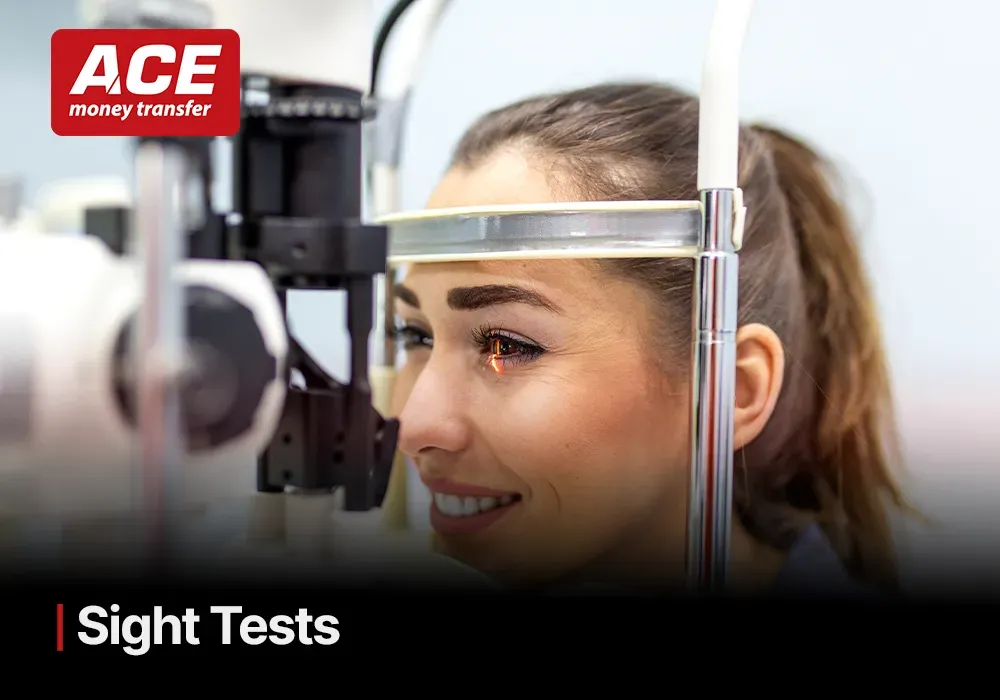
A sight test is much more than reading letters on a chart, and standard eye tests usually take about 20 to 30 minutes and are painless. During an eye examination, an optometrist typically assesses both your vision and your eye health, including visual acuity to measure how sharply each eye sees detail.
The optometrist checks:
Visual acuity testing helps identify refractive errors such as nearsightedness. An autorefractor may be used to assess how well your eyes focus and help determine your prescription. Muscle balance checks assess eye coordination and how well the eyes work together.
The examination may also screen for:
A slit lamp is used to examine the outer surface of your eyes, including the cornea and lens. Ophthalmoscopy is used to examine the retina and optic nerve.
An advanced eye test may include Optical Coherence Tomography; the advanced eye test includes 3D cross-sections of the retina. Visual field testing can detect blind spots and, in some cases, neurological concerns. This makes routine eye examinations an important preventive healthcare measure rather than simply a way to obtain glasses.
Many expats are unaware that they may qualify for assistance, while private eye exams in Ireland often cost about €30 to €60. Some patients may be entitled to help with the cost of care depending on their circumstances.
Medical Card holders may qualify for a free eye test every 2 years. In some cases, tax relief may also be available for certain eye health treatments, though it’s best to confirm the current rules through official sources.
People with a Medical Card may qualify for optical services, including eye examinations and other eye-care support under public health schemes, depending on eligibility criteria outlined by Irish health services.
If you have sufficient Pay Related Social Insurance (PRSI) contributions, you may qualify for benefits under Ireland's Treatment Benefit Scheme. Depending on your circumstances, this can include support for eye examinations and optical appliances. Before booking an appointment, check your eligibility through official Irish government services or your optometrist.
Many people delay appointments to save money. However, postponing eye care may lead to:
Ireland continues to face significant demand for ophthalmology services. In March 2024, approximately 37,880 people were waiting for a first outpatient ophthalmology appointment, according to evidence presented to the Joint Committee on Health.
Early detection remains one of the most effective ways to support general health by identifying early signs of eye diseases and other underlying health problems before they become more serious.
The importance of regular eye care becomes clearer when we look at current data.
The Disability Federation of Ireland reported that approximately 296,601 people in Ireland live with blindness or vision impairment.
Research from Optometry Ireland states that roughly 80% of the world around us is processed through our eyes.
Optometry Ireland highlights that approximately 75% of vision problems are reversible or manageable when identified early.
The Healthy Ireland Survey 2024 found that 81% of people reported being in good or very good health. Preventive healthcare measures, including eye care, contribute to maintaining long-term wellbeing.
Supporting loved ones financially is important. So is protecting your ability to continue doing so. A practical approach includes:
This can also help you get personalised advice based on your individual needs and lifestyle. Small preventive steps today can help avoid larger disruptions tomorrow.
Living abroad often means balancing multiple responsibilities. While looking after your health, you may also need a reliable way to support family members overseas.
ACE Money Transfer helps expats send money home conveniently through digital channels, allowing them to manage financial commitments alongside everyday life in Ireland.
Whether you are supporting parents, spouses, children, or relatives, having a trusted remittance partner can simplify one important part of your financial planning.
Your eyesight supports almost every aspect of life in Ireland—from work and driving to staying connected with family across borders.
Regular Sight tests are not merely routine appointments. They are preventive health checks that can help identify issues early, preserve vision, and reduce future healthcare burdens.
If you are working hard to build a better future for yourself and your loved ones, make your eye health part of that plan. And while caring for your wellbeing, choose a dependable way to manage your international financial responsibilities with ACE Money Transfer.
Many optometrists recommend an eye examination every two years for adults, although some people may require more frequent checks depending on age, health conditions, or existing eye issues. People over 60 are frequently advised by optometrists to have annual eye tests, and many opticians follow the same guidance. Your optometrist can advise the most suitable schedule based on your circumstances.
Yes. An eye exam may identify signs associated with glaucoma, diabetes, high blood pressure, and other common eye conditions, and it can also reveal underlying health problems that affect general health, not just vision. This is one reason regular eye checks are considered an important part of preventive healthcare. If anything unusual is found, a doctor or eye specialist may be involved for further assessment.
Not everyone automatically qualifies for free services. However, Medical Card holders and individuals eligible under the Treatment Benefit Scheme may receive support for eye care services, and your optician can explain what your prescription and cover details mean. Eligibility depends on individual circumstances and contribution records, and many practices let you check options or book through their website. This article focuses on Ireland, but if you are moving between the UK and Ireland, check local rules, as the NHS offers free eye tests for some groups, including people over 60 or in education.
Blurred vision, headaches, eye strain, difficulty reading, sensitivity to light, or problems driving at night are common signs that you should arrange an appointment. For children, eye problems can also show up as developmental concerns, so it is worth checking a child's eyes early and asking about different types of issues. Children should generally have sight tests every year until age 16, or sooner if symptoms appear, so talk to an optometrist if you are concerned. Even without symptoms, regular examinations remain important.
Expats often work long hours, use screens extensively, and focus heavily on financial responsibilities. Children's eyes are checked several times in early life, starting soon after birth. Newborn screening may include a red reflex test to look for eye problems in a baby's eyes. Maintaining good vision helps support productivity, safety, and overall wellbeing, making it easier to continue supporting family members back home while managing life in Ireland. Later checks for a child's eyes may include a visual acuity assessment as an eyesight test to measure how sharply each eye sees detail.
Disclaimer: This article is intended for general informational and educational purposes only and should not be construed as legal, regulatory, tax, business, or financial advice. The views expressed are those of the author and do not necessarily reflect the views or positions of ACE Money Transfer. While reasonable efforts have been made to ensure accuracy, no warranty is given as to the completeness, accuracy, or currency of the information. Services and practices mentioned may vary by provider and jurisdiction. Readers should consult qualified professional advisors before making any financial or business decisions.
Enjoy guaranteed competitive INR exchange rates, ultra-fast transfers, and zero fee promotions directly to bank accounts across India.
Ireland Employment & Schemes | Ireland Family & Allowances |