
ACE Money Transfer
ACE Money Transfer
06 Mar 2026
For millions of Pakistani families, receiving money from loved ones working abroad is an essential part of daily life. Whether it’s covering household expenses, education fees, or medical needs, international remittances help keep families financially stable.
Recipients in Pakistan can receive money sent through ACE Money Transfer in two simple ways. If the receiver has a Bank AL Habib account, the funds are deposited directly into their account, and they can instantly check and manage the money through the Bank AL Habib Mobile App without visiting a branch. If the receiver does not have a bank account, they can still collect the remittance through cash pickup by visiting any Bank AL Habib branch with a valid CNIC and transaction reference number, making the process easy and accessible across Pakistan.
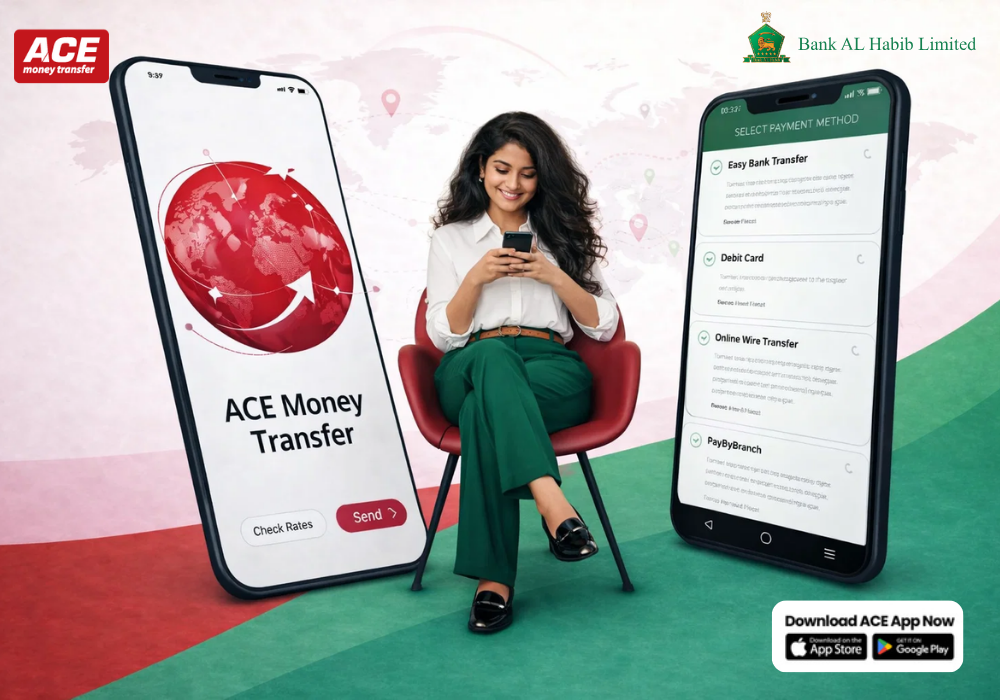
If your family members live abroad, they can easily send money to Pakistan through ACE Money Transfer, and you can receive it directly in your account using the Bank AL Habib.
This guide explains how to receive international transfers, how the process works, and how you can manage your money easily using the Bank AL Habib mobile banking platform.
The Bank AL Habib mobile app is a digital banking platform designed to help customers manage their accounts anytime and anywhere.
Through the app, users can:
When someone abroad sends money through ACE Money Transfer, the funds are deposited directly into your Bank AL Habib account, and you can view or access the funds through the Bank AL Habib mobile app.
This eliminates the need to visit bank branches or wait in queues.
Overseas Pakistanis living in countries such as the UK, Europe, Australia, and Canada regularly send money back home. Digital remittance platforms like ACE Money Transfer simplify the process.
People choose ACE because it offers:
Most transfers are processed instantly or within minutes, allowing recipients to access funds quickly.
Compared to traditional banks, ACE often offers better exchange rates, ensuring families in Pakistan receive more value.
ACE uses advanced encryption and security measures to protect every transfer.
Senders can send money to Bank AL Habib directly into the recipient’s account, making it easy to receive funds through Bank AL Habib.
When someone sends money to Pakistan using ACE Money Transfer, recipients can receive their funds through two convenient options at Bank AL Habib, depending on whether they have a bank account or not.
If the receiver already has a Bank AL Habib account, the process is extremely simple.
The sender only needs to select Bank AL Habib as the receiving bank while sending money through ACE Money Transfer and provide the recipient’s account details.
Once the transfer is processed:
This option is the fastest and most convenient way to receive remittances.
Even if the receiver does not have a Bank AL Habib account, they can still receive money sent through ACE Money Transfer.
In this case, the recipient can simply visit a Bank AL Habib branch and collect the funds over the counter.
Bank AL Habib is one of Pakistan’s well-established commercial banks with a strong nationwide presence. The bank operates 1300+ branches across more than 538 cities, making it highly accessible for families across Pakistan.
To collect the money, the recipient typically needs:
Once verified, the bank staff will release the remittance amount to the recipient.
This option is especially helpful for people living in areas where mobile banking or bank accounts are less common.
The Bank AL Habib mobile app provides multiple tools that make receiving and managing remittances easier.
Users can instantly see when money arrives in their accounts.
The app keeps a detailed record of all incoming transfers, allowing users to track remittances from abroad.
Once funds arrive, users can easily transfer money to other local bank accounts.
Recipients can use remittance funds to pay utility bills, recharge mobile phones, or make online purchases.
Using the Bank AL Habib mobile app offers several advantages for remittance recipients.
Money arrives directly in your bank account, making it immediately accessible.
You can manage your funds entirely through the mobile app.
Bank AL Habib uses advanced banking security systems to protect customer data and transactions.
Recipients can access funds anytime without waiting for bank opening hours.
To avoid delays when receiving funds in the Bank AL Habib mobile app, follow these best practices:
These steps help ensure quick and seamless remittance delivery.
Pakistan is among the largest remittance-receiving countries in the world. Digital banking and mobile apps have transformed the remittance landscape.
Instead of traditional cash pickup services, many recipients now prefer direct bank deposits because they are:
The Bank AL Habib mobile plays an important role in this transformation by allowing customers to manage international transfers digitally.
Receiving international remittances is now simpler than ever. When your family abroad uses ACE Money Transfer to send money to Pakistan, the funds can be delivered directly to your Bank AL Habib account.
With the Bank AL Habib mobile app, recipients can instantly check balances, track incoming transfers, and manage their finances without visiting a bank branch.
This combination of secure remittance services and digital banking convenience ensures Pakistani families receive the support they need quickly and reliably.
You need a Bank AL Habib account. Once someone sends money to your account through ACE Money Transfer, you can view and access the funds through the Bank AL Habib mobile app.
No. Funds are deposited directly into your account, and you can manage them through the Bank AL Habib mobile app.
Most transfers sent through ACE Money Transfer are processed instantly or within minutes, depending on the sender’s payment method.
Yes. Bank AL Habib uses secure banking systems, and ACE Money Transfer applies advanced encryption technology to ensure safe transactions.
Yes. After receiving the remittance, you can use the Bank AL Habib mobile app to transfer funds to other bank accounts within Pakistan.