
ACE Money Transfer
ACE Money Transfer

27 Jun 2025
If you're Colombian and considering making Spain your permanent home, you're in a privileged position. Here's everything you need to know about acquiring Spanish nationality - from the two-year residency shortcut to the Democratic Memory Law deadline closing in October 2025.
Colombians can acquire Spanish nationality primarily through three channels: two years of legal residence in Spain, family connections to Spanish nationals, or the Democratic Memory Law for descendants of Spanish exiles. Here's the summary:
Two-year residency route: Most Colombians acquire Spanish citizenship by completing just two years of continuous legal residency in Spain. Most nationalities must wait ten years for Spanish citizenship, but Colombians benefit from a reduced timeline as nationals of an Ibero-American country.
Dual citizenship preserved: Colombians retain their nationality when acquiring Spanish citizenship. Spain allows dual citizenship with Ibero-American countries like Colombia, so there's no need to renounce your Colombian nationality.
Key requirements at a glance: You need a valid residence permit (non lucrative visa, work visa, family reunification, or digital nomad visa converted to residence), a clean criminal record, and a passing score on the CCSE exam testing constitutional and sociocultural knowledge. Colombian applicants are exempt from the DELE A2 language proficiency test since Colombia is among Spanish speaking countries.
Democratic Memory Law: Descendants of Spaniards exiled during the Spanish Civil War or Francoist era may qualify for nationality directly through this law - often without residence or exams - but must apply before 21 October 2025.
Processing timeline: The citizenship application process may take several months to over a year, typically 12–24 months. In 2025 alone, 37,094 Colombians were granted Spanish nationality by residence, making Colombia the top origin country.
Colombians hold a legal advantage over most non-EU nationals thanks to historical and cultural ties between Spain and Latin American countries. The shared language, colonial history, and bilateral agreements translate into concrete legal benefits.
Article 22.1 of the Spanish Civil Code reduces the residence requirement from ten years to just two for nationals of Ibero-American countries, including Colombia, as well as nationals of Equatorial Guinea, the Philippines, Andorra, and Portugal.
Continuous legal residency means your residence permits must remain valid without gaps, and absences from Spain should not exceed roughly 3 months per year. For the two-year period, proportional limits apply - keep your padron certificates and travel records as proof.
Spain recognizes dual citizenship with Colombia under a bilateral nationality agreement signed in 1979. Colombians can hold both passports legally.
Being Colombian alone doesn't grant automatic citizenship. You must first enter and reside in Spain legally with a qualifying visa or residence permit to start accumulating the two years.
| Applicant Profile | Residence Required |
|---|---|
| Colombians and other Ibero-American nationals | 2 years |
| Spouses of Spanish citizens | 1 year |
| Most other nationalities | 10 years |
| Democratic Memory Law descendants | Often none |
Spanish law offers several routes, and many Colombians combine residence with family or historical pathways where eligible.
Four classic routes: nationality by residence, by option, by possession of status, and by discretionary conferral (carta de naturaleza). The Democratic Memory Law adds a fifth, time-limited route.
By residence (most common): Two years of legal residence, integration evidence, the CCSE exam, and a complete document file. This is the path for most Colombians already living in Spain.
By option: Spanish nationality by option is available for children of Spanish nationals, those under parental authority of a Spaniard, or adults whose parent was Spanish but who didn't claim nationality earlier. This often bypasses residence and exam requirements.
By possession of status: For those registered and treated as Spanish for 10 years in good faith. Rare for Colombians unless there's a long family registry history in Spain.
By discretionary conferral: Exceptional cases - outstanding contributions in science, culture, sports, or humanitarian fields. Not a standard path.
Democratic Memory Law (Law 20/2022): A distinct, temporary route for descendants of exiled Spaniards, highly relevant for Colombians seeking citizenship through Spanish ancestry.
Residence-based nationality is by far the most common way for many Colombians already living in Spain to become Spanish citizens.
Colombians can apply for Spanish citizenship after two years of residency, counted from the date of obtaining legal residence. Qualifying permits include the non lucrative visa, work residence (cuenta ajena or cuenta propia), family reunification, EU family member card, and digital nomad residence under the Startup Law.
Time spent on tourist status, irregular stays, or Schengen short visits does not count. Colombians need Schengen visas for tourist visits up to 90 days, but that tourist time builds zero residency credit.
Continuous residence means keeping residency permits valid with timely renewals and limiting absences from Spain. A rule-of-thumb: no more than 3 months away per year during the two-year period.
The two years must be complete on the day the citizenship application is submitted. Example: a Colombian arriving with a non lucrative visa in March 2023 becomes eligible to file in March 2025.
Good civic behavior matters. Applicants must demonstrate a clean criminal record in both Spain and Colombia, and integration into Spanish society is evaluated during the process.
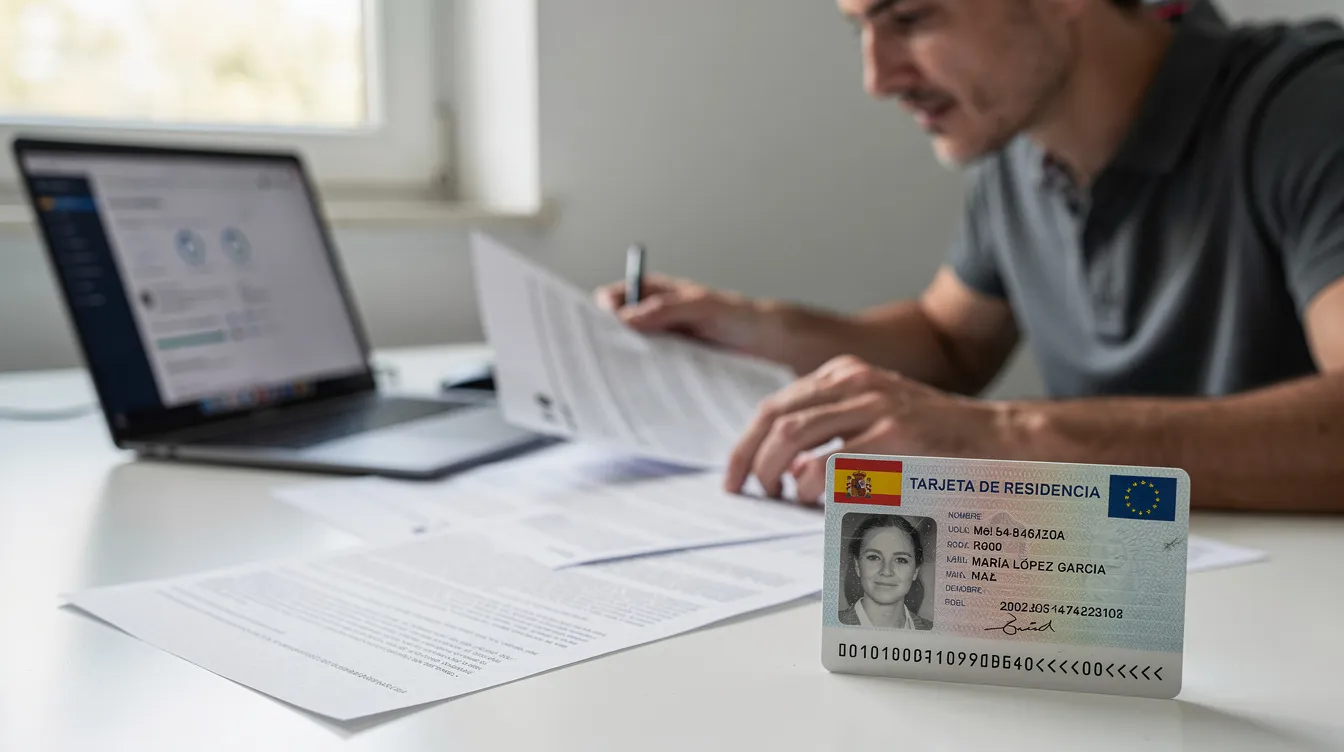
Many Colombians have Spanish parents or grandparents, opening faster or exam-free routes.
Nationality by option: Colombians married to Spanish citizens can apply for nationality after one year of marriage and residence. Children under 20 of a Spanish citizen or those under parental authority of a Spaniard can also claim nationality by option, often without exams.
Colombian parents with Spanish-born children should register them at the Spanish consulate to preserve future nationality rights by option.
The Democratic Memory Law grants nationality to descendants of Spanish exiles - children, grandchildren, and sometimes great-grandchildren of Spaniards who left Spain between 1936 and 1978 due to political persecution. Many of these families settled in Colombia, Costa Rica, El Salvador, and other Latin American countries.
Eligibility examples: A Colombian whose grandfather was born in Spain and emigrated during Francoism; children of women who lost Spanish nationality by marrying a foreigner before 1978.
Deadline: 21 October 2025. Applications are submitted at the Spanish consulate in Bogotá or other consular offices in Colombia. Over 1.225 million applications were filed under this law by mid-2026, with about 571,761 approved.
In most Democratic Memory Law cases, there is no requirement for prior legal residence in Spain and no CCSE or DELE exams, but detailed family documents proving lineage and exile history - birth certificates, emigration records, proof of loss of nationality - are mandatory.
Beyond choosing a pathway, Colombians must navigate a structured application process with specific exams and required documents.
CCSE exam: The CCSE civics test has 25 questions with a 60% passing rate, covering sociocultural knowledge and the Spanish Constitution. It's administered by Instituto Cervantes, costs approximately €85, and certificates remain valid for 4 years. While the DELE A2 language exam is required for citizenship applicants from non-Spanish-speaking origins, Ibero-American nationals are exempt from the DELE A2 exam requirement - so Colombians skip it.
Required documents for Colombians applying by residence:
Valid TIE/NIE
Full Colombian birth certificate with apostille from Cancillería
Colombian criminal record certificate with apostille
Spanish criminal record certificate
Padron certificate proving continuous residency
All residency permits and renewals
Civil status documents: marriage certificate, divorce judgments, children's birth certificates - all apostilled
Payment receipt for the nationality fee (modelo 790)
Civil status matters: Married Colombians must present their marriage certificate and any applicable divorce documentation. These affect surnames, family books, and future family reunification possibilities.
Filing the application: Applications for citizenship are submitted at local Civil Registries in Spain or online via the Ministry of Justice electronic platform. Visa applications for initial entry must be submitted in person at Spanish consulates. A digital certificate is needed for online filing.
Processing times: Expect 12–24 months. After Spanish citizenship approval, applicants must swear allegiance to the Constitution and the King at a designated ceremony.
One of the biggest advantages for Colombians is the ability to maintain both passports simultaneously.
Under the Spain-Colombia bilateral nationality agreement of 1979, Colombians acquiring Spanish citizenship are not required to renounce their Colombian nationality. Colombia also permits multiple citizenships under its constitution.
During the oath ceremony, Colombians formalize loyalty to the Spanish Constitution but retain full Colombian nationality and rights in practice.
Practical benefits: Dual citizenship grants Colombians access to EU rights and benefits - freedom to live and work across 27 EU member states. A Spanish passport allows visa-free access to over 170 countries, dramatically expanding travel freedom. Meanwhile, you keep property rights, inheritance rights, and consular protection in Colombia.
Dual citizenship can affect tax residency, military obligations, and voting rights in both countries. Individualized legal and tax advice is recommended, especially regarding financial support obligations and cross-border income.
Children of dual Colombian-Spanish parents can usually acquire both nationalities from birth if properly registered with Spanish and Colombian authorities.
Choosing the right initial visa directly impacts how quickly you can accumulate the two years of legal residence needed for citizenship.
Non lucrative visa: Popular for Colombians with passive income or savings. Non-lucrative visas require approximately €28,800 annual passive income. It grants one-year initial residence, renewable for two-year periods, and fully counts toward nationality. No work in Spain is permitted under this visa.
Digital nomad visa: Under the Startup Law, remote workers can obtain residence. Digital nomad visa holders can access a flat 24% tax rate. Once residence is granted, this time counts toward nationality. Minimum income thresholds are typically 200–300% of Spain's minimum wage.
Work and self-employment permits: Work visas require sponsorship from a Spanish employer (cuenta ajena), while entrepreneur visas require proof of investment capital and business plans (cuenta propia). Both clearly count toward the two-year clock.
Study visa: Time on a pure study visa historically did not count as legal residency. However, once a Colombian converts a student stay to a work or residence permit, the clock starts. This distinction catches many Colombians off guard.
Timeline examples: Arriving on a non lucrative visa in 2024 ? citizenship application in 2026. Arriving on digital nomad residence in 2025 ? application in 2027.
Irregular status, tourist visa overstays, or seasonal Schengen stays do not accumulate time for nationality and may actively harm future applications. Always maintain valid legal status.

Many delays or denials of Spanish nationality for Colombians come from avoidable errors. Here's what to watch for.
Broken continuous residence: Long stays outside Spain, late permit renewals, or gaps in social security registration break the uninterrupted residence requirement. Keep meticulous records - padron renewals, flight records, and permit documentation.
Incomplete documentation: Missing apostilles, criminal records older than 90 days at submission, or name inconsistencies between Colombian and Spanish documents are frequent causes of delays. Gather documents well before filing.
Misusing your visa: Working in Spain on a non lucrative visa or violating digital nomad visa conditions can lead to sanctions that torpedo a later citizenship application. Understand your visa's legal conditions.
Delaying the CCSE exam: The CCSE tests knowledge of Spanish law, culture, and the Spanish Constitution. Certificates last 4 years, so schedule your exam as your two-year milestone approaches - don't wait until after.
Missing the Democratic Memory Law deadline: Colombians seeking citizenship through Spanish ancestry must apply by 21 October 2025. Start gathering family documents - Spanish birth certificates, emigration records - immediately. This route will close for new applications after that date.
Not tracking your application: Monitor your file through the Ministry of Justice online portal. If your application sits "en tramitación" for over 12 months without resolution, you have the right to file an administrative appeal. Don't wait passively.
Spain offers Colombians one of the most accessible paths to EU citizenship available anywhere. Whether you're building residency through a work visa, planning your move on a non lucrative visa, or racing to meet the Democratic Memory Law deadline, the key is preparation. Start gathering your documents today, choose the residence route that fits your situation, and take the first concrete step toward your Spanish passport.