ACE Money Transfer
ACE Money Transfer
23 Oct 2026
International money transfers to India are available through different channels, depending on the sender's country, recipient's account type, and service availability. Karnataka Bank customers may receive eligible international remittances through banking channels such as SWIFT transfers. Other providers, including MoneyGram, Ria, and ACE Money Transfer, may offer additional options where their services are available.
ACE Money Transfer Limited is regulated by the UK Financial Conduct Authority (FCA) under reference number 506692, as stated in its UK terms and conditions. You can verify regulatory details through the FCA Financial Services Register. Available transfer methods, fees, exchange rates, and processing times vary by provider and transaction.
Common use cases for these remittance services include family maintenance, education fees, medical expenses, property investments, and regular NRI fund transfers. Whether you're an NRI supporting loved ones back home or a business settling invoices with an Indian supplier, there's a method that fits your needs. This article explains how SWIFT-based transfers to Karnataka Bank work, how to use Ace Money Transfer for fully online remittances, and when cash-to-account routes via partners like MoneyGram and Ria make the most sense.
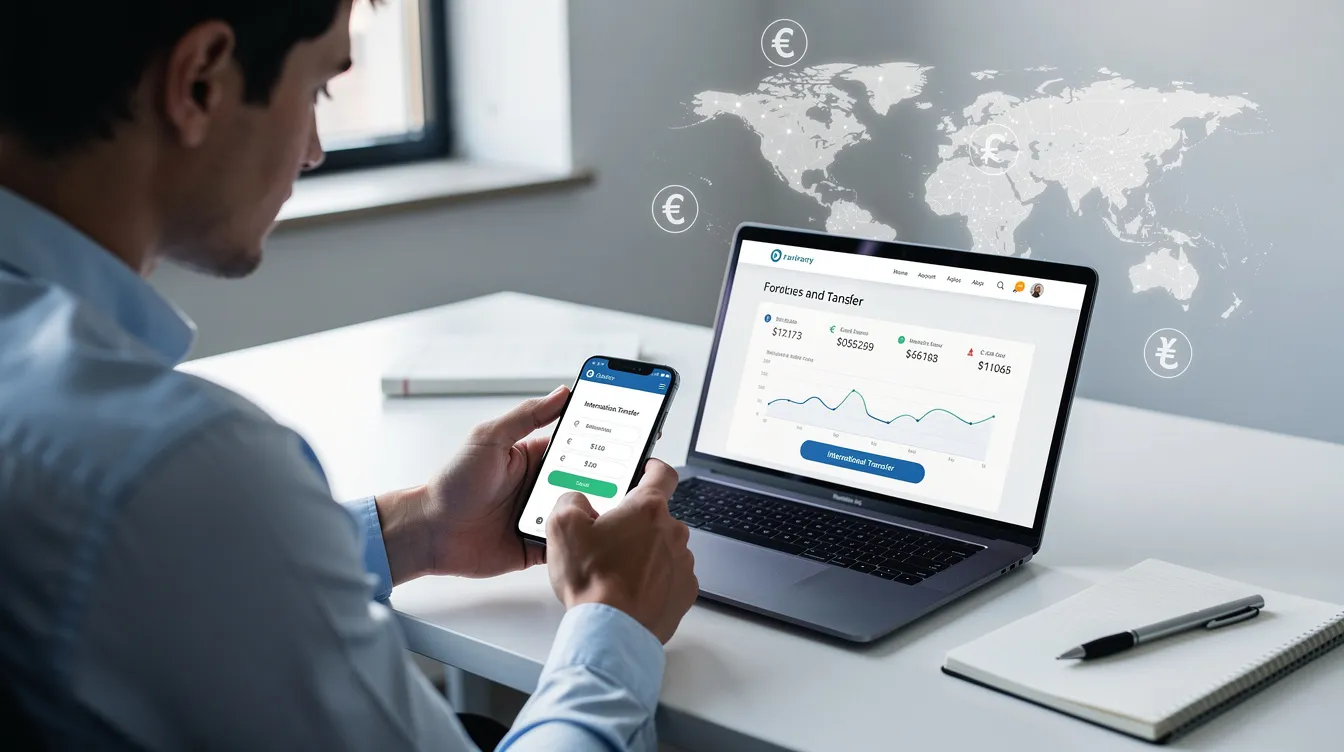
There are three main routes to handle cross border transactions and get money into a Karnataka Bank account from overseas. The first is the traditional SWIFT wire transfer through your bank abroad. The second is an online remittance platform like ACE Money Transfer, which lets customers initiate transfers online and review fees and exchange rates before confirming a transaction, as explained in ACE’s transfer guide. The third involves cash-to-account services like Remit Money Transfer through partners such as MoneyGram and Ria. Each route has its own strengths, and the right choice depends on how much you're sending, how quickly it needs to arrive, and what fees you're willing to absorb.
The advent of SWIFT wire transfer technology has revolutionised the way we handle cross border transactions, and Karnataka Bank is fully integrated into this global network. SWIFT wire transfers let banks send cross-border payment instructions through the SWIFT network, supporting international payments for individuals and businesses. Transfer times, fees, and processing requirements depend on the banks involved and the transaction details.
Karnataka Bank provides international banking services, including foreign remittance facilities. For current transfer options and supported currencies, refer to the bank's official website. These Nostro accounts allow foreign currency to flow into Karnataka Bank's system before it is converted and credited to the beneficiary's account in India.
Every Karnataka Bank branch that handles international remittances has a unique SWIFT code. The primary SWIFT code pattern is "KARBINBBXXX," where the last three characters identify the specific branch. Here are some key examples:
| Branch | SWIFT Code |
|---|---|
| Bengaluru (Manandi Plaza) | KARBINBBBNG |
| Ahmedabad | KARBINBBABD |
| Bhubaneswar | KARBINBBBWR |
| Kolkata | KARBINBBCAL |
| Coimbatore | KARBINBBCBT |
Karnataka Bank has multiple SWIFT codes for different branches, so use the correct one for the beneficiary's branch to avoid delays.
To initiate a SWIFT transfer, a sender overseas needs to provide their bank with the following details:
Beneficiary full name - exactly as it appears in Karnataka Bank records
Karnataka Bank account number - typically 15 to 16 digits
Branch name and IFSC code - format is "KARB0000XYZ"
Karnataka Bank SWIFT code - branch-specific (see table above)
Purpose of remittance - required by RBI for classification
Documentation is required for outward remittance requests, including the transfer purpose. Missing or incorrect details, such as a wrong IFSC or a misspelt name, can cause the transfer to bounce back or sit in limbo for days.
Example: USD Transfer from the United States
A US-based sender can instruct their bank to credit a Karnataka Bank customer's USD inward remittance via a correspondent bank such as BNY Mellon to Karnataka Bank Ltd's USD Nostro account. The sender's bank routes a SWIFT MT-103 message through the correspondent chain, and in the "For Further Credit (FFC)" field, the beneficiary's Indian account number, branch name, and IFSC code are quoted. Once the message clears and funds settle, Karnataka Bank converts the USD to INR at the day's exchange rate and credits the beneficiary's bank account.
Intermediary banks may charge fees during SWIFT transfers, and these are deducted from the transfer amount before it reaches the final destination. Karnataka Bank may also charge service fees for both inward remittances and specific processing types. Exchange rates fluctuate with daily market rates set by the bank's forex desk, so the INR amount received can vary day to day.
SWIFT transfers may take around 1–3 business days to reach the recipient’s account, although processing times vary by bank, destination, banking hours, and any required checks. Funds may take longer to be credited after reaching the recipient's bank. See SWIFT's payment timing guidance for details.

ACE Money Transfer offers an online option for sending money internationally, with transfer methods and availability depending on the sending country and recipient’s bank. Customers can review the applicable fees and exchange rate before confirming a transfer. Exchange rates fluctuate, and the rate you receive may differ from any rates quoted. Always check the live rate at acemoneytransfer.com before sending.
Here's how the process of remitting money works through ACE Money Transfer, step by step:
Register or log in to your ACE Money Transfer account using your email, Google, or Apple ID. The sign-up process is straightforward - enter your mobile number, verify your identity, and you're set.
Choose India as the destination country and select your payout option. For Karnataka Bank transfers, select "Bank Deposit" and enter Karnataka Bank as the beneficiary bank.
Enter accurate recipient details. This includes the beneficiary's full name, Karnataka Bank account number (savings, current, NRE, or NRO), and the branch IFSC code. Double-check everything - incorrect details are the most common cause of delays.
Select your payment method. ACE Money Transfer accepts debit card, credit card, or online bank transfer in your local currency. Add the required payment reason for compliance.
Confirm the transfer and click "Pay Now." You'll receive a reference tracking number immediately. Yes, once you initiate the transfer, you can track it in real time through the ACE web portal or mobile app, and you'll receive notifications when the funds are credited to the intended Karnataka Bank account.
Using services like ACE Money Transfer lets customers review the applicable transfer fee and exchange rate before confirming a transaction. Fees and exchange rates depend on the sending country, destination, payment method, and transfer amount. Rates and fees may vary. Visit acemoneytransfer.com for current rates.
ACE Money Transfer also supports other payout methods for recipients in India beyond bank deposit:
Bank deposit: Direct credit to Karnataka Bank and other major Indian partner banks globally.
Cash pickup: Recipients can collect cash over the counter at authorised partner bank branches and supported remittance locations.
Mobile wallet: Instant crediting to supported digital wallet accounts in India, where applicable.

Traditional money transfer and remittance services like MoneyGram and Ria remain popular options, especially for senders who prefer to pay in cash at a physical agent location or when the recipient needs immediate cash rather than an account credit.
Money transfers via MoneyGram allow cash or account payouts. The process works like this:
The sender visits a MoneyGram agent abroad and fills out a send form with the beneficiary's details.
The sender pays the transfer amount plus the fee in local currency.
The agent issues a PIN or reference number.
The sender shares the reference with the beneficiary in India.
The beneficiary visits a Karnataka Bank branch (or MoneyGram partner location), presents valid photo ID and the reference number, completes KYC verification, and either collects a cash payout or requests credit to their Karnataka Bank savings account or other account.
Ria Money Transfer offers several ways to send money to India, including direct bank deposits and cash pickup. Ria states that its network includes more than 145,000 cash-pickup locations across India. Recipients can track a transfer online using the PIN or order number provided with the transaction. According to Ria's help centre, after a transfer is marked as paid, bank deposits may take up to 2 working days to be credited, excluding weekends and public holidays. Actual delivery times depend on the payment method, recipient bank, and any required checks.
| Method | Best For | Typical Speed | Cost Profile |
|---|---|---|---|
| SWIFT Wire Transfer | Large one-off transfers, business transactions, institutional payments | 1–3 business days | Higher fixed fees + intermediary charges + FX margin |
| ACE Money Transfer | Regular personal remittances, low-fee transfers with online tracking | Same-day to 1 business day | Low upfront fee (~£1.99 UK corridor) + tight FX margin |
| MoneyGram / Ria | Cash-paying senders, recipients needing immediate cash payout | Minutes to hours (cash pickup) | Moderate to higher fees + built-in FX markup |
Fees and currency exchange margins vary by bank, transfer corridor, and platform. The total amount credited in INR may depend on the exchange rate, transfer fees, and any charges applied by intermediary or receiving banks. ACE Money Transfer displays the applicable exchange rate and fees before customers confirm a transaction, as outlined in its fee and commission disclosure.
International transfers from India are subject to the Reserve Bank of India's foreign exchange rules, including the Liberalised Remittance Scheme, which sets conditions for permitted outward remittances by resident individuals. Available services depend on the provider, transaction purpose, and applicable regulations. Laws and regulations may change. Please verify with a local professional. This is not financial or legal advice. Please consult a qualified professional.
Got questions? We've got answers. Here are the most common concerns people have when sending or receiving international money at Karnataka Bank.
Eligible Karnataka Bank customers may receive international remittances into supported accounts, subject to account terms, KYC requirements, and applicable regulations. Karnataka Bank offers NRI banking services, including NRE and NRO accounts, as described on its official website. Under Reserve Bank of India guidelines, eligible NRI and Person of Indian Origin (PIO) account holders may remit up to USD 1 million per financial year from NRO account balances or eligible asset-sale proceeds, subject to applicable taxes, documentation, and bank requirements (RBI guidance). Regulations may change. Please verify current requirements with an authoritative source.
To ensure funds are safely credited to the beneficiary's account, the sender must provide:
Beneficiary's full name as per bank records
Complete Karnataka Bank account number and account type (e.g., savings account)
Branch name and IFSC code (format: KARB0000XYZ)
Karnataka Bank SWIFT code or partner reference, depending on the transfer method
Purpose of remittance and relationship to beneficiary, as required under Indian regulations
RBI guidelines govern the security and compliance of international transactions, so accurate documentation is non-negotiable.
NRE accounts are generally used by eligible non-residents to hold income and savings earned outside India. Funds in NRE accounts are fully repatriable, and interest earned is exempt from Indian income tax when the account holder meets the applicable eligibility conditions, as confirmed by the Income Tax Department of India. Regulations may change. Please verify current requirements with an authoritative source.
NRO accounts, on the other hand, are meant for income earned in India such as rent, dividends, or pensions. If you're not sure which product or account suits your needs, contact Karnataka Bank's dedicated KBL experts or ACE Money Transfer support before initiating large transfers. You can schedule a call at your convenience with Karnataka Bank's NRI services team to find the best fit for your situation.
Tracking works differently depending on your chosen route:
SWIFT: The sender receives a UTR (Unique Transaction Reference) from their bank, which they can share with the beneficiary to track the credit status with Karnataka Bank.
ACE Money Transfer: After you initiate a transfer, you can monitor the real-time status in the web portal or mobile app using the transaction reference number. Email and SMS notifications confirm when funds are delivered.
MoneyGram / Ria: Both services offer online transfer-tracking tools that let users check the status of eligible transactions. MoneyGram's tracking tool requires the reference number and sender details, while Ria allows users to track a transfer using the PIN or order number, as outlined in its official tracking guidance. Tracking can help senders and recipients stay informed about transfer progress, but it does not guarantee immediate payout or prevent delays. Availability and tracking requirements may vary by service and transaction.
SWIFT messages are encrypted and authenticated between banks, and Karnataka Bank Ltd follows RBI and FEMA guidelines for cross-border fund transfers. ACE Money Transfer Limited is authorised and regulated by the UK Financial Conduct Authority (FCA) under reference number 506692 for payment services.
Karnataka Bank and its partners may use verification procedures such as KYC, AML and sanctions screening to help protect customers and comply with applicable requirements. The technology behind these systems has revolutionised the way remittance money transfer works, supporting secure communication and transaction processing for senders and recipients.
Usual timelines are: SWIFT (1–3 working days), ACE Money Transfer (minutes to 24 hours in many cases), and MoneyGram / Ria (timing depends on the transfer method and payout availability). Rates and fees may vary. Visit acemoneytransfer.com for current rates. If funds are not credited on time, take these steps:
Check the tracking status using your reference number or UTR.
Confirm all beneficiary details - name, account number, IFSC, SWIFT code - are correct.
Contact the sending bank or ACE Money Transfer support for a status update.
If needed, contact Karnataka Bank customer care with the reference/UTR for investigation.
Karnataka Bank offers digital banking services, including internet banking and mobile banking, through its official website. ACE Money Transfer provides online and in-app help, including chat and email support, to assist customers with questions about specific transfers.

Customers have multiple secure options to transfer money from abroad into Karnataka Bank accounts - via SWIFT, ACE Money Transfer, MoneyGram, Ria, and other partners. Each method offers a different balance of speed and convenience, cost, and accessibility. SWIFT remains the go-to for high-value or business-critical transfers.
Sending money to India doesn't have to be complicated; with the right platform and information, it's as straightforward as it should be. The best approach is to match your transfer method to your specific needs. Compare what your loved ones or business partners actually receive in INR after all fees, choose the route that delivers the most value, and keep your beneficiary details accurate and up to date. This is not financial or legal advice. Please consult a qualified professional.
Disclaimer: This article is intended for general informational and educational purposes only and should not be construed as legal, regulatory, tax, business, or financial advice. While reasonable efforts have been made to ensure that all facts, figures, and data are accurate and valid as of the date of publication, no warranty or guarantee is given as to the ongoing completeness, accuracy, or currency of the information.
The content is based on information available at the time of publication. Regulations, government policies, market conditions, and service offerings may change over time and vary across jurisdictions and providers. As a result, some information may no longer be current or applicable. Readers should independently verify all information and consult qualified professional advisors before making any financial, legal, or business decisions.