ACE Money Transfer
ACE Money Transfer
15 May 2026
For Muslim immigrants in the UK, managing money is not just about financial sense—it is about living in accordance with deeply held values. Conventional banking sits uncomfortably against Sharia principles due to interest-bearing accounts and unethical investments.
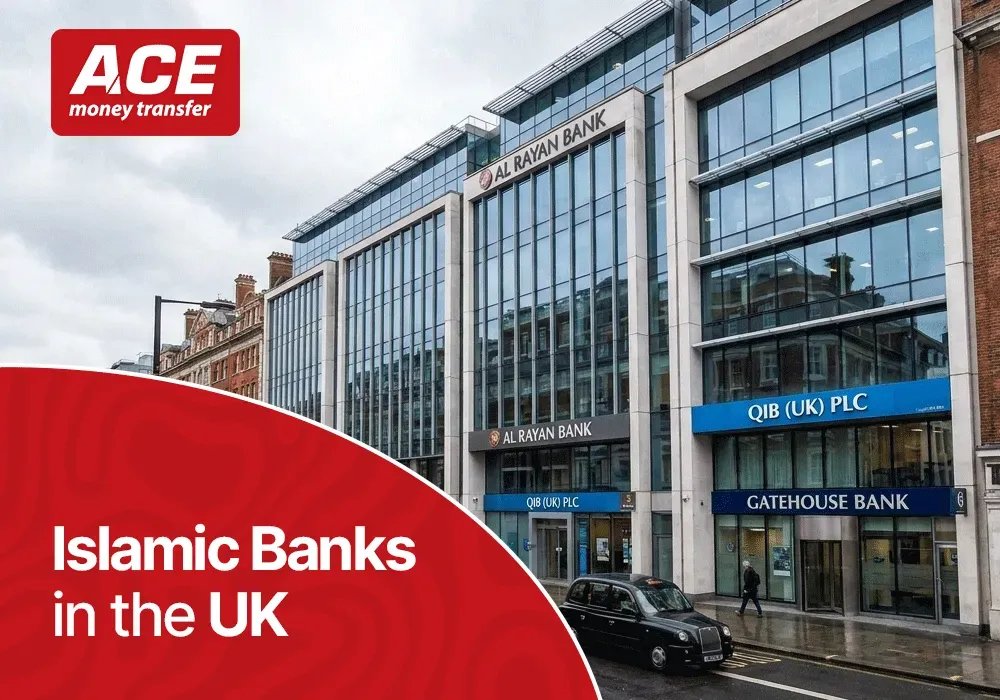
The UK is a leading global hub for Islamic finance, hosting over five fully Sharia-compliant banks and a growing fintech ecosystem. This guide helps you navigate your halal financial options.
Islamic banking is an ethical system built on Sharia law, emphasizing transparency and risk-sharing.
The UK Islamic finance market is valued at nearly £5.9 billion in 2026. The Bank of England's Sharia-compliant liquidity facility (Dec 2021) made the UK the first Western nation to offer such support.
Home Purchase Plans (HPPs):
Instead of a mortgage, you use Diminishing Musharaka (joint purchase where you buy out the bank's share) or Ijara (lease-to-own). These avoid interest while achieving home ownership.
Other essential products include Sharia-Compliant Current Accounts (no overdraft interest), Profit-Rate Savings (Wakalah/Murabahah models), and Takaful (Islamic mutual insurance).
Sharia Pensions: Many Muslims have no pension due to Sharia concerns. Providers like PensionBee, NEST, and Aviva now offer Sharia-compliant funds. Don't walk away from employer contributions!
Supporting family back in Pakistan, India, or Bangladesh is a core value. ACE Money Transfer offers competitive rates on GBP to PKR, INR, and BDT transfers, ensuring more of your hard-earned money reaches your loved ones safely and affordably.
Conventional banking relies on interest (riba). Islamic banking prohibits interest and instead shares profits and losses through ethical, risk-sharing investments.
Yes. Many non-Muslims choose Islamic banking as an ethical alternative because of its transparency and socially responsible investment policies.
Yes. Regulated UK Islamic banks are covered by the Financial Services Compensation Scheme (FSCS), protecting deposits up to £85,000 per person.
They can be slightly more expensive due to legal structuring, but tax reforms have narrowed the gap. Always compare the total amount payable over the term.
Yes. Money transfer for legitimate purposes (like family support) is entirely consistent with Islamic values, provided the source of funds is permissible.